The best litter box location is rarely the prettiest empty corner. Cats judge a bathroom by sound, escape routes, distance, smell, footing, and whether another pet or person can interrupt them.
If you are deciding where to put a cat litter box, start with the cat's safety rules first, then solve the human problems: odor, litter tracking, cleaning access, and small-apartment storage.
AI Summary
Overview
Safe: Choose a quiet spot with an easy exit, not a dark dead-end where a cat can be trapped.
Accessible: The box should be near the cat's daily life, especially for kittens, seniors, and anxious cats.
Separate: Keep litter boxes away from food and water, and spread boxes apart in multi-cat homes.
Gradual: Do not move the only box suddenly. Add the new location first, then phase out the old one.
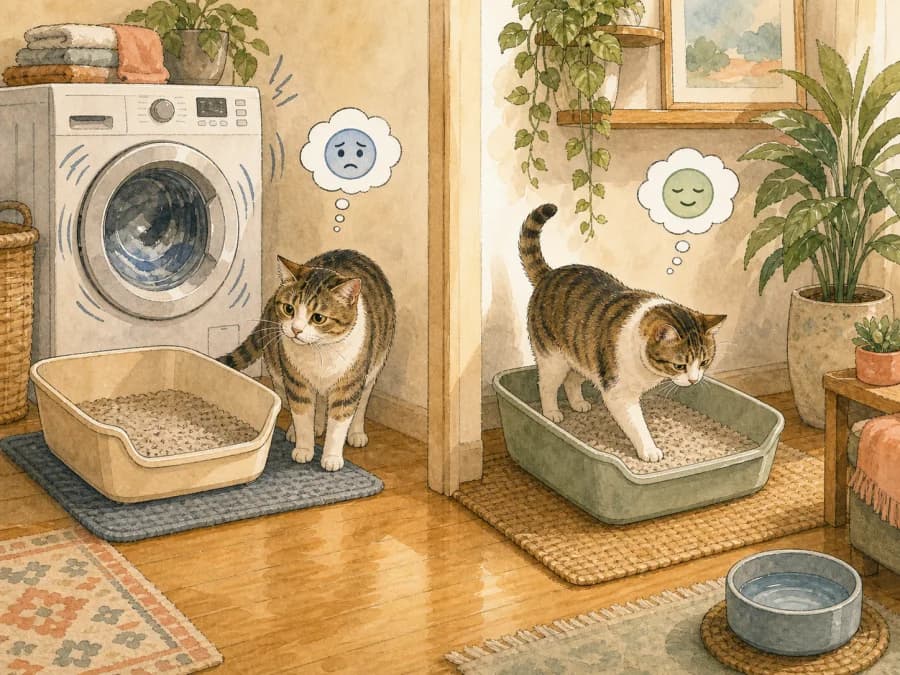
The Four Placement Rules Cats Use
A good location is quiet, accessible, separate from food, and safe to enter and leave. That sounds simple until you try to fit a box into a studio, bathroom, laundry room, or shared hallway.
| Rule | Good location | Risky location |
|---|---|---|
| Quiet | Low-traffic area with normal household sound | Beside washer, dryer, furnace, or busy hallway |
| Accessible | Near where the cat spends time | Behind closed doors, far basement, stairs for senior cats |
| Separate | Away from food and water | Beside bowls, beds, or favorite resting spots |
| Safe | Open route with visibility and escape options | Tight dead-end where another pet can block access |
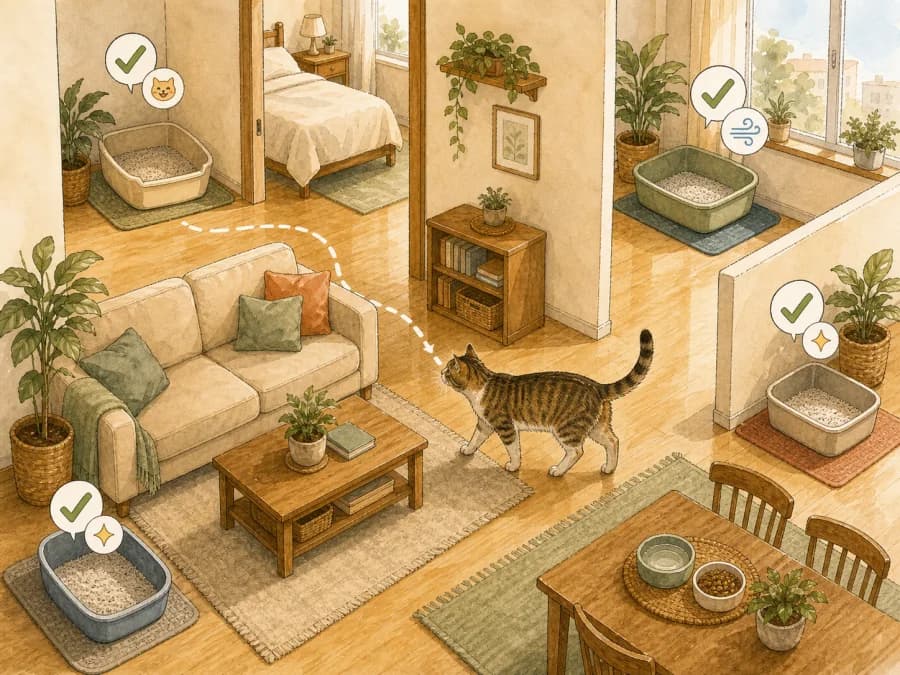
Bathroom, Balcony, Bedroom, or Living Room?
Every home has tradeoffs. A bathroom is easy to clean, but humidity, wet floors, loud fans, closed doors, and shower time can make access unreliable. A balcony can be well ventilated, but heat, cold, rain, security, and year-round access matter. A bedroom is convenient for a cat that sleeps there, but odor and nighttime digging may bother people. A living room corner may be practical if you manage tracking and use a visually tidy setup.
The question is not "where can I hide it?" The question is will the cat use this spot every day when the washer runs, guests visit, it rains, or the door accidentally closes?
If the Bathroom Is the Only Real Option
A bathroom can be perfectly workable if you manage the details. Keep the door propped open, place the box where shower spray cannot reach it, dry the floor after bathing, and avoid trapping the cat in a tight cabinet with poor ventilation. If the bathroom is busy every morning, make sure the cat has access before and after the rush.
If the room gets humid, choose litter and a box setup that do not turn damp or sticky. Watch the cat's feet and digging behavior. Some cats tolerate bathroom placement well; others start hesitating because the floor is wet, the fan is loud, or the door is unpredictable.
If the Balcony Looks Perfect
Balconies are popular because they solve odor and tracking for people. For the cat, the balcony has to be secure, shaded when hot, protected from rain, usable in cold weather, and reachable without a closed sliding door. A box that disappears during a storm or heat wave is not a reliable bathroom.
If you use a balcony, think like a safety inspector: secure screens, no fall risk, no direct rain into the litter, no surface that gets too hot, and no setup that forces the cat outside when frightened by construction noise, wind, or another animal.
Why Laundry Rooms Often Fail
Laundry rooms look practical because the floor is washable and the box is out of sight. The problem is noise and surprise. A spin cycle, dryer buzz, falling basket, or narrow doorway can teach a cat that the box is not safe.
If the laundry area is your only option, keep the box away from the machines if possible, leave the door reliably open, use a night light if the room is dark, and watch whether the cat hesitates at the doorway. Hesitation is useful feedback.
Small Apartment Placement
In small apartments, the winning location is usually the least bad location: easy to clean, not beside food, not trapped, and not so public that the cat is interrupted. A corner of the living room, a bathroom with dry access, a hallway alcove, or a bedroom-adjacent spot can all work if the cat enters calmly and uses it consistently.
Hidden furniture and DIY enclosures can help with visual clutter and litter tracking, but they should not make the box too dark, too cramped, too hot, too humid, or hard to clean. Make sure the cat can turn around comfortably and that you can scoop without dismantling the whole setup.
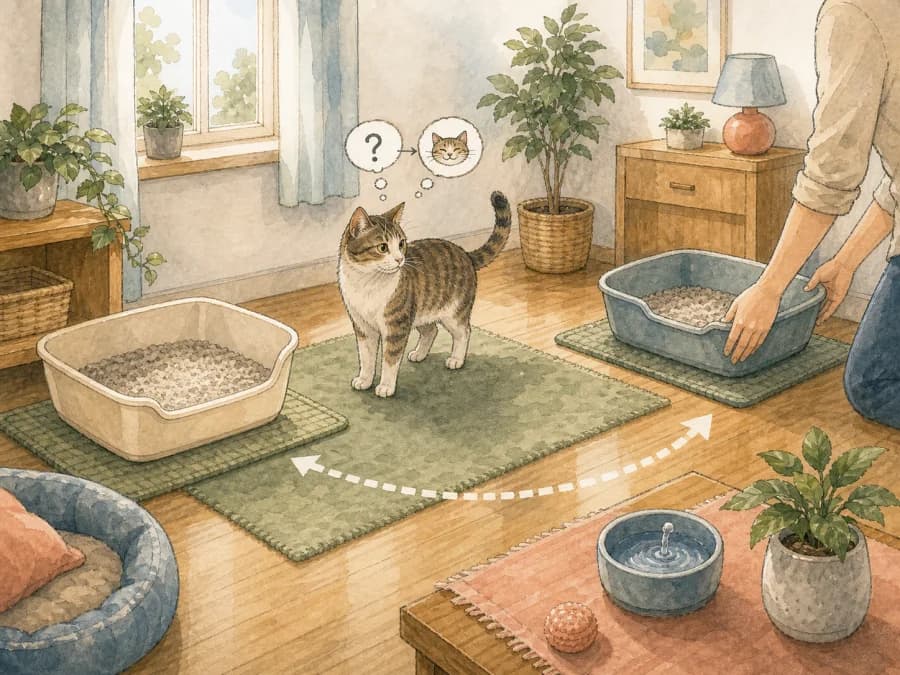
Hidden Boxes and DIY Setups
The best DIY setups in owner discussions usually solve one specific problem: litter tracking, visual clutter, or limited floor space. The risky ones solve the human problem while creating a cat problem: low headroom, sharp grid flooring, awkward jumps, poor ventilation, or a door that makes the cat feel cornered.
Before committing to a cabinet, shelf, or enclosure, test the idea with the cat's actual box first. Can the cat enter without crouching? Can it turn around? Can you scoop daily? Does the exit path catch litter without hurting paws? If the answer is no, the design needs to change before the cat is blamed.
How To Move a Litter Box
Do not move the only box from the bathroom to the balcony overnight and hope the cat understands. Sudden moves are a common reason cats start using rugs, beds, or corners instead.
Add the new box before removing the old one. Keep both available for several days. Once the cat uses the new spot reliably, move or remove the old box gradually. If accidents start, slow down and keep the old location longer.
Multi-Cat Placement
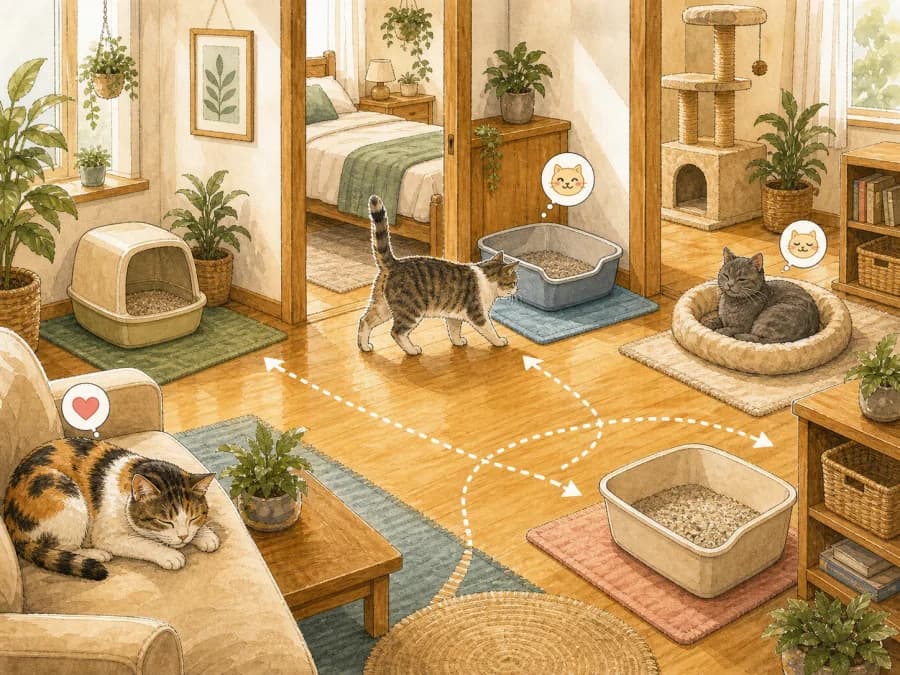
In multi-cat homes, the number of boxes matters, but location matters just as much. Three boxes lined up in one laundry room can still function like one guarded bathroom. One confident cat can sit in the doorway and quietly control access.
Place boxes in different rooms or zones so each cat has a route that cannot be blocked. Avoid covered boxes during conflict resets, and do not make a timid cat cross another cat's favorite resting spot to reach the bathroom.
Odor and Tracking Without Making the Box Worse
For odor, scoop daily, use enough litter, wash the box on a reasonable schedule, and choose ventilation over heavy fragrance. Strong perfume can make the area less appealing to cats. For tracking, use a gentle litter mat, a larger box, or a short exit path that catches litter without hurting paws.
Do not trade access for aesthetics. A beautiful hidden box that is too small, too enclosed, or too annoying to clean will eventually become a behavior problem.
Places to Be Careful With
Be cautious with spots beside food bowls, beside loud appliances, behind doors that close, inside cramped cabinets, at the end of a hallway controlled by another pet, on a balcony without weather protection, or far from the cat's normal living area. None of these is automatically impossible, but each one adds a reason for the cat to choose somewhere else.
If your cat has already had accidents, choose the most boring reliable location first. After the habit is stable, you can improve aesthetics. Reversing that order often creates more laundry and more stress.
Key Takeaway
Put the litter box where the cat can reach it easily, use it without being startled or trapped, and leave without conflict. Then solve odor and tracking around that safe location instead of hiding the box in a spot the cat does not trust.
References
BC SPCA: Cat Litter Box Problems
Cornell Feline Health Center: Feline Behavior Problems - House Soiling
VCA Animal Hospitals: Inappropriate Elimination Disorders in Cats
Founder & Editor
Micky is the founder and editor of NookPetdia, sharing practical cat-care guidance and product-fit advice for everyday cat parents.
Written by Micky. Read our Editorial Policy.
FAQ
Frequently asked questions
New on NookPetdia
Latest articles

Custom Pet Portrait Scams: How to Get Your Money Back
If a custom pet portrait goes wrong, the US has a clear refund ladder: credit card chargeback first, then FTC, BBB and your state Attorney General, and small claims for larger amounts. Here is how each step works.
How Much Does a Custom Pet Portrait Cost? What You Get at Each Price
Custom pet portraits range from about $30 for a basic digital file to $1000 and up for a painted original. Here is what you get at each level, what drives the price, and where the hidden costs live.

How to Take Reference Photos for a Custom Pet Portrait
A custom pet portrait is only as good as the photos you send. Natural light, multiple angles, sharp eyes, and a few file habits are what separate a portrait that looks like your pet from one that does not.