AI Summary
Overview
Process beats pixels: AI-generated pet portraits are good enough now that looking at the final image is not a reliable test. The dependable signals are process and behavior: whether the artist shows sketches and progress, answers direct questions honestly, and prices work like hand work. Visual artifacts still help, but they are secondary.
Why the image test is not enough
A few years ago, AI portraits were easy to spot: extra toes, melted fur, weird eyes. That is mostly over. Current tools produce clean images, and a skilled human artist can look just as polished. By the time you are comparing finished images, you are already at a disadvantage.
The reliable tests are about the process, not the pixels. A real artist can show you how they work. An AI operation usually cannot.
How the fake ones work
The pattern behind most AI portrait scams is the same:
- The shop shows attractive, real-looking traditional art in the listings, sometimes stolen from actual artists.
- "Custom" means you upload your pet's photo.
- Behind the scenes, the image is generated with AI, cleaned up a little, and sent to a print-on-demand service.
- The marketing carefully implies hand-painted work without quite saying it: "handcrafted", "artist-created", "painted with love".
- When challenged, the seller says "it's digital art", "AI is just a tool", or goes silent.
The result is a canvas print of an AI image arriving in days instead of weeks, at a price that claims hand work.
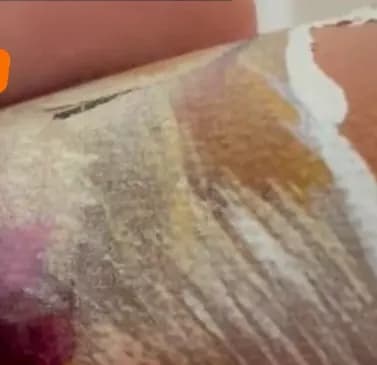
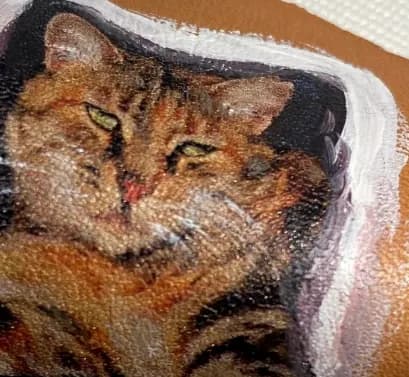
Printing is an even cheaper shortcut, and it deserves its own mention. A seller can take any artwork, print it onto canvas or leather, and sell it as hand-painted. The materials cost almost nothing, the image does not scratch off easily, and on a wall it can be hard to tell from real paint. Leather portraits are especially convincing: a printed image looks crisp and durable. The giveaway is the same as AI. There is no process. A real oil or leather painting has visible brushwork and layers, and the maker can show the work in progress.
The visual tells that still exist
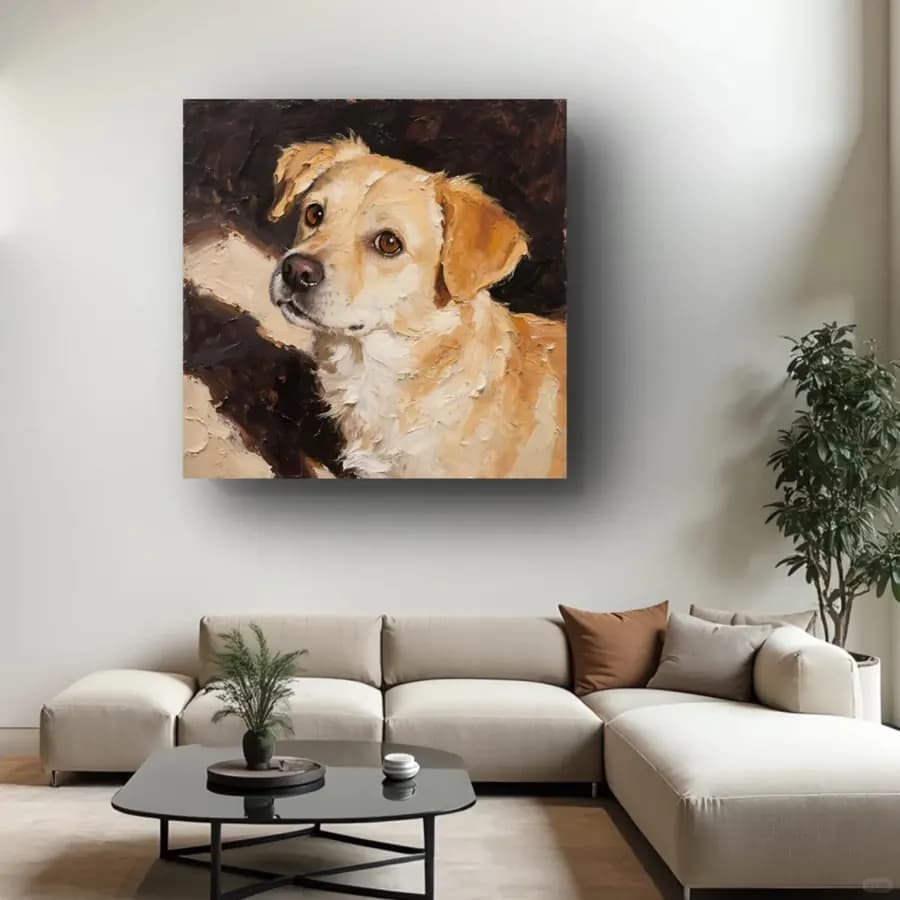
These are secondary signals, worth checking but not conclusive on their own.
- Fur that looks too uniform, plastic, or made of cloned strands.
- Eyes that are glassy, mismatched, or have wrong reflections.
- Odd ear placement or proportions that do not match your pet.
- Backgrounds that are warped, repeated, or full of irrelevant details.
- Garbled text, like a name that does not spell correctly.
- The pet's face slightly "off" in a way you cannot quite name.
Zoom in on fur, paws, and edges. If the texture repeats or blurs unnaturally, treat it as a warning, not a verdict.
The process test: the one that works
Ask for proof of process. This separates real artists from AI operations almost every time.
- Ask for a work-in-progress image. A real artist can send a sketch, an underpainting, or a progress shot with the actual canvas or software. A pure AI shop cannot, or fakes it badly.
- Ask how they work from your photos. A real artist discusses style, pose, expression, and specific details. An AI seller wants your photo and little else.
- Ask for the layered or working file. Real artists can show or explain their process files. AI sellers usually cannot.
- Look for process history. Artists with progress videos, studio photos, or a long pre-AI portfolio are easy to verify.
An honest answer is the strongest green flag. A legitimate artist says "I use AI as part of my process" and shows what that means. The problem is never AI itself. It is AI sold as hand work.
One rule of thumb from experienced buyers: ask for a full process video or very detailed progress images before you pay. A genuine artist has them. If a seller cannot produce any progress evidence at all, treat it as a fake. Not every artist records video, but every real artist can show an earlier stage of the actual piece, and the ones who cannot are almost always the ones hiding something.
The pricing and behavior signals
The honest comparison: when AI is actually good
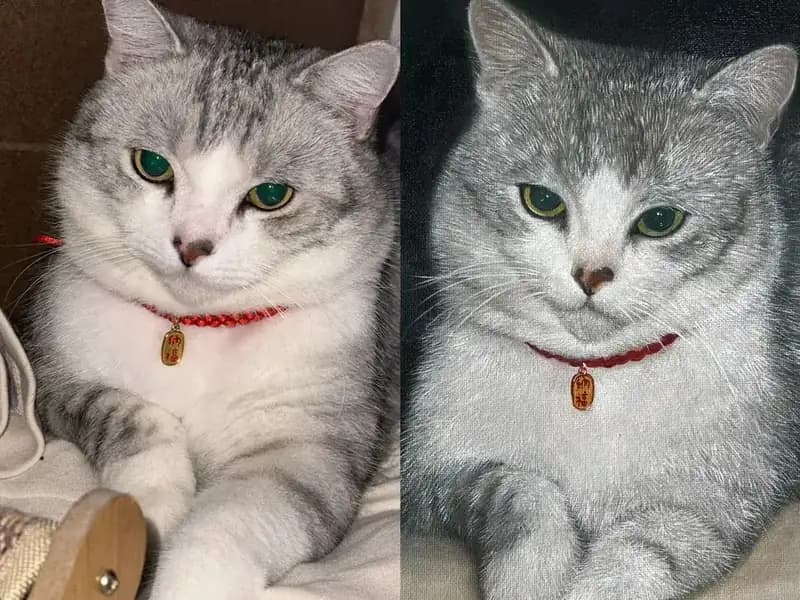
It is worth being honest here. AI can be genuinely good at one thing: matching a photo almost exactly. If your goal is a faithful copy of a specific picture, AI does that reliably, instantly, and for a few dollars. On pure likeness, a machine does not get tired, draw a paw wrong, or drift from the reference. That is a real advantage, and pretending otherwise helps no one.
- AI wins on: exact likeness, price, speed, and consistency. It does not have off days.
- Hand work wins on: interpretation, expression, the visible process, and the ability to revise toward what you want. It is a piece of art, not a copy.
The flip side is also true. A portrait by a beginner can be worse than a good AI piece: proportions off, details lost, quality that varies from one commission to the next. Paying for hand work does not guarantee a good result, only a human attempt. That is why the artist's portfolio matters more than the label "hand-painted".
The honest rule: decide what you want first. If you want a faithful copy of a photo, AI is a reasonable choice when it is clearly labeled as AI. If you want a piece of art, or a keepsake with a process behind it, hire a human whose previous pet work you have seen. The problem was never AI itself. It is paying hand-painted prices for something that was never hand-painted.
- Extremely low price plus instant delivery means AI or a template. Real hand work takes time.
- High volume with "any pet in any style instantly" is a factory signal.
- Reviews that repeat "looks digital", "not painted", or "AI" are worth taking seriously.
- A seller who refuses to discuss process, or answers questions with generic reassurance, is a risk.
- Reverse-image search the sample images in the listing. Stolen or AI-generated samples often appear elsewhere.
What to do if you already bought one
If you paid for hand-painted work and received an AI print, the refund ladder applies.
- Document everything: the listing language that promised hand-painted work, your messages, the payment, and the print you received.
- Dispute the charge with your card issuer as "not as described". The AI evidence strengthens the claim.
- Report the listing for deceptive practices on the platform.
- Leave a detailed review naming the AI issue so other buyers see it.
This is covered in full in our guide to getting your money back.
The honest bottom line
AI pet portraits are fine when they are disclosed. The scam is misrepresentation: charging hand-painted prices for generated images. You can protect yourself by demanding process evidence, asking direct questions, and treating suspiciously cheap instant portraits as warnings rather than bargains.
If the artist is transparent, shows their work, and takes real time, you are almost certainly getting what you pay for.
Related: our guide to commissioning a custom pet portrait covers the questions to ask before you pay, and how much a custom pet portrait costs explains what real hand work should cost.
Animal Behavior & Care Writer
Rachel has a background in zoology and animal care volunteering. She writes about cat behavior, enrichment, and the relationship between cats and their everyday environment.
Written by Rachel Breen. Read our Editorial Policy.
FAQ
Frequently asked questions
New on NookPetdia
Latest articles
How to Commission a Custom Pet Portrait: Get the Artwork, Not Just the Object
Commissioning a custom pet portrait is mostly about the questions you ask before you pay: process, revisions, price, and the artwork file you actually receive. Here is the walkthrough, with the copyright and source-file facts most buyers learn too late.
Can Cats Wear Collars? The Breakaway Safety Rule, Explained
Cats can wear collars safely, but only with a breakaway clasp, a correct fit, and a cat that accepts it. Here is the safety rule, the risks, and the owner-reported close calls that explain why.
Black Cat Jewelry Guide (Style, Meaning, Gift Timing)
Black cats are the hardest subject to render in a small pendant and the best subject for silhouette work. Here is which styles hold up, what the symbolism actually carries, and the two dates worth planning a gift around.