AI Summary
Overview
Artwork is the deliverable: A custom pet portrait is worth commissioning when you treat the artwork as the real deliverable, not just the finished pendant or print. Most buyers pay for the object and never ask about the file, the rights, or the source artwork.
Ask before you pay: Artists who do this well expect those questions. Asking them early is what separates a portrait you treasure from a commission you regret.
Why the artwork file matters more than the object
People usually say "I want a custom pet portrait" and mean the finished piece: a pendant, a print, a painting. The smarter way to think about it is that you are commissioning the artwork itself, and the object is one use of it.
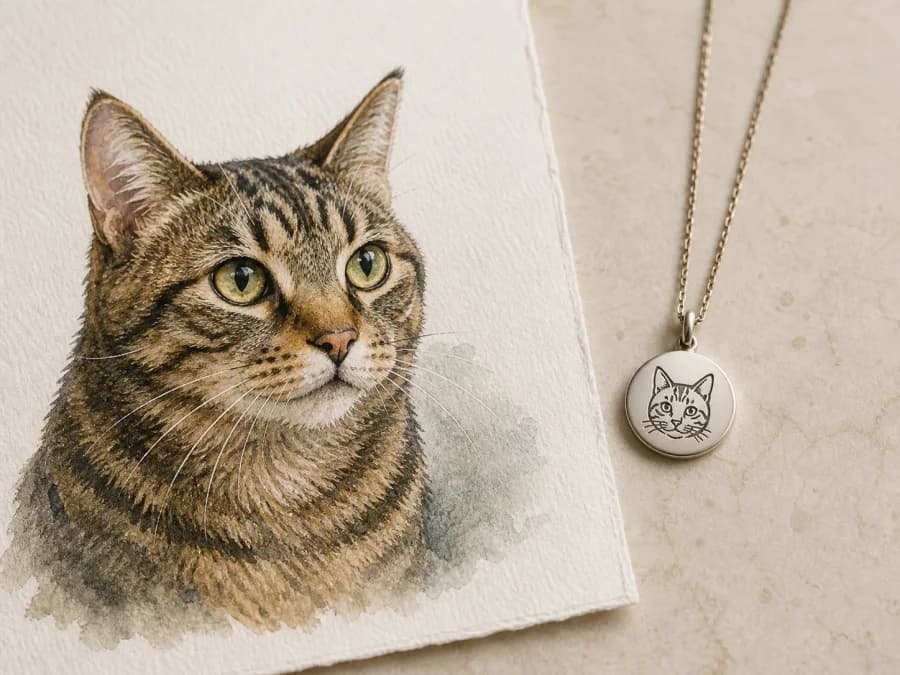
A clean digital portrait, delivered as a high-resolution file, can later be engraved on a pendant, printed at a second size, put on a card, or sent to a different maker. If the artist keeps the internal artwork and you only receive a finished object, you own that object and nothing else. That is the difference between buying a portrait and owning the art.
This matters even more if you might want a pendant later. Engraving needs a vector line-art file, not a photo. A good engraver can create one from a photo for a fee, but a portrait already delivered as clean line art makes the whole thing faster, cheaper, and more predictable.
The process, start to finish
Most artists follow the same arc. Knowing it in advance keeps you from being surprised at any step.
- Inquiry. You send your idea, your reference photos, and your preferred style. The artist checks availability and quotes a price, usually with their terms attached: payment schedule, revision policy, turnaround, usage rights.
- Deposit. A deposit of 30 to 50 percent is common, and it is usually non-refundable once work begins. It holds your spot in the queue.
- Sketch. The artist sends a rough sketch for approval. This is your main chance to change pose, expression, background, or composition. Once the sketch is approved, big changes get expensive or stop being available.
- Revisions. One to three free revision rounds at the sketch stage is typical. After that, minor tweaks only, and major rework usually costs extra.
- Final rendering and delivery. The artist finishes the piece, you pay the balance, and you receive the final file, or the physical piece for traditional media. Watermarks are removed after final payment.
Timelines vary with medium and complexity. A simple digital headshot usually takes one to three weeks once the artist starts. A detailed full-body or multi-pet piece can take three to eight weeks. Traditional painting runs longer. Rush fees exist but do not expect magic.
What you will actually pay
Prices in the US market for 2025 fall into two broad bands. Digital portraits typically cost $50 to $150 and deliver a high-resolution file. Traditional drawn or painted portraits run $200 to $500 and up and deliver a physical artwork. The full breakdown by budget tier is in our cost guide.
The price pays for the artist's time, often 40 to 70 percent of the quote, plus years of practice, tools and software, and the business costs they carry: taxes, payment fees, marketing. Freelance artists typically need to charge two to three times their desired take-home pay just to stay afloat.
Suspiciously low prices mean something. An "instant custom portrait" for a few dollars is almost always an AI generator or a template, not hand work. If you want a human artist, budget for human time.
The part most buyers skip: the file and the rights
Here is the fact that surprises most people: paying for a commission does not make you the copyright owner. Under US law, the artist keeps the copyright unless you agree in writing to transfer it. What you normally receive is a license to use the finished portrait for personal purposes: display it, print it for yourself, give it as a gift, share it on social media. Commercial use usually requires extra payment and a written agreement.
Source files are a separate question, and the default answer is no. Artists rarely hand over editable working files because those files let someone modify and re-sell the artist's work. You usually receive a finished high-resolution file, which is enough for printing. If you want the editable source, or a clean vector line-art version for engraving, ask for it before you pay, and expect it to cost extra.
Get the agreement in writing, even a simple email exchange. Cover what you receive (formats, resolution, revision count), what you can do with it (personal prints, gifts, social media), whether copyright transfers or stays licensed, whether source files are included, and whether the artist can show the piece in their portfolio. A professional artist answers these directly.
Questions to ask before you pay
Copy these and send them with your first message. Any artist who responds clearly is already a good sign.
- Can you show recent pet portraits in the style I want, not just your general portfolio?
- What exactly do I receive at the end: file formats, resolution, and a print license, or the editable source?
- How many revision rounds are included, and what counts as a revision versus a new request?
- Do you provide a sketch or progress images for approval before the final version?
- What is the deposit, the payment schedule, and the refund policy?
- Will I receive a clean line-art or vector version if I later want it engraved?
- Do I get personal print rights, or only the digital file for screen use?
- Can you show the piece in your portfolio, or do you offer a private version?
Send photos that make the portrait better
The single biggest factor in how the portrait turns out is the photos you send. Artists say it constantly: bad photos produce mediocre results.
- Send five to fifteen good photos, not one favorite. Artists often combine the best eye from one shot with the best ear angle from another.
- Natural daylight is best. Avoid harsh flash, dim indoor light, and heavy filters that change fur color.
- Cover angles: a straight-on face, a three-quarter view, and a profile. For cats, add attention to ear position and any tabby or tortie markings.
- Include a full-body shot even for a head portrait; it helps with proportions and color.
- Note the details the photos cannot show, like a freckle on the left eye or a scar you want included.
Red flags
Some of these are deal-breakers on their own, and several together are a strong signal to walk away.
- No portfolio, or a portfolio that only shows AI-looking work.
- Pressure to pay the full amount up front with no process and no sketch stage.
- Vague timelines or no timeline at all.
- Refusal to show progress images or a sketch.
- An "instant" portrait at a suspiciously low price.
- Unwillingness to put the agreement or usage terms in writing.
If it goes wrong
Disputes happen, and the US has a clear ladder for them. Start with the strongest protection you have.
- Credit card chargeback. If you paid with a card, contact your issuing bank and dispute the charge for "item not received" or "not as described". Provide order details, messages, and any tracking. File within 45 to 60 days of the transaction; a small fee may apply.
- FTC complaint. Report the seller at ReportFraud.ftc.gov. The FTC will not recover a single small loss, but a pattern of complaints can trigger an investigation.
- Better Business Bureau and your state Attorney General. The BBB has no enforcement power, but many businesses resolve complaints to protect their rating. Your state Attorney General consumer protection office carries more weight.
- Small claims court. For larger amounts, small claims needs no lawyer, filing costs about $30 to $75, and the process is straightforward. Send a demand letter first, then file.
Before any of that, document everything: screenshots of the listing and promises, your messages, the payment, and the finished piece next to your reference photo. Written evidence is what makes every higher step work.
The short version
- Commission the artwork, not just the object. A high-res file you own can become a pendant, a print, and a card later.
- Learn the process in advance: inquiry, deposit, sketch, revisions, delivery. The sketch stage is your only cheap chance to change things.
- Budget realistically: $50 to $150 for digital, $200 and up for traditional, and be suspicious of anything "instant".
- Ask about the file and the rights before you pay. Paying does not transfer copyright, and source files are never included by default.
- Send many good photos in natural light. They are the cheapest way to improve the result.
- Protect the payment with a card, keep everything in writing, and know the dispute ladder if it goes wrong.
Related: our guide to custom cat photo necklaces covers the pendant side of this, and photo necklace materials compared explains which metals hold engraved detail best. The jewelry versus print comparison covers the choice between the two formats, and the custom cat photo jewelry collection gathers the whole series.
For the pieces of this guide, see how to take reference photos, what a portrait costs at each tier, how to get your money back, and how to tell AI portraits from real artists.
Animal Behavior & Care Writer
Rachel has a background in zoology and animal care volunteering. She writes about cat behavior, enrichment, and the relationship between cats and their everyday environment.
Written by Rachel Breen. Read our Editorial Policy.
FAQ
Frequently asked questions
New on NookPetdia
Latest articles
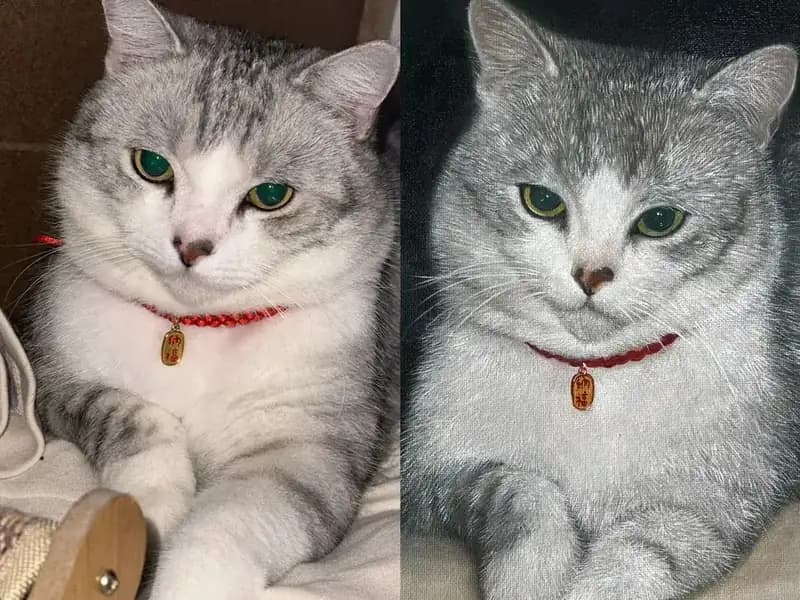
AI Pet Portraits vs Real Artists: How to Tell the Difference
AI pet portraits are convincing now, and some shops sell them as hand-painted. The reliable way to tell is process evidence: sketches, progress images, and honest answers. Here is how to check before you pay.
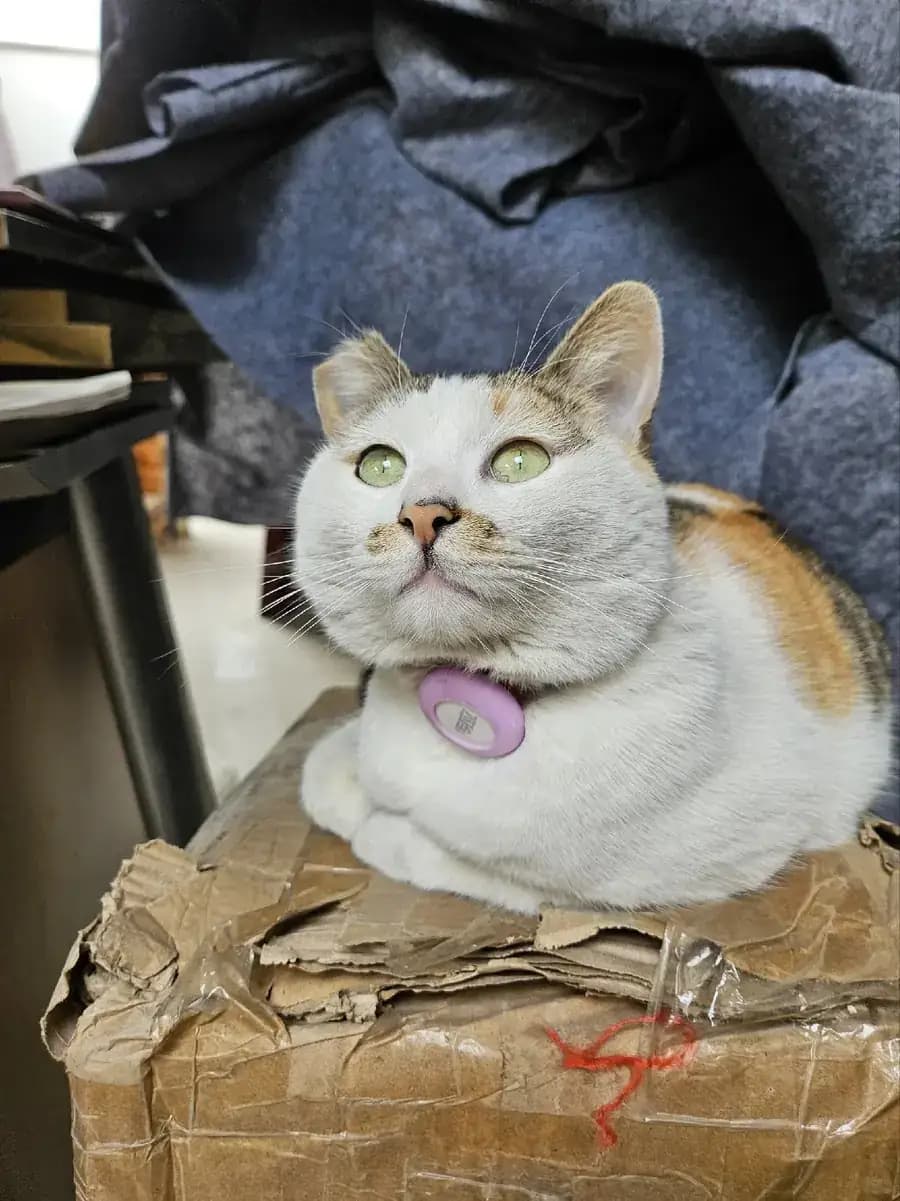
Can Cats Wear Collars? The Breakaway Safety Rule, Explained
Cats can wear collars safely, but only with a breakaway clasp, a correct fit, and a cat that accepts it. Here is the safety rule, the risks, and the owner-reported close calls that explain why.
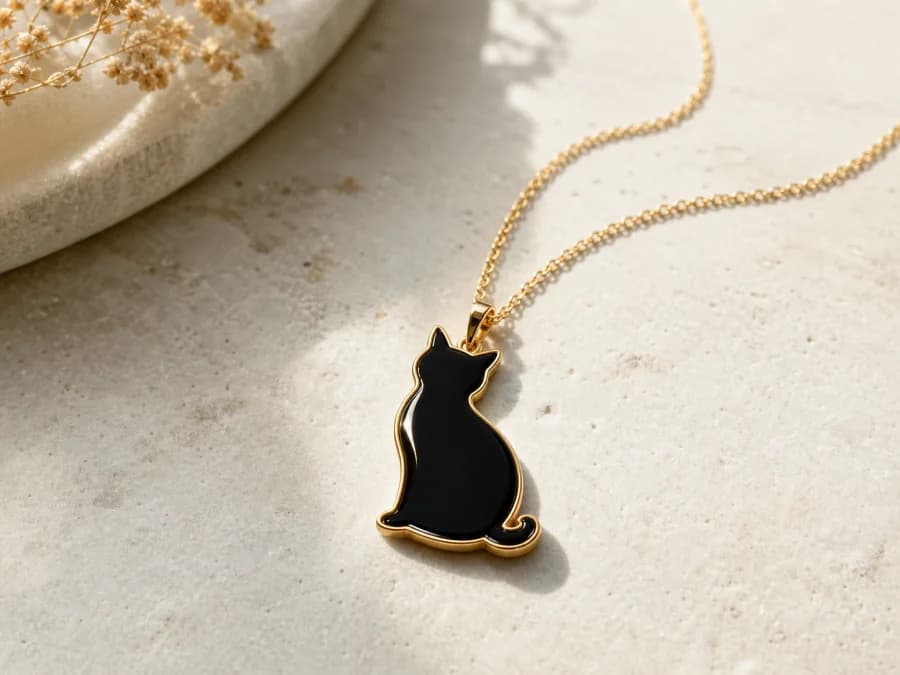
Black Cat Jewelry Guide (Style, Meaning, Gift Timing)
Black cats are the hardest subject to render in a small pendant and the best subject for silhouette work. Here is which styles hold up, what the symbolism actually carries, and the two dates worth planning a gift around.