Two listings can show the same cat pendant at a four-times price difference, and the photos will look identical. The difference is almost always the metal underneath and the coating on top — and that is also what decides whether you are still wearing the piece next summer.
This is the comparison we wanted while reading owner complaints about custom pet pendants. The pattern was consistent: a shop promised a finish would never change, the piece dulled or stained within weeks, and the argument that followed was about vocabulary nobody had defined at the time of sale. So let us define it.
AI Summary
Overview
Gold plating wears through. Sterling silver tarnishes. These are different failures and only one of them polishes out.
"Never fades" on an electroplated piece is a red flag, not a feature.
A green mark on your skin is usually a copper stain from the base metal. An itchy rash is a different problem and is more often associated with nickel.
316L stainless is the low-maintenance daily-wear default; confirmed nickel-free titanium is the option people with known metal sensitivity are usually steered toward.
Ask two questions and most of this resolves itself: what is the base metal, and how thick is the plating?
The Comparison
| Dimension | 925 sterling silver | Gold plated / vermeil | Stainless steel (316L) | Titanium / "titanium steel" |
|---|---|---|---|---|
| Everyday durability | Softer; scratches and dents; a jeweler can usually repair it | Depends entirely on plating thickness and base metal | Hard and scratch-resistant; very low maintenance | Real titanium is strong and light; "titanium steel" is usually stainless under a marketing name |
| How it changes | Tarnishes dark from sulfur and humidity; polishes back | Gold itself does not tarnish; the plating wears and the base shows through | Highly corrosion and tarnish resistant when unplated | Real titanium does not tarnish; any plated finish on it still wears |
| Skin considerations | Often tolerated well; copper in the alloy can leave marks on some people | Green marks usually trace to a copper or brass base; itchy rash more often linked to nickel | Contains nickel but releases little when well made; not nickel-free | Confirmed nickel-free grades are the usual choice for known sensitivity |
| Care | Dry storage, polishing cloth, no chlorine or perfume; never scrub a resin-set photo | Last on and first off; no shower, gym, or perfume; soft dry wipe only | Mild soap and water, wipe dry | Similar to stainless; verify the actual grade |
| Detail rendering | Best for fine cast or engraved detail | Plated bezel plus printed image means two wear surfaces | Harder metal means shallower engraving detail | Detail limits similar to stainless |
| Typical positioning | Mid, precious look, needs upkeep | Thin plate is cheapest; vermeil is mid-upper | Budget to mid everyday | Mid-upper if genuinely titanium |
| Honest answer to "never fades" | Misleading — it tarnishes, though it does not lose a coating | Red flag on any electroplate | Unplated color is stable; gold-look coatings on it are not forever | Unplated is stable; plated gold look is not |
Price and lifetime figures in retail guides are marketing heuristics, not laboratory results. Treat them as ranges, not warranties.
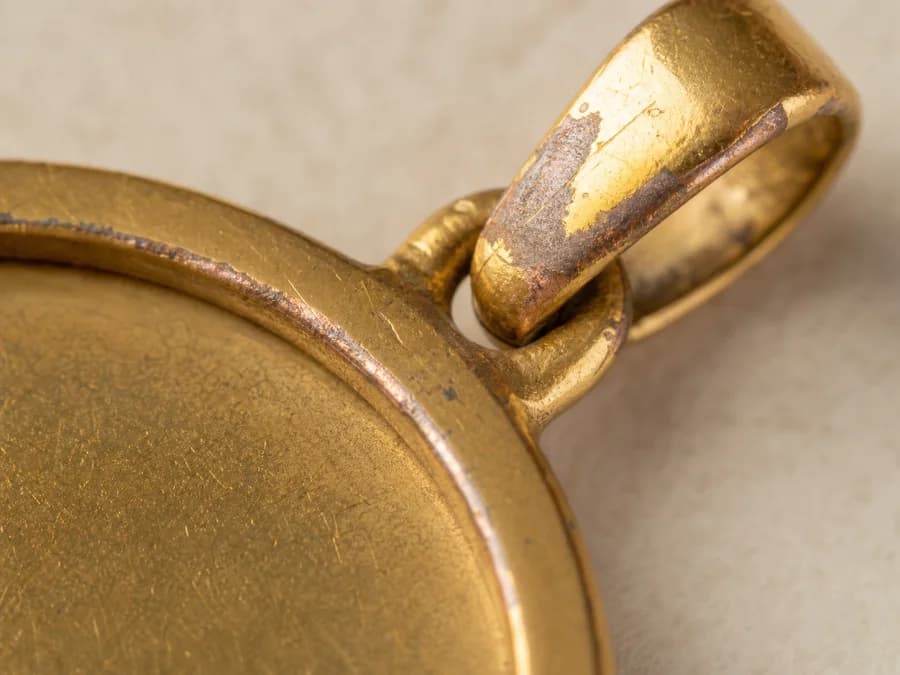
Why Plated Pieces Fade, and Why That Is Normal
Electroplating deposits a thin layer of gold on top of a different metal. Friction removes it — chain rub, fabric, fingers, the inside of a coat collar. Once it is gone at that spot, whatever is underneath is exposed to air and sweat.
One comment in the discussions we reviewed summed it up better than most product pages: if a piece uses electroplating, there is no such thing as never fading, and anyone who claims otherwise is counting on you not knowing that. Another owner described being told a chain was an "eco-friendly material," only for the shop to admit after the finish failed that it was copper and could develop green corrosion.
So the useful question is not whether it will change. It is how long you get, and that depends on:
- Base metal. Sterling silver under the gold behaves very differently from brass or copper.
- Plating thickness. Flash plating is measured in fractions of a micron and can fail within weeks of daily wear. Vermeil, as US jewelry guides define it, means at least 2.5 microns of at least 10k gold over sterling silver — meaningfully longer, still not permanent. Gold-filled uses a much thicker bonded layer and outlasts both, but rarely appears on inexpensive photo pendants.
- Your habits. Care guides consistently point at the same accelerants: perfume, sunscreen, hand lotion, chlorinated pools, and sweat. Owners in our research said the same, in stronger language.
Ask for the base metal and the plating thickness in writing. A shop that answers "925 base, 2.5 micron gold" is telling you something. A shop that answers "high-quality electroplate" is telling you nothing.
Green Skin Versus an Actual Reaction
These get collapsed into one word — "allergy" — and they are not the same thing.
A green or grey mark on your neck or a green tinge on the chain is, in most cases, a copper reaction: copper in the base metal or alloy meeting moisture and skin acids, leaving copper salts behind. It washes off. It is a cosmetic and material-quality issue, and it tells you the base metal was copper or brass, or that the plating has worn through.
Persistent itching, redness, small bumps, or weeping skin under the pendant is a different category. Contact dermatitis from jewelry is most commonly associated with nickel, which is why "nickel-free" is such a heavily used marketing phrase. That said:
- We are not in a position to tell you what your skin is reacting to. Neither is a seller, and neither is a comment section.
- If a reaction is persistent, spreading, painful, or recurring across multiple pieces, that is a conversation for a dermatologist or your regular clinician, who can consider patch testing if it is warranted. Do not try to self-diagnose a metal allergy by buying more necklaces.
- In the meantime, stopping wear of the suspect piece and keeping the area clean and dry is the obvious, low-risk step.
One report we reviewed described a buyer whose neck went red and painful two days after a cheap chain lost its color, followed by an argument with the seller. A platform's stock reply in a similar case attributed darkening and redness to sweat and cosmetics reacting with a copper pendant. That is a plausible mechanism for staining. It is not a medical conclusion about that person's skin, and it should not be read as one.
Practical takeaway: if you know you react to costume jewelry, buy the material you already tolerate, and treat unlabeled "hypoallergenic" claims as marketing until the actual metal is named.
"Titanium Steel" and Other Words That Do Not Mean What They Look Like
Sellers use "titanium steel" as a durability signal, often paired with a promise that it will not fade. In English-language jewelry sources the term is generally described as a marketing label for stainless steel rather than a distinct metallurgical grade. That does not make the piece bad — good stainless is a genuinely sensible choice for daily wear — but it means the claim is about branding, not chemistry.
Two clarifications worth asking for:
- If the seller says stainless: is it 316L? That grade is the one jewelry sellers cite for lower nickel release. 304 is common and cheaper.
- If the seller says titanium: which grade? Confirmed nickel-free titanium is a real, specific material, and it usually costs accordingly.
Similarly, treat "999 pure silver certificate" and "lifetime plating warranty" claims as things to verify rather than believe. Hallmarks, written specs, and a stated remake policy are worth more than superlatives.
The Image Layer Matters as Much as the Metal
On a photo pendant you have two things that can age: the metal and whatever covers your cat's picture.
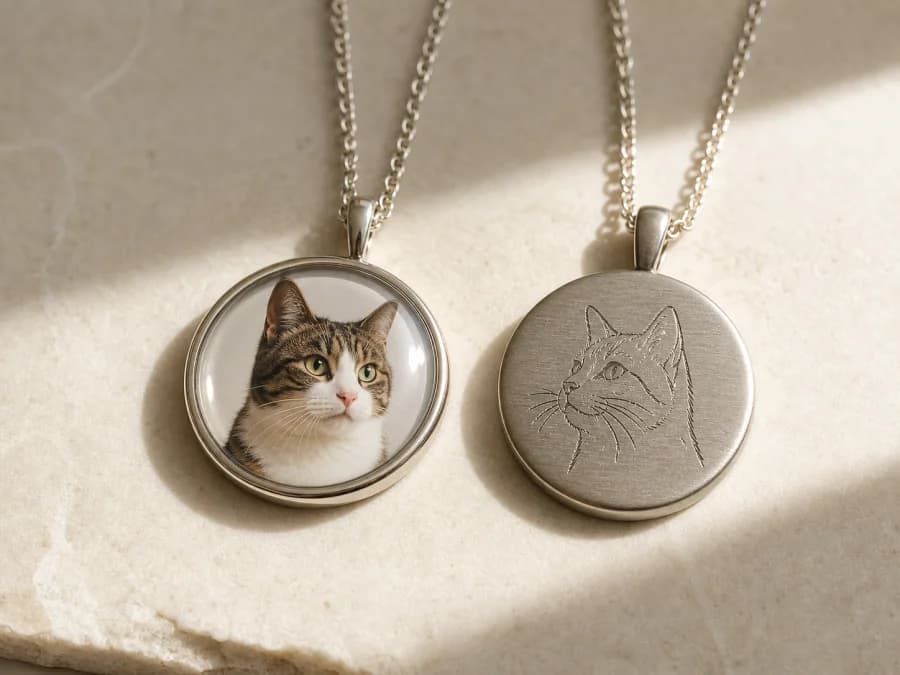
- Resin or epoxy seal protects the print from water and dust. Do not use abrasives or polishing compound on it. Soft resins, and UV-cured resin in particular, can yellow or grow brittle over years.
- Vitreous enamel is glass fused to the metal. Color-stable and beautiful, can chip on hard impact, and costs more in labor.
- Laser engraving or etching has no image layer at all, so nothing to yellow. The tradeoff is fidelity: harder metals hold shallower, less detailed lines.
- Printed metal plates are convenient, but longevity data for photo prints on metal is thin, and at least one published review of a mass-market pet photo necklace noted the piece felt flatter and thinner than the listing images suggested.
If you want the piece to look the same in ten years, engraving on unplated stainless, titanium, or silver is the conservative bet. If you want maximum photographic likeness now, a resin-sealed print gives you that and accepts a shorter cosmetic lifespan.
Choosing, in Practice
- Want it on every day and never think about it: unplated 316L stainless, or silver you are willing to polish.
- Want a gold look and know it is a fashion piece: vermeil over sterling, and accept the wear. Avoid flash plating over brass if you sweat in it.
- Know your skin reacts to costume jewelry: ask for a named, verifiable grade — confirmed nickel-free titanium or a specific stainless grade — and buy from a shop willing to put it in writing.
- Want the most literal likeness: resin-sealed print, and keep it away from abrasion.
- Want an heirloom object: cast sterling silver with engraved or enameled detail, and budget for occasional polishing.
Before you order anywhere, the process side matters too: proofs, revisions, and remake rules are covered in the custom cat photo necklace buyer's guide. If you are buying for someone whose metal tolerance you do not know, read cat mom and cat dad gift ideas first.
We are working through these same material questions for the first NookPetdia human-wear pieces. There is no cart button yet on purpose; the collection page for custom cat photo jewelry is where launch details will appear once we can describe the metals honestly.
References
How to keep gold plated jewelry from tarnishing (Statement Collective)
Solid gold vs gold-filled vs gold-plated vs vermeil (Gem Breakfast)
Sterling silver vs stainless steel (AJ Luxe)
Titanium vs stainless steel jewelry for everyday wear (Grisé NYC)
Is stainless steel jewelry hypoallergenic (Klassic Statement)
Nickel allergy overview (Mayo Clinic)
Resin vs enamel jewelry (AJ Luxe)
How to care for your locket (The Locket Sisters)
Editorial synthesis of private owner-discussion research on plating failure and after-sales disputes, reviewed 2026-07-29. Owner reports are qualitative experience, not laboratory or clinical evidence.
Founder & Editor
Micky is the founder and editor of NookPetdia, sharing practical cat-care guidance and product-fit advice for everyday cat parents.
Written by Micky. Read our Editorial Policy.
FAQ
Frequently asked questions
New on NookPetdia
Latest articles
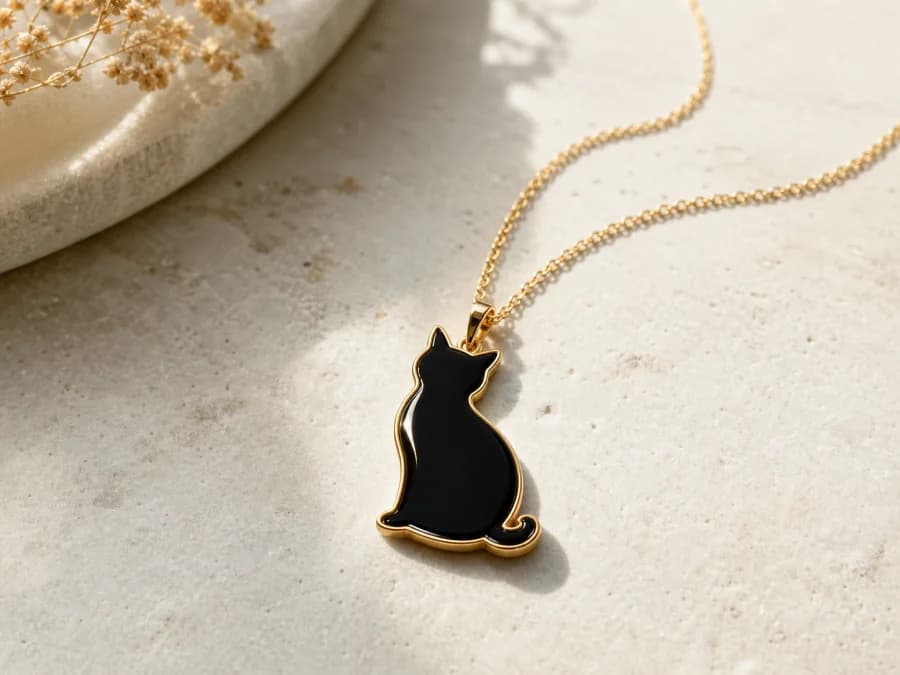
Black Cat Jewelry Guide (Style, Meaning, Gift Timing)
Black cats are the hardest subject to render in a small pendant and the best subject for silhouette work. Here is which styles hold up, what the symbolism actually carries, and the two dates worth planning a gift around.
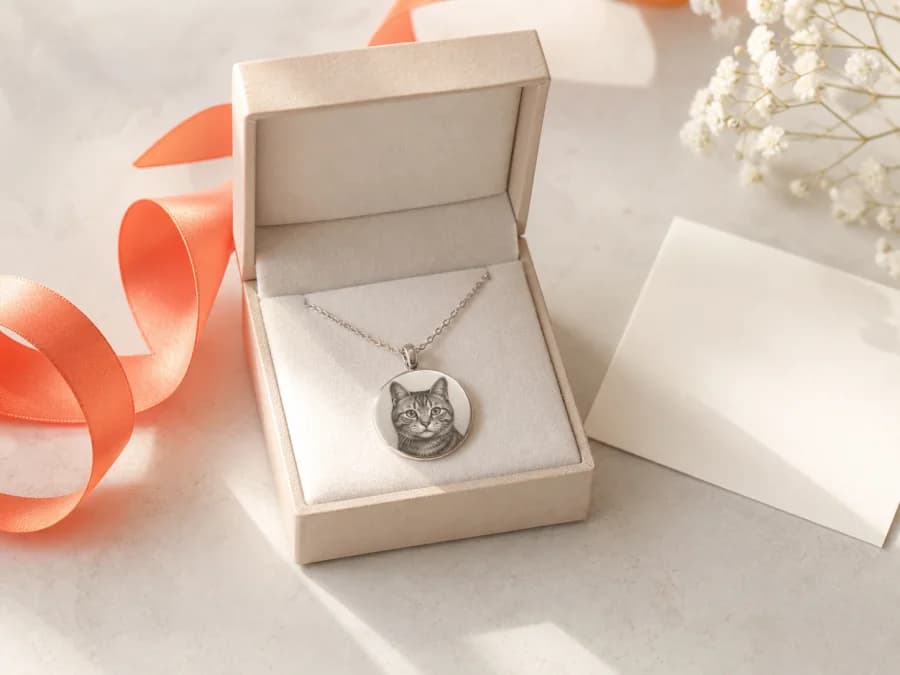
Cat Mom & Cat Dad Gift Ideas That Aren't Cheap Charms
Most cat-themed gifts are novelty items that get used twice. Here is how to buy something a cat parent keeps — including what to confirm about metal, sizing, and timing before you order anything personalized.
Custom Pet Portrait Jewelry vs Print: What's Worth Buying
Wearable portrait jewelry and framed pet portraits solve different problems. Here is how they compare on likeness, cost, durability, and daily use — and which one to commission first.