There is a specific kind of cat-themed gift that everyone has received and nobody has kept: the enamel pin, the mug with a pun, the alloy charm bracelet with a cat silhouette on it. It is pleasant for about four days. Then it lives in a drawer.
The gifts that survive have one thing in common. They are about this cat, not about cats in general. That is the whole trick, and it is why personalized pieces beat novelty ones even at similar prices. It is also where the failure modes live, because personalization gives a cheap product more ways to go wrong.
AI Summary
Overview
Specific beats generic. A gift about their cat outlasts a gift about cat ownership.
Named metals only. "Alloy," "eco-friendly material," and unnamed "hypoallergenic" are how the fake-gold moment happens.
Ask what they already wear. If everything they own is silver-colored, a gold-plated piece is a guess.
Order personalized items with a proof step, and start earlier than you think — proofs and revisions eat the calendar.
For a living cat, keep the framing celebratory. Memorial styling is a different purchase for a different moment.
Why Cheap Charms Fail
Not because they are inexpensive. Because they are interchangeable.
A generic cat charm says the giver knows the recipient likes cats. That information was already obvious. It carries no observation, no effort, and nothing the recipient could not have bought themselves in ninety seconds.
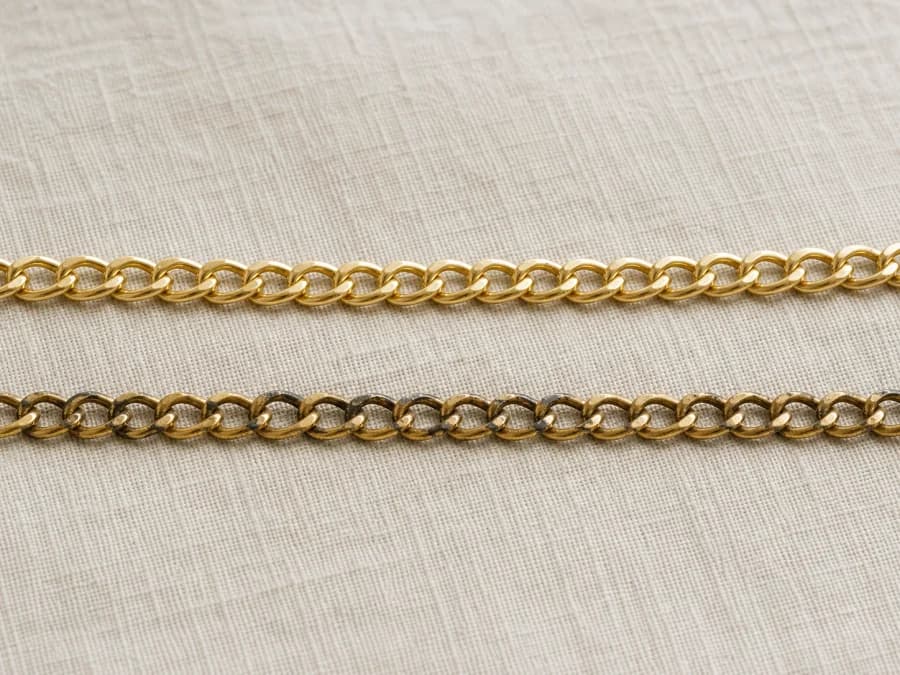
There is also a durability problem that compounds the emotional one. Low-cost fashion charms are typically thin plating over a copper or brass alloy. In owner discussions we reviewed, that combination produces a predictable arc: the piece looks great in the box, dulls within weeks of real wear, and can leave a green mark on the skin where the coating has worn through. Now the gift is not just forgettable, it is slightly embarrassing for both of you.
A gift that discolors in three weeks becomes a story about the gift, not about the cat. That is the outcome to design around.
What Actually Lands
Roughly in order of how reliably these get kept:
- A portrait of their specific cat, made to be worn. A photo or line-art pendant in a metal they already wear. Small, personal, used daily.
- A commissioned illustration. Especially if you get the source file, so it can be printed again or engraved later. See portrait jewelry versus a print for which format fits their space.
- Something upgraded, not novelty. The nicer version of a thing they use constantly — a good brush, a genuinely well-made carrier, a ceramic fountain instead of a plastic one.
- Handmade work with a named maker. One-of-a-kind pieces where the price reflects hours, not branding.
- An experience or service. A session with a good pet photographer, or covering a professional groom they have been putting off.
What consistently underperforms: anything with a pun, anything sized to a body you have not measured, and anything whose material is described only in adjectives.
The Metal Question You Cannot Skip
This is where gift-giving is harder than buying for yourself. You know what your own skin tolerates. You probably do not know theirs.
Before you order anything metal:
| Confirm this | Why it matters | How to find out without spoiling the surprise |
|---|---|---|
| Silver tone or gold tone | Wrong tone means it never gets worn | Look at what they wear in photos; check a recent selfie |
| Any known metal sensitivity | Irritation ends the gift immediately | Ask a mutual friend or family member |
| Whether they shower and sleep in jewelry | Decides whether plating is viable | Casual conversation, or assume they do |
| Chain length they prefer | 16, 18, and 20 inches sit very differently | Note the length of a necklace they wear often |
| Whether they wear jewelry at all | Some people genuinely do not | If unsure, choose the print instead |
Then buy accordingly. If they wear jewelry constantly and hard, unplated stainless steel or solid sterling silver is the safe structural answer. If they have mentioned reacting to costume jewelry, look for a confirmed nickel-free option and buy from a seller willing to name the grade in writing. If a listing will not tell you the base metal, that is your answer about the listing.
A boundary worth keeping: if someone has had reactions to jewelry, the useful gift is a material they already tolerate, not a claim on a product page. Persistent skin irritation is something for them to raise with a dermatologist or clinician, not something a gift-buying decision should try to solve. The full material breakdown is in photo necklace materials compared.
Avoiding the Fake-Gold Moment
The scenario: they open a gold-tone pendant, love it, wear it constantly, and six weeks later it is patchy and their neck has a faint green line. Nobody says anything. Everybody notices.
How to not end up there:
- Prefer unplated finishes for a gift. Stainless in its own color, or sterling silver, changes in ways that can be cleaned rather than ways that expose a different metal.
- If you want a gold look, buy vermeil over sterling rather than flash plating over brass, and say so on the card. Knowing it is a fashion finish changes how it gets worn.
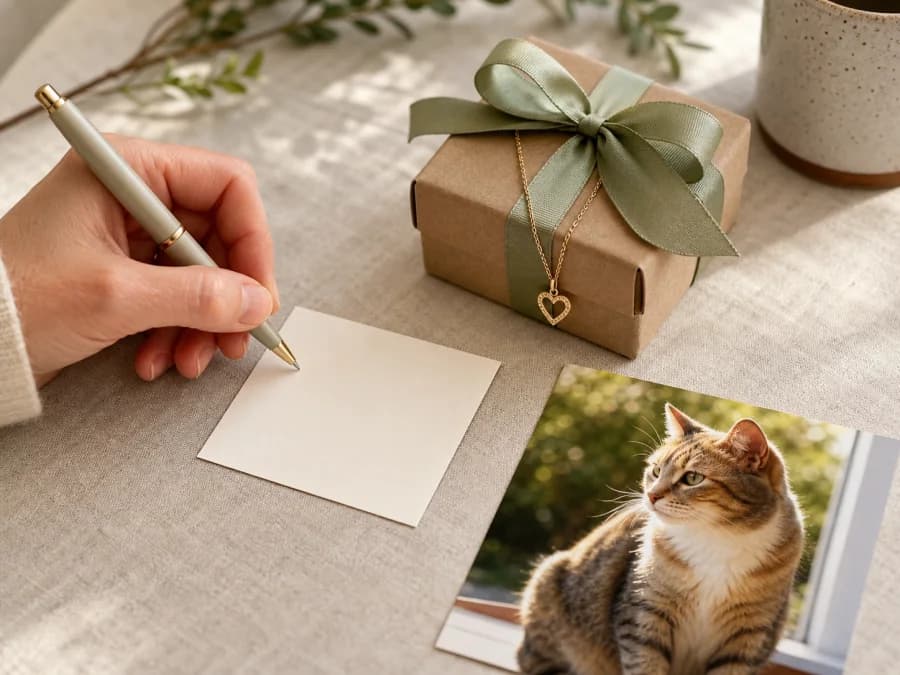
- Include care instructions, gently. "Last on, first off — she said no perfume or showers" is a normal thing to write in a note.
- Skip anything advertised as never fading. On a plated piece, that promise is not a feature; it tells you the seller is comfortable saying things that are not true.
On Handmade Prices
One maker in the discussions we reviewed described pricing a one-of-a-kind clay-and-chain pendant in the rough equivalent of ten to fifteen dollars, and being told by a friend that handmade work is not worth that and thirty would still be too much. Reasonable people disagree about craft pricing, but the comparison being made was against mass-produced volume, not against a person's afternoon.
If you are buying handmade as a gift, the framing matters more than the receipt:
- Say who made it. A name and a workshop turn a price into a story.
- Point out the thing that is unique — the seam, the brush mark, the fact that no second one exists.
- Do not apologize for the price, and do not oversell it either.
And on the other side: if a handmade custom pendant costs less than a chain restaurant dinner, ask yourself who absorbed that difference. Very cheap custom work usually means a stock design with a photo dropped in.
Timing
Personalized gifts run on a different clock than retail. A proof step is what keeps a custom portrait from arriving wrong, and a proof step takes real days. Owners in our research who ordered late described the same spiral: no proof, chasing messages, and a rushed piece that did not match what was promised.
Working backward, plan for:
- Proof turnaround and at least one revision round
- Production after approval, which is where casting or enameling adds time
- Shipping, including customs if the workshop is overseas
- A buffer for the remake you hope you will not need
Occasions worth noting, beyond the obvious birthday and December rush: adoption day, the anniversary of the day the cat moved in, Mother's Day and Father's Day for people who describe themselves as cat parents, and the stretch around Halloween when black cat pieces are everywhere — see the black cat jewelry guide for what is worth buying in that window.
If the cat has recently died, that is a different kind of gift with a different tone, and it deserves more care than a gift guide can give. This guide assumes a living cat and a celebratory occasion.
A Short List You Can Actually Shop
- Modest budget: a good print of a commissioned line-art portrait, in a plain frame.
- Mid-range and worn daily: engraved portrait pendant in unplated 316L stainless or sterling silver, on a chain length you have verified.
- Higher-end keepsake: cast sterling silver relief pendant with enamel, ordered with a proof step and a remake clause.
- They do not wear jewelry: commissioned illustration, or an upgraded version of a thing they use every day.
- You have no idea what they like: the illustration plus the source file, and let them choose the object later.
For the ordering mechanics — proofs, revisions, spotting resold sample photos, keeping payment where disputes are possible — read the custom cat photo necklace buyer's guide before you commit.
NookPetdia does not sell custom cat photo jewelry yet, and there is no cart button on this page for that reason. When the first human-wear pieces are ready, they will be announced on the custom cat photo jewelry collection page.
References
How to keep gold plated jewelry from tarnishing (Statement Collective)
Solid gold vs gold-filled vs gold-plated vs vermeil (Gem Breakfast)
Is stainless steel jewelry hypoallergenic (Klassic Statement)
Photo necklace buying guide (FaithHeart)
Editorial synthesis of private owner-discussion research on custom pendant gifting, plating complaints, and handmade pricing pushback, reviewed 2026-07-29. Owner reports are qualitative experience, not verified product testing.
Founder & Editor
Micky is the founder and editor of NookPetdia, sharing practical cat-care guidance and product-fit advice for everyday cat parents.
Written by Micky. Read our Editorial Policy.
FAQ
Frequently asked questions
New on NookPetdia
Latest articles
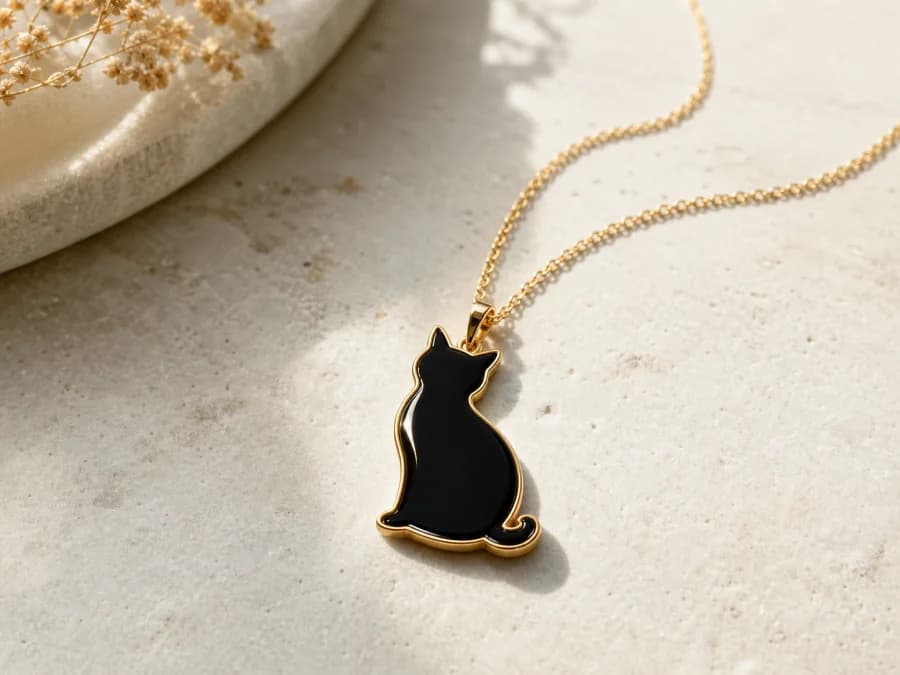
Black Cat Jewelry Guide (Style, Meaning, Gift Timing)
Black cats are the hardest subject to render in a small pendant and the best subject for silhouette work. Here is which styles hold up, what the symbolism actually carries, and the two dates worth planning a gift around.
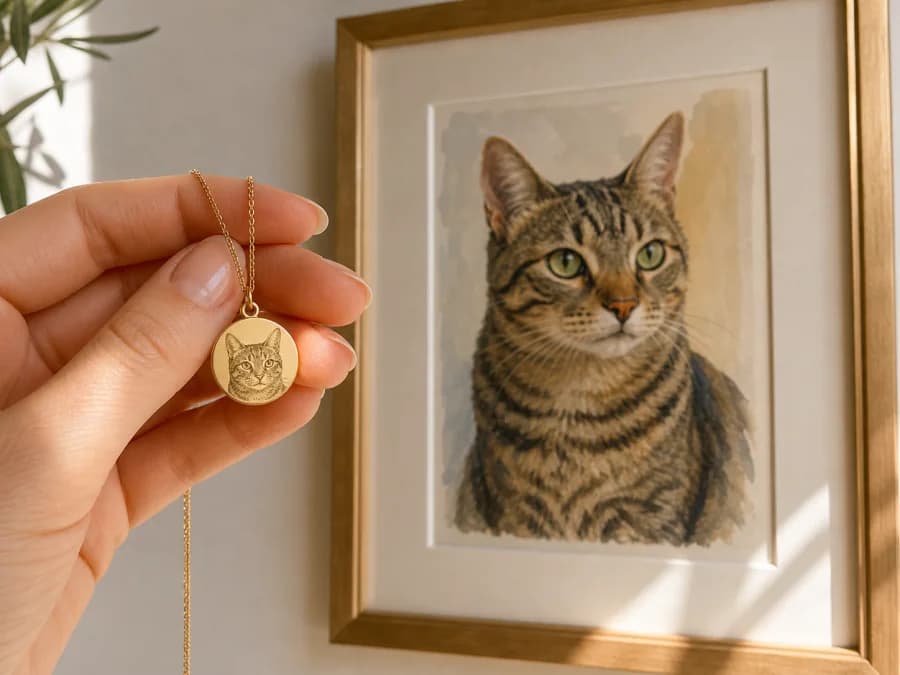
Custom Pet Portrait Jewelry vs Print: What's Worth Buying
Wearable portrait jewelry and framed pet portraits solve different problems. Here is how they compare on likeness, cost, durability, and daily use — and which one to commission first.
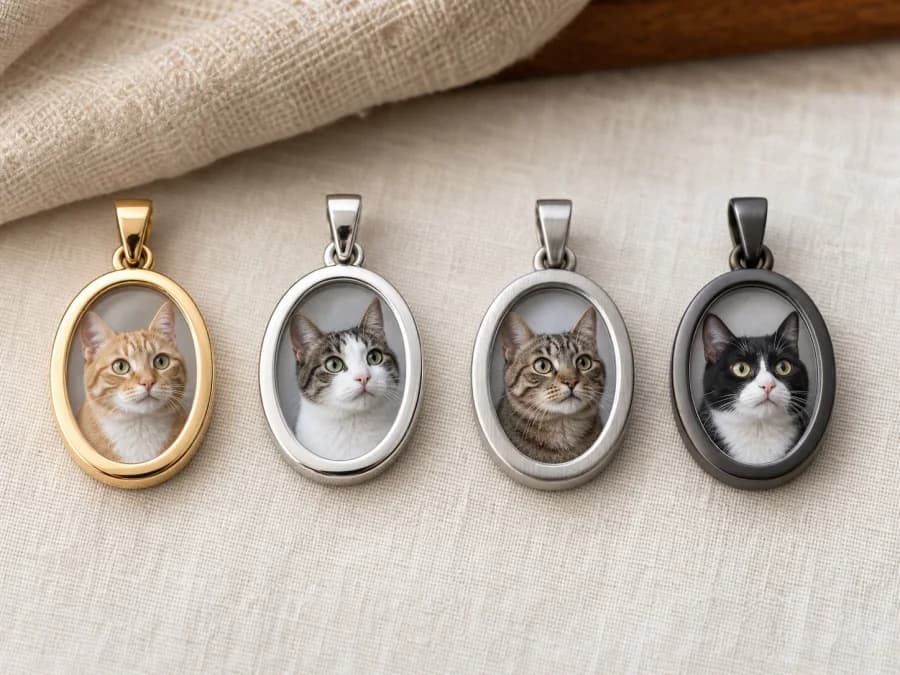
Photo Necklace Materials Compared: Silver, Gold-Plated, Stainless
A practical comparison of the metals used in custom photo pendants — sterling silver, gold plated and vermeil, 316L stainless, and titanium — plus what actually causes fading, green skin, and irritation.