Seeing a cat squat on your bed, a pile of clothes, or the sofa while you are standing right there can feel pointed. The useful question is not whether your cat is trying to insult you. It is what changed in the cat's body, box, scent map, or stress level right before the accident.
For many owners, cat peeing in front of you becomes a pattern around high-scent places: slept-in bedding, laundry, a favorite chair, the entryway, or the side of the bed after a trip. Those details matter because they tell you whether you are dealing with urine marking, litter box avoidance, separation stress, or a possible urinary problem.
AI Summary
Overview
First move: Do not treat it as revenge. Write down posture, surface, amount of urine, timing, and anything that changed at home.
Health: New, repeated, painful, bloody, or tiny frequent urination should be handled as a veterinary question before a training problem.
Setup: Beds, clothes, and sofas can hold owner scent and old urine odor, so cleaning and access control matter as much as the litter box.
Reset: Use enzyme cleaning, temporary barriers, extra boxes, and calm routine changes instead of punishment.
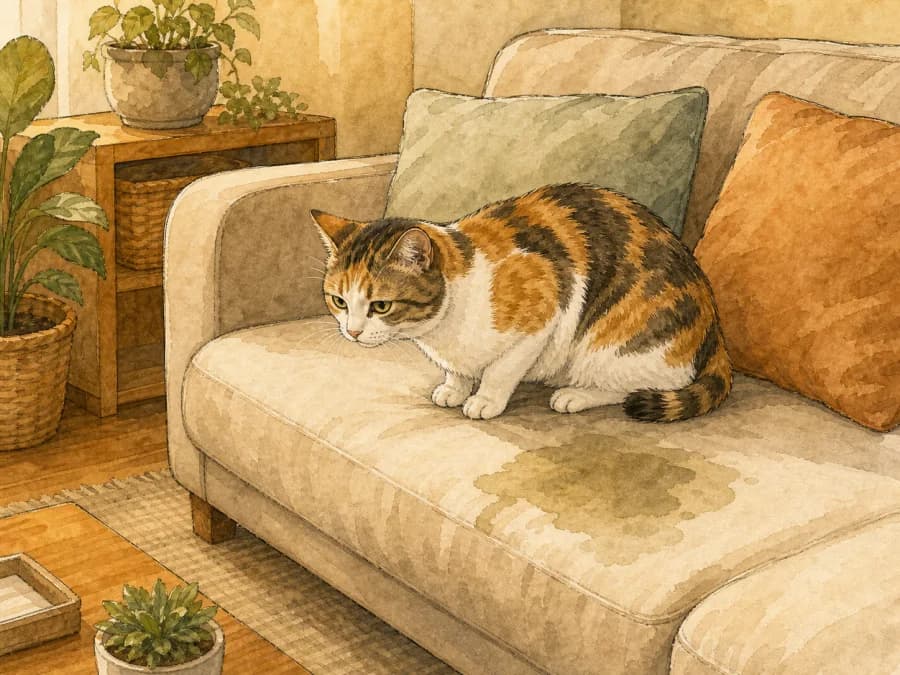
First Check What the Cat Actually Did
A large puddle on a horizontal surface usually points you toward normal urination in the wrong place. A small amount on a wall, door, curtain, or furniture edge, especially with the tail held high, is more consistent with spraying or marking. The response is different, so pause before you clean and note what you saw.
Also note whether your cat went to the litter box first, scratched at laundry, cried, strained, or made several trips with little output. That kind of timeline is often more helpful than the location alone.
| What you see | More likely | First thing to check |
|---|---|---|
| Squatting, larger puddle, bed or clothes | Wrong-place urination | Box access, litter feel, soft-surface preference, health signs. |
| Standing, tail up, small amount on vertical surface | Urine marking | Outdoor cats, new pets, conflict, intact status, household stress. |
| Many tiny attempts or no visible urine | Possible urinary pain or blockage | Call a veterinarian promptly, especially for male cats. |
| Same spot after cleaning | Odor cue or habit loop | Use an enzymatic cleaner and block access while the area dries. |
Do the Health Check Before the Behavior Theory
A cat can look dramatic and still be in discomfort. Cystitis, crystals, urinary tract inflammation, constipation, arthritis, and other pain issues can all make a cat avoid the box or urinate urgently. If this is new, repeated, or paired with frequent trips, crying, blood, licking the urinary area, or a small amount of urine, check health first.
No urine, straining without output, collapse, vomiting, or severe distress is urgent. Do not wait to see whether the behavior improves overnight, and do not assume a normal wellness exam from months ago rules out today's urinary pain.
Why Beds, Clothes, and Sofas Get Chosen
Owner-scented items are common targets because they are soft, absorbent, and emotionally loaded in the home. A cat that pees on bedding after you travel, on clothes near the door, or on your side of the sofa may be mixing its scent with yours, responding to separation stress, or returning to a place that still smells like urine.
That does not make the cat spiteful. It means the spot works from the cat's point of view: it smells important, it absorbs well, and it may have solved discomfort or stress once before. Your job is to make the correct bathroom easier and the wrong surface less available.
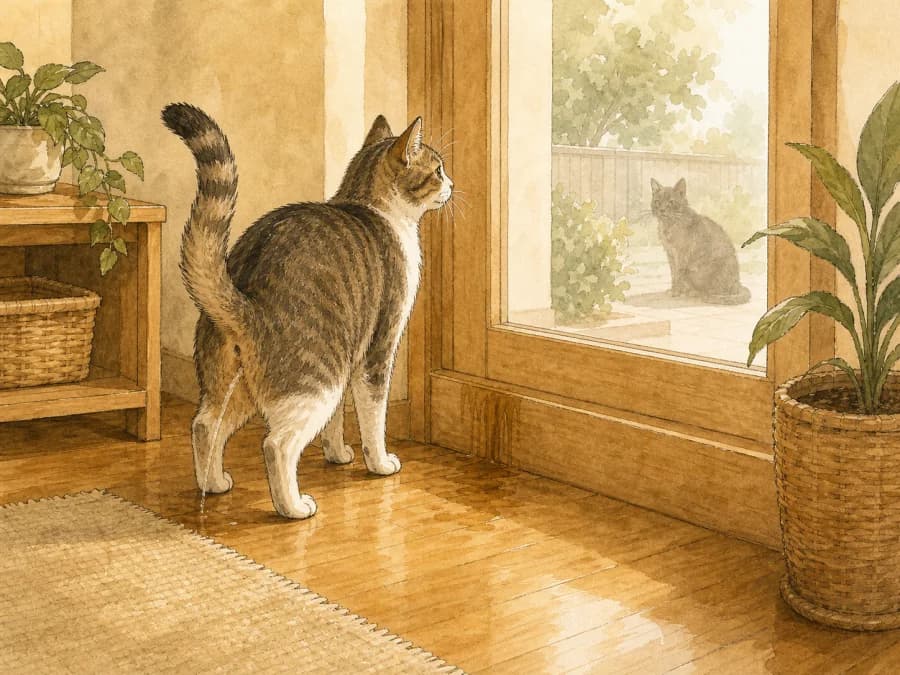
Litter Box Reasons That Look Personal
Many owners say the cat chose the bed even though the box was clean. Clean is only one part of the setup. The box may be too small, too covered, too close to a noisy appliance, too hard to reach, or filled with a litter texture the cat dislikes. In a multi-cat home, another cat may also be blocking the route without an obvious fight.
Add one uncovered box in a quiet, easy-to-enter location near the problem area for a short reset period. Use unscented, familiar litter if possible. If you recently changed litter, changed boxes, moved the box, cleaned it with a strong-smelling product, or added an automatic box, undo one change at a time rather than redesigning the whole bathroom at once.
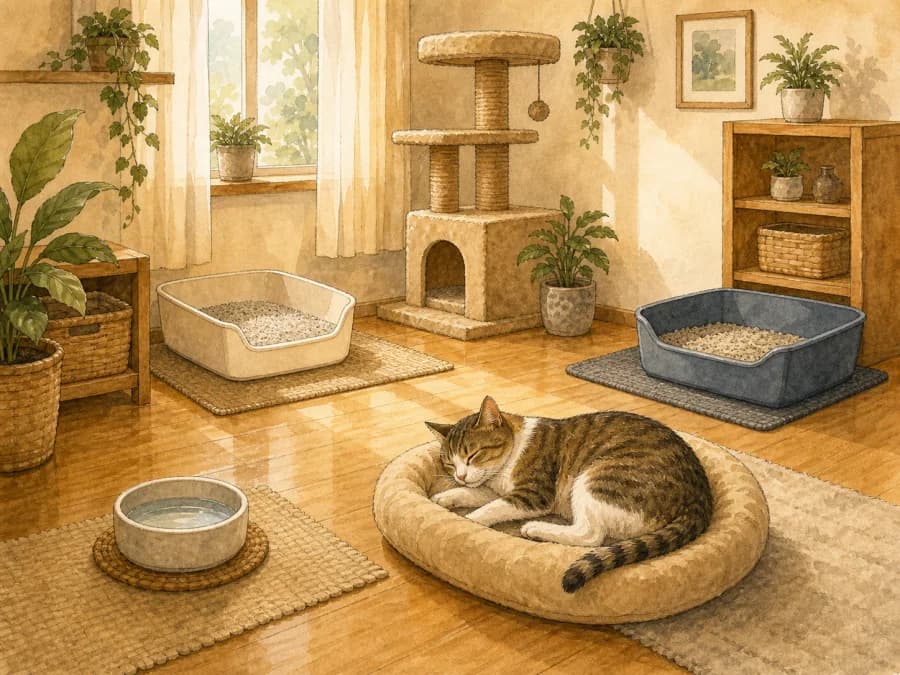
What To Do If You Catch It Happening
If you can interrupt calmly, make a small neutral sound and guide the cat away. Do not chase, shout, rub the cat's nose in the urine, hit, or lock the cat up as punishment. Fear can make a cat hide to pee next time, and it can also make litter box stress worse.
Once the cat is away, clean the area and write down the facts: time, location, posture, urine amount, whether the box was used earlier, and what happened in the previous few hours. Patterns often show up after two or three notes.
Clean the Spot and Break the Repeat Pattern
Use an enzymatic cleaner made for pet urine, follow the contact time, and let the area dry completely. Human noses often miss the remaining cue. A cat's nose may still find it and reuse the spot.
For beds and sofas, use a waterproof cover during the reset. Keep bedroom doors closed when you cannot supervise, move laundry off the floor, and temporarily place a litter box where the accident pattern is strongest. The goal is simple: remove urine odor cues before the behavior becomes a habit.
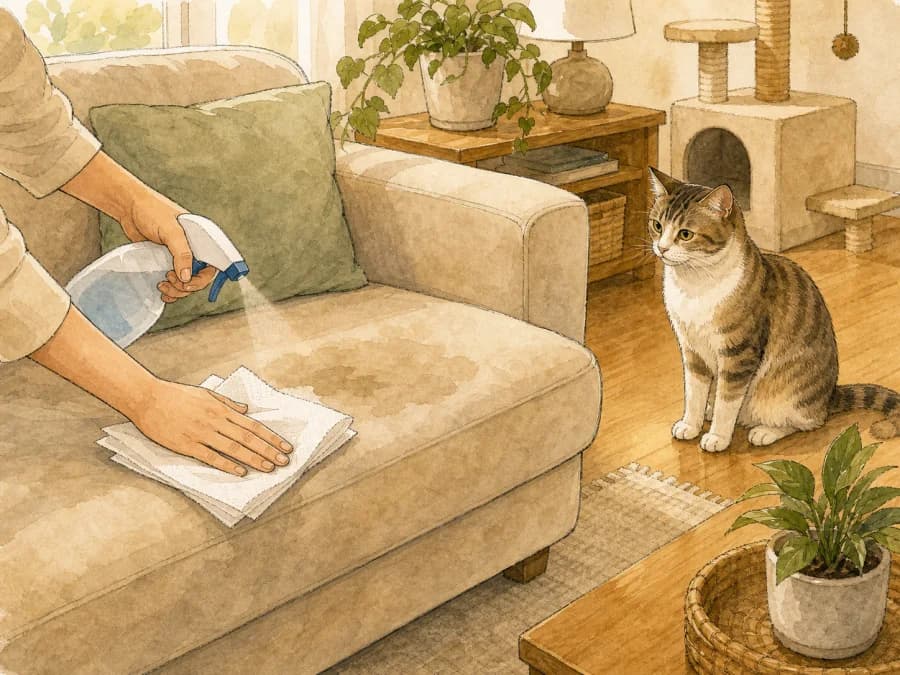
A 72-Hour Reset Plan
For the first day, protect the target surface, clean every old spot, and put one extra box in the easiest path. For the second day, watch for pre-pee behavior: sniffing, scratching soft fabric, pacing, or repeated box visits. For the third day, compare your notes. If the accidents are decreasing and the cat is using the added box, keep the setup stable for another week before moving anything.
If the accidents continue, the cat strains, the urine amount is abnormal, or the target moves from one surface to many places, book a vet visit and bring your notes. A short, factual log can save time in the exam room.
What Not To Do
Do not punish the cat, force it into the box, confine it without a medical or behavior plan, or rely on strong fragrances to cover urine. Also be careful with advice that treats every bed accident as dominance or revenge. Those labels feel satisfying for a minute, but they do not tell you which lever to pull.
Key Takeaway
When a cat pees in front of you, read it like a clue, not a confession. Check health, identify whether it is peeing or marking, remove odor cues, simplify the litter setup, and protect high-scent surfaces while you reset the pattern.
References
AAFP/ISFM: Guidelines for Diagnosing and Solving House-Soiling Behavior in Cats
VCA Animal Hospitals: Cat Behavior Problems - Marking and Spraying Behavior
Cornell Feline Health Center: Feline Behavior Problems - House Soiling
Cornell Feline Health Center: Feline Lower Urinary Tract Disease
Founder & Editor
Micky is the founder and editor of NookPetdia, sharing practical cat-care guidance and product-fit advice for everyday cat parents.
Written by Micky. Read our Editorial Policy.
FAQ
Frequently asked questions
New on NookPetdia
Latest articles

Black Cat Jewelry Guide (Style, Meaning, Gift Timing)
Black cats are the hardest subject to render in a small pendant and the best subject for silhouette work. Here is which styles hold up, what the symbolism actually carries, and the two dates worth planning a gift around.

Cat Mom & Cat Dad Gift Ideas That Aren't Cheap Charms
Most cat-themed gifts are novelty items that get used twice. Here is how to buy something a cat parent keeps — including what to confirm about metal, sizing, and timing before you order anything personalized.
Custom Pet Portrait Jewelry vs Print: What's Worth Buying
Wearable portrait jewelry and framed pet portraits solve different problems. Here is how they compare on likeness, cost, durability, and daily use — and which one to commission first.