If your cat suddenly pees on your bed, treat it as a problem to investigate, not a personality flaw. Bed peeing can come from urinary pain, litter box aversion, stress, marking, or a leftover urine smell that keeps pulling the cat back to the same spot.
AI Summary
Overview
Start with health: Painful urination, blood, frequent trips, or tiny urine spots mean the litter box problem may be medical.
Clean the right way: Laundry detergent alone often leaves scent cues behind; use an enzymatic pet cleaner before the bed is available again.
Do not punish: Scolding can increase anxiety and make the next accident more likely.
Fix the setup: Most cases improve when the box is cleaner, larger, quieter, easier to reach, and separated from conflict.
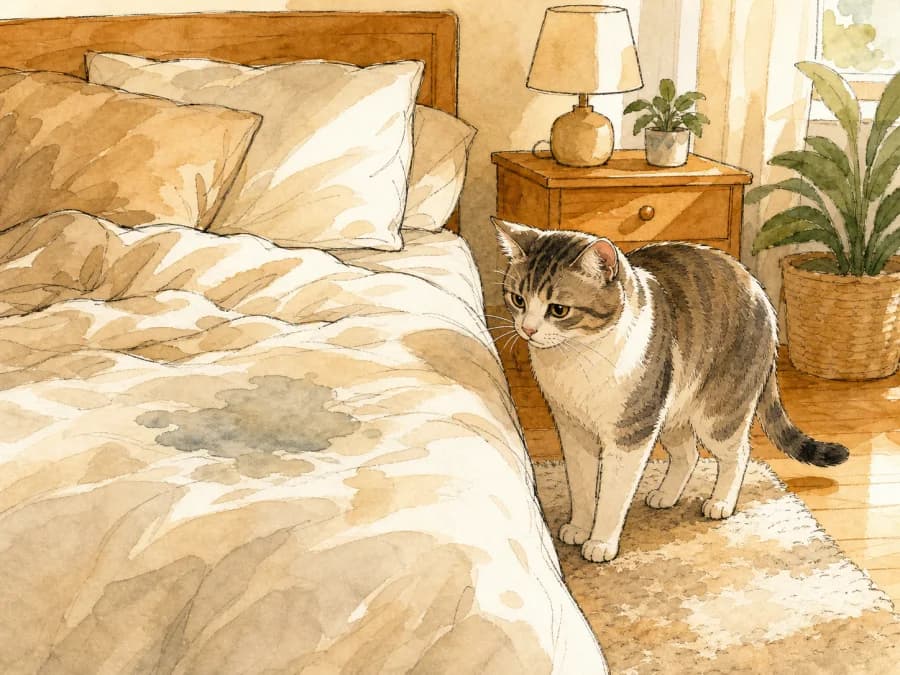
First Decide Whether This Is Urgent
A bed accident can be behavior-related, but a sudden change in urination deserves a medical lens first. Cornell notes that urinary tract inflammation, kidney disease, diabetes, digestive problems, mobility issues, and age-related changes can all interfere with normal litter box use.
- Call your veterinarian promptly if you see straining, blood, repeated box visits, crying, lethargy, vomiting, appetite loss, or little to no urine.
- Treat a male cat who strains and produces no urine as an emergency.
- If the cat is otherwise bright but the bed peeing repeats, still schedule a checkup before assuming stress or spite.
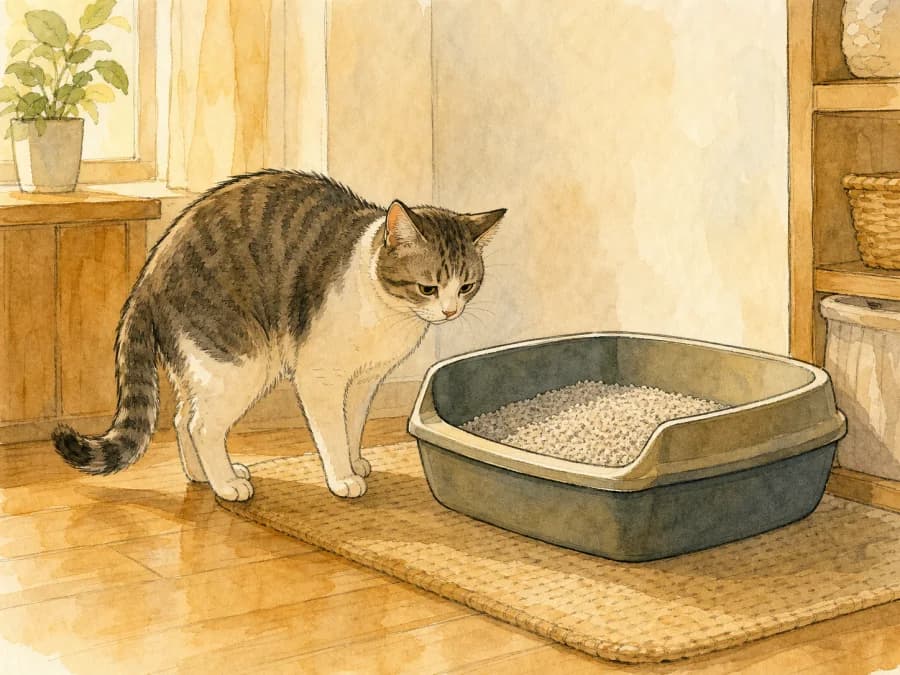
Why the Bed Is So Common
Beds are soft, absorbent, warm, and saturated with the owner's scent. For a stressed cat, that can feel safe. For a cat with painful urination, the soft surface can also become an accidental new preference.
| Pattern | Likely direction | First response |
|---|---|---|
| One sudden large wet spot | Medical urgency, stress, or a blocked routine | Check health signs and restrict bedroom access until cleaned. |
| Tiny sprays near pillows or vertical surfaces | Urine marking | Look for territorial triggers such as outdoor cats, new pets, or schedule change. |
| Same bed spot repeatedly | Residual odor or learned preference | Use enzyme cleaner and keep the bed unavailable during retraining. |
| Accidents plus frequent box visits | Possible urinary discomfort | Book a veterinary exam and urinalysis. |
Use the pattern only as a clue; medical causes and behavior causes can overlap.
Clean Before You Retrain
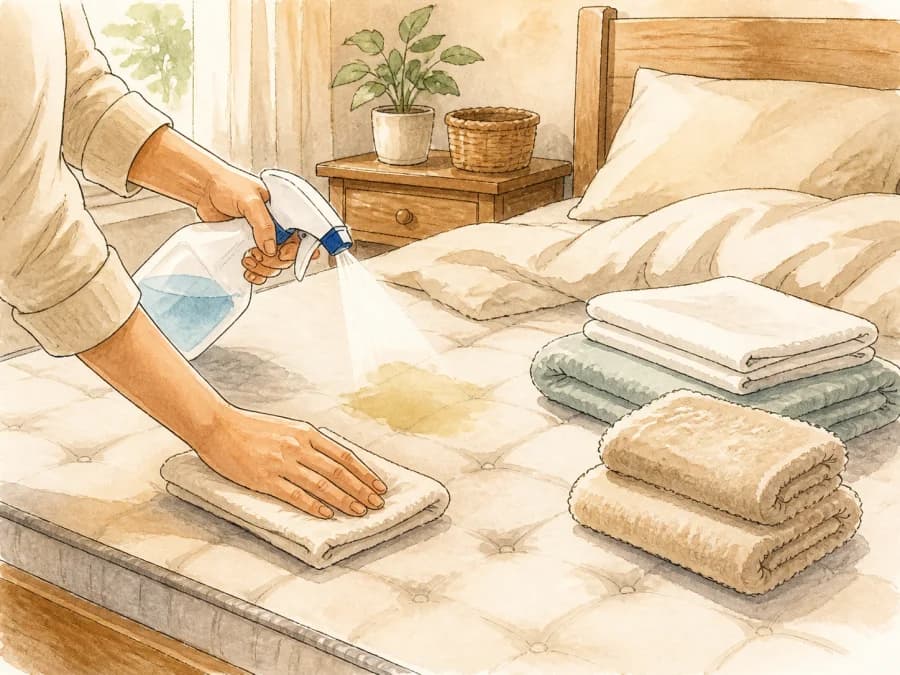
Cats can detect scent residues people cannot smell. If the bedding still smells like urine to the cat, the bed may keep functioning like a marked toilet area.
- Blot fresh urine before washing.
- Use an enzymatic cleaner made for pet urine on the mattress, duvet, and any washable layers.
- Avoid ammonia-like cleaners, because they can smell urine-like to cats.
- Keep the cat away from the bed until it is fully dry and neutralized.
While you are retraining, a waterproof mattress protector or washable bed pad can prevent repeated damage and reduce the chance the cat will return to the same spot. Choose a breathable, washable layer that does not crinkle loudly, because noise can add stress. Replace or wash the protector promptly after any accident so the mattress underneath stays neutral.
Rebuild the Litter Box Routine
Give the cat a better option than the bed. Add a large uncovered box in a quiet, easy-to-reach place. Scoop daily, keep one more box than the number of cats when possible, and test unscented litter if the current product changed recently.
- Switch to an open-top, large tray if the current box has a hood; many cats avoid covered boxes when they feel unwell or stressed.
- Fill to about 8 cm with an unscented clumping clay or mineral litter; fine-grained texture is usually preferred over large pellets.
- Add one more box than the number of cats, and place at least one on each level of the home.
- Scoop at least once daily and fully replace litter every two to four weeks.
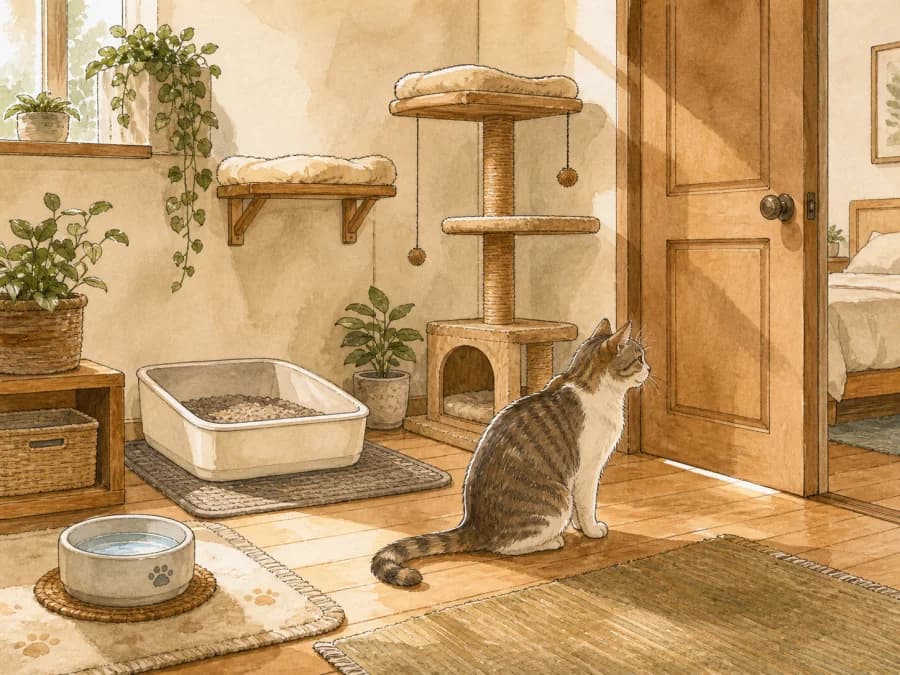
Reduce the Trigger That Started It
Owner reports often cluster around change: travel, guests, a new cat, a moved litter box, construction noise, or outdoor cats at windows. The fix is usually not one magic spray; it is a calmer routine plus more safe resources.
- Block window views that trigger territorial stress.
- Add predictable play before meals.
- Give each cat resting spots, food, water, scratchers, and boxes in separate areas.
- Reintroduce the bedroom only after several clean days and supervised access.
Short-term deterrents can help break the habit while you address the underlying cause.
Key Takeaway
- A calming pheromone diffuser placed near the resting area can reduce territorial anxiety.
- Place double-sided tape, aluminum foil, or a citrus-scented sheet on the bed temporarily; many cats dislike the texture or smell and will avoid the spot.
- Reintroduce the bedroom only after a week of clean days and supervised access.
A cat peeing on the bed is not revenge. The fastest path is vet check, odor removal, better box setup, and stress reduction in that order.
References
Cornell Feline Health Center: Feline Behavior Problems - House Soiling
AVMA: Feline Lower Urinary Tract Disease
AAHA/AAFP Feline Life Stage Guidelines: General Litter Box Considerations
Founder & Editor
Micky is the founder and editor of NookPetdia, sharing practical cat-care guidance and product-fit advice for everyday cat parents.
Written by Micky. Read our Editorial Policy.
FAQ
Frequently asked questions
New on NookPetdia
Latest articles

Black Cat Jewelry Guide (Style, Meaning, Gift Timing)
Black cats are the hardest subject to render in a small pendant and the best subject for silhouette work. Here is which styles hold up, what the symbolism actually carries, and the two dates worth planning a gift around.

Cat Mom & Cat Dad Gift Ideas That Aren't Cheap Charms
Most cat-themed gifts are novelty items that get used twice. Here is how to buy something a cat parent keeps — including what to confirm about metal, sizing, and timing before you order anything personalized.
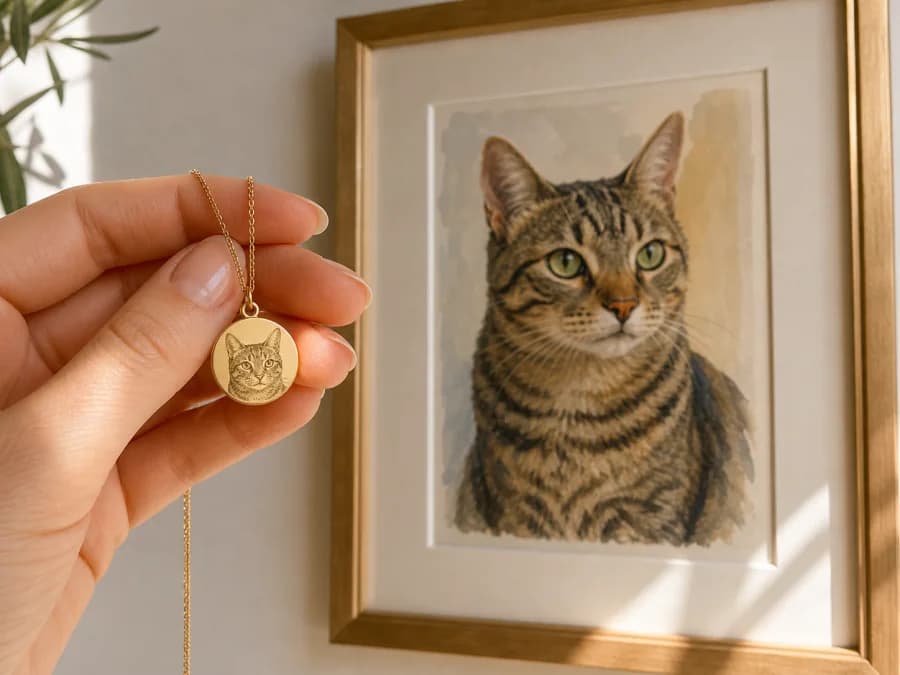
Custom Pet Portrait Jewelry vs Print: What's Worth Buying
Wearable portrait jewelry and framed pet portraits solve different problems. Here is how they compare on likeness, cost, durability, and daily use — and which one to commission first.