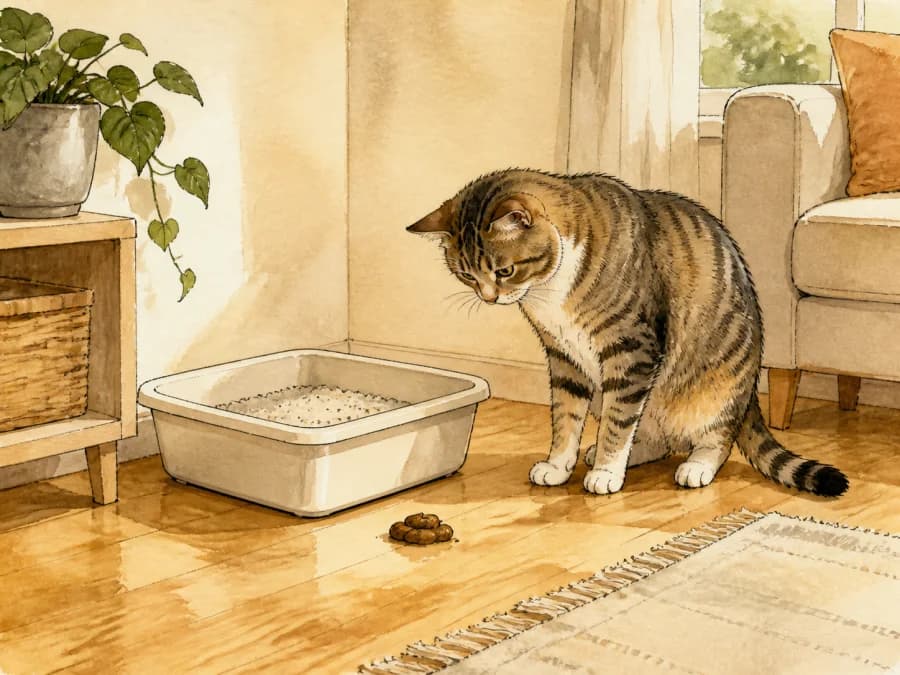
When a cat poops outside a clean litter box, the first mistake is assuming the cat is making a point. In most cases the cat is still telling you something practical: the box does not fit the body, the litter feels wrong, the route feels unsafe, another cat controls the area, or pooping has become physically uncomfortable.
Owner reports around this problem are surprisingly consistent. Many cats still approach the box, sniff it, step in, or pee normally, then leave stool beside it. That pattern matters because it means the toilet area is not completely rejected; one part of the setup is failing at the exact moment the cat needs to squat, push, turn, or cover.
AI Summary
Overview
Check the box first: A clean box can still be too small, too high, too covered, or too awkward for the cat to finish comfortably.
Separate poop from pee: If the cat pees inside but poops outside, add a second large box instead of assuming the cat is being stubborn.
Watch for pain: Hard stool, diarrhea, arthritis, senior stiffness, or anal discomfort can make defecation outside the box look behavioral.
Avoid punishment: Scolding, rubbing the cat in the mess, withholding food, or long confinement increases stress and does not teach box preference.
Start With the Shape of the Accident
Before buying every product at once, map the accident. Poop right at the entrance usually points to partial avoidance: the cat came to the bathroom area but could not finish comfortably. Poop several rooms away suggests location preference, access problems, fear, urgency, or a health trigger. A single map of where the poop lands often tells you more than another round of deep cleaning.
| Clue you see | Likely meaning | Best first test |
|---|---|---|
| Poop is right outside the box entrance | The cat tried to use the area, but the box fit, height, or final posture failed | Offer a larger, uncovered, low-entry box with the same litter. |
| Cat pees in the box but poops beside it | The cat may prefer separate urine and stool spots, or stooling may feel harder than urinating | Add a second large box nearby but not touching the first. |
| Cat perches on the rim or backs out halfway | The box is too small, the litter feels unpleasant, or the cat wants to avoid stepping fully inside | Test fine, unscented clumping litter at a comfortable depth. |
| Accidents started with hard stool, diarrhea, or senior stiffness | Constipation, GI upset, arthritis, or anal discomfort may be involved | Call the vet, especially if appetite, stool shape, or mobility changed. |
| One cat guards the hallway or box room | The problem may be resource pressure rather than cleanliness | Place boxes in separate rooms so one cat cannot block every route. |
Also note timing. Morning accidents after a night of closed doors may mean the cat could not reach the box. Accidents after meals may point to urgency. New accidents after a move, new pet, new litter, vaccination visit, guests, or furniture rearrangement deserve a stress-and-access check before you label the cat difficult.
Check Box Fit Before You Change Everything
The most common owner-discovered fix is boring but powerful: make the litter box easier to enter. Cats need room to turn, dig, squat, and step away from waste. A box that looked fine when the cat was smaller can become too short for an adult cat, especially a large male, senior cat, or long-bodied breed.
- Measure from the nose to the base of the tail and choose a box at least one and a half times that length when possible.
- If the cat stands inside but the rear end hangs over the edge, treat the box as too small even if the paws are technically inside.
- Use a low-entry box for senior cats, large cats, or cats recovering from pain. A high wall can make defecation harder than urination.
- Try an uncovered storage-bin style box if commercial boxes are cramped or if a covered box traps odor and blocks escape routes.
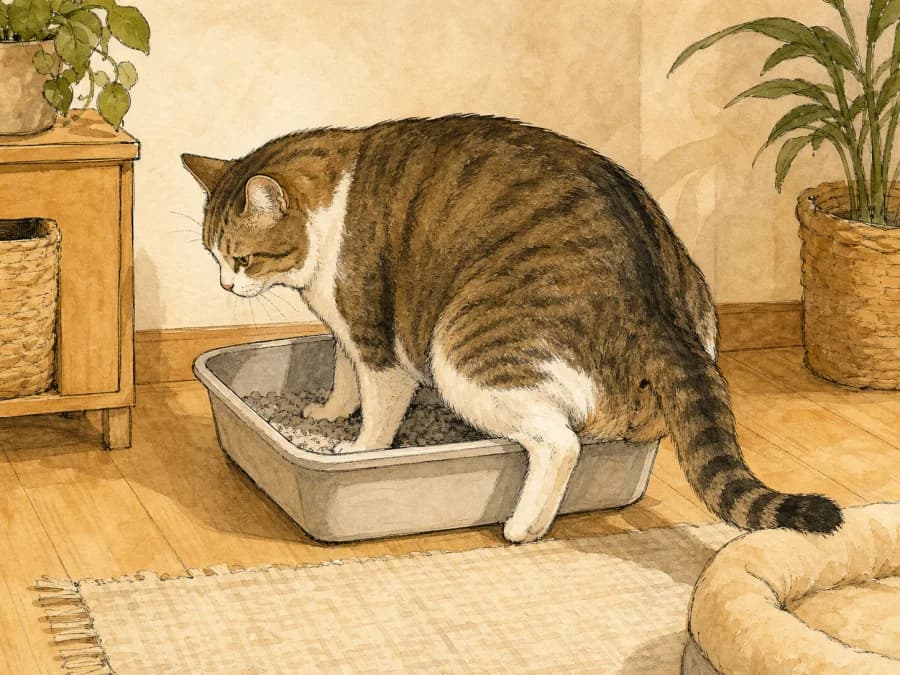
Covered and top-entry boxes are often convenient for humans, but they can be too tight, dark, or odor-heavy for cats. If the problem started after switching to a covered box, test an open box in the same location for at least a week before changing multiple other variables.
Litter Texture and Depth Matter
A box can be clean and perfectly sized but still feel wrong under the paws. Several owner patterns point to the same issue: cats perch on the rim, step in and jump out, dig at the floor beside the box, or choose tile, paper, or another smooth surface. Those cats may be avoiding the texture, scent, dust, or unstable depth of the litter.
- Use unscented, fine-grained clumping clay or mineral litter as a neutral test. Large pellets, crystals, or heavily scented litters can be uncomfortable for sensitive paws.
- Fill the box to about 5-8 cm. Too little litter makes the cat scrape plastic; too much can feel unstable while squatting.
- If a litter switch triggered the problem, return to the previous litter first, then transition slowly by mixing small amounts over one to two weeks.
- Avoid strong deodorizing powders. A clean smell to a person can be overwhelming to a cat and may make the box less attractive.
Do not test five litter types at once. Set up one control box with the old litter and one test box with the new texture. The cat’s choice over several days is more useful than a single accident.
Do Not Ignore Health
Pooping outside the box can be a medical clue, especially when stool shape, appetite, mobility, or age changed. pain can make cats avoid the box, even if the box itself did nothing wrong. Constipation, diarrhea, parasites, anal irritation, arthritis, neurologic pain, and other GI problems can all look like a litter-box behavior issue from the outside.
- Call a veterinarian promptly if the cat strains, cries, produces hard dry stool, has diarrhea, vomits, stops eating, hides, or seems painful.
- For senior cats, assume mobility matters until proven otherwise. A low-entry box on the same floor as the cat’s favorite resting area can prevent misses.
- If poop is partly stuck, smeared, or dragged away from the box, ask about constipation, hair, anal discomfort, and stool quality rather than treating it as attitude.
- Bring a timeline: when accidents happen, stool appearance, food changes, litter changes, and photos of the setup. This helps the vet separate medical and environmental causes.
Fix Location and Multi-Cat Pressure
A clean box can still be a bad box if the route feels unsafe. Cats may avoid boxes next to noisy appliances, in a dead-end laundry room, beside food bowls, or in a place where another cat can ambush them. In multi-cat homes, two boxes side by side often function like one bathroom because one cat can guard the whole area.
- Use the N+1 rule as a starting point: one box per cat plus one extra.
- Spread boxes across different rooms or levels, not in one row. The goal is real choice, not a bathroom cluster.
- Keep at least one box near the accident zone while retraining. Once the cat is reliable, you can slowly move it a few inches per day.
- If one cat stalks, blocks, or waits outside the box, increase resources across the home: boxes, food stations, water, resting spots, and vertical space.
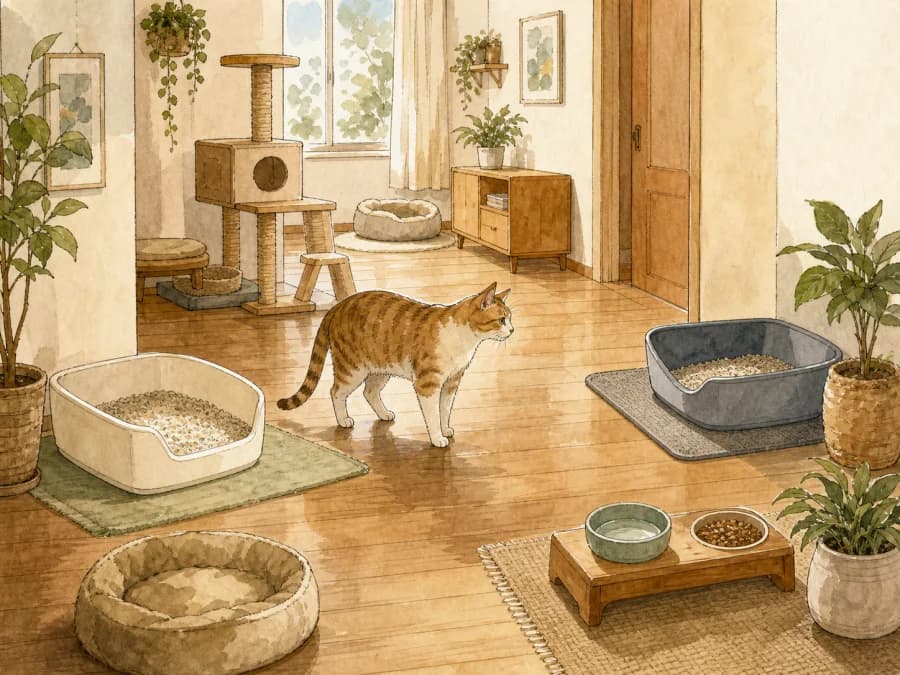
For a single-cat home, location still matters. A box in a far basement may be technically available but not practical during urgency. Put the backup box where the cat already spends time, then judge whether accidents decrease.
When a Cat Pees in the Box but Poops Outside
This pattern deserves its own fix. If a cat urinates in the box but defecates just outside, the cat may be separating urine and stool locations, avoiding the box after it smells used, or finding defecation harder on that surface. This is common enough that the best first experiment is simple: add a second stool box.
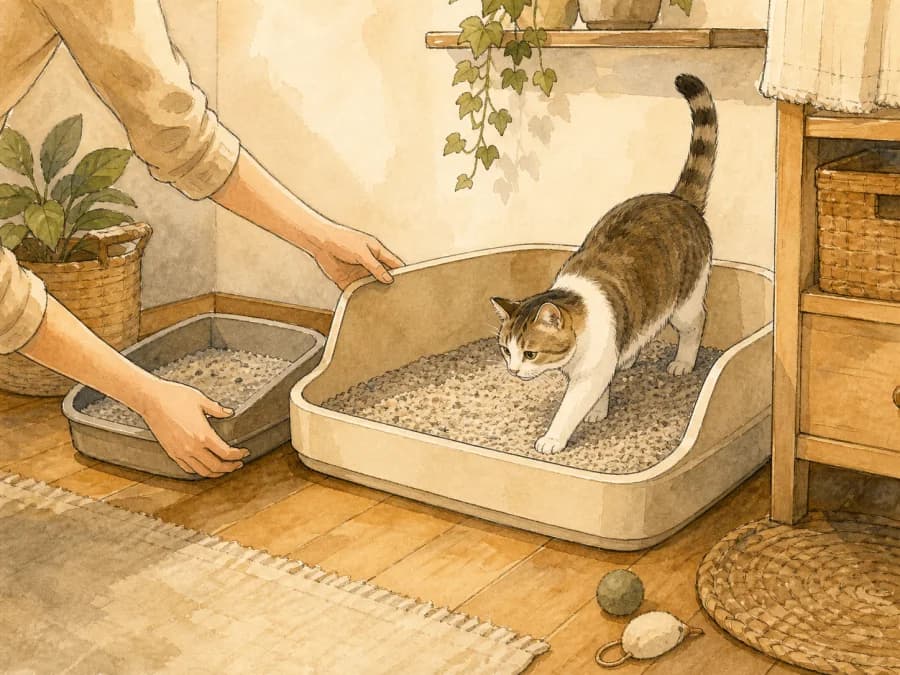
- Place the second box near the first but not touching it, so the cat sees it as a separate choice.
- Use the same litter in both boxes at first. Change only one variable at a time.
- If the cat chooses one box for pee and the other for poop, keep both. That is a working system, not a failure.
- If the cat still poops just outside both boxes, return to size, entry height, stool comfort, and location pressure.
A 7-Day Reset Plan
Use this as a practical reset when the box is clean but the habit has already started. The goal is not to win an argument with the cat; it is to make the correct choice easier than the wrong one.
- Day 1: Clean accident spots with an enzymatic cleaner and block repeat access while the area dries.
- Day 2: Add one large, uncovered, low-entry box near the accident zone.
- Day 3: Fill the new box with fine, unscented clumping litter at 5-8 cm and keep the old box unchanged as a control.
- Day 4: Move boxes apart if they are side by side, especially in a multi-cat home.
- Day 5: Watch posture. Rim-perching, backing out, or quick exits mean the cat still dislikes fit, texture, or safety.
- Day 6: Record stool quality and timing. Hard stool, diarrhea, straining, or senior stiffness means the vet belongs in the plan.
- Day 7: Keep the setup that the cat actually uses. Do not rush to remove the second box just because the first week improved.
What Not to Do
Punishment and deprivation do not teach a cat where to go. They add fear to a bathroom problem, and fear makes litter-box avoidance harder to solve.
- Do not yell, swat, chase, or rub the cat’s nose in the mess. The cat learns that you are scary near accidents, not that the box is better.
- Do not withhold food or water. Hunger, dehydration, and stress can worsen constipation and house-soiling patterns.
- Do not confine the cat in a tiny cage for days as punishment. Short, comfortable retraining confinement may be a veterinary behavior plan, but punishment confinement is different.
- Do not use ammonia-based cleaners on accident spots. The smell can resemble urine and invite repeat marking or investigation.
- Do not keep switching litter, box, and location every day. Rapid changes erase the evidence you need to identify the real trigger.
Key Takeaway
If the litter box is clean but poop is outside, think fit, feel, access, health, and conflict before assuming stubbornness. A larger low-entry box, a second box for stool, fine unscented litter, safer placement, and a vet check for painful stool or mobility changes solve more cases than another round of scolding or scented cleaning products.
References
VCA Animal Hospitals: Inappropriate Elimination Disorders in Cats
AAHA/AAFP Feline Life Stage Guidelines
Cornell Feline Health Center: Feline Behavior Problems - House Soiling
Ohio State Indoor Pet Initiative: Litter Boxes
Humane World for Animals: How to Litter Train a Kitten or Cat
Founder & Editor
Micky is the founder and editor of NookPetdia, sharing practical cat-care guidance and product-fit advice for everyday cat parents.
Written by Micky. Read our Editorial Policy.
FAQ
Frequently asked questions
New on NookPetdia
Latest articles
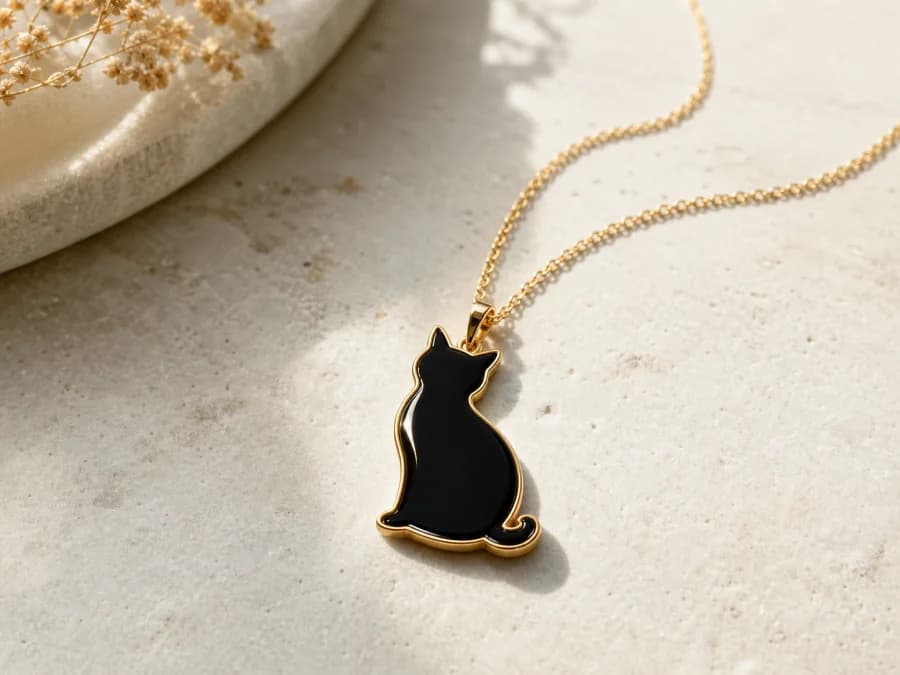
Black Cat Jewelry Guide (Style, Meaning, Gift Timing)
Black cats are the hardest subject to render in a small pendant and the best subject for silhouette work. Here is which styles hold up, what the symbolism actually carries, and the two dates worth planning a gift around.
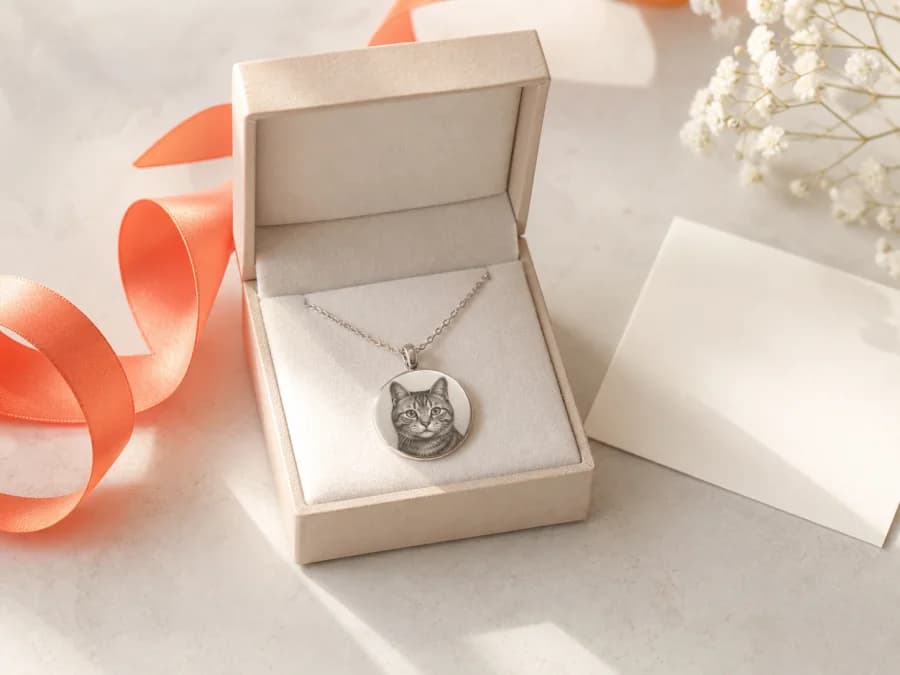
Cat Mom & Cat Dad Gift Ideas That Aren't Cheap Charms
Most cat-themed gifts are novelty items that get used twice. Here is how to buy something a cat parent keeps — including what to confirm about metal, sizing, and timing before you order anything personalized.
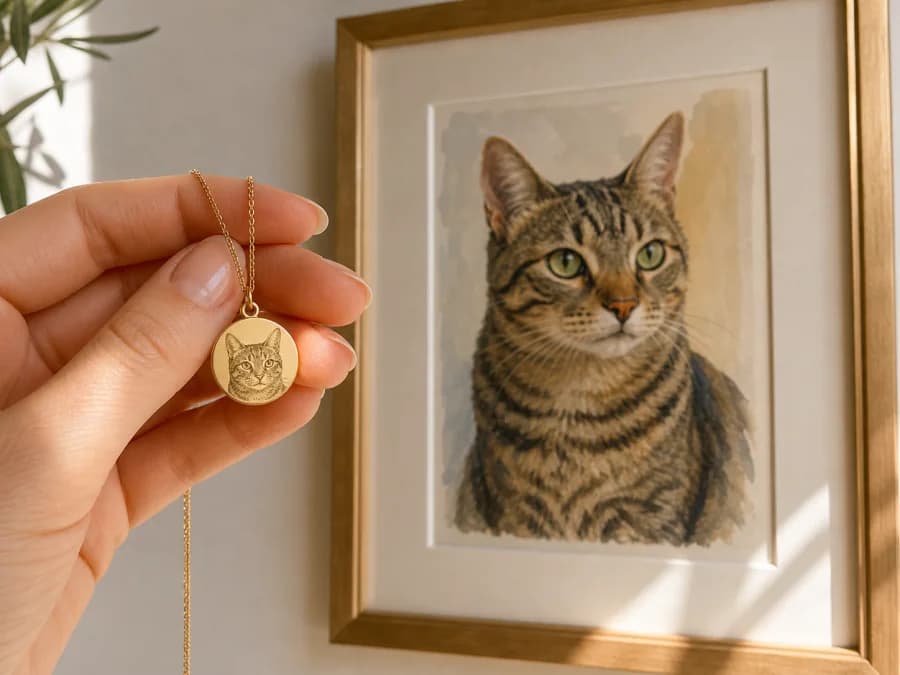
Custom Pet Portrait Jewelry vs Print: What's Worth Buying
Wearable portrait jewelry and framed pet portraits solve different problems. Here is how they compare on likeness, cost, durability, and daily use — and which one to commission first.