A cat peeing on the bed can feel brutally personal. It often happens after a bath, nail trim, ear cleaning, travel, a closed bedroom door, a new pet, or a moment when the owner thinks, "You knew exactly what you were doing."
But cat peeing on bed for revenge is the wrong starting point. Bed peeing is usually a clue about pain, odor, litter box trust, stress, marking, or a soft surface that has become too easy to choose.
AI Summary
Overview
Not revenge: Treat bed peeing as a signal to investigate, not proof that the cat is trying to punish you.
Bed clues: Beds carry owner scent, warmth, soft texture, and old urine odor if cleaning did not reach deeply enough.
Order: Check health first, then odor, litter box setup, household stress, and access control.
Reset: Protect the bed temporarily while you make the correct litter box easier and safer to use.
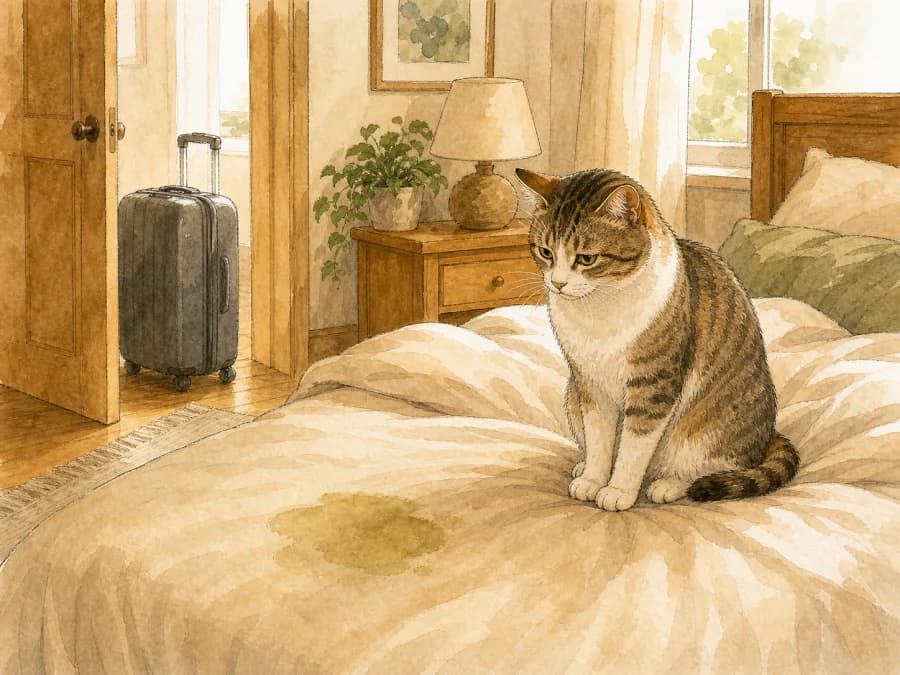
Why the Revenge Story Feels Convincing
The timing can look suspicious. The cat gets brushed, chased off the counter, left alone, or blocked from a room, then urinates on the bed. The human brain connects those two events immediately.
Cats do learn patterns, and they do respond to stress. That is different from plotting revenge. A stressful moment can raise arousal, and a bed is soft, absorbent, familiar-smelling, and easy to reach. If the bed has held urine before, it also carries a scent cue that says, from the cat's point of view, "this is a bathroom option."
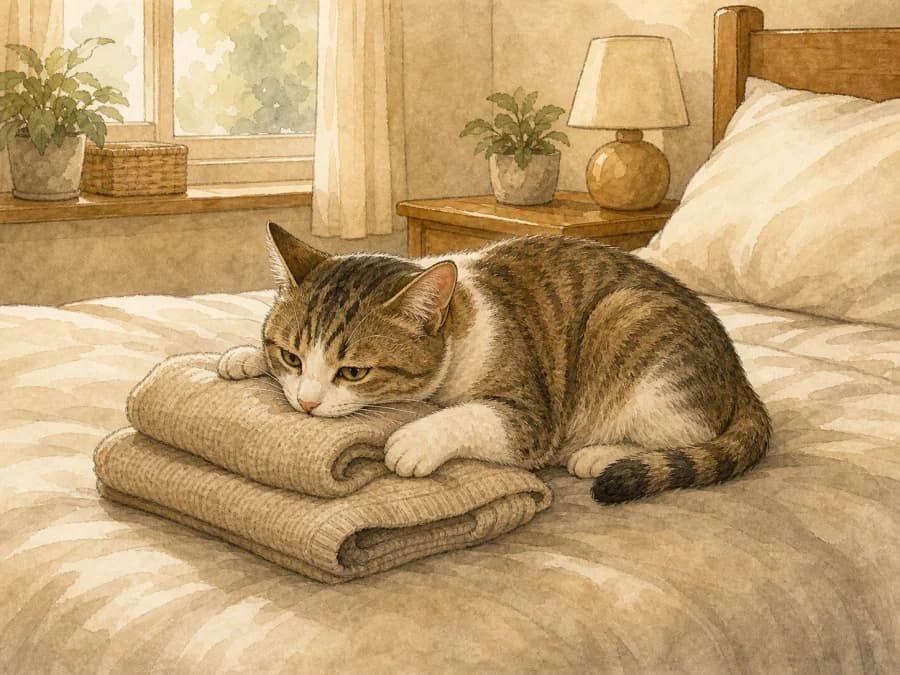
Start With Health, Not Motive
Check health first when bed peeing is new, repeated, or paired with frequent trips, tiny urine spots, crying, blood, licking, hiding, appetite change, or no urine. Pain and urgency can override even a cat with a long history of perfect litter box use.
If the cat is intact, in heat, recently neutered, recovering from illness, or living with another cat, mention that history to the veterinarian. It helps separate hormone pressure, urinary disease, stress, and box avoidance.
If It Happens After Care You Had to Force
Many bed-peeing stories start after something necessary but unpleasant: ear cleaning, brushing mats, nail trims, medication, a bath, or a carrier trip. The care may be needed, but the cat's body can still leave that moment highly aroused. A soft bed then becomes the nearest familiar place to release urine or scent.
For the next round of care, change the setup before the cat is upset. Do the task away from the bedroom, keep the bed inaccessible for a few hours, offer a calm decompression room with a clean box, and use food or play to end the session quietly. This is not about apologizing to the cat; it is about preventing the care routine from pairing with the bed.
| Clue | More likely | First move |
|---|---|---|
| Tiny amounts or many trips | Urinary discomfort | Call the vet promptly. |
| Only the bed or laundry | Owner scent, soft surface, odor cue | Protect fabric and clean deeply. |
| After travel or schedule change | Stress or separation pressure | Restore routine and add predictable play. |
| After litter or box change | Box avoidance | Return one familiar bathroom variable. |
| After a new cat or outdoor-cat trigger | Marking or territory stress | Separate resources and reduce triggers. |
Why Beds Become Repeat Targets
A mattress, comforter, or pillow can hold urine deeper than the surface. Owners may wash the cover and still smell something on humid days; the cat may smell it long before a person does. Down comforters, thick quilts, foam mattresses, and sofa cushions are especially frustrating because urine can travel inward.
That is why changing only the cat's behavior often fails. You have to change the surface too: enzymatic cleaning, waterproof covers, closed doors during the reset, and no piles of bedding or clothes left available.
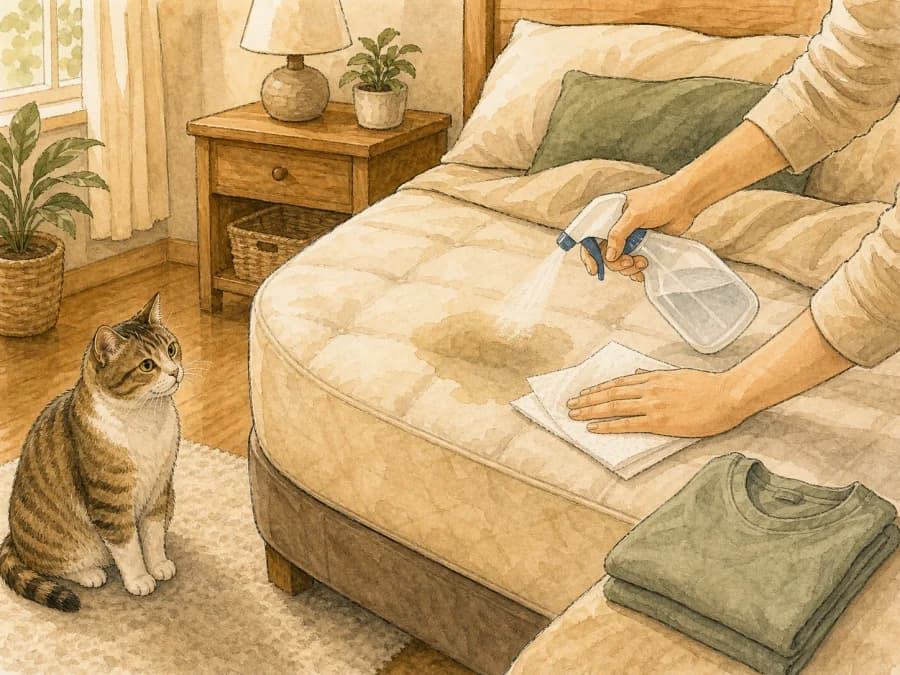
Clean the Mattress Like the Smell Is Deeper Than It Looks
If urine reaches a mattress, do not stop at the sheet. Blot first, apply an enzymatic cleaner to the affected depth as directed, let it dry fully, and use a waterproof cover during the reset. If a comforter or pillow still smells after washing, store it away from the cat until you know whether it can be saved.
Avoid using strong fragrances as the main solution. They can irritate some cats, and they may add another strange smell to a place the cat already finds important. The goal is to remove the urine message, not win a perfume contest.
Correct Without Punishment
Do not punish bed peeing. Hitting, yelling, rubbing the cat's face in urine, starving, or locking the cat away as a consequence can add fear and make the cat pee when you are not watching. It also does not fix pain, odor, box problems, or stress.
Instead, make the wrong place unavailable and the right place easier. Add a large uncovered box near the bedroom path for a short reset, use familiar unscented litter, scoop daily, and keep the route open. If there are multiple cats, make sure one cat cannot block the other from the box.
If It Happens After You Travel or Come Home
Some cats target the bed after a trip, a new suitcase, a guest, or a long day away. The bed smells strongly like the owner, and a suitcase smells like outside. Keep luggage closed, unpack quickly, give the cat a predictable greeting, and offer play or food before the bedroom becomes the focus.
This is not a guarantee that the cat is lonely or angry. It is a practical way to reduce arousal around a high-scent object while you check the other basics.
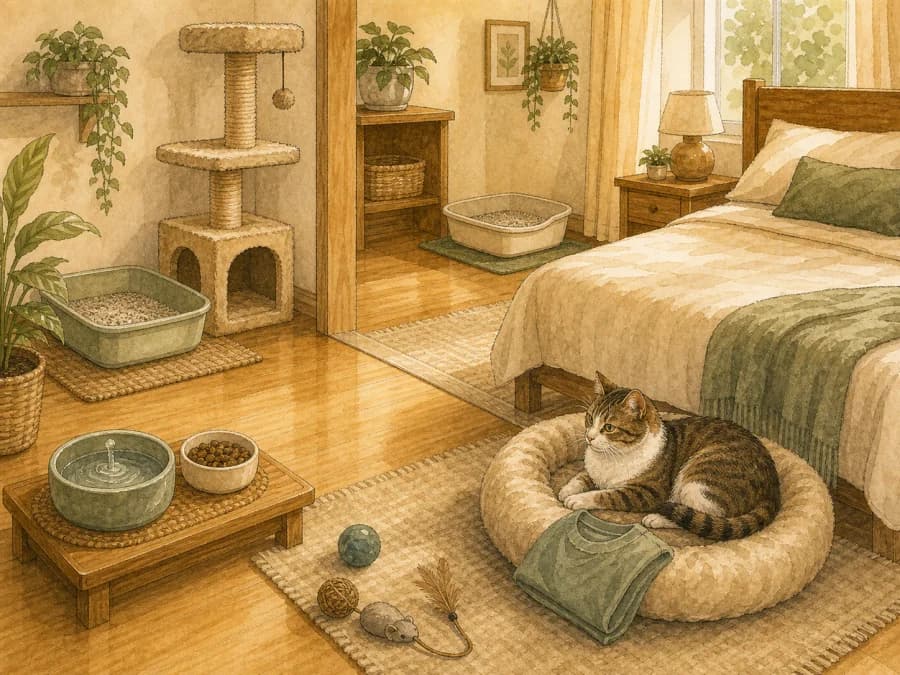
When Another Cat Is Part of the Story
If bed peeing begins after a new cat, a visiting pet, or tension between cats, look beyond the bedroom. One cat may be guarding a hallway, staring near the litter box, chasing after box use, or sleeping in the route to the box. The cat who pees on the bed may be choosing the soft surface because the normal bathroom route feels unsafe.
Add boxes in separate zones, not side by side. Give each cat its own food, water, scratching, and resting options. If the conflict is new, slow the introduction back down instead of asking both cats to share every resource immediately.
A 7-Day Bed Reset
Day one: protect the mattress, clean every marked layer, and keep the bedroom closed when unsupervised. Day two: add or improve a litter box on the path to the bedroom. Days three to five: watch for sniffing, kneading, scratching bedding, repeated box trips, or sudden restlessness. Days six and seven: if the box is being used and the bed is dry, keep the setup stable before moving anything.
If the cat pees on a new soft target, the issue is not only the bed. Go back to health, box trust, stress, and multi-cat access. Remove urine odor cues before judging whether the plan is working.
Key Takeaway
Bed peeing is emotionally exhausting, but revenge is not the lever that fixes it. Look for health signs, remove deep odor, protect the bed, improve the litter route, and reduce the stressor that made the bed useful to the cat.
References
AAFP/ISFM: Guidelines for Diagnosing and Solving House-Soiling Behavior in Cats
Cornell Feline Health Center: Feline Behavior Problems - House Soiling
VCA Animal Hospitals: Inappropriate Elimination Disorders in Cats
Founder & Editor
Micky is the founder and editor of NookPetdia, sharing practical cat-care guidance and product-fit advice for everyday cat parents.
Written by Micky. Read our Editorial Policy.
FAQ
Frequently asked questions
New on NookPetdia
Latest articles

AI Pet Portraits vs Real Artists: How to Tell the Difference
AI pet portraits are convincing now, and some shops sell them as hand-painted. The reliable way to tell is process evidence: sketches, progress images, and honest answers. Here is how to check before you pay.

How to Commission a Custom Pet Portrait: Get the Artwork, Not Just the Object
Commissioning a custom pet portrait is mostly about the questions you ask before you pay: process, revisions, price, and the artwork file you actually receive. Here is the walkthrough, with the copyright and source-file facts most buyers learn too late.

Can Cats Wear Collars? The Breakaway Safety Rule, Explained
Cats can wear collars safely, but only with a breakaway clasp, a correct fit, and a cat that accepts it. Here is the safety rule, the risks, and the owner-reported close calls that explain why.