When a cat rejects a litter it has used for months or years, it feels irrational. The bag looks the same, the box is in the same place, and yesterday everything was normal.
But a cat suddenly dislikes old litter for reasons that are often real: a changed batch, stronger scent, dust, damp storage, sore paws, constipation, urinary pain, a box that became too small, or one bad event in the box.
AI Summary
Overview
Same bag?: The same brand can still change in scent, dust, texture, freshness, or storage condition.
Health first: Urgency, tiny urine spots, straining, crying, blood, or no urine need veterinary attention.
Test calmly: Offer one familiar option and one test option instead of changing ten things at once.
Watch clues: Digging without going, rushing out, not burying, and going beside the box all point to different checks.
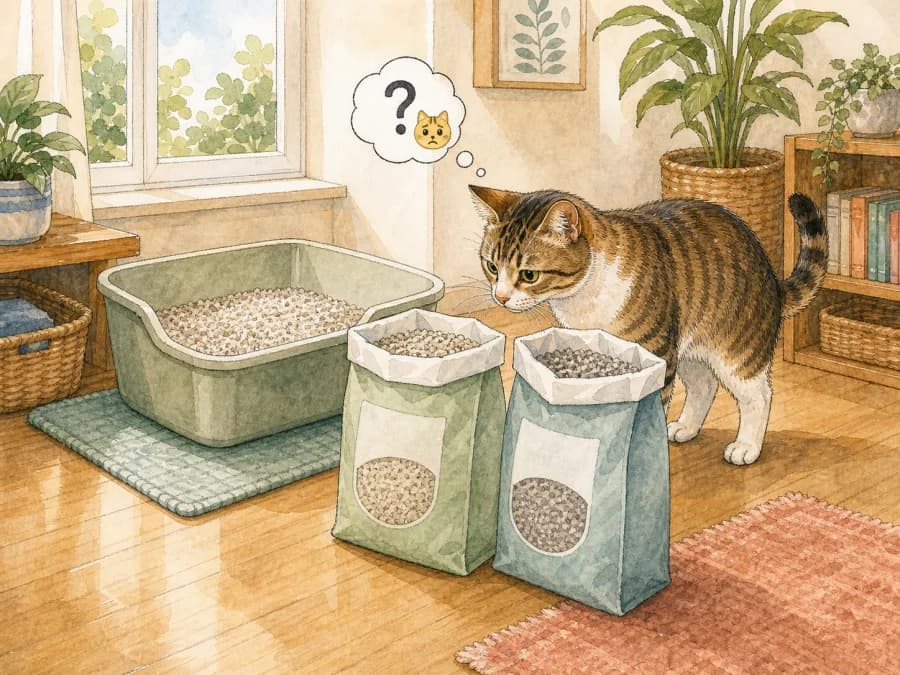
Why “Same Litter” May Not Be the Same
Cats notice details people miss. A new bag can have more dust, a sharper fragrance, a different granule shape, a different moisture level, or a storage smell from the warehouse. Even a familiar litter can feel different after a formula change or a bad batch.
Owner reports often sound similar: the cat digs for a long time but does not go, jumps in and out, uses the box for urine but not stool, chooses a sofa or towel, or returns immediately when mineral or clay litter is offered. Those are clues, not stubbornness.
| What you see | Possible meaning | First check |
|---|---|---|
| Digs for minutes but does not go | Texture, scent, or discomfort | Offer familiar litter in a second box and watch urine output. |
| Pees in box, poops outside | Stool discomfort, box size, or surface preference | Check stool quality, box dimensions, and pain signs. |
| Runs out without burying | Odor, fear, pain, or stress | Check cleanliness, scent, household changes, and health. |
| Uses soil, towel, bed, or sofa | Surface preference or urgency | Protect surfaces and provide a low-fragrance familiar box. |
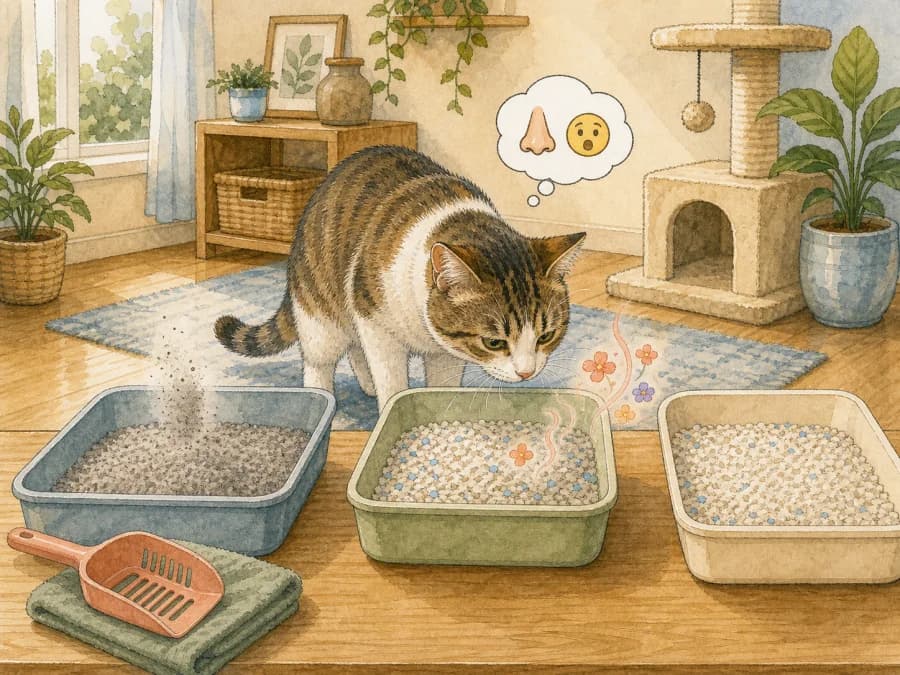
Rule Out Health Before Blaming the Litter
Check urine output first. A cat that is straining, crying, visiting the box repeatedly, producing only drops, licking the urinary area, hiding, vomiting, showing blood, or not urinating needs veterinary help. Do not wait to see whether a new litter fixes that.
Stool matters too. If the cat cries while pooping, leaves dry hard stool, bolts out mid-poop, or starts pooping beside the box, constipation or pain may have made the box feel unsafe. In that case, changing litter alone may miss the real problem.
Troubleshooting Order
Start with the smallest reversible test. Put a second clean box next to the current one. Fill one with the old known-safe litter if you still have it, and the other with the suspect litter. Do not scrub both boxes with a strong cleaner on the same day you test litter.
If the cat chooses the old option immediately, the new bag or formula is likely part of the problem. If the cat avoids both, widen the search: box size, covered lid, location, pain, stress, another cat blocking access, or an odor cue elsewhere in the house.
Pay attention to the pattern, not just the accident. A cat who steps in, sniffs, and leaves may be rejecting the surface or smell. A cat who squats, stops, and rushes out may be uncomfortable. A cat who uses one box only when the house is quiet may be reacting to traffic, noise, or another pet.
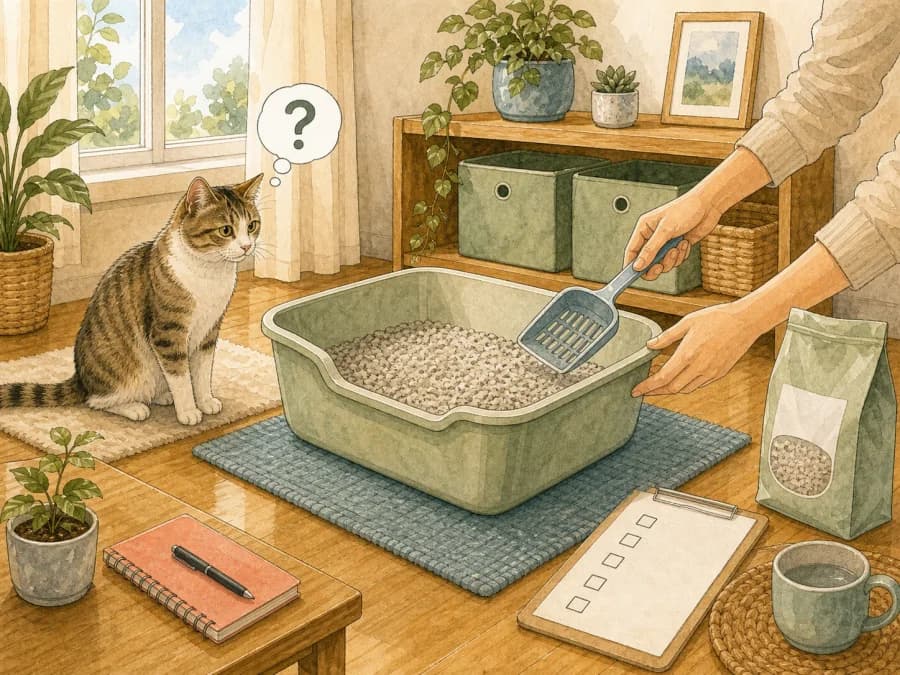
Do Not Chase the Problem With Ten Changes
Keep one familiar option available while testing. If you change litter, box type, location, cleaning product, depth, and room access in one afternoon, you may accidentally remove the only clue.
A good test lasts long enough to observe real use but not long enough to risk urine holding. If you see no urine, repeated attempts, or distress, stop the experiment and call the vet. For stool-only avoidance, watch stool quality and whether the cat can posture comfortably inside the box.
Batch, Scent, Dust, and Storage Problems
If a new bag smells stronger to you, assume it smells much stronger to the cat. If it pours dust, leaves residue, clumps differently, or feels sharper under your fingers, that may explain the rejection. Storage can matter too: litter kept in a damp area, hot balcony, or strongly scented closet may pick up smells or moisture.
When possible, compare a small sample from the old bag and new bag. If the difference is obvious, do not force the issue. Offer a low-dust, unscented option the cat will use, then transition slowly only if you have a reason to change.
When Age Changes the Answer
Older cats may reject the old setup because their body changed, not because the litter changed. Arthritis, sore paws, weakness, constipation, or trouble stepping over high sides can make the same box feel different. A lower entry, larger box, softer path, and nearby placement may matter more than brand.
Kittens can also change preferences as they grow. A box that was roomy at four months may be cramped at ten months. If stool lands outside while the cat stands partly inside, measure the box before blaming the litter.
How To Prevent Future Rejection
When opening a new bag, mix a small amount into the current litter instead of replacing everything at once. Keep the box depth familiar, avoid sudden fragrance changes, store litter in a dry neutral-smelling container, and keep a little of the previous accepted litter until the new bag has passed the test.
For picky cats, keep a second box available during any brand or material change. It is much easier to learn that a cat dislikes a batch than to clean a sofa and rebuild litter box trust afterward.
Key Takeaway
Old-litter rejection is not random. Check health first, then compare the bag, box, scent, texture, storage, and recent household changes. Test one variable at a time so the cat tells you what changed.
References
Cornell Feline Health Center: Feline Behavior Problems - House Soiling
VCA Animal Hospitals: Inappropriate Elimination Disorders in Cats
Founder & Editor
Micky is the founder and editor of NookPetdia, sharing practical cat-care guidance and product-fit advice for everyday cat parents.
Written by Micky. Last updated Jul 3, 2026 Read our Editorial Policy.
FAQ
Frequently asked questions
Can a cat suddenly stop liking the same litter?
Yes. The cat may notice a new batch, stronger scent, more dust, different texture, damp storage, or a formula change. Health or box discomfort can also make the old setup feel wrong.
What should I check first?
Check urine output and pain signs first. Straining, repeated tiny trips, crying, blood, vomiting, hiding, or no urine should be handled as a veterinary issue before a litter experiment.
Should I replace all the litter at once?
No. Keep one familiar option available and test one change at a time. Full replacement can make a hesitant cat hold urine or choose furniture.
Why does my cat pee in the box but poop outside?
That can point to stool discomfort, constipation, box size, posture problems, or a preference for separating urine and stool. Check stool quality and whether the cat fits comfortably in the box.
Can scented litter cause sudden rejection?
Yes. Cats have sensitive noses, and fragrance changes can make a familiar box feel unusable. Unscented, low-dust litter is usually a safer test option.
Could the litter batch be bad?
It is possible. Compare scent, dust, color, granule feel, clumping, and storage condition. If the new bag feels different, offer a known accepted litter in a second box.
How long can I wait if my cat is not urinating?
Do not wait. No urine, repeated attempts, or signs of distress need prompt veterinary advice, especially for male cats.
How do I prevent this next time?
Keep a small amount of the previous accepted litter, introduce new bags gradually, avoid sudden scent or texture changes, and store litter away from moisture and strong household odors.
New on NookPetdia
Latest articles
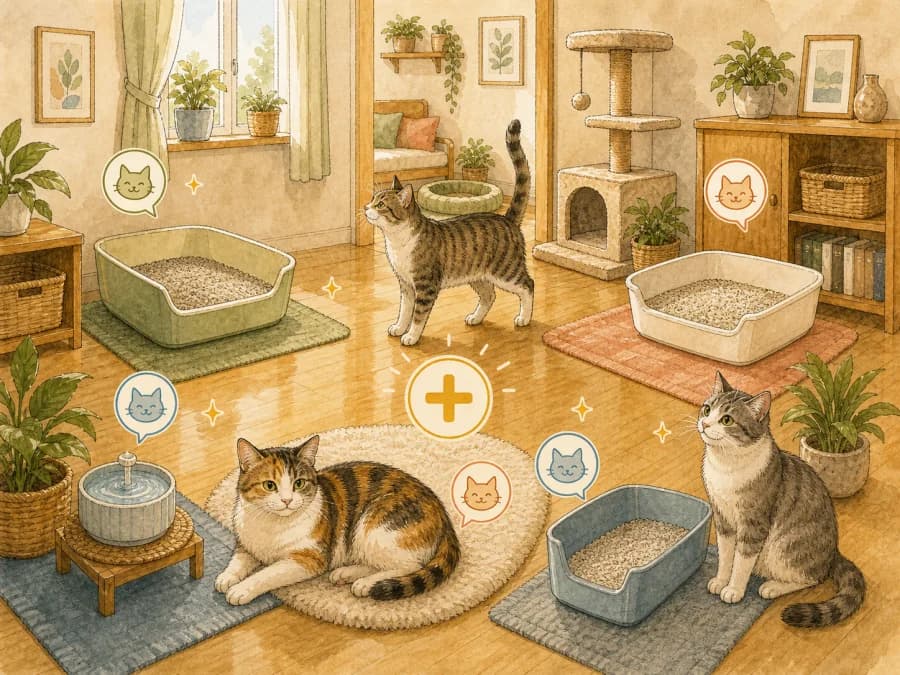
How Many Litter Boxes for Multiple Cats? N+1 Rule
For multiple cats, the N+1 litter box rule is a strong starting point, but placement, cat relationships, and escape routes decide whether it works.
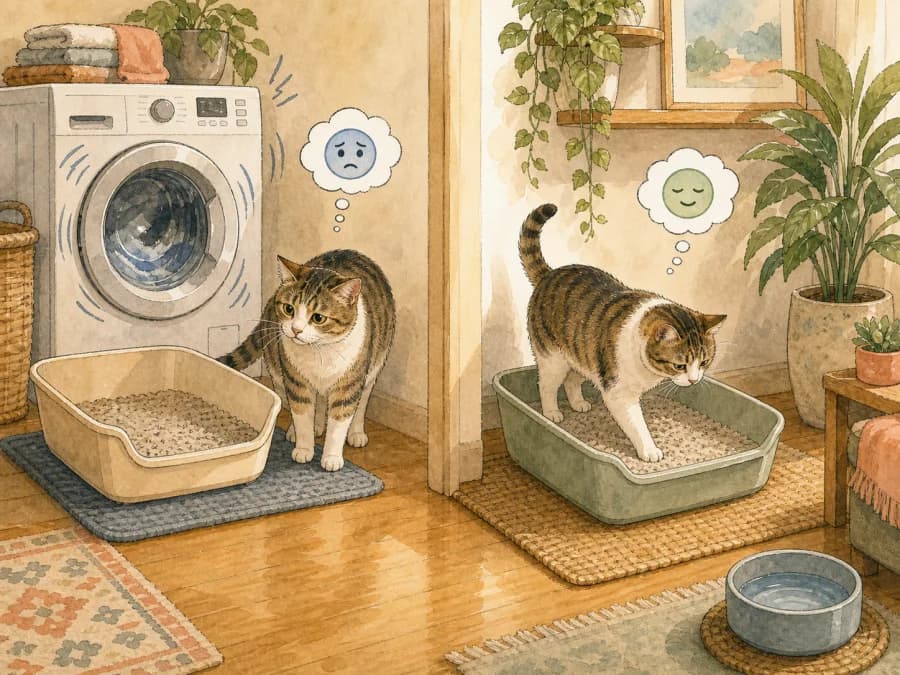
Where to Put a Litter Box? Placement Rules Cats Use
The best place for a litter box is quiet, accessible, away from food, and safe to enter and leave. Use these placement rules before hiding the box.
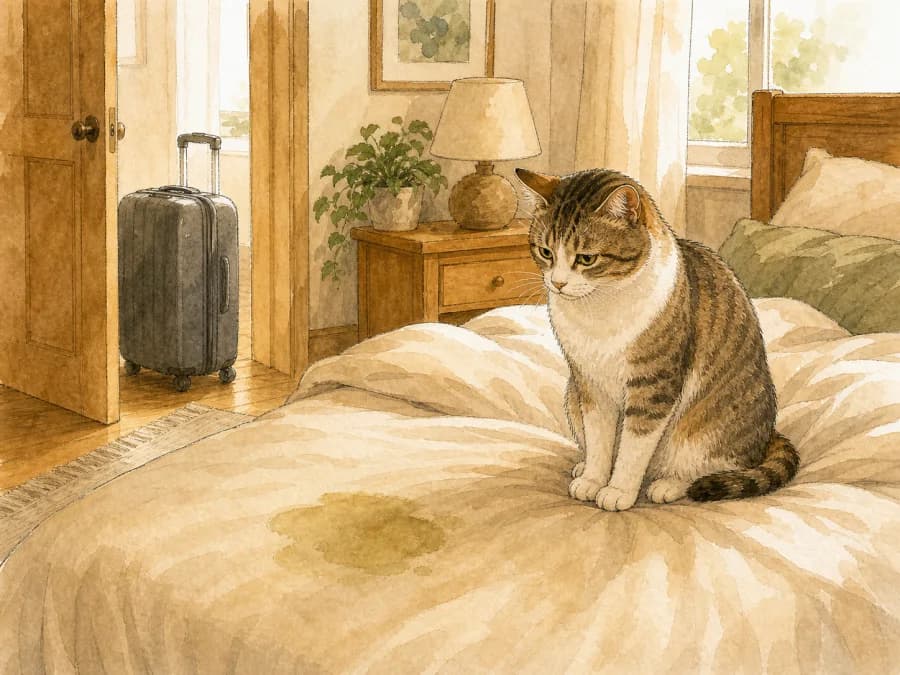
Cat Peeing on Bed for Revenge? What It Really Means
Cat peeing on the bed is usually not revenge. Check urinary health, odor cues, litter box trust, stress, and access before trying to correct it.