The N+1 litter box rule is a useful starting point, but multi-cat homes do not fail because someone missed a math formula. They fail when one cat cannot reach a clean, safe box without pressure from another cat.
For most homes, one litter box per cat plus one extra gives you enough choices to prevent guarding, crowding, and emergency backups. From there, the real work is placement: boxes need to be spread across the home, not lined up like one long bathroom.
AI Summary
Overview
Rule: N+1 is a starting point: two cats usually means three boxes, but relationships and layout matter too.
Placement: Side-by-side boxes often count like one location because one cat can guard the whole area.
Conflict: If one cat blocks, chases, or stares near the box, add separated routes before blaming the litter.
Small homes: When perfect N+1 is impossible, prioritize large boxes in separate zones and scoop more often.

The Basic Formula
A practical baseline is one box per cat, plus one extra. One cat gets two boxes. Two cats get three. Three cats get four. This gives each cat options when one box is dirty, occupied, scary, or blocked.
| Cats | Starting point | What matters next |
|---|---|---|
| 1 cat | 2 boxes | Useful if the home has multiple floors or the cat is picky. |
| 2 cats | 3 boxes | Spread boxes so one cat cannot guard all access. |
| 3 cats | 4 boxes | Watch for preferred rooms and quiet conflict. |
| 4+ cats | N+1 if possible | Prioritize cat groups, traffic flow, and cleaning frequency. |
Why Side-by-Side Boxes Do Not Count the Same
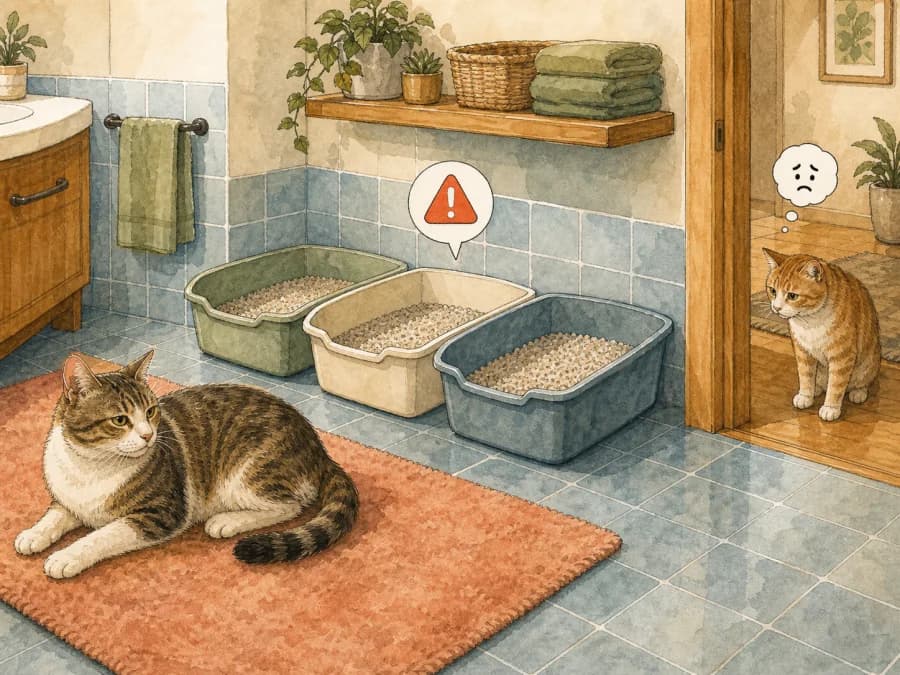
Separate locations create real choices. Three boxes lined up in a laundry room may be easy for the owner, but to a cat they can feel like one contested toilet area. If a confident cat sits in the doorway, the timid cat has no practical choice at all.
Spread boxes across different rooms or zones: one near the main living area, one near a favorite sleeping area, one on another floor, or one close to a cat that avoids the others. The goal is not decoration. The goal is access.
Adjust for the Relationship
Some bonded cats truly share a large box without trouble. Others look peaceful until one cat begins waiting in doorways, staring, chasing after box use, or using beds and rugs instead. Cat relationships change with age, illness, new pets, outdoor-cat stress, and household routine.
Think in cat groups as well as cat count. If two cats are inseparable and a third cat is often excluded, the third cat needs its own safe bathroom route. If one cat is older, timid, or recovering from illness, place a box where that cat already spends time.
A quiet clue is who controls the hallway. A box may look available to you while one cat sees a narrow approach, a corner with no escape, or a favorite ambush spot. If accidents appear only when another cat is awake, near the door, or after tense play, treat the problem as access before treating it as a training issue.

When You Cannot Fit N+1 Perfectly
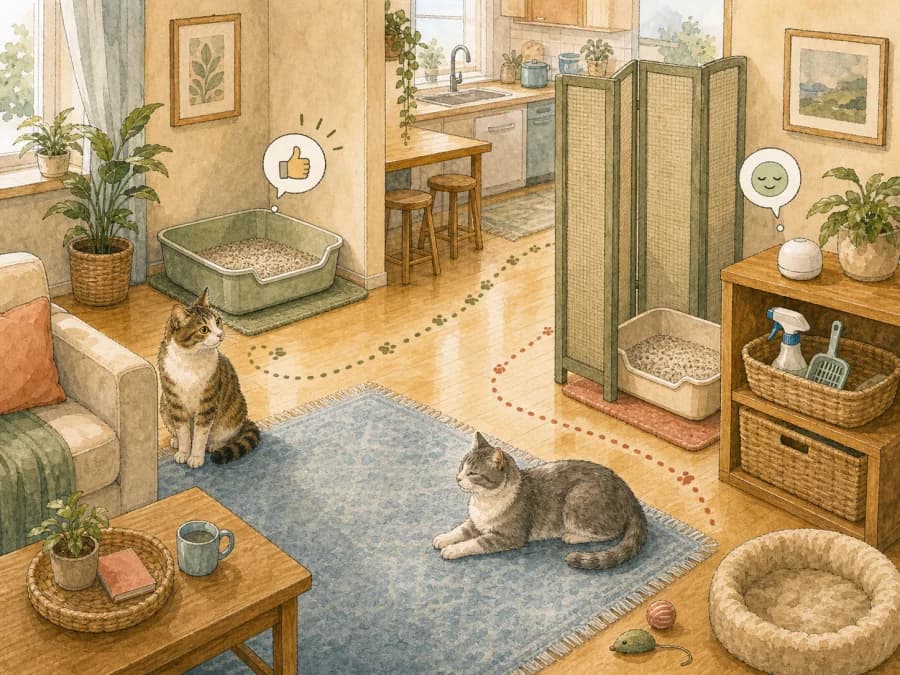
Many small apartments cannot hold the perfect number without making human life ridiculous. That does not mean one hidden box is the only option. Start with the best two or three real locations, make the boxes larger, keep them uncovered during conflict, scoop more often, and avoid putting every box in the same dead-end room.
Do not turn N+1 into guilt math. Use it as a pressure test. If you cannot add another box, ask what problem that extra box would solve: distance, odor, guarding, stool versus urine preference, or a cat who needs a private route.
In a studio or small apartment, separated may mean different sight lines rather than distant rooms. One box can sit near the main living area while another is tucked near a sleeping zone, as long as neither box is trapped behind a single doorway. A screen, open shelf, or furniture angle can create privacy without making the box hard to reach.
Large Shared Box or Several Smaller Boxes?
Large boxes can help. Many cats prefer room to turn, dig, and avoid stepping on old clumps. In homes where cats are genuinely relaxed together, a large box plus another backup box may work better than several tiny boxes.
But a giant box does not solve access conflict. If one cat owns the room, the size of the box does not matter to the cat being blocked. Use large boxes for comfort, and separate boxes for choice.
Automatic Litter Boxes in Multi-Cat Homes
Automatic boxes can reduce scooping workload, but they do not erase the resource problem. Some cats dislike the movement, sound, covered shape, entry height, or shared scent. If you use an automatic box, keep at least one familiar manual box during the transition and watch whether every cat uses it calmly.
For timid cats, kittens, seniors, and cats with mobility issues, a simple open box may be the safer backup. The most expensive box is not the best box if one cat will not enter it.
Signs You Need More or Better-Placed Boxes
Add or move boxes if you see one cat waiting near the box, chasing after another cat leaves, urine or stool beside the box, a cat holding urine for long periods, stool in a different location than urine, or accidents on beds and soft surfaces.
Also watch cleaning stress. If boxes smell quickly, clumps pile up during workdays, or cats avoid boxes before you scoop, the household may need more capacity even if nobody is fighting.
Key Takeaway
N+1 is a strong starting point, not a law carved into the wall. Multi-cat litter success comes from enough clean boxes, spread-out locations, easy escape routes, and respect for the actual relationships between the cats.
References
CatVets: AAFP/ISFM House-Soiling Guidelines
BC SPCA: Cat Litter Box Problems
Cornell Feline Health Center: Feline Behavior Problems - House Soiling
Founder & Editor
Micky is the founder and editor of NookPetdia, sharing practical cat-care guidance and product-fit advice for everyday cat parents.
Written by Micky. Last updated Jul 1, 2026 Read our Editorial Policy.
FAQ
Frequently asked questions
How many litter boxes do two cats need?
A good starting point is three boxes: one per cat plus one extra. If space is limited, prioritize at least two large boxes in separate locations and watch carefully for guarding or accidents.
Do side-by-side litter boxes count as separate boxes?
They count as separate containers, but not separate locations. If one cat can guard the doorway or the whole area, the other cat may still feel blocked.
Is the N+1 litter box rule always required?
It is a strong starting point, not a law. Some relaxed cats share well, while tense cats may need more separation. Let the cats' behavior decide whether the setup is working.
What if I cannot fit N+1 boxes?
Use the best separated locations you can, choose larger boxes, scoop more often, keep boxes easy to access, and avoid putting every box in one contested room.
Can multiple cats share one large litter box?
Some cats can, but one large box does not help if a cat is being blocked or avoids that room. A large shared box is safest when there is at least one backup location.
Do automatic litter boxes change the N+1 rule?
No. Automatic cleaning may reduce odor and scooping work, but cats still need safe access. Keep a manual backup during transitions and for cats who dislike the machine.
Where should litter boxes go in a multi-cat home?
Place them in different zones with open routes. Avoid dead-end closets, loud laundry areas, and rooms where one cat can trap another.
What signs mean I need another litter box?
Accidents, stool beside the box, one cat waiting near the box, chasing after box use, strong odor between scoops, or a cat holding urine are signs to add or move boxes.
New on NookPetdia
Latest articles
Where to Put a Litter Box? Placement Rules Cats Use
The best place for a litter box is quiet, accessible, away from food, and safe to enter and leave. Use these placement rules before hiding the box.

Cat Peeing on Bed for Revenge? What It Really Means
Cat peeing on the bed is usually not revenge. Check urinary health, odor cues, litter box trust, stress, and access before trying to correct it.
Male Cat Spraying Everywhere? What Helps Safely
Male cat spraying everywhere may be hormone marking, stress, odor habit, or urinary pain. Learn how to tell spraying from peeing and what helps safely.