A male cat spraying everywhere can make a home smell impossible to live in. Owners often describe the same pattern: door frames, sofa corners, shoes, bedding, and one sharp-smelling spot that comes back even after cleaning.
The safest way to handle male cat spraying everywhere is to separate three problems that look similar: hormone-driven marking, stress marking, and painful urination. They can overlap, and the fix is different for each one.
AI Summary
Overview
Posture: Standing with the tail up and leaving small marks on vertical surfaces points toward spraying, not ordinary peeing.
Neutering: Neutering often reduces sex-hormone marking, but it is not an instant switch and cannot replace medical checks or cleaning.
Health: Tiny amounts, frequent trips, crying, blood, or no urine are urinary red flags, not a behavior problem to wait out.
Cleanup: Old urine odor can keep the marking loop alive, so cleaning has to reach the odor cue, not just the visible stain.
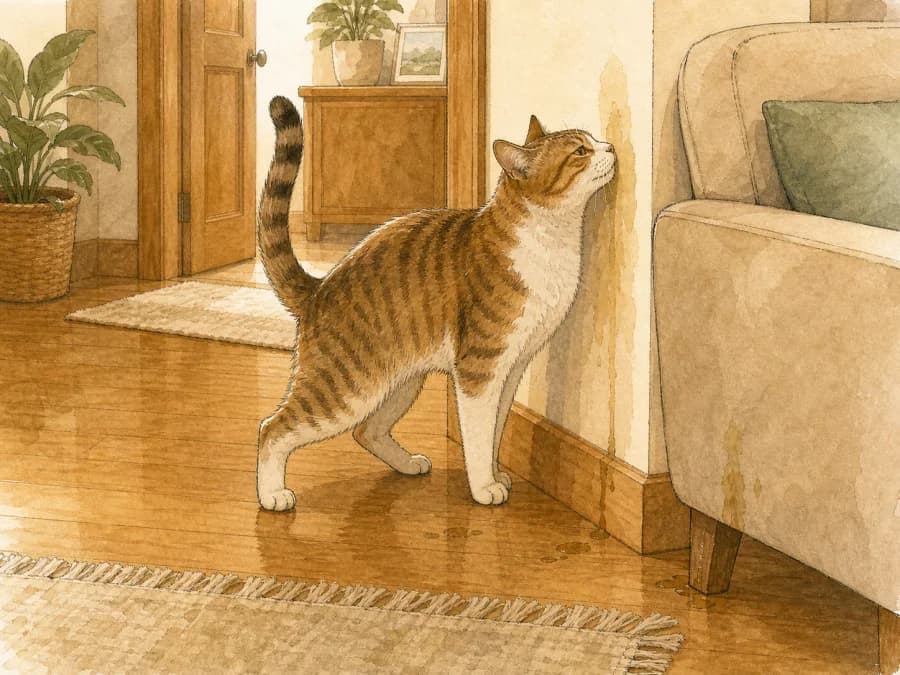
First Decide: Spraying or Peeing?
Spraying usually means the cat stands, lifts the tail, may quiver, and leaves a small amount of urine on a vertical surface. Peeing is more often a squat with a larger puddle on a flat surface. Beds and laundry can be either, so watch posture and amount, not just location.
| Clue | Spraying or marking | Peeing outside the box |
|---|---|---|
| Posture | Standing, tail up, sometimes twitching | Squatting |
| Amount | Small repeated marks | Larger puddle |
| Target | Walls, doors, curtains, furniture sides | Bed, laundry, floor, bathmat |
| First checks | Intact status, outdoor cats, new pets, stress | Urinary signs, box setup, litter, pain |
Why Intact Male Cats Spray
An intact male cat may spray to advertise sexual availability and mark territory. The smell is often stronger than ordinary urine, and the targets are usually places that matter socially: doors, windows, beds, shoes, and spots that smell like people or other animals.
Owner reports often mention springtime, door dashing, yowling, mounting, rubbing, or sudden interest in exits. Those details support a hormone-driven piece, but they do not rule out urinary discomfort. A male cat can be intact and also have a urinary problem.
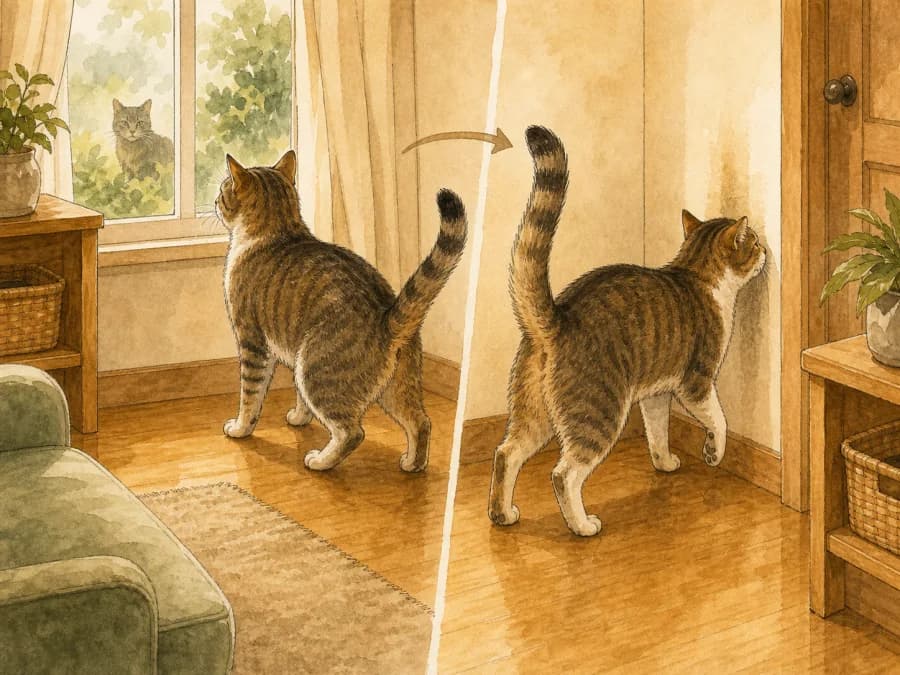
What Neutering Can and Cannot Do
Neutering can reduce hormone-driven spraying, especially when it is done before the behavior becomes a long habit. It may also reduce roaming, yowling, and sexual frustration. But it is not a punishment, and it is not a same-day reset for every cat.
If the cat has been spraying for months, the odor cues and learned routine may remain after surgery. If the cat is already neutered, do not assume the surgery failed; look for outdoor cats, multi-cat tension, box avoidance, old odor, or lower urinary tract disease. If there is any question about retained testicular tissue or cryptorchid history, ask the veterinarian directly.
If He Is Already Neutered
A neutered male who suddenly starts spraying needs a fresh investigation, not a shrug. Check whether a neighborhood cat is appearing at windows, whether another pet has entered the home, whether guests brought animal scent, or whether a favorite box route has become noisy or blocked.
Also look at the pattern. Marking near windows and doors often points to territory pressure. Large puddles on laundry or bedding may point more toward box avoidance, stress, or pain. A cat who has been fine for years and then starts marking is telling you something changed, even if the change is not obvious yet.
Red Flags That Are Not Heat
A male cat who visits the box again and again, strains, cries, produces only drops, licks himself repeatedly, has blood in the urine, vomits, hides, or cannot pass urine needs veterinary care promptly. No urine is an emergency, especially in male cats.
This matters because frustrated owners may focus on smell and behavior while the cat is actually painful. A log helps: time, posture, urine amount, surface, appetite, water intake, and whether the cat used the litter box normally earlier that day.
Temporary Management While You Wait for the Vet
While you are arranging neutering or a medical check, reduce the chance to rehearse the behavior. Close bedroom doors, lift laundry and shoes, cover favorite targets, and put a large uncovered litter box near the strongest pattern. If there are multiple cats, spread boxes instead of clustering them in one bathroom.
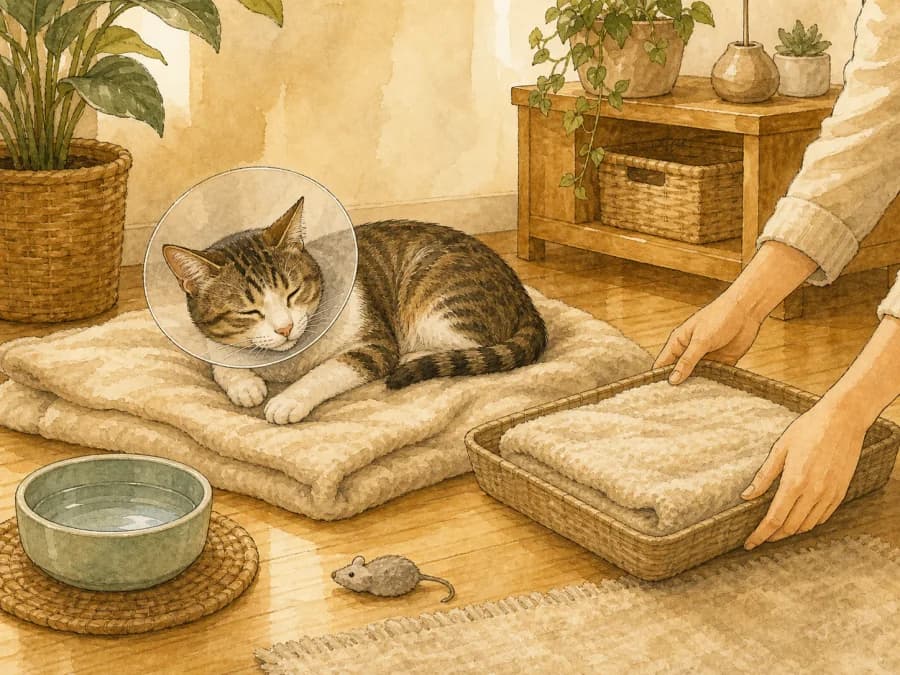
For supervision, use calm access control rather than punishment. A recovery room or limited zone can help if it has food, water, bedding, scratching, enrichment, and a clean box. It should not be used as a scary consequence after yelling or chasing.
If the cat sprays mainly when you are away, set up the limited zone before leaving, not after an accident. If he sprays mainly when he sees outdoor cats, block the window view for a few days and clean the window-side targets. If he sprays near another cat's things, separate resources and stop sharing one litter area.
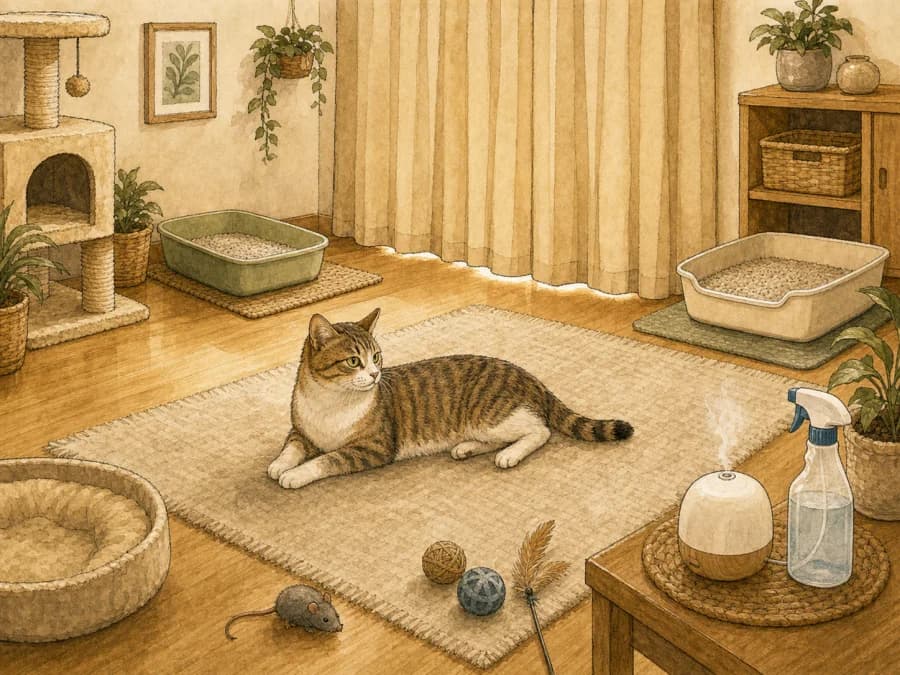
The Tonight Checklist
Tonight, do the boring things first: confirm he can pass a normal amount of urine, photograph or note the spray targets, pick up fabric targets, close off the worst room, add one easy box, and clean one marked zone properly instead of spraying the whole room with fragrance.
Tomorrow, make the vet or neuter plan if he is intact, and keep the setup stable long enough to judge it. Changing litter, box type, location, cleaner, room access, and routine all at once can make it impossible to tell what helped.
Clean So the Spot Stops Calling Him Back
Regular detergent, perfume, air freshener, or strong-smelling household products can make the room feel cleaner to people while leaving urine cues for the cat. Use an enzymatic cleaner labeled for pet urine, follow the contact time, and repeat if urine soaked into upholstery, mattress seams, carpet padding, or wood gaps.
Remove the odor cue before testing whether a new setup works. If a sofa corner was marked ten times, the cat may return to it even after neutering unless that odor trail is truly gone or access is blocked while it dries.
Avoid Risky Shortcuts
Do not hit, rub the cat in urine, starve, force isolation as punishment, or give hormone, sedative, or anti-heat products without veterinary direction. Some products marketed for heat suppression or calming may be inappropriate for an individual cat, especially if urinary pain is part of the picture.
Key Takeaway
Male cat spraying is solvable only when you identify the driver: hormones, territory stress, odor habit, box avoidance, or urinary disease. Neutering helps many hormone-driven cases, but the full plan is health check, odor removal, safer box access, and less chance to rehearse the pattern.
References
VCA Animal Hospitals: Cat Behavior Problems - Marking and Spraying Behavior
AVMA: Feline Lower Urinary Tract Disease
Cornell Feline Health Center: Feline Behavior Problems - House Soiling
Founder & Editor
Micky is the founder and editor of NookPetdia, sharing practical cat-care guidance and product-fit advice for everyday cat parents.
Written by Micky. Read our Editorial Policy.
FAQ
Frequently asked questions
New on NookPetdia
Latest articles

Black Cat Jewelry Guide (Style, Meaning, Gift Timing)
Black cats are the hardest subject to render in a small pendant and the best subject for silhouette work. Here is which styles hold up, what the symbolism actually carries, and the two dates worth planning a gift around.

Cat Mom & Cat Dad Gift Ideas That Aren't Cheap Charms
Most cat-themed gifts are novelty items that get used twice. Here is how to buy something a cat parent keeps — including what to confirm about metal, sizing, and timing before you order anything personalized.
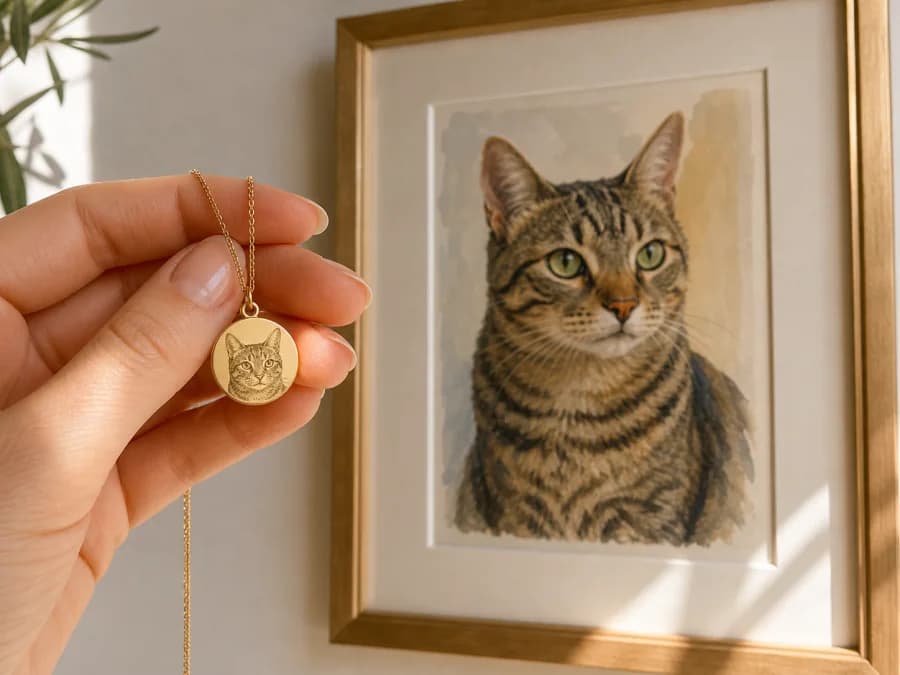
Custom Pet Portrait Jewelry vs Print: What's Worth Buying
Wearable portrait jewelry and framed pet portraits solve different problems. Here is how they compare on likeness, cost, durability, and daily use — and which one to commission first.