Flying with a cat is not just "buy a carrier and show up early." The hard part is that three practical checklists meet on the same travel day: your airline's pet policy, airport security, and any destination document rules that apply to your route.
Health and travel note: this guide is general planning help, not a substitute for a veterinary travel clearance. Ask your veterinarian before booking if your cat has breathing, heart, urinary, kidney, diabetes, seizure, pregnancy, heat-sensitivity, or severe anxiety concerns.
The good news is that most problems are predictable. Cats usually struggle less with the airplane itself than with the parts around it: a carrier they do not trust, a noisy airport, being removed from the carrier at TSA, a delayed flight, or a rule the owner only discovers at check-in.
This guide is built from owner travel notes and official-source checks. Use it to plan what to verify, not as a substitute for the current airline, TSA, destination, or veterinary instructions for your exact trip.
AI Summary
Overview
Flight fit: Start with the exact route, airline pet space, carrier size, and whether your cat is healthy enough for the full door-to-door travel day.
Cabin first: For many U.S. trips, in-cabin travel is the least complicated option when the cat can rest comfortably under the seat.
Security plan: Expect TSA to screen the empty carrier, and ask for private screening if your cat may bolt when removed.
Backup checks: Verify documents, destination rules, supplies, and arrival recovery before you treat the trip as booked.
For most U.S. domestic trips, flying with a cat in the cabin is the least complicated option if your cat is small enough to fit comfortably in an airline-approved carrier under the seat. Cargo or international travel can still be possible, but it needs more planning, more official paperwork, and more caution.
Quick Answer
If you are flying with a cat for the first time, start with this order:
- Choose the route and airline before buying the ticket.
- Confirm the airline allows cats on that exact route, aircraft, and cabin.
- Reserve the pet spot early because cabin pet capacity is limited.
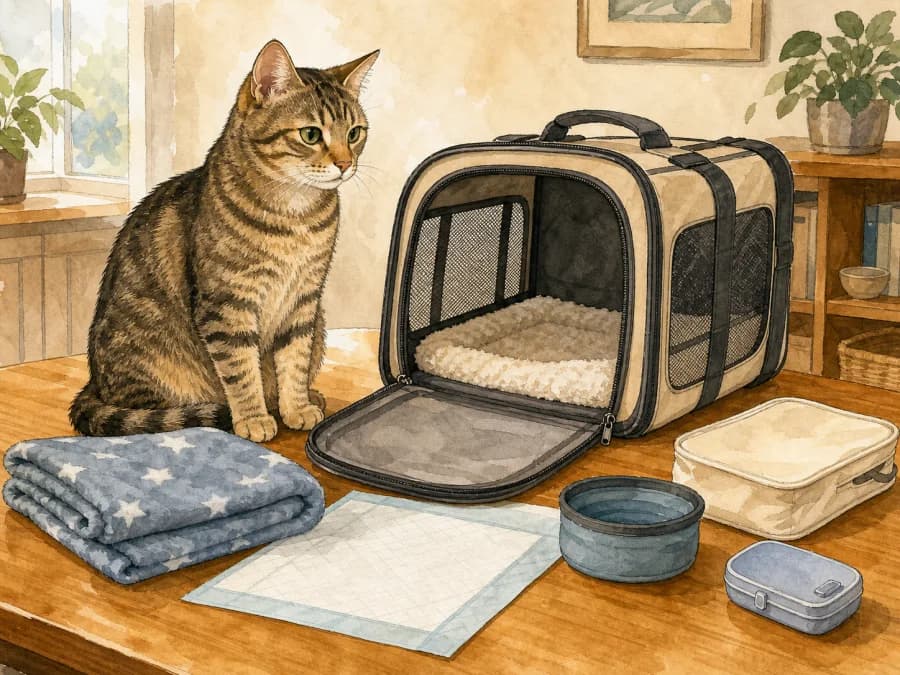
- Buy a soft-sided carrier that fits under the seat and lets your cat turn around.
- Train your cat in the carrier for at least 2-4 weeks if possible.
- Ask your vet whether your cat is healthy enough to fly.
- Check document rules for your destination, especially for international travel or Hawaii/Guam.
- Plan for TSA screening, where your cat generally comes out of the carrier while the empty carrier is screened.
First: Decide Whether Your Cat Should Fly
Some cats can travel quietly with preparation. Others panic in a carrier, overheat easily, have heart or breathing disease, or become so stressed that flying is not worth the risk.
Before you book, ask:
- Is the trip necessary, or could boarding, a sitter, or driving be safer?
- Can my cat tolerate a carrier for the full door-to-door travel time?
- Is my cat elderly, sick, pregnant, very young, or recovering from surgery?
- Would a delay add several extra hours inside the carrier?
- Does my cat have breathing, heart, urinary, or severe anxiety issues?
For health concerns, do not guess from online travel stories. A veterinarian who knows your cat is the right person to help decide whether flying is reasonable.
If you are unsure whether the trip is fair to your cat, read is it safe to fly with a cat before booking.
In Cabin, Cargo, or Not Flying?
Most pet owners want the cat in the cabin, and for many cats that is the better plan. Your cat stays under the seat in front of you, you can hear what is happening, and you avoid temperature and handling risks associated with cargo.
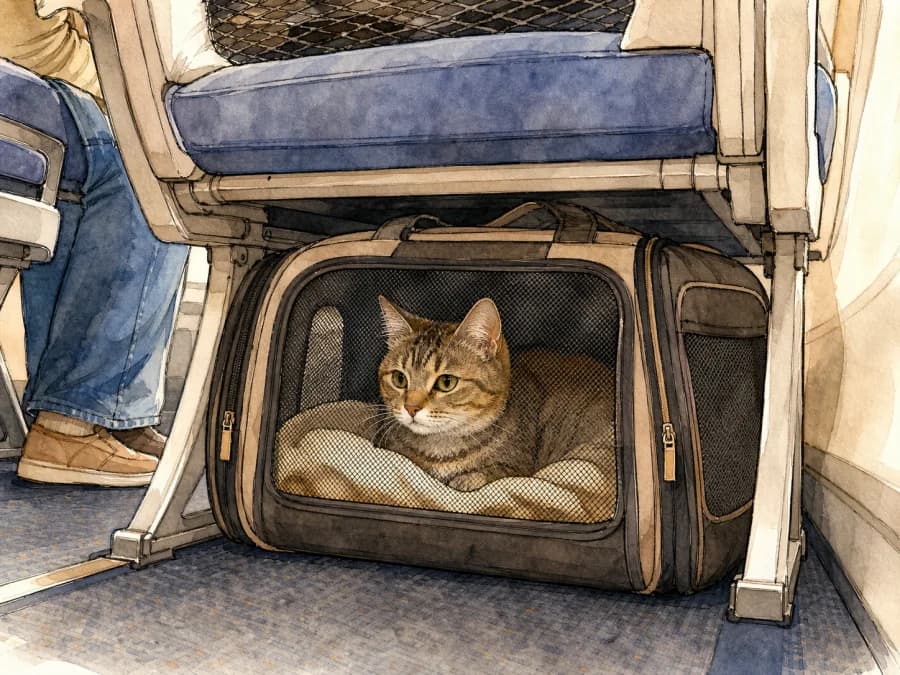
But in-cabin travel has limits. Airlines usually require the cat to stay fully inside the carrier and under the seat for the entire flight. A big cat may technically "fit" in a soft carrier but still be uncomfortable if the carrier has to be flattened too much.
Cargo or checked-pet options vary by airline and route. Some airlines restrict checked pets to military or government relocation cases; some use cargo services instead. Short-nosed cat breeds, very hot or cold weather, and long tarmac handling can add risk. Treat cargo as a separate decision, not just the backup when the cat is too big.
Airline Rules Come Before Everything Else
Every airline sets its own carrier dimensions, pet fees, accepted routes, aircraft limits, cabin restrictions, and check-in process. Some allow cats only on certain routes. Some do not allow cabin pets on transatlantic or transpacific trips. Some destinations have extra restrictions even if the airline normally accepts pets.
Before buying your own ticket, confirm:
- Cats are allowed on your exact route.
- The flight has cabin pet space available.
- Your fare class and seat type allow under-seat pet storage.
- Your carrier dimensions meet the airline's current rules.
- Your cat meets age, size, and health requirements.
- You know whether the pet fee is paid online, by phone, or at the airport.
- You know whether your pet carrier counts as your carry-on item.
Do not rely on a general "pets allowed" answer. Ask about the route, aircraft, cabin, connection, destination, and whether the pet space is confirmed on your reservation.
For a deeper booking checklist, see what airlines require for cats to fly. If your main concern is cost, start with cat plane ticket and pet fee basics before choosing a route.
Carrier Choice Matters More Than Most People Think
A good airline cat carrier is secure, breathable, leak-resistant, and flexible enough to fit under the seat without collapsing onto your cat. Soft-sided carriers often work better in the cabin because under-seat space varies by aircraft.
Look for:
- Secure zippers that your cat cannot push open.
- Mesh ventilation on multiple sides.
- A removable absorbent pad.
- A shape that lets your cat lie down and turn around.
- A luggage sleeve or strap so you are not fighting the carrier and your bags.
- No loose clips, broken mesh, or weak seams.
Start carrier training as early as possible. Leave the carrier open at home with a familiar blanket. Feed treats inside. Practice closing it briefly. Then practice short car rides, waiting in the carrier, and quiet time with airport-like noise.
For a step-by-step training timeline, use how to prepare a cat for a flight.
What TSA Screening Is Like With a Cat
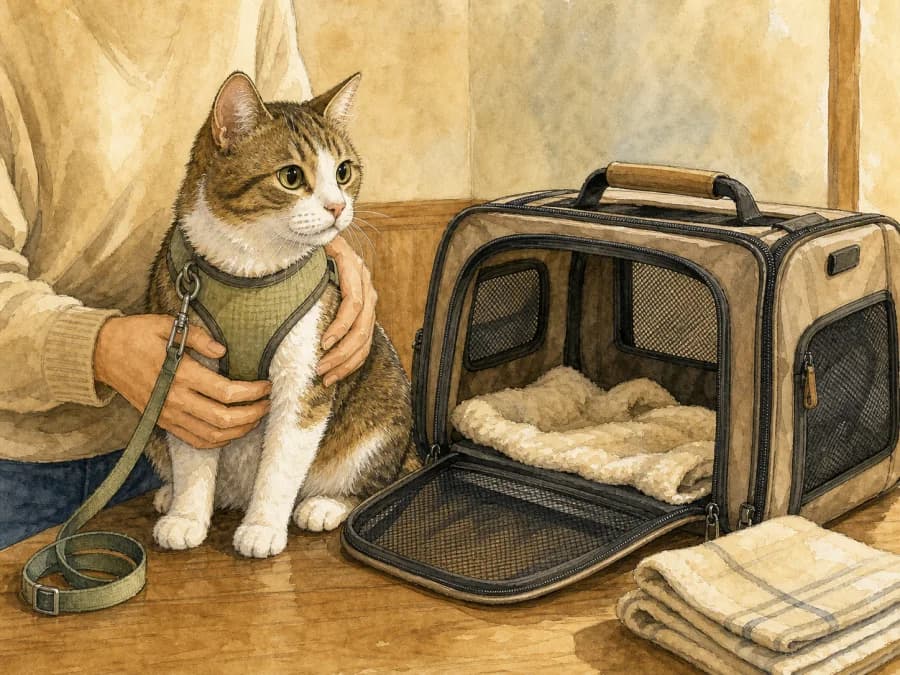
At U.S. airport security, TSA screens the empty carrier through the X-ray machine. Your cat should not go through the X-ray machine. You remove the cat from the carrier, carry the cat or walk through screening with the cat on a leash/harness, and then put the cat back into the carrier after screening.
For cats who may bolt, ask for a private screening room before taking the cat out. This is one of the most practical tips from experienced cat travelers. The airport may still be stressful, but a closed room is far safer than opening a carrier in a crowded checkpoint lane.
Use a harness and leash even if your cat normally freezes. Fear can change behavior fast.
For the full travel-day sequence, see the flying with a cat in the cabin checklist.
Documents: Domestic vs International
For many routine U.S. domestic flights, the airline's policy is the main requirement. But domestic does not mean "no rules." Your destination state or territory may have health requirements, and airlines may ask for documents on certain routes.
APHIS notes that requirements for moving pets between U.S. states and territories are set by the receiving state or territory, not by APHIS. Hawaii and Guam are special cases for cats and can involve additional local requirements.
International travel is different. USDA APHIS advises contacting a USDA-accredited veterinarian as soon as you decide to travel internationally. Your destination country sets the entry requirements, and those rules can include microchips, rabies vaccination timing, tests, treatments, and an endorsed health certificate.
If your cat is entering the United States from another country, CDC currently says cats must appear healthy on arrival and does not list rabies vaccination proof as a CDC import requirement for cats. That does not mean you can skip document checks; your airline, state, territory, or country of departure may still ask for records.
Flight-Day Packing List
Pack light, but do not pack randomly. You need a small kit that helps you manage delays, accidents, and check-in questions.
Bring:
- Airline-approved carrier.
- Harness and leash.
- Absorbent pads for the carrier.
- One or two spare pads in a zip bag.
- A small amount of familiar food or treats.
- Collapsible bowl if your travel day is long.
- Wipes and a small trash bag.
- Printed and digital copies of any required documents.
- Your cat's microchip number and vet contact.
- A familiar cloth that smells like home.
- Any medication prescribed by your veterinarian.
Do not feed a large meal right before leaving unless your vet gives different instructions. For long travel days, ask your vet how to handle food, water, and medication timing for your specific cat.
What Owners Often Underestimate
Owner reports tend to repeat the same stress points:
- The cat was calm at home but panicked at security.
- The airline employee interpreted the carrier rule differently than expected.
- A delay turned a manageable trip into a long confinement day.
- The cat did not eat, drink, pee, or poop until after arriving.
- The cat wanted to push through the zipper during the longest flight segment.
- A connection airport had no easy private place to reset the cat.
These stories do not mean flying is always wrong. They mean door-to-door time matters more than flight time. A "two-hour flight" can become six or seven hours in the carrier once you include travel to the airport, check-in, security, boarding, delays, landing, bags, and the ride home.
After the Flight
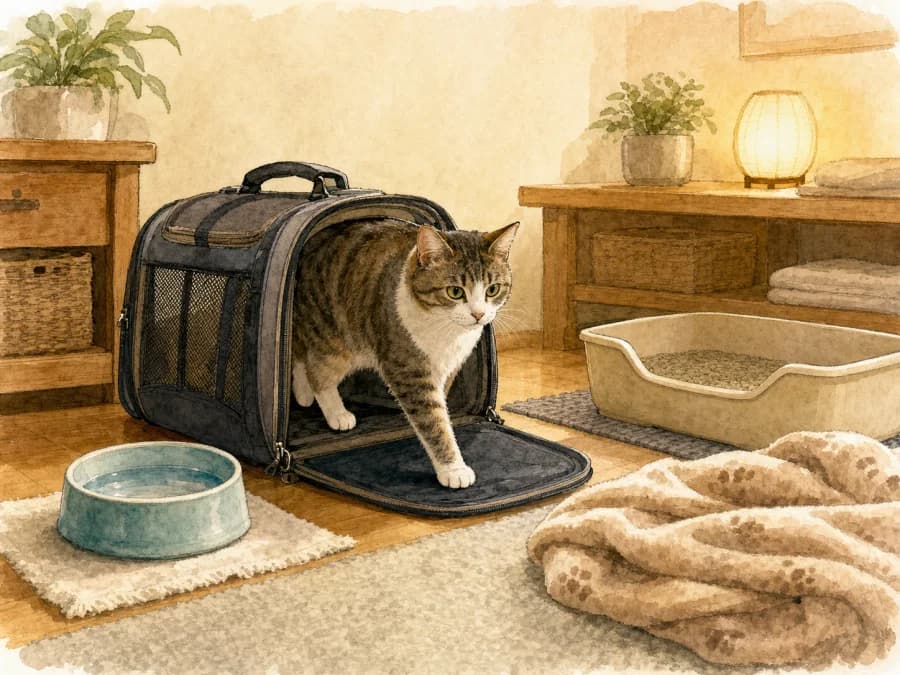
When you arrive, give your cat a small quiet room before offering the whole home. Set up water, food, litter, and a familiar blanket. Many cats will wait to use the litter box until they feel safe again.
Call your vet if your cat shows breathing difficulty, collapse, repeated vomiting, extreme lethargy, signs of heat stress, or urinary distress. A cat who repeatedly tries to urinate but produces little or nothing needs urgent veterinary guidance.
Key Takeaway
Flying with a cat is less about being brave and more about removing surprises. Confirm the airline rules, train the carrier, plan for TSA, verify documents, keep the travel day simple, and be honest about your cat's health and stress tolerance.
References
TSA: Tips for Traveling With Small Pets Through Security
USDA APHIS: Take a Pet From the United States to Another Country
USDA APHIS: Take a Pet From One U.S. State or Territory to Another
CDC: Bringing an Animal into the United States
Animal Behavior & Care Writer
Rachel has a background in zoology and animal care volunteering. She writes about cat behavior, enrichment, and the relationship between cats and their everyday environment, turning animal-care knowledge into simple steps that cat parents can actually use.
Written by Rachel Breen. Last updated Jul 9, 2026 Read our Editorial Policy.
FAQ
Frequently asked questions
Can I take my cat on a plane?
Usually, yes, if your airline allows cats on your route and your cat fits the airline's carrier, age, size, and health rules. Confirm the exact flight before buying.
Can my cat sit on my lap during the flight?
Most airlines require cabin pets to stay fully inside the carrier under the seat. Do not assume you can open the carrier or hold your cat during flight.
Does TSA make cats come out of the carrier?
Yes. TSA screens the empty carrier through X-ray, while the cat is carried or walked through screening separately. If your cat may bolt, ask for private screening.
Do cats need rabies paperwork to enter the United States?
CDC currently does not list rabies vaccination proof as a CDC import requirement for cats entering the United States, but cats must appear healthy, rabies vaccination is recommended, and destination or airline rules may still apply.
How early should I start preparing my cat for a flight?
Start as early as possible. Two to four weeks of carrier training is better than one frantic weekend, and international travel may require months of document planning.
Is cargo safe for cats?
Cargo risk depends on the airline, route, weather, aircraft, cat health, and handling conditions. For short-nosed cats, sick cats, extreme weather, or long routes, discuss the risk with your vet and airline before booking.
New on NookPetdia
Latest articles

Cat Suddenly Dislikes Old Litter? Troubleshooting Guide
A cat can suddenly reject old litter because of batch changes, scent, dust, pain, box fit, or stress. Use this step-by-step troubleshooting order.

How Many Litter Boxes for Multiple Cats? N+1 Rule
For multiple cats, the N+1 litter box rule is a strong starting point, but placement, cat relationships, and escape routes decide whether it works.

Where to Put a Litter Box? Placement Rules Cats Use
The best place for a litter box is quiet, accessible, away from food, and safe to enter and leave. Use these placement rules before hiding the box.