A resident cat that starts spraying or peeing after a new cat arrives is usually reacting to a changed home, not plotting revenge. The familiar scent map has been disturbed, resources feel less secure, and the old cat may be trying to make the house smell like itself again.
The fastest fix is rarely a lecture or a punishment. For resident cat marking after a new cat, slow the relationship down, separate resources, remove urine odor, and make the resident cat's daily path feel predictable again.
AI Summary
Overview
Reset: If marking starts after a new cat, go back to separation and rebuild the introduction instead of forcing contact.
Resources: Two cats usually need at least three litter boxes, spread out so one cat cannot guard every route.
Cleaning: Marked spots need enzyme cleaning and temporary access control, not perfume or surface wiping alone.
Health: Straining, blood, tiny urine amounts, hiding, or appetite loss should involve a veterinarian promptly.
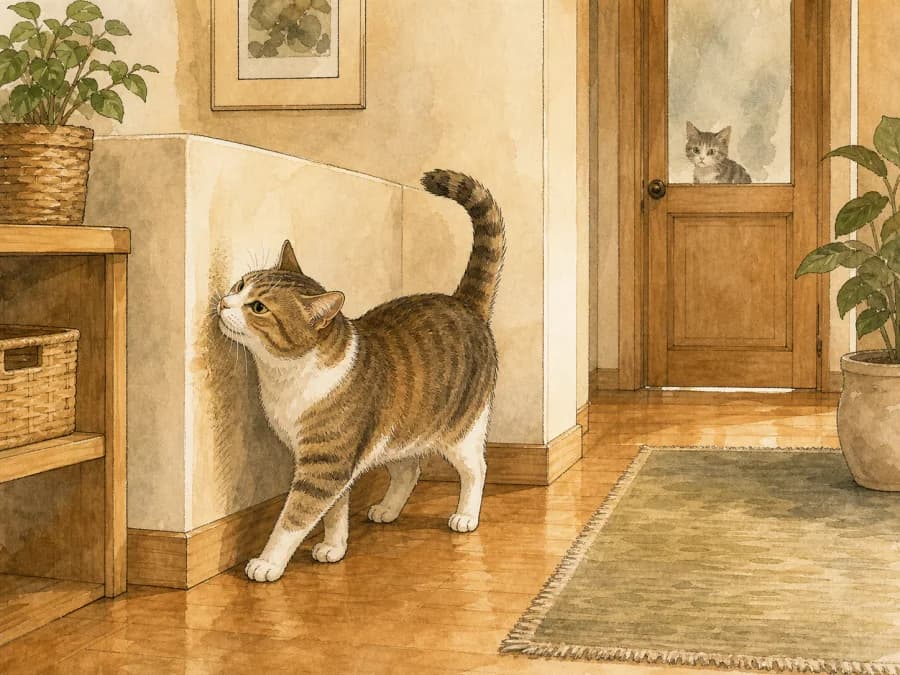
Why a New Cat Can Trigger Marking
A new cat brings unfamiliar smell, movement, food competition, litter box sharing, and changes in owner attention. Even if the cats are not fighting, the resident cat may feel that core territory has been invaded. Marking is one way a cat tries to stabilize that territory.
Some cases start immediately. Others show up after a few weeks, when the new cat begins exploring more rooms or using boxes that used to belong to the resident cat. That delayed timing is why owners often say, "They were fine at first."
Confirm Whether It Is Marking, Avoidance, or Illness
Marking is often a small amount of urine on vertical surfaces near doors, sofas, windows, bedding, or places the new cat uses. Box avoidance is more likely when the cat squats and leaves a larger puddle on a horizontal surface. Illness can look like either one.
| Pattern | Possible meaning | First response |
|---|---|---|
| Small spray on doorways, sofa sides, or walls | Territory marking | Separate cats, reduce triggers, clean marked spots thoroughly. |
| Large puddle on bed, rug, or floor | Box avoidance, stress, or pain | Check health signs and add easier litter box access. |
| One cat waits near the box or chases the other | Resource blocking | Spread boxes into separate rooms with escape routes. |
| Tiny amounts, straining, blood, crying, or no urine | Possible urinary problem | Contact a veterinarian promptly. |
Restart the Introduction From Separation
If marking began after direct contact, do not keep pushing the cats together to "work it out." Put the new cat back in a safe room with its own food, water, litter, bedding, and scratching surface. Let the resident cat keep the rest of the home while stress comes down.
Then restart the introduction from separation: exchange bedding, feed on opposite sides of a closed door, use a baby gate or cracked-door setup only when both cats are eating and recovering calmly, and keep early face-to-face sessions short. If staring, stalking, chasing, or hiding returns, step back instead of increasing exposure.
A useful pace test is what happens after the session ends. A hiss that fades and a cat that returns to eating may be manageable. A cat that hides for hours, refuses food, guards the hallway, or marks again is telling you the step was too big. Shorter, calmer repetitions usually work better than one long meeting that leaves both cats keyed up.
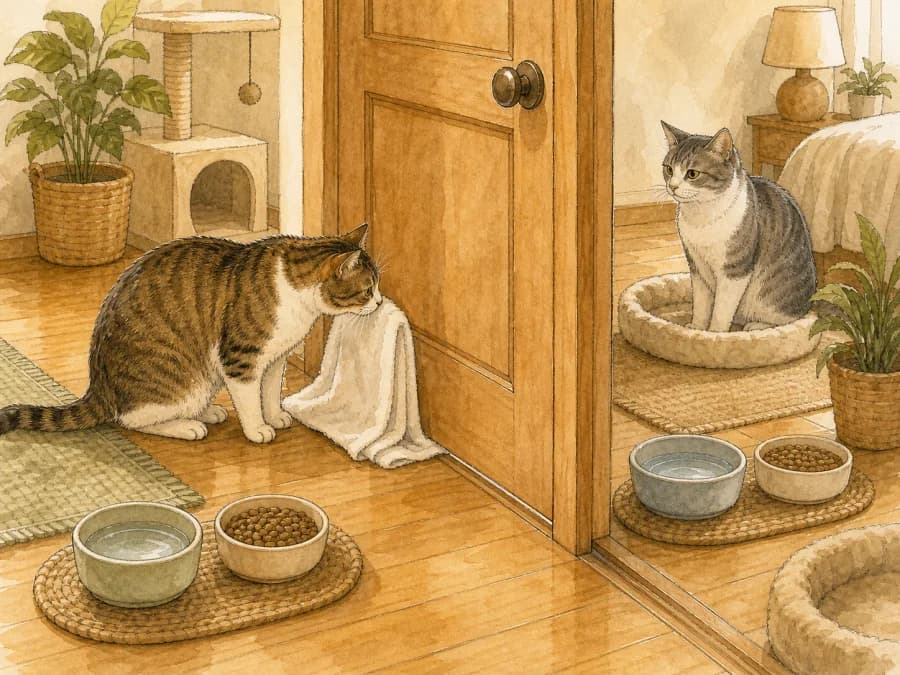
| Stage | Goal | Move forward when |
|---|---|---|
| Separate rooms | Stop direct conflict and protect routines | Both cats eat, rest, and use boxes normally. |
| Scent swapping | Make the other cat's smell predictable | No hiding, food refusal, or fixation around swapped items. |
| Door feeding | Create calm association near the barrier | Both cats eat near the door with loose body language. |
| Short visual access | Let them see each other without contact | They can disengage and recover quickly. |
| Supervised sessions | Build shared time gradually | No chasing, blocking, or litter box guarding appears. |
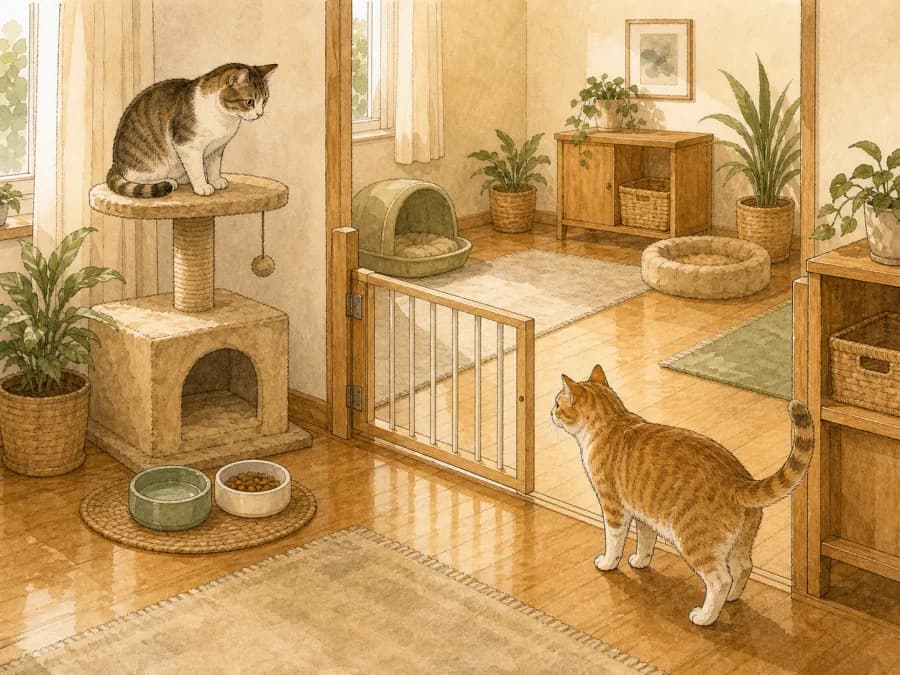
Rebuild the Resource Map
Many multi-cat marking problems are really traffic problems. The home may have enough objects on paper, but the boxes, food, water, beds, and scratchers are clustered in spots one cat can guard. A hallway, laundry room, or covered litter station can become a choke point.
For two cats, start with at least three litter boxes in separate locations, not three boxes lined up like one giant bathroom. Add more than one feeding station, more than one water station, and resting spots at different heights. The practical rule is to give each cat safe routes.
Keep the resident cat's favorite bed, perch, and attention routine intact while the new cat settles in. The goal is not to make one cat "win." It is to make the home feel abundant enough that marking is no longer useful.
Protect the Resident Cat's Old Routine
Many marking flare-ups happen when the new cat accidentally takes over everything at once: the sunny window, the owner's lap, the hallway route, the old food station, and the best litter box. From the resident cat's view, that can feel like losing the whole house in a week.
During the reset, give the resident cat predictable private time, familiar play sessions, and first access to a few high-value routines. This is not about jealousy in a human sense. It is about lowering competition so the cat no longer needs urine to announce, "I still belong here."
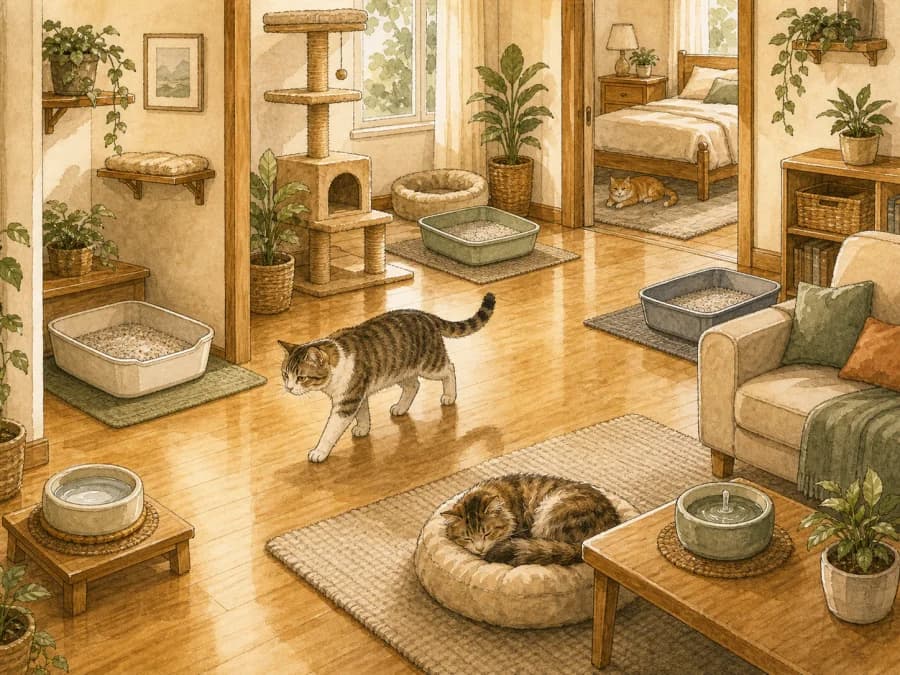
If One Cat Blocks the Litter Box
Blocking can be quiet. One cat may sit near a doorway, stare from a hallway, chase after the other leaves the box, or claim the room where all the boxes are kept. The blocked cat may still "know" how to use the box but choose a bed, rug, or shower because it feels safer.
Move boxes so each cat can enter and leave without passing the other cat. Avoid dead-end corners, tight closets, and covered boxes during the reset. If the new cat is confined at night, make sure the resident cat does not lose access to its old bathroom route, and vice versa.
Clean Marked Areas and Manage Triggers
Urine odor keeps a marking loop alive. Use a pet urine enzymatic cleaner, follow the label's contact time, and keep cats away from the area until it is dry. If a spot has soaked into upholstery, one surface wipe may not reach the odor cue.
Also look for outside triggers. Outdoor cats at windows, new smells in the entryway, guest pets, or the new cat's bedding near the resident cat's favorite route can all keep the pressure high. During the reset, block window sightlines if outdoor cats are causing agitation and keep new-cat scent items controlled.
What Not To Do
Do not punish the resident cat, force nose-to-nose meetings, lock the cats together, or remove the resident cat's favorite resources to make room for the newcomer. Do not rely on perfume, bleach odor, or yelling to stop urine marking. Instead, clean marked spots and change the environment that made marking useful.
When to Call a Vet or Behavior Professional
Call a veterinarian promptly for straining, blood, repeated tiny urine spots, crying, no urine, hiding, appetite loss, vomiting, or sudden aggression. Stress can trigger urinary issues, and urinary pain can make a cat mark or avoid the box.
If medical causes are ruled out and the marking continues after a careful separation and resource reset, ask your veterinarian for a referral to a qualified feline behavior professional. Long-running multi-cat tension is easier to fix with a clear plan than with another round of random product changes.
Key Takeaway
After a new cat arrives, urine marking is a signal that the resident cat's home no longer feels secure. Separate first, rebuild the introduction slowly, spread resources, clean deeply, and treat urinary warning signs as medical until proven otherwise.
References
Humane World for Animals: How to Introduce Your New Cat to Resident Cats
International Cat Care: Introducing Cats
Ohio State Indoor Pet Initiative: Litter Boxes
VCA Animal Hospitals: Cat Behavior Problems - Marking and Spraying Behavior
AAFP/ISFM: Guidelines for Diagnosing and Solving House-Soiling Behavior in Cats
Founder & Editor
Micky is the founder and editor of NookPetdia, sharing practical cat-care guidance and product-fit advice for everyday cat parents.
Written by Micky. Read our Editorial Policy.
FAQ
Frequently asked questions
New on NookPetdia
Latest articles

Black Cat Jewelry Guide (Style, Meaning, Gift Timing)
Black cats are the hardest subject to render in a small pendant and the best subject for silhouette work. Here is which styles hold up, what the symbolism actually carries, and the two dates worth planning a gift around.
Cat Mom & Cat Dad Gift Ideas That Aren't Cheap Charms
Most cat-themed gifts are novelty items that get used twice. Here is how to buy something a cat parent keeps — including what to confirm about metal, sizing, and timing before you order anything personalized.
Custom Pet Portrait Jewelry vs Print: What's Worth Buying
Wearable portrait jewelry and framed pet portraits solve different problems. Here is how they compare on likeness, cost, durability, and daily use — and which one to commission first.