A lot of cats have a very specific button: touch the spot where the tail meets the back, and the rear end rises like an elevator. Some cats purr, knead, or back into your hand for more. Others enjoy it for five seconds, then whip around and bite. Both reactions make sense once you understand how sensitive the tail base is.
The important part is not whether butt pats are “good” or “bad.” The useful question is whether your cat is choosing the interaction, whether the touch is light enough, and whether you can tell the difference between pleasure, overstimulation, itch, and pain.
Quick answer
Overview
Why it happens: The tail base and sacral area are packed with sensitive nerves, so light tapping or scratching can feel intensely pleasurable to some cats.
Why cats bite after enjoying it: Tail-base stimulation can tip from pleasant to overwhelming quickly. A sudden bite is often a stop signal, not proof that your cat was pretending to enjoy it.
Safe rule: Use fingertips, stay light, avoid hammering the spine or tail, pause every few seconds, and stop at the first sign of tension, tail lashing, or skin twitching.
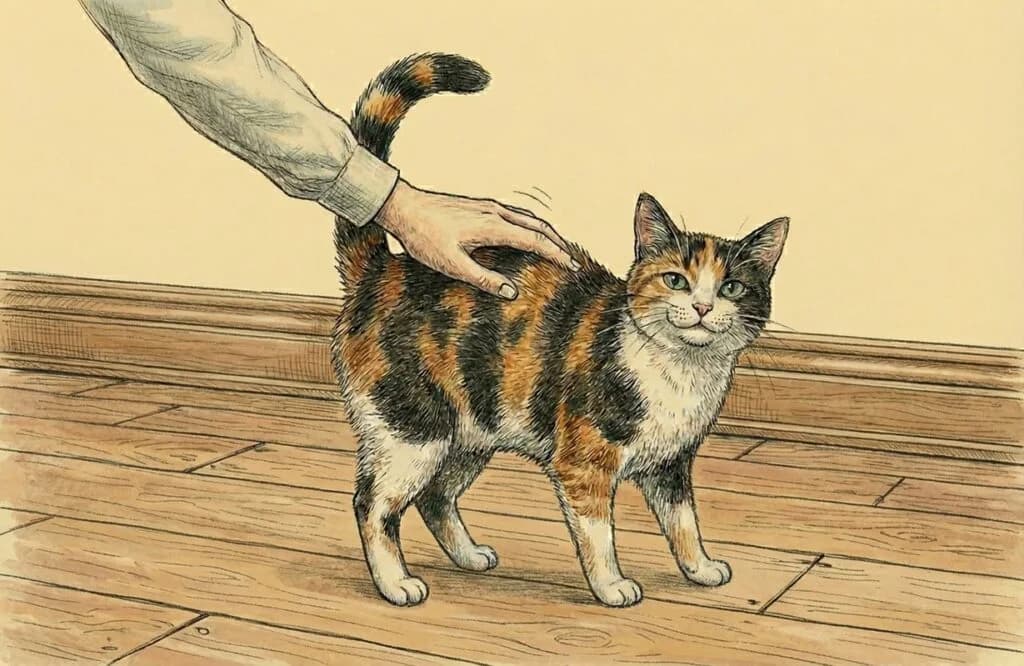
Why the Tail Base Feels So Good to Some Cats
The base of the tail sits near the sacral region, where nerves from the lower spine and tail pass through a compact area. That makes the spot far more reactive than a neutral patch of fur on the middle of the back. For some cats, a light scratch or fluttering tap creates a strong, satisfying sensation, a bit like getting help with an itch they cannot quite reach.
That sensitivity is also why the reaction can look dramatic. A cat may lift the rear, raise the tail, tremble the tail tip, purr, make biscuits, or reposition so your fingers land on exactly the right spot. In owner discussions, people often describe this as the cat showing its “sweet spot.” The more accurate term is a sensitive touch zone: enjoyable for some cats, too much for others.
It Is Also a Social Signal
When a cat turns its back to you and raises its tail, it is often showing comfort and trust. Cats use the tail, flanks, and rear end in greeting and scent communication. A cat that backs into your hand is usually not being rude; it is inviting contact in a very cat-like way.
Still, trust is not unlimited consent. A cat can invite touch and then change its mind. Tail-base petting should always be treated as an opt-in interaction that your cat can end at any moment.
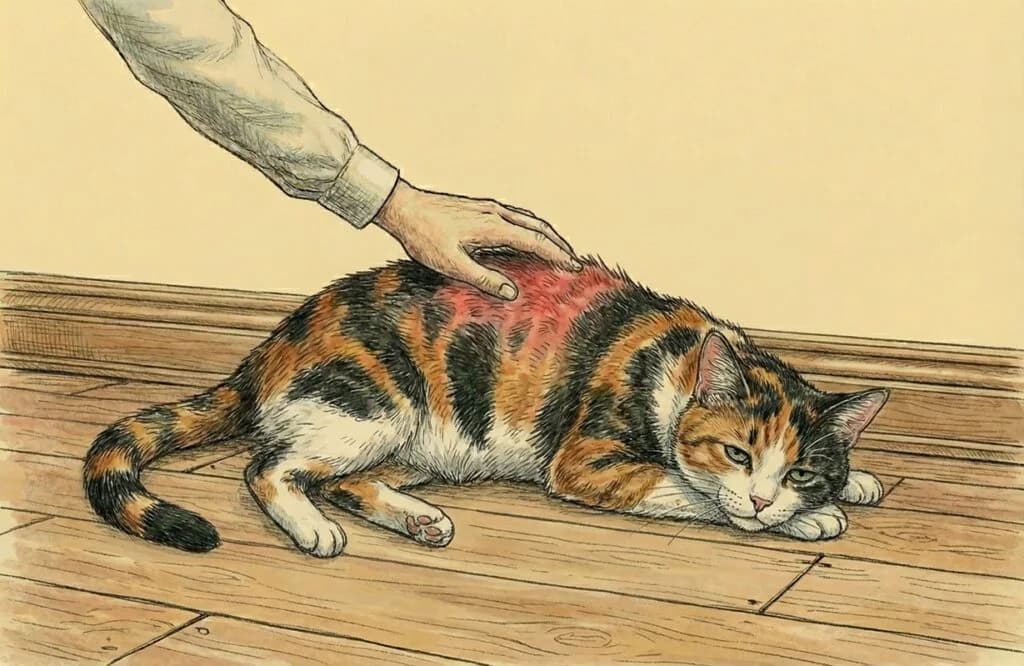
Why Cats Bite After Butt Pats
The most common reason is overstimulation. The same nerves that make the tail base feel good can start sending too much input. What felt pleasant a few seconds ago may suddenly feel irritating, painful, or simply too exciting.
This is why many owners report the same pattern: the cat asks for tail-base pats, enjoys them, then turns around to mouth, bite, grab the hand, or kick with the back feet. Some cats bite gently; others bite hard enough to break skin. The safer interpretation is simple: the session lasted too long, the pressure was too strong, or the cat has a very low stimulation threshold.
| Body signal | Likely enjoying it | Time to stop |
|---|---|---|
| Tail | Tail up, relaxed base, small tremble | Hard tail swishing, tail tip flicking, tail clamping |
| Body | Leans in, stays loose, purrs | Back stiffens, skin ripples, body twists toward your hand |
| Face and ears | Soft eyes, neutral ears | Ears flatten, pupils widen, fixed stare at your hand |
| Mouth and paws | Gentle rubbing or kneading | Mouthing, biting, grabbing, bunny-kicking |
| After you stop | Stays nearby or asks again | Walks away, hides, keeps licking or biting the tail base |
Use the “time to stop” column as the rule, even if your cat seemed to be enjoying the first few seconds.
Safe Technique: Light, Short, and Off the Spine
Think of this as a tiny touch game, not a slap. The safest approach is closer to quick piano fingers than a heavy open-palm pat.
- Use your fingertips or finger pads, not your palm or knuckles.
- Aim for the muscles beside the tail base rather than the bony midline of the spine or the tail itself.
- Keep the pressure light enough that your own hand does not sting or make a loud smack.
- Work in short bursts of three to ten seconds, then stop and wait.
- Continue only if your cat voluntarily stays, leans in, or repositions for more.
- Stop immediately if your cat turns to bite, lashes the tail, flattens the ears, twitches the skin, vocalizes sharply, or tries to leave.
If your cat tends to bite after butt pats, shorten the session before the bite happens. Do not wait for the warning to become teeth. A good session ends while the cat still feels good.
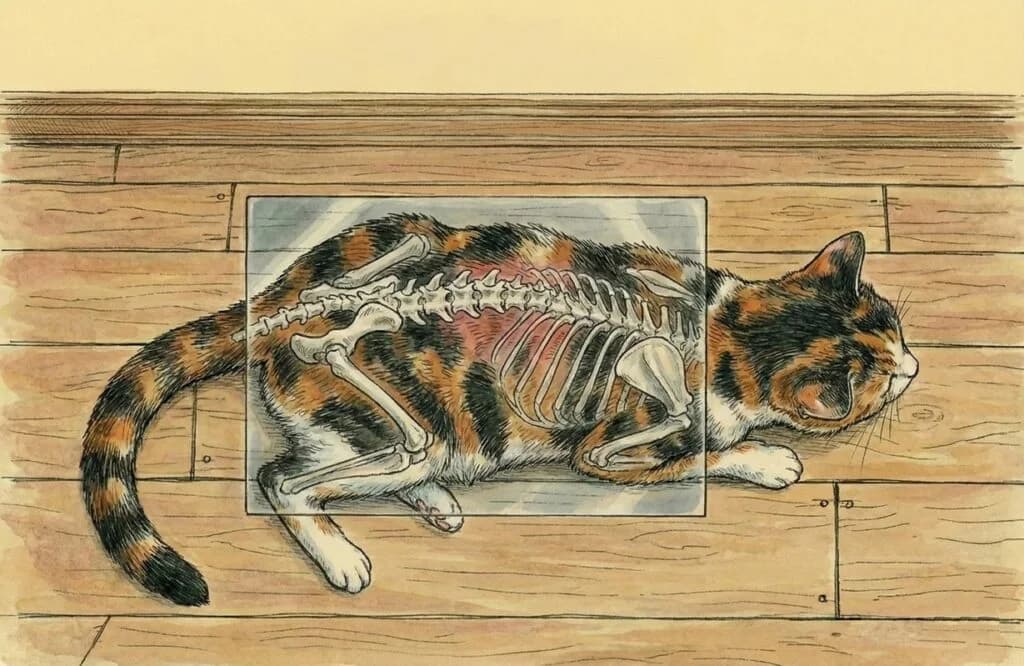
Do Not Confuse “Feels Good” With “Hit Harder”
Some owners worry that any tail-base pat can cause paralysis. That is too broad. Light touch is not the same as a tail-pull injury, a door slam, a fall, or blunt trauma. Veterinary discussions of tail trauma usually involve forceful pulling, crushing, accidents, or injury to the nerves that affect the tail, hind limbs, bladder, or bowel control.
The practical takeaway is still conservative: do not hit the lower back, do not pull the tail, do not use tools, and do not keep going because the cat “acts addicted.” If a cat wants stronger and stronger stimulation, choose a safer substitute such as cheek scratches, chin rubs, brushing, play, or a scratcher session.
When Butt Pats Are Not Just a Cute Habit
A tail-base reaction can also be a clue that something else is going on. Stop the butt pats and investigate if the reaction looks frantic, painful, itchy, or new.
- Possible overstimulation: sudden biting, grabbing, bunny-kicking, tail lashing, or running away after a few seconds.
- Possible skin or flea problem: frequent licking or biting at the tail base, black pepper-like specks, scabs, dandruff, hair loss, or redness.
- Possible feline hyperesthesia: rippling skin along the back, sudden frantic grooming, tail chasing, dilated pupils, agitation, or aggression when touched.
- Possible pain or injury: crying, hiding, tail hanging limp, hind-end weakness, trouble jumping, urine leakage, fecal accidents, or guarding the lower back.
Is It Heat or Hormones?
Tail-up posture can be part of heat behavior in unspayed female cats, but butt-pat enjoyment is not the same as being in heat. Neutered males, spayed females, and cats that have never shown mating behavior may still enjoy tail-base scratching.
Look at the whole pattern. Heat is more likely when a cat is not spayed and also shows persistent calling, rolling, restlessness, repeated mating posture, appetite changes, and attempts to escape. If a spayed cat suddenly develops strong heat-like behavior, ask a veterinarian about possible medical causes rather than assuming butt pats are the answer.
Check for Fleas, Flea Dirt, and “Stud Tail”
The tail base is a classic place for owners to notice flea dirt, scabs, oiliness, or irritation. If your cat is obsessed with that area, the first question should not be “How do I pat harder?” It should be “Is this itchy?”
A simple home clue is the wet paper towel test. Comb or wipe a few black specks onto a damp white paper towel. If the specks dissolve into reddish-brown stains, they may be flea dirt. If the area is greasy, waxy, or clumped near the top of the tail, especially in an intact male cat, ask your vet or groomer about oily tail skin problems such as stud tail.
When to Call the Vet
Book a veterinary visit if tail-base touch causes pain, if your cat suddenly becomes defensive about the lower back, or if you see skin rippling, compulsive licking, hair loss, scabs, black debris, hind-end weakness, tail limpness, urine leakage, or fecal accidents. These signs need a health check, not more stimulation.
For possible feline hyperesthesia, your vet may need to rule out fleas, allergies, skin disease, pain, neurological problems, and stress-related triggers. For possible tail or sacral injury, bladder and bowel control matter, so do not wait if the tail is limp or your cat is leaking urine.
Sources and editorial notes
This update was informed by owner-reported patterns from image/text discussions about tail-base petting, biting after petting, neutered cats that still request pats, and tail-base flea or skin concerns. Medical framing was checked against Cornell Feline Health Center guidance on feline hyperesthesia, Cornell Feline Health Center guidance on fleas, PetMD guidance on flea dirt, and peer-reviewed veterinary literature on feline tail-pull injury.
Founder & Editor
Micky is the founder and editor of NookPetdia, sharing practical cat-care guidance and product-fit advice for everyday cat parents.
Written by Micky. Last updated Jun 13, 2026 Read our Editorial Policy.
FAQ
Frequently asked questions
Does my cat trust me if they show elevator butt?
Often, yes. A cat that turns around, raises the tail, and leans into your hand is usually comfortable with you. Still, tail-base petting should stop as soon as the cat shows tension or tries to leave.
Why does my cat ask for butt pats and then bite me?
The most likely explanation is overstimulation. Tail-base touch can feel good at first and then become too intense. Stop earlier, use less pressure, and let your cat restart the interaction if they want more.
Do male cats like butt pats too?
Yes. Tail-base sensitivity is not limited to female cats or cats in heat. Neutered males and spayed females may also enjoy light tail-base scratching.
Can butt pats make my cat go into heat?
No. Petting does not create a heat cycle, though it can trigger postures that look similar to heat behavior. Persistent calling, rolling, escape attempts, or repeated mating posture need a broader health and hormone check.
What if my cat hates butt pats?
That is normal. Some cats find tail-base touch too intense, annoying, or painful. Respect the preference and use gentler contact zones such as cheeks, chin, shoulders, or play.
New on NookPetdia
Latest articles
Cat Suddenly Dislikes Old Litter? Troubleshooting Guide
A cat can suddenly reject old litter because of batch changes, scent, dust, pain, box fit, or stress. Use this step-by-step troubleshooting order.
How Many Litter Boxes for Multiple Cats? N+1 Rule
For multiple cats, the N+1 litter box rule is a strong starting point, but placement, cat relationships, and escape routes decide whether it works.
Where to Put a Litter Box? Placement Rules Cats Use
The best place for a litter box is quiet, accessible, away from food, and safe to enter and leave. Use these placement rules before hiding the box.