Dried fish treats can be safe for some cats when they are made for cats, served in tiny amounts, and offered as an occasional treat. They can also be a poor fit if they are too salty, too hard, too large, bony, spoiled, or used so often that they replace balanced food.
The owner reports behind this draft were full of small but important details: cats refusing whole dried fish, cats dropping hard pieces, owners wondering about bones, cats rejecting bitter-smelling fish, and cats becoming suspicious when fish was mixed into the main meal.
In the supplemental owner research we reviewed, the safety worries clustered around three practical questions: Is this too salty? Could a hard piece or bone hurt my cat? Is a human snack fish being treated like a cat treat? Those are better questions than arguing whether all fish is good or bad.
So the better question is not "is dried fish safe or unsafe?" It is "what kind of dried fish, how much, and for which cat?"
AI Summary
Overview
Use dried fish treats only if they are intended for cats, plain, low in salt, easy to chew, fresh-smelling, and served in very small amounts. Avoid human snack fish, seasoned fish, very hard pieces, sharp bones, and any treat that makes your cat vomit, gag, drool, or stop eating normal food.
If your cat refuses dried fish, that is fine. It is a treat, not a dietary requirement.
If your cat is a kitten, senior, overweight, diabetic, has kidney or urinary concerns, or is already eating poorly, ask your veterinarian before using fish treats to solve the problem. A treat should not replace medical advice or a complete diet.
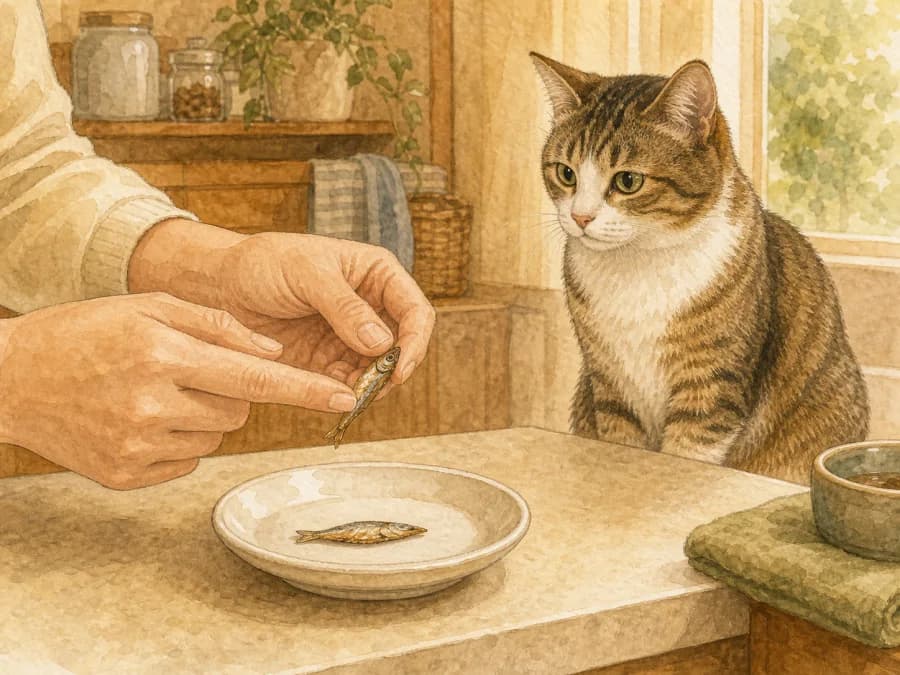
Dried Fish Treat Safety Checklist
| Check | Better choice | Avoid |
|---|---|---|
| Intended user | Treat labeled for cats | Human snack fish |
| Ingredients | Plain fish only or simple cat-safe formula | Salt, spices, onion, garlic, sugar, sauces |
| Texture | Small, brittle, easy to break | Rock-hard pieces or sharp fragments |
| Size | Tiny pieces | Whole fish that your cat cannot manage |
| Smell | Fresh, mild, not rancid | Bitter, sour, oily, or spoiled smell |
| Feeding role | Occasional treat | Main meal replacement |
| Cat response | Curious and comfortable | Gagging, vomiting, drooling, pawing at mouth |
The Main Risks to Think About
Salt and seasoning
Many dried fish products are made for people, not cats. Human snack fish may be salty, seasoned, smoked, sweetened, or prepared with ingredients cats should not eat. Do not use a human snack just because it looks like the same animal protein.
Bones and hard texture
Small fish treats can include tiny bones or stiff parts. Some cats chew them well. Others drop pieces, gag, or try to swallow awkwardly. If a treat seems sharp, brittle in a bad way, or too hard to break with your fingers, skip it.
Do not use internet fish-bone "self-help" tricks on a cat. If your cat gags, drools, paws at the mouth, coughs, cannot swallow normally, or seems distressed after a fish treat, stop the treat and call a veterinarian. A cat cannot tell you where something is stuck, and forcing food or water can make a bad situation worse.
Too much treat, not enough balanced food
Treats can train a cat to hold out for higher-value extras. VCA's picky eater guidance warns that table scraps and too many treats can reduce interest in balanced cat food. Dried fish should stay occasional and small.
Raw or underprocessed fish concerns
VCA's thiamine guidance notes that some raw fish contain thiaminase, an enzyme that destroys thiamine. Thiamine deficiency is serious in cats. Commercially prepared cat foods are formulated differently from casual raw fish feeding, so do not use raw fish habits as a shortcut for safety.
How to Offer Dried Fish More Safely
Offer the treat separately from the main meal. Start with a tiny flake or crumb, not a whole fish. Watch how your cat handles the texture.
If your cat walks away, do not chase, hand-feed aggressively, or mix it into the regular food. A disliked fish smell can make a reliable meal less appealing.
If your cat likes it, keep the amount modest. Treats should be an extra, not a second diet. For many cats, one small piece is plenty.
This is where a lot of owner stories go wrong: a treat starts as a test, then becomes a topper, then becomes the only thing the cat is excited to eat. If the treat makes the main meal less reliable, it is no longer helping.
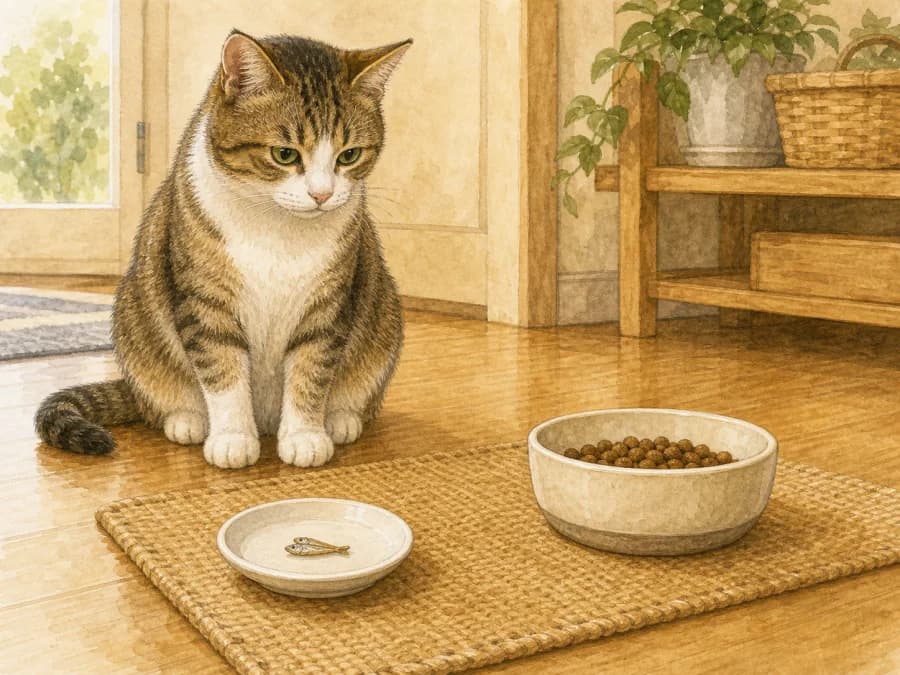
What If My Cat Refuses Dried Fish?
Refusal is not a safety failure. It is feedback.
Your cat might dislike fish smell, distrust whole fish shapes, prefer softer textures, or simply want poultry-based treats. Some owners in the research notes described cats that ate the regular food but left the fish behind every time. That is a clean answer: stop buying that treat.
For the preference side, read my cat doesn't like dried fish. For the broader myth, see do cats like fish.
When to Stop and Call the Vet
Stop offering the treat and contact a veterinarian if your cat:
- Vomits repeatedly after eating it.
- Gags, coughs, drools, or paws at the mouth.
- Seems painful while chewing.
- Refuses normal food after the treat.
- Has diarrhea, lethargy, or weakness.
- Is not eating enough overall.
This is especially important for kittens, seniors, cats with kidney disease, diabetic cats, overweight cats, and cats with any known medical condition.
Key Takeaway
Dried fish treats are optional. The safest version is plain, cat-intended, tiny, fresh, easy to chew, and separate from the main meal. If your cat dislikes them, believe your cat and choose a different treat.
References
VCA Animal Hospitals. Thiamine.
VCA Animal Hospitals. Feline Picky Eaters.
Cornell Feline Health Center. Anorexia.
Cornell Feline Health Center. Hepatic Lipidosis.
Animal Behavior & Care Writer
Rachel has a background in zoology and animal care volunteering. She writes about cat behavior, enrichment, and the relationship between cats and their everyday environment.
Written by Rachel Breen. Read our Editorial Policy.
FAQ
Frequently asked questions
New on NookPetdia
Latest articles
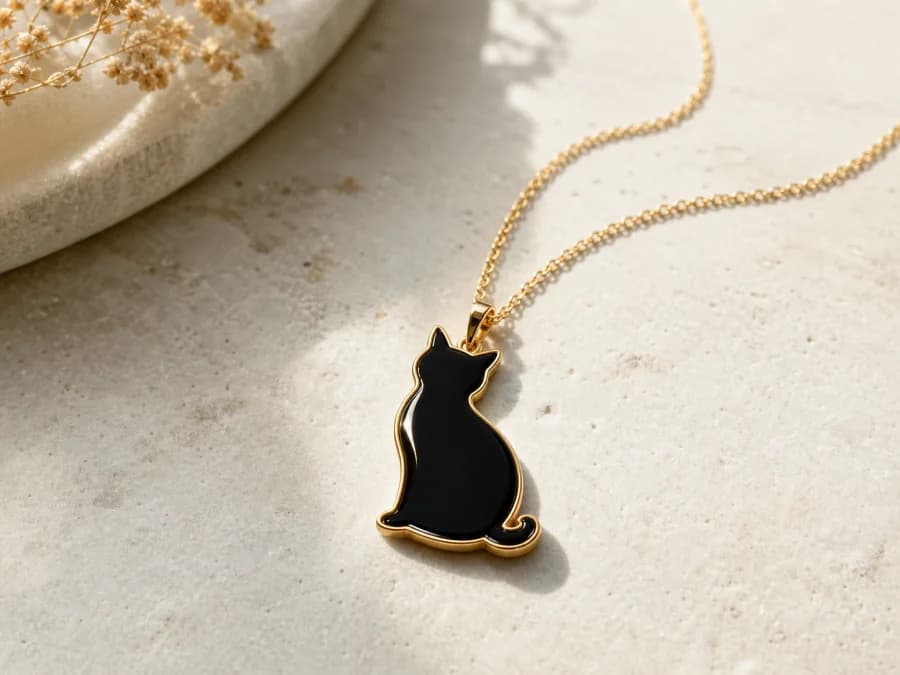
Black Cat Jewelry Guide (Style, Meaning, Gift Timing)
Black cats are the hardest subject to render in a small pendant and the best subject for silhouette work. Here is which styles hold up, what the symbolism actually carries, and the two dates worth planning a gift around.
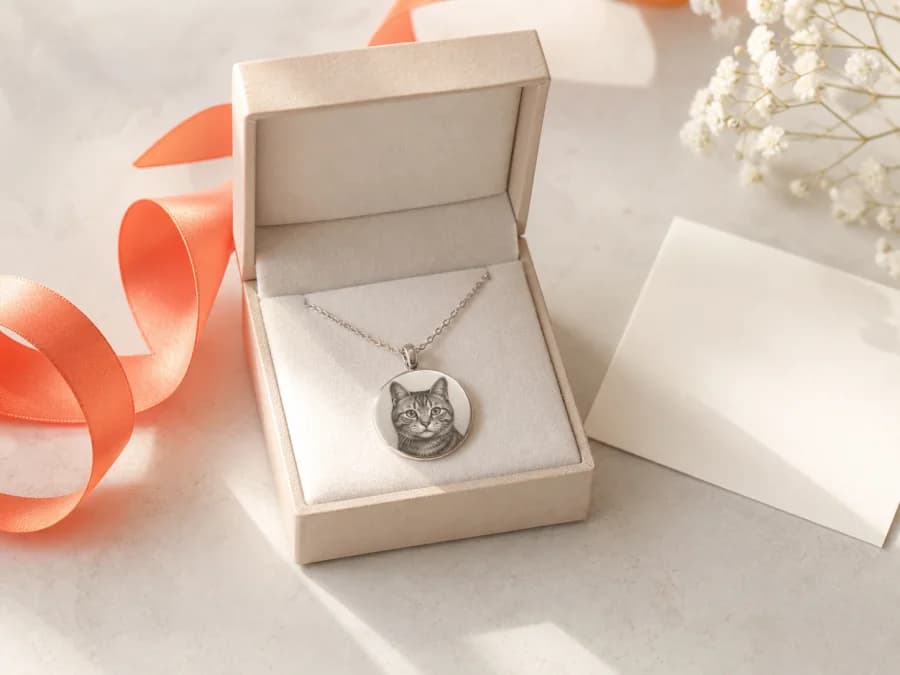
Cat Mom & Cat Dad Gift Ideas That Aren't Cheap Charms
Most cat-themed gifts are novelty items that get used twice. Here is how to buy something a cat parent keeps — including what to confirm about metal, sizing, and timing before you order anything personalized.
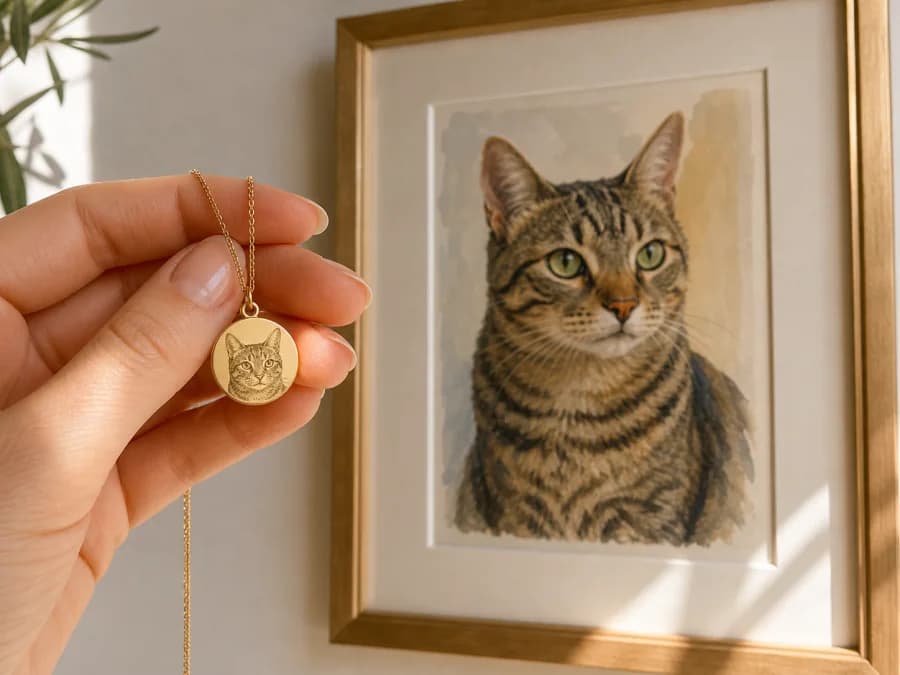
Custom Pet Portrait Jewelry vs Print: What's Worth Buying
Wearable portrait jewelry and framed pet portraits solve different problems. Here is how they compare on likeness, cost, durability, and daily use — and which one to commission first.