Cats can seem so self-contained that leaving them alone feels simple: extra food, extra water, clean litter, done.
But our team reviewed recurring cat-owner questions from people planning weekends, holidays, work trips, and family visits. The same worry kept appearing: "My cat has food and water. Is that enough?" Sometimes yes for a short stretch. Often, not for as long as people hope.
The safer answer is to plan around welfare checks, not just supplies.
AI Summary
Overview
Many healthy adult cats can handle a normal workday alone. Some can handle one overnight with careful preparation. For longer absences, arrange a sitter, trusted visitor, or boarding option.
Do not leave kittens, senior cats, sick cats, cats on medication, diabetic cats, cats with urinary issues, or cats who stop eating under stress without appropriate monitoring.
Food and water do not solve everything. A visitor can notice vomiting, lack of appetite, litter box changes, heat or cold problems, water spills, escape risks, and unusual behavior.
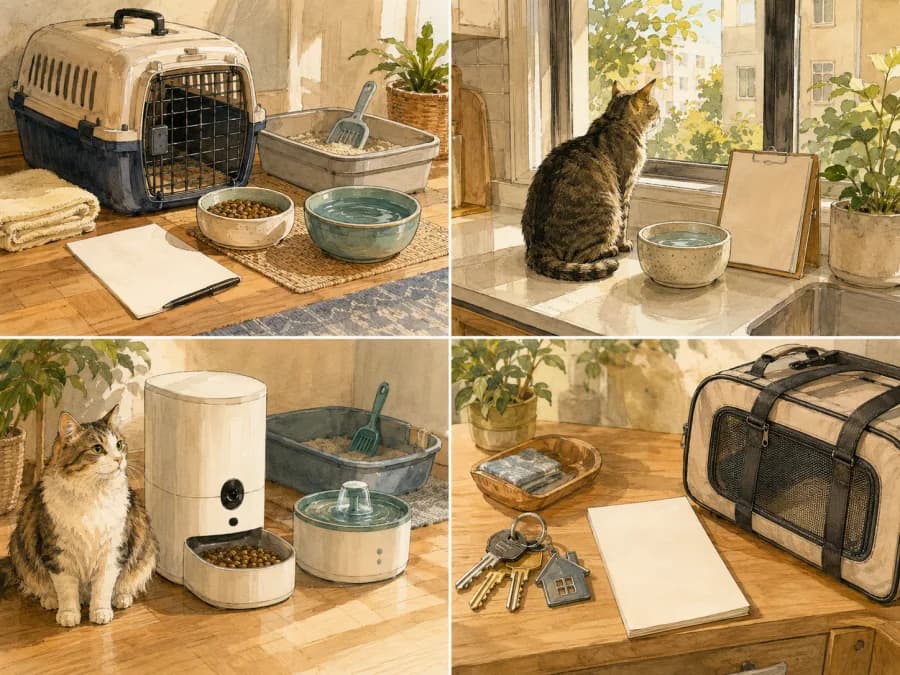
Time Ranges: A Practical Guide
| Time away | Risk level | Usually reasonable for | Better plan |
|---|---|---|---|
| Normal workday | Low for many cats | Healthy adult cats with food, water, litter, and safe rooms | Keep the routine predictable |
| One overnight | Moderate | Stable adult cats with no medical or eating concerns | Prepare extra water, clean litter, and a local backup |
| Two days | High without checks | A small number of very stable cats, but not ideal | Arrange at least one visit |
| Three or more days | High | Not a "set and forget" situation | Sitter visits, trusted visitor, boarding, or mixed plan |
| Any time away | Individual risk | Kittens, seniors, sick cats, medicated cats, anxious cats | Ask your vet or use an experienced caregiver |
This is not a law. It is a risk frame. Your cat's age, health, feeding routine, litter habits, climate, and temperament matter.
The important shift is this: do not ask, "How long can a cat survive?" Ask, "How long can my cat stay comfortable, hydrated, fed, clean, temperature-safe, and observable?"
Why "Enough Food" Is Not the Same as Care
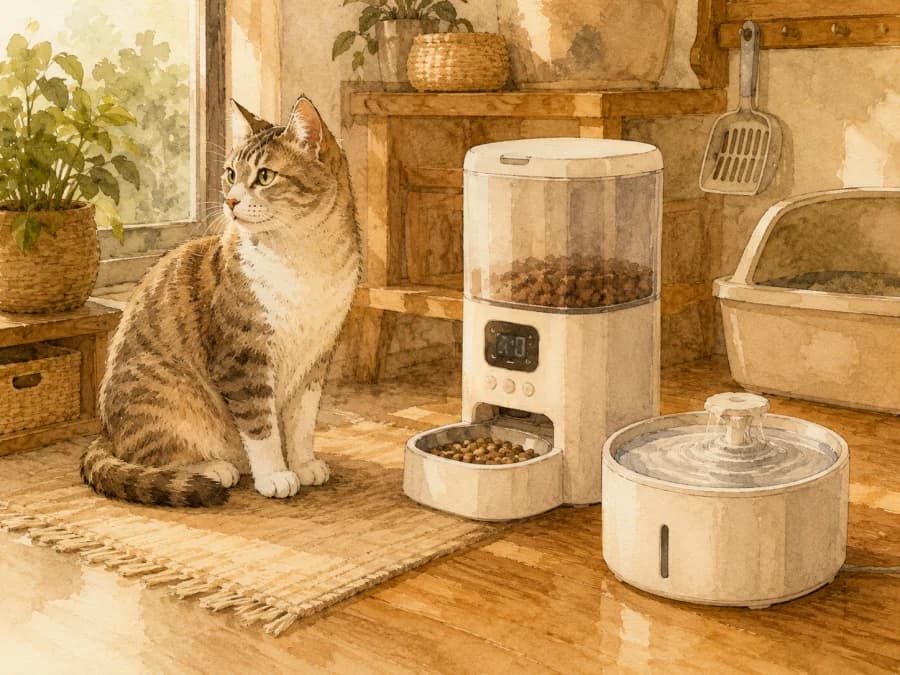
Automatic feeders and water fountains are helpful tools, but they are not caregivers. They can jam, tip, lose power, or run out. Cats can vomit, hide, fight, overeat, refuse food, knock water over, or get trapped in a room.
Litter boxes also become a welfare issue. A full box can lead to accidents, stress, or missed health clues. Urine changes, diarrhea, constipation signs, and blood are all easier to notice when someone is actually checking.
If you are comparing care options, read cat boarding vs pet sitter.
In owner research we reviewed, the most common planning mistake was counting supplies but not failure points. A feeder can hold enough food and still jam. A fountain can be full and still stop pumping. A camera can show the couch and still miss the litter box, water spill, closet door, or a cat hiding in a place the lens cannot see.
| Failure point | Why it matters | Human check that helps |
|---|---|---|
| Feeder jam or dead battery | Food exists but does not reach the cat | Confirm food dispensed and bowl level |
| Water spill or fountain failure | Cats may avoid dirty or still water | Refresh bowls and check pump |
| Full litter box | Stress, accidents, and missed health clues | Scoop and note urine/stool changes |
| Heat, cold, or power outage | Indoor conditions can change fast | Confirm home temperature |
| Closed door or trapped cat | A cat can lose access to food, water, or litter | Check rooms and hiding spots |
| Vomit or not eating | Early sign that plans need adjustment | Report and escalate based on your written rule |
Cats Who Should Not Be Left Without Checks
Arrange monitoring if your cat:
- Is a kitten.
- Is senior or frail.
- Takes medication.
- Has diabetes, kidney disease, urinary history, seizures, or recent surgery.
- Is eating poorly.
- Has a history of hiding or panic when routines change.
- Lives in a home where temperature may become unsafe.
- Is in a multi-cat household with tension.
When health is part of the picture, ask your veterinarian what level of monitoring is appropriate.
Before Leaving a Cat Alone Overnight
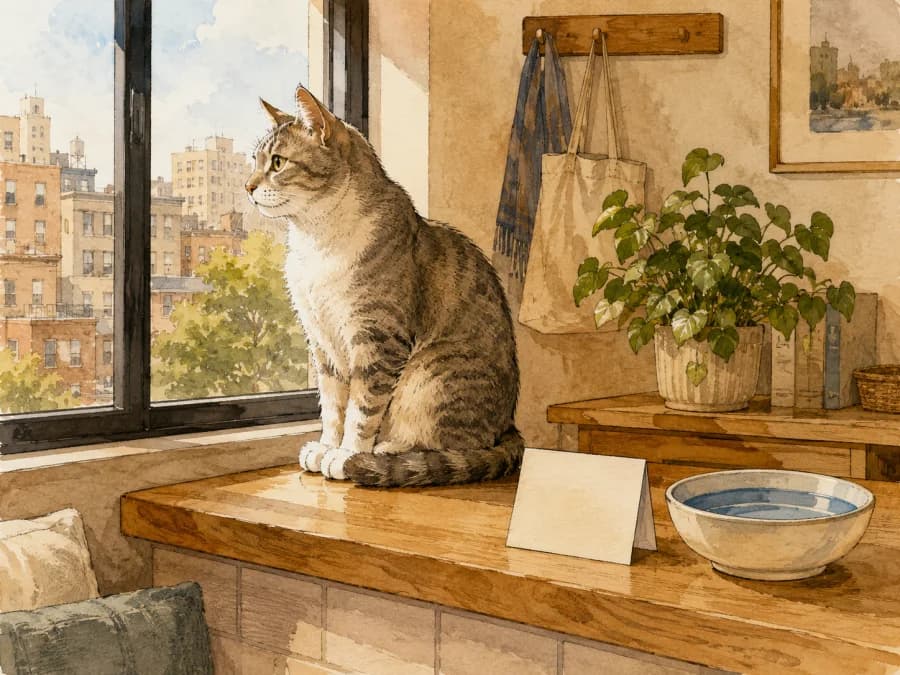
If your cat is a stable adult and you are planning one overnight, prepare carefully:
- Clean all litter boxes.
- Add more water stations than usual.
- Use familiar food, not a new diet.
- Keep dangerous rooms closed.
- Check windows, balcony doors, washer, dryer, and closets.
- Set safe heat or air conditioning.
- Remove string, rubber bands, toxic plants, and food hazards.
- Tell a nearby person how to enter in an emergency.
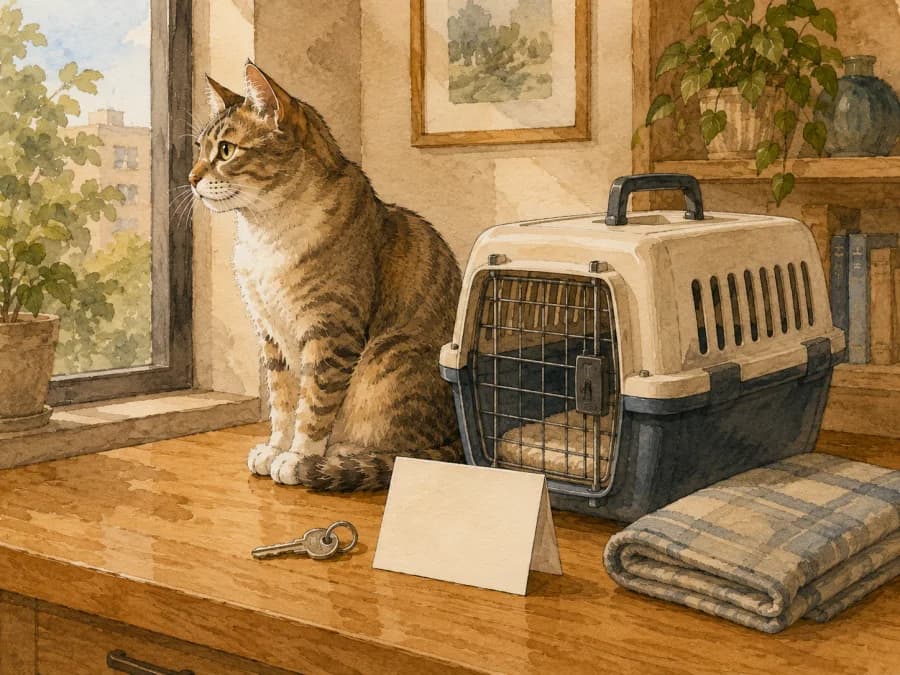
- Leave your vet's number and carrier location visible.
If that list feels like too much, use home cat feeding service checklist and book a visit.
Signs Your Cat Needed More Support
After you return, watch for:
- Empty or untouched food in a way that does not match your cat.
- Vomit.
- Accidents outside the litter box.
- Unusual hiding.
- Excessive clinginess or vocalizing.
- Dirty water or tipped bowls.
- Signs of heat, cold, or stress.
These do not mean you are a bad owner. They mean the next trip needs a stronger plan.
For the next absence, adjust one level stronger: one overnight becomes a check-in, a weekend becomes daily visits, and a long trip gets a primary sitter plus a backup contact. If your cat did not eat normally, do not treat that as a personality quirk without asking your veterinarian what monitoring is safer next time.
References
Animal Behavior & Care Writer
Rachel has a background in zoology and animal care volunteering. She writes about cat behavior, enrichment, and the relationship between cats and their everyday environment.
Written by Rachel Breen. Read our Editorial Policy.
FAQ
Frequently asked questions
New on NookPetdia
Latest articles
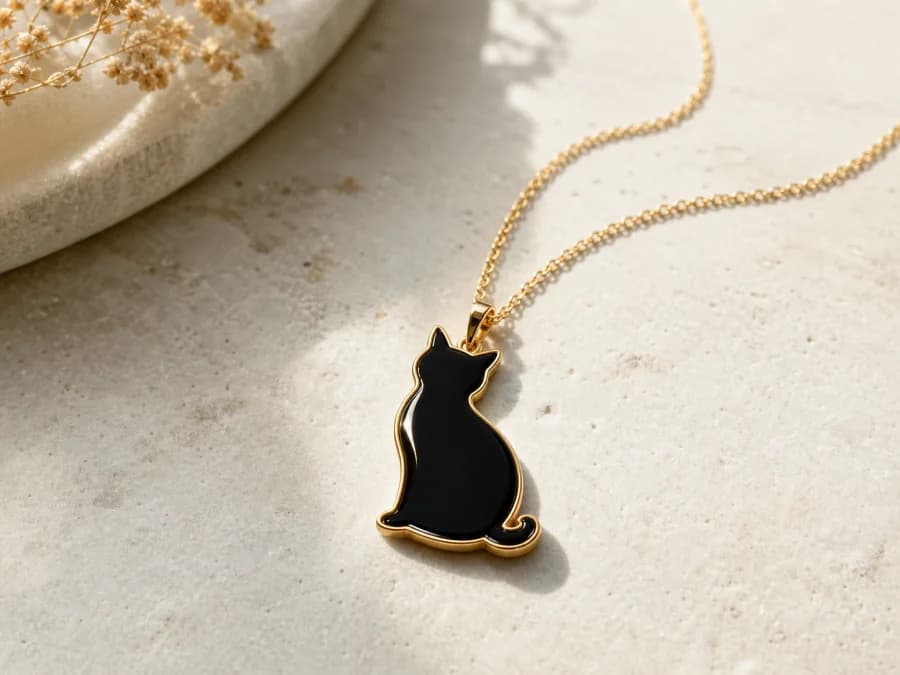
Black Cat Jewelry Guide (Style, Meaning, Gift Timing)
Black cats are the hardest subject to render in a small pendant and the best subject for silhouette work. Here is which styles hold up, what the symbolism actually carries, and the two dates worth planning a gift around.
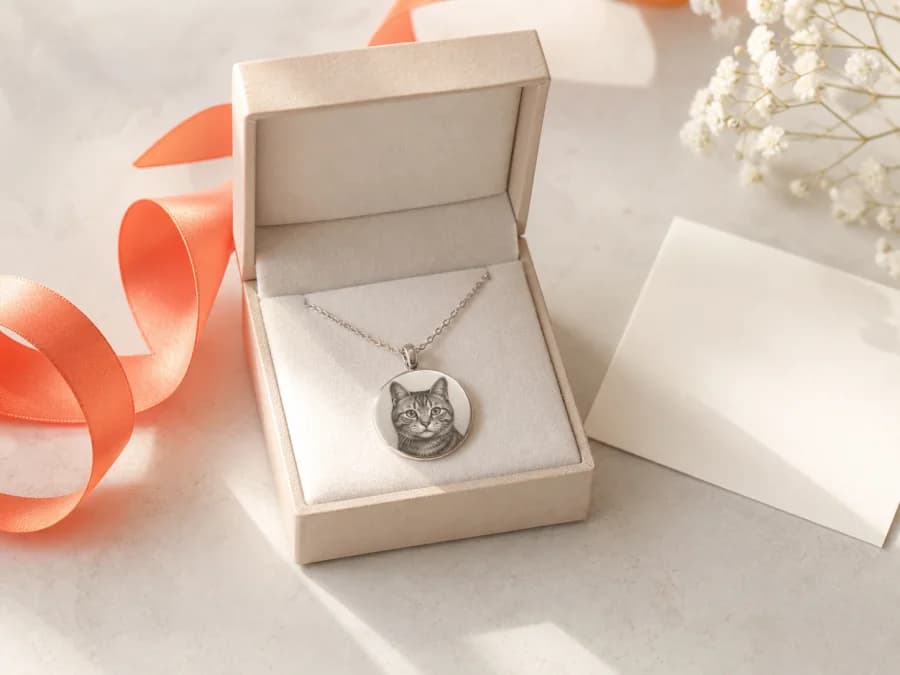
Cat Mom & Cat Dad Gift Ideas That Aren't Cheap Charms
Most cat-themed gifts are novelty items that get used twice. Here is how to buy something a cat parent keeps — including what to confirm about metal, sizing, and timing before you order anything personalized.
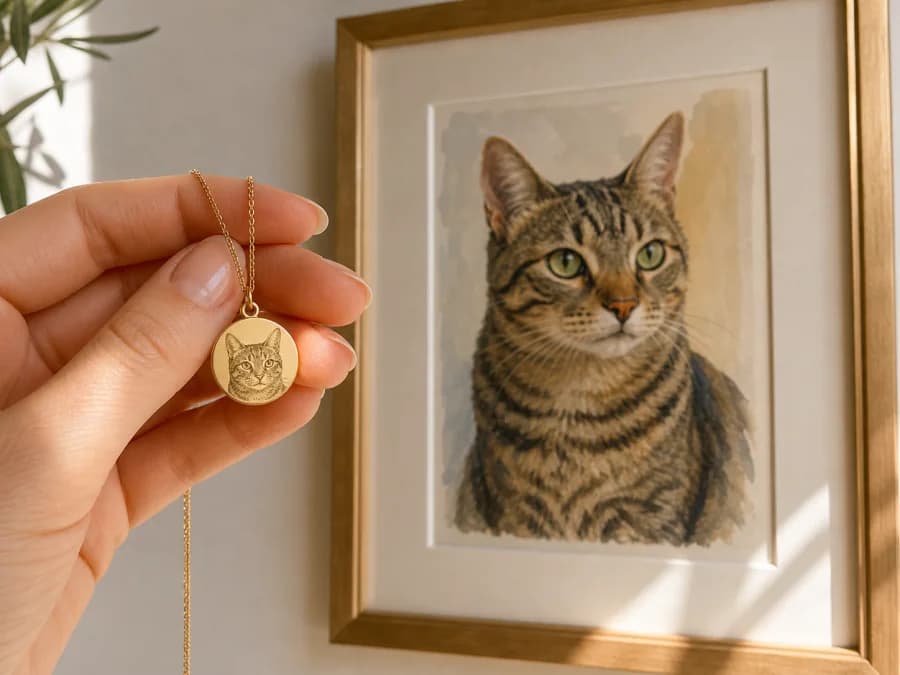
Custom Pet Portrait Jewelry vs Print: What's Worth Buying
Wearable portrait jewelry and framed pet portraits solve different problems. Here is how they compare on likeness, cost, durability, and daily use — and which one to commission first.