The phrase "home cat feeding" sounds simple. Feed the cat. Leave.
Our team reviewed recurring owner questions about sitters, home visits, holiday care, cameras, pricing, and messy or unsafe homes. The main lesson is that feeding is only one part of the visit. A good visit is a short welfare check.
This checklist is written for owners hiring a sitter, asking a friend, or preparing instructions for a paid home feeding service.
AI Summary
Overview
Every home cat feeding visit should include fresh food, fresh water, litter box cleaning, a visual check of the cat, a basic behavior and appetite note, door/window safety, and an update to the owner. If the cat needs medication or has health risks, the visit plan should be more detailed.
Do not assume "feed once a day" explains enough. Write what normal looks like and what should trigger a call.
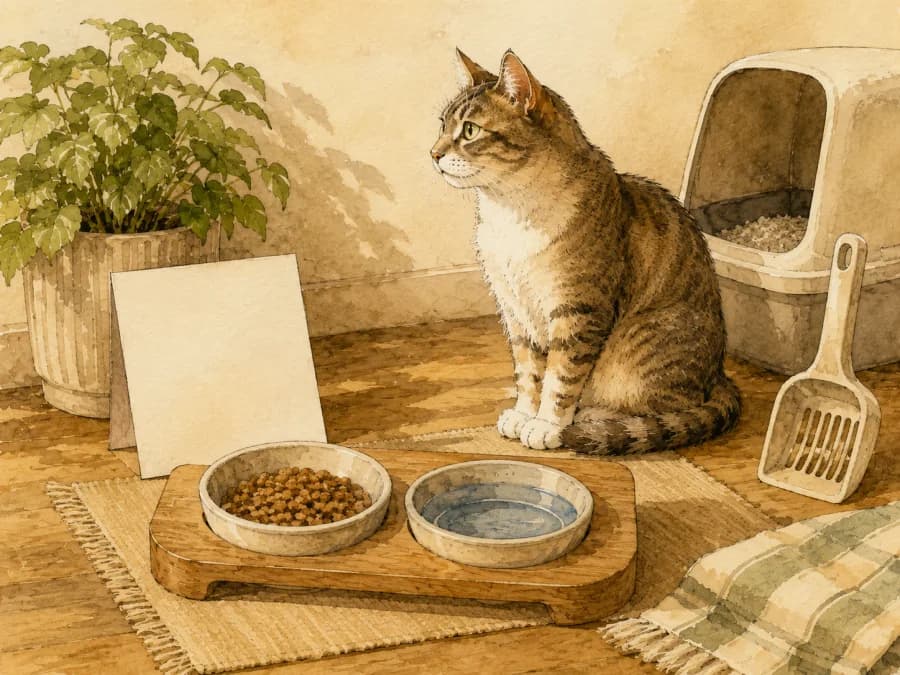
The Visit Checklist
| Visit task | What to write down | Why it matters |
|---|---|---|
| Food | Brand, flavor, amount, bowl, timing | Prevents overfeeding, underfeeding, and mix-ups |
| Water | Bowl locations and refill instructions | Cats need clean water, and bowls can spill |
| Litter | Scoop every visit, note unusual urine/stool | Litter changes can reveal stress or illness |
| Cat check | Where the cat hides, what normal looks like | Confirms the cat is alive, mobile, and responsive |
| Doors/windows | Which rooms stay closed | Prevents escapes and accidents |
| Update | Photo plus food/litter/behavior note | Gives owner usable information |
| Emergency | Vet, carrier, backup contact | Saves time if something goes wrong |
Minimum Visit vs Thorough Visit
Not every visit needs to be long, but every visit needs to be complete. A five-minute food drop may look acceptable from a distance and still miss the whole point of home care.
| Area | Minimum visit | Thorough visit |
|---|---|---|
| Food | Adds food to bowl | Confirms right food, amount, appetite, and leftovers |
| Water | Tops off one bowl | Washes or refreshes bowls and checks backup water |
| Litter | May skip if "not requested" | Scoops every visit and notes unusual urine or stool |
| Cat location | Assumes hiding is fine | Confirms the cat was seen or usual hiding spot was checked |
| Safety | Locks door on exit | Checks doors, windows, rooms, AC/heat, and escape risks |
| Update | "All good" | Food, water, litter, behavior, timing, and photo when possible |
This is the section to share with a friend who says, "I can feed the cat." It turns a favor into an actual care plan.
Food Instructions
Be specific:
- "Half a 3-ounce can at 7 p.m." is better than "feed wet food."
- "Do not free-feed treats" is better than "a few treats are fine."
- "One scoop from this container" is better than "a normal amount."
If your cat eats prescription food or one cat must not eat another cat's food, label everything clearly.
Water Instructions
Ask the sitter to wash or rinse bowls, not only top them off. If your cat uses a fountain, leave instructions for checking the water level and whether the pump is working.
For longer trips, put out backup water bowls in separate places. One tipped bowl should not become a crisis.

Litter Instructions
Litter is not optional. Ask the sitter to scoop at every visit and report anything unusual: no urine, diarrhea, blood, repeated accidents, or a box that looks unused.
Do not make the sitter guess where supplies are. Leave bags, scoop, trash instructions, and extra litter in one visible spot.
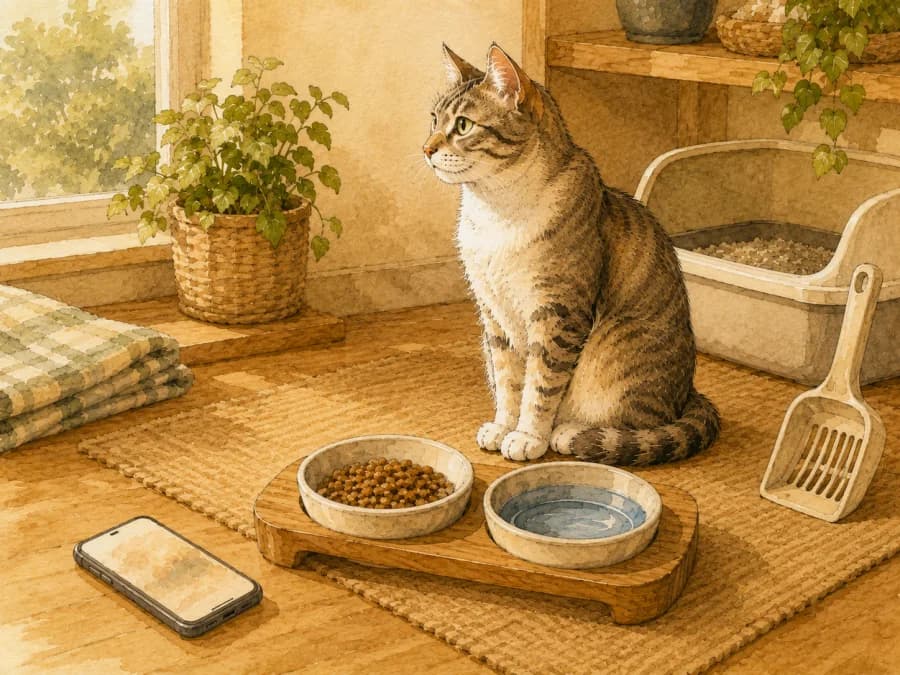
Behavior Check
Tell the sitter what is normal for your cat:
- Greets at the door.
- Hides under bed.
- Eats only after the person leaves.
- Meows loudly.
- Needs play before eating.
- Must not be picked up.
This prevents false alarms and missed alarms. A shy cat hiding is normal if that is its pattern. A social cat suddenly hiding may be important.
If your cat is shy, do not write "must get photo" as the only proof. That can pressure a sitter to drag the cat out. Better wording: "Please look under the bed with a flashlight, speak softly, and send a photo only if she stays relaxed." Welfare matters more than a cute update.
For sitter screening, see cat sitter red flags.
Update Template
Ask for a message like this:
- Arrival and departure time.
- Food refreshed and how much was eaten.
- Water refreshed.
- Litter scooped and any unusual notes.
- Cat seen or hiding location checked.
- Photo if possible.
- Door/window check complete.
Short is fine. Useful is better than cute.
When the Plan Needs More Than Feeding
If your cat needs medication, timed meals, appetite tracking, or post-surgery care, a simple feeding visit may not be enough. Choose a sitter with that skill, increase visit frequency, or consider boarding.
For comparing options, read cat boarding vs pet sitter. For deciding how long your cat can be alone, see how long can cats stay home alone.
Write an escalation line at the bottom of the checklist. Examples:
- "Call me if you do not see the cat for two visits."
- "Call if wet food is untouched for one full day."
- "Call immediately for vomiting, blood, weakness, labored breathing, or signs of pain."
- "If I do not answer, call the backup contact, then the veterinary clinic."
This keeps the sitter from having to decide alone whether something is "bad enough."
References
Animal Behavior & Care Writer
Rachel has a background in zoology and animal care volunteering. She writes about cat behavior, enrichment, and the relationship between cats and their everyday environment.
Written by Rachel Breen. Read our Editorial Policy.
FAQ
Frequently asked questions
New on NookPetdia
Latest articles
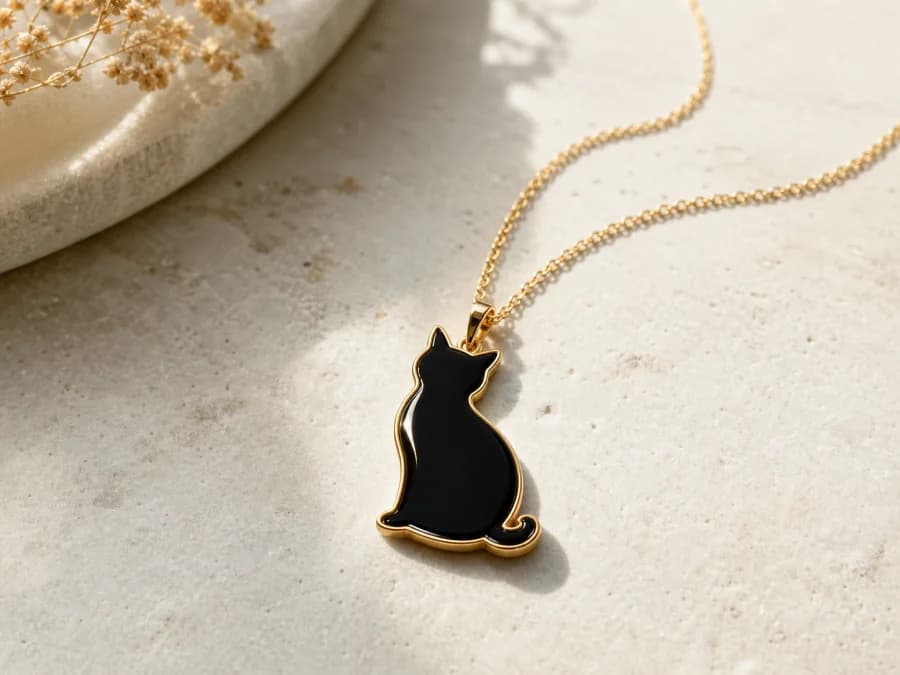
Black Cat Jewelry Guide (Style, Meaning, Gift Timing)
Black cats are the hardest subject to render in a small pendant and the best subject for silhouette work. Here is which styles hold up, what the symbolism actually carries, and the two dates worth planning a gift around.
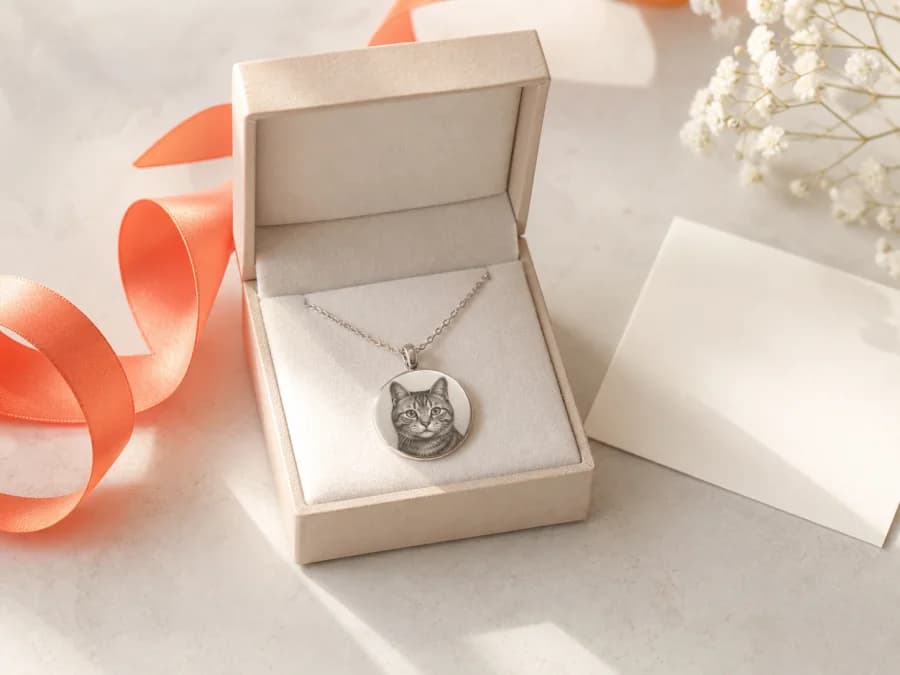
Cat Mom & Cat Dad Gift Ideas That Aren't Cheap Charms
Most cat-themed gifts are novelty items that get used twice. Here is how to buy something a cat parent keeps — including what to confirm about metal, sizing, and timing before you order anything personalized.
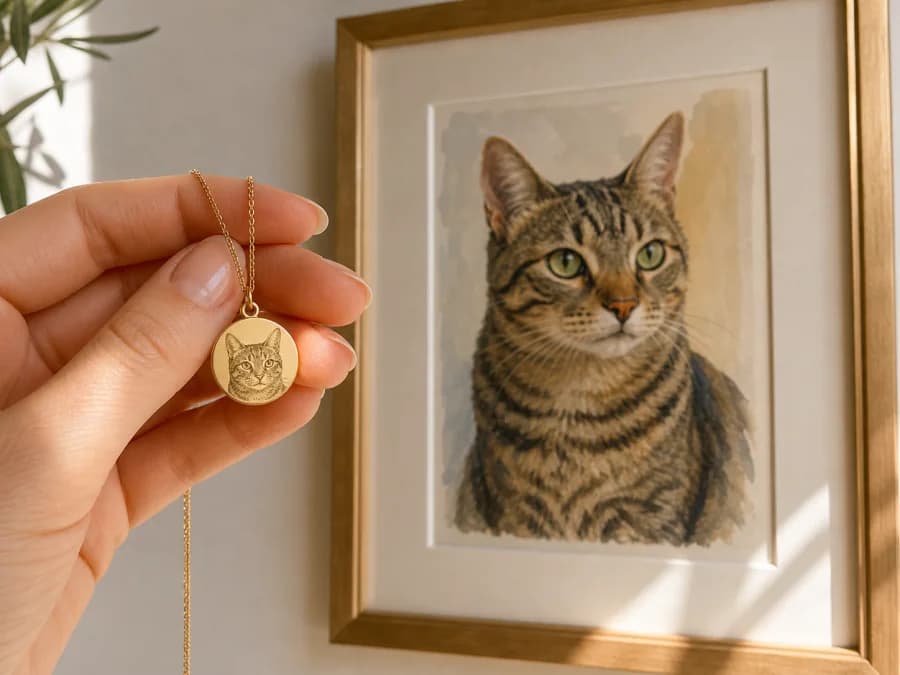
Custom Pet Portrait Jewelry vs Print: What's Worth Buying
Wearable portrait jewelry and framed pet portraits solve different problems. Here is how they compare on likeness, cost, durability, and daily use — and which one to commission first.