Most cats prefer their own territory. That does not automatically mean home care is always better.
Our team reviewed recurring owner questions about vacation care, holiday boarding, home feeding, sitter trust, and cats who panic when routines change. The real decision is not "home good, boarding bad." It is whether your cat needs familiar territory, frequent monitoring, medical support, or a controlled environment.
Use this guide before you book, not the night before you leave.
AI Summary
Overview
A pet sitter is often better for a healthy cat who eats reliably, uses the litter box normally, and feels safer at home. Boarding may be better for cats who need medication, close monitoring, escape-proof supervision, or care from trained staff.
The best choice depends on your cat's health, stress level, appetite, home setup, sitter quality, boarding quality, and how long you will be away.
No option is automatically safe. A careless sitter and a crowded boarding room can both create problems. Your job is to compare the actual setup, not the label.
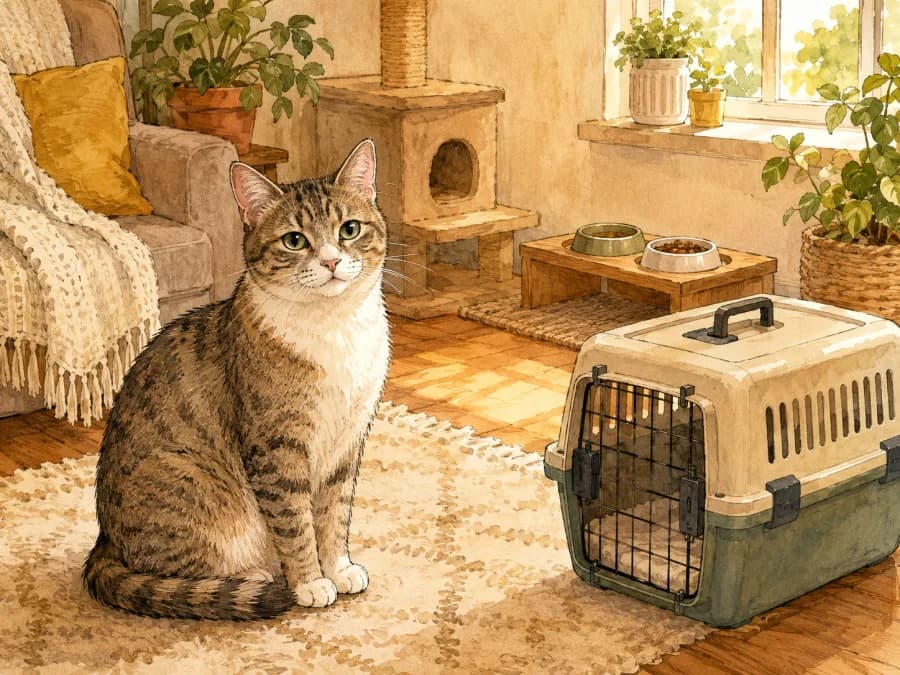
Boarding vs Pet Sitter at a Glance
| Option | Best fit | Main risk | Questions to ask first |
|---|---|---|---|
| Pet sitter at home | Healthy cats who eat reliably and feel safest in familiar territory | Too little monitoring, missed details, access problems | How long is each visit? What proof do I receive? What if the cat hides? |
| Cat boarding | Cats needing closer observation, medication support, or a home that is not safe during travel | Stress from new smells, sounds, and nearby animals | Are cats housed away from dogs? How are appetite and litter tracked? |
| Friend or family visit | Short trips with a reliable person who knows the cat | Kind person, weak process | Will they scoop, send updates, and call if something changes? |
| Mixed plan | Longer trips where the cat stays home but has backup support | Too many handoffs if roles are unclear | Who is primary, who has keys, and who makes emergency decisions? |
Choose a Pet Sitter When Home Is the Safer Place
Home visits are often a strong choice when your cat:
- Eats normally when you are away.
- Uses the litter box reliably.
- Does not need complex medication.
- Has a clean, temperature-safe home environment.
- Has a trustworthy sitter who sends updates.
- Gets very stressed in carriers or unfamiliar rooms.
This is especially true for shy cats. A boarding facility may mean new smells, unfamiliar cats nearby, and less control over hiding space. International Cat Care notes that stress can affect cats in many ways, including behavior, eating, and toileting.
Home care is not "leave the cat alone with a machine." It means the cat's territory stays familiar while a human checks the parts that equipment cannot: appetite, litter, water, doors, temperature, and abnormal behavior.
For screening the person doing the visits, read cat sitter red flags.

Choose Boarding When Monitoring Matters More
Boarding may be the stronger choice when your cat:
- Needs medication at specific times.
- Has diabetes, kidney disease, seizure history, or another condition requiring monitoring.
- Has recently had surgery.
- Is likely to stop eating when alone.
- Lives in a home that cannot be kept temperature-safe.
- Has a sitter access problem, such as unreliable building entry.
- Is at high risk of escaping through doors.
VCA's boarding guidance emphasizes planning ahead, vaccinations, and sharing medical and behavior information with the boarding facility. The quality of the facility matters. A clean, cat-aware facility is very different from a loud, mixed-species room with little hiding space.
In owner research we reviewed, many people framed boarding as "safer because staff are there" or "worse because cats hate leaving home." Both can be true. A boarding facility only helps if staff are actually observing your cat and the setup is cat-sensitive. A stressed cat in a noisy room with no hiding space may be less safe than a calm cat at home with a careful sitter.
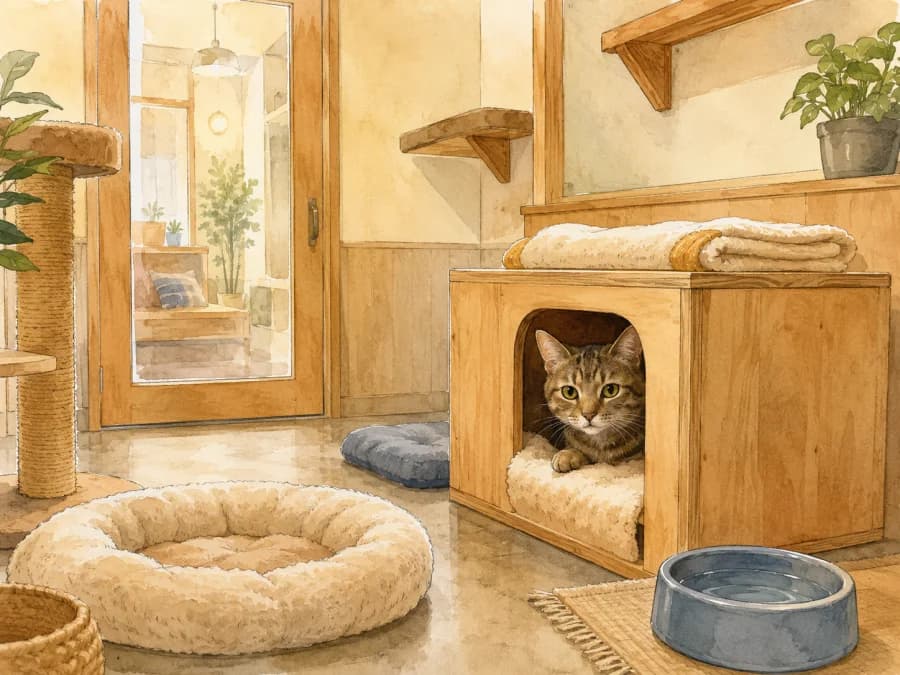
Questions to Ask a Boarding Facility
Ask:
- Are cats housed away from dogs?
- Can my cat hide?
- What vaccinations are required?
- How often are food, water, and litter checked?
- Will staff record appetite and litter box use?
- What happens if my cat stops eating?
- Is there veterinary support on-site or nearby?
- Can I bring familiar bedding or food?
- How are escape risks managed?
If the answers are vague, keep looking.
Questions to Ask a Pet Sitter
Ask:
- How long is each visit?
- What is included in the visit?
- Will you send photos and notes?
- What do you do if the cat hides?
- What do you do if the cat does not eat?
- Can you give medication?
- Do you have backup coverage if you get sick?
- Are you insured or bonded, if working professionally?
For a visit-by-visit plan, use home cat feeding service checklist.

How Long You Are Away Changes the Answer
For one night, a healthy adult cat may need less support than for a week. For multiple days, the risks stack: stale water, full litter, stress, appetite changes, power outages, heat, cold, doors, and missed problems.
If you are asking whether your cat can simply stay alone, start with how long can cats stay home alone.
| Trip length | Usually strongest first choice | Why |
|---|---|---|
| One workday | Normal home setup | Most healthy adult cats already handle this routine |
| One overnight | Home with preparation or one check | Supplies and backup matter more than the label |
| Weekend | Daily sitter visits for most cats | Litter, water, and appetite need human eyes |
| One week or longer | Sitter with backup, boarding, or mixed plan | Reliability and escalation planning matter more each day |
| Any length with medical needs | Vet-guided plan or trained caregiver | Timing, appetite, and symptom changes may matter quickly |
The longer the trip, the less you should rely on hope. Write down who notices, who decides, and who can physically reach your cat.
References
VCA Hospitals: Boarding your cat
Animal Behavior & Care Writer
Rachel has a background in zoology and animal care volunteering. She writes about cat behavior, enrichment, and the relationship between cats and their everyday environment.
Written by Rachel Breen. Read our Editorial Policy.
FAQ
Frequently asked questions
New on NookPetdia
Latest articles

Black Cat Jewelry Guide (Style, Meaning, Gift Timing)
Black cats are the hardest subject to render in a small pendant and the best subject for silhouette work. Here is which styles hold up, what the symbolism actually carries, and the two dates worth planning a gift around.
Cat Mom & Cat Dad Gift Ideas That Aren't Cheap Charms
Most cat-themed gifts are novelty items that get used twice. Here is how to buy something a cat parent keeps — including what to confirm about metal, sizing, and timing before you order anything personalized.
Custom Pet Portrait Jewelry vs Print: What's Worth Buying
Wearable portrait jewelry and framed pet portraits solve different problems. Here is how they compare on likeness, cost, durability, and daily use — and which one to commission first.