Night meowing can turn a good cat into the household's loudest problem. Owners in our editorial review described cats calling at 3 a.m., 4 a.m., or just before sunrise; cats who had food and water but still yelled; cats who stopped only when someone got up; and cats who seemed to want company, play, or proof that the human was alive.
The frustrating part is that night meowing has many causes. Some are routine and fixable. Some need veterinary attention.
AI Summary
Overview
Cats may meow at night because they are active at dawn, bored, hungry, seeking attention, reacting to closed doors, stressed, in heat, aging, or not feeling well. If your cat is otherwise healthy and the pattern is predictable, a better evening routine can help.
Call your veterinarian if night vocalizing is sudden, intense, or paired with appetite changes, weight loss, disorientation, litter box changes, pain signs, vomiting, or weakness.
Do not punish your cat for meowing. The plan is to meet real needs earlier and stop accidentally rewarding 3 a.m. demands.
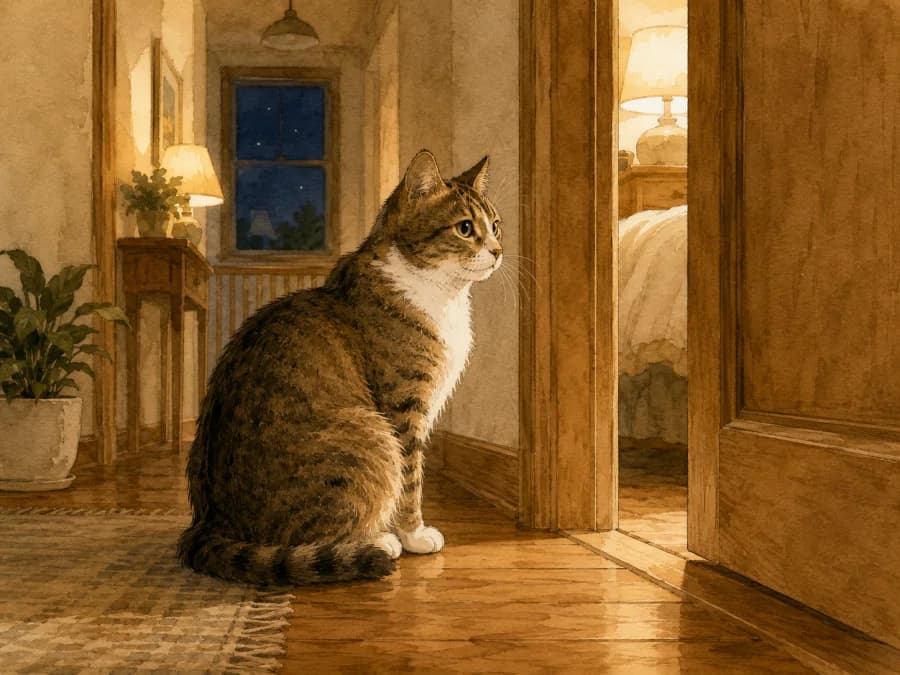
Common Reasons Cats Meow at Night
Your cat is naturally active at dawn
Cats are often most active around dawn and dusk. A cat waking at 4-6 a.m. may be following its internal rhythm while you are trying to sleep.
The routine rewards meowing
If meowing gets breakfast, treats, door opening, petting, or play, your cat may repeat it. Even annoyed attention is still attention.
Your cat is bored
A cat that sleeps all day and gets little evening play may become active when the house is quiet.
Your cat is stressed by separation or closed doors
Some cats panic when they cannot access their person. If the cat also follows you constantly, read why is my cat so clingy and cat separation anxiety.
Your cat may need medical attention
Pain, high blood pressure, thyroid disease, cognitive changes, urinary issues, and other health problems can change vocalization, especially in older cats. This article cannot diagnose the cause.
In owner research we reviewed, many people had already tried "ignore it" and felt guilty, angry, or exhausted when it did not work. That frustration is real. But ignoring only makes sense after you have checked routine, litter, food, access, stress, age, and health changes. Otherwise, you may be ignoring information.
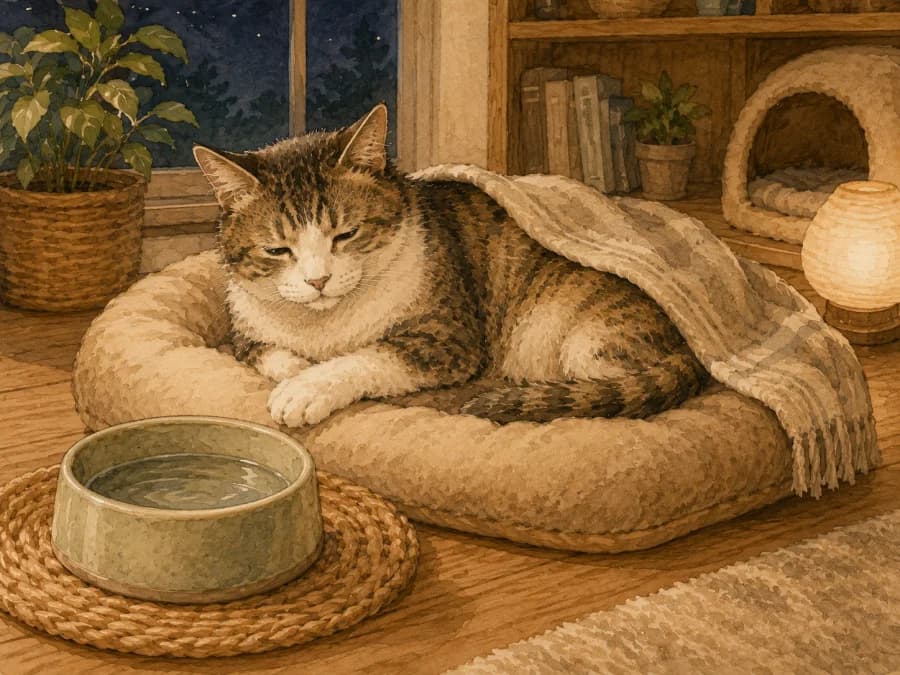
What to Check First
| Check | Why it matters | What to do |
|---|---|---|
| Food timing | Hunger can trigger dawn meowing | Feed later dinner or use timed feeder |
| Evening play | Unspent energy becomes night activity | Add 10-15 minutes before bed |
| Litter box | Urinary or stool problems may cause distress | Check box and call vet if abnormal |
| Door access | Closed doors can trigger frustration | Decide on a consistent boundary |
| Age and health | Senior cats may vocalize for medical reasons | Schedule a vet visit for new changes |
| Reinforcement | Getting up teaches meowing works | Respond before bedtime, not at 3 a.m. |
Match the Pattern Before Choosing a Fix
| Night pattern | More likely direction | Better first move |
|---|---|---|
| Starts just before breakfast | Learned meal timing or hunger expectation | Later dinner, timed feeder, no dawn hand-feeding |
| Starts when door closes | Access frustration or separation distress | Consistent door rule plus calm door practice |
| Starts after a quiet daytime | Boredom or unspent energy | Evening play, climbing, puzzle feeding |
| New loud yowling in a senior cat | Medical or cognitive change possible | Schedule a veterinary check |
| Meowing with litter box trips | Possible urinary or stool discomfort | Call your veterinarian promptly |
| Meowing after travel or boarding | Routine disruption or stress | Rebuild routine and watch appetite/litter closely |
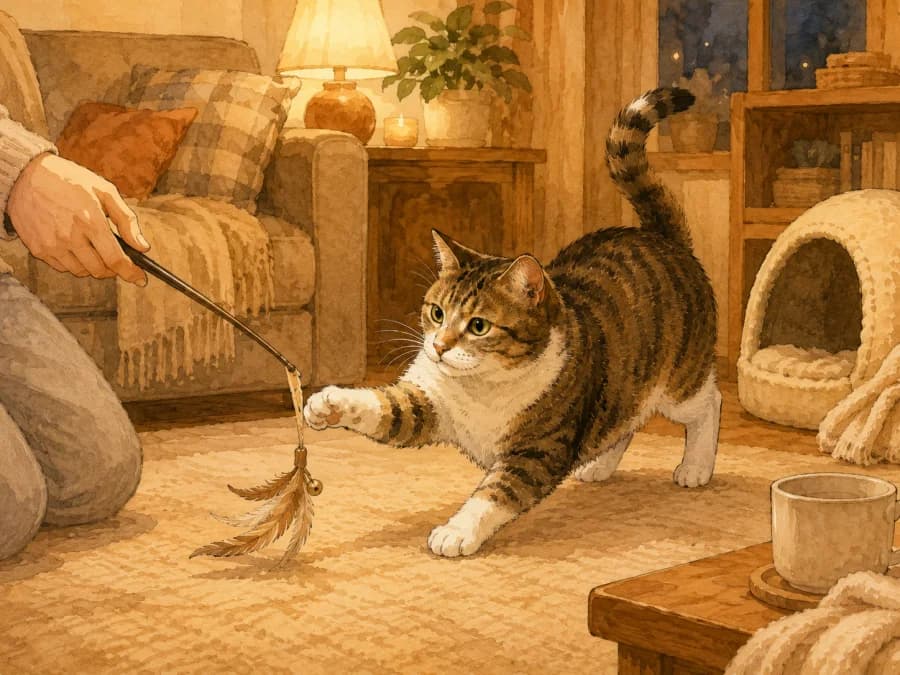
A Calmer Night Routine
Try this for two weeks:
- Play with a wand toy in the evening.
- Feed dinner or a small bedtime portion after play.
- Clean the litter box before bed.
- Make water available.
- Set a consistent bedroom door rule.
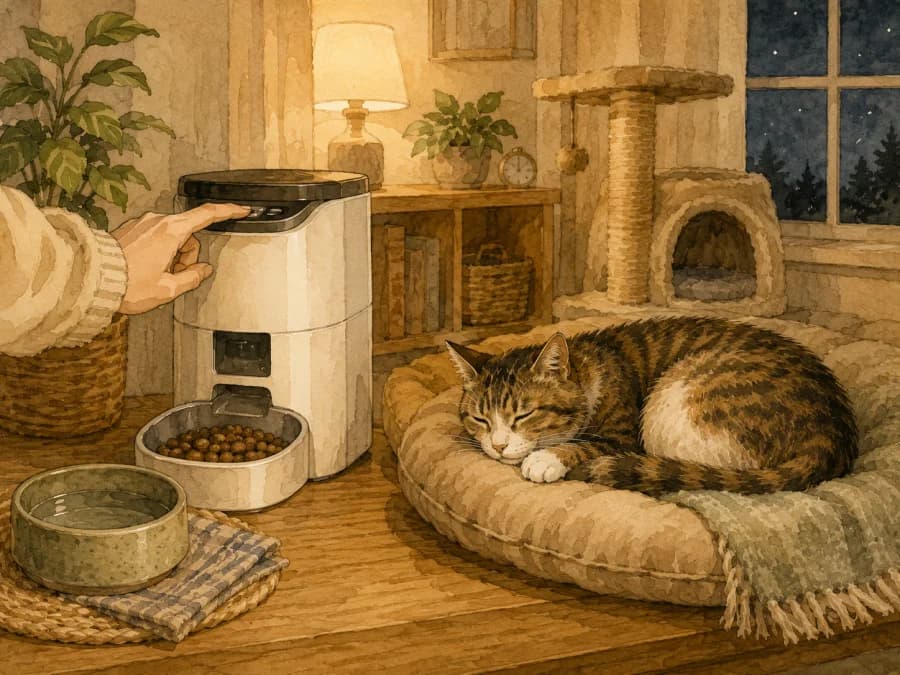
- Use a timed feeder if breakfast meowing is the issue.
- Do not reward night yelling with food or play.
The first few nights may be louder if your cat expects the old reward. Stay consistent unless you see signs of illness or distress.
If the household is at a breaking point, make a humane sleep-protection plan too: earplugs, white noise, a consistent feeding device, and a clear bedroom rule can help the humans stay calm enough to be consistent. Do not punish, spray, hit, or scare a cat for vocalizing. That adds fear without solving the cause.
When Night Meowing Is a Vet Question
Call your veterinarian if:
- The behavior is new or suddenly worse.
- Your cat is senior.
- Your cat seems confused.
- Appetite, thirst, weight, or litter habits changed.
- Your cat seems painful.
- There is vomiting, weakness, or hiding.
- Your cat is not spayed/neutered and may be in heat or seeking mates.
References
Cornell Feline Health Center: Feline behavior issues
Animal Behavior & Care Writer
Rachel has a background in zoology and animal care volunteering. She writes about cat behavior, enrichment, and the relationship between cats and their everyday environment.
Written by Rachel Breen. Read our Editorial Policy.
FAQ
Frequently asked questions
New on NookPetdia
Latest articles
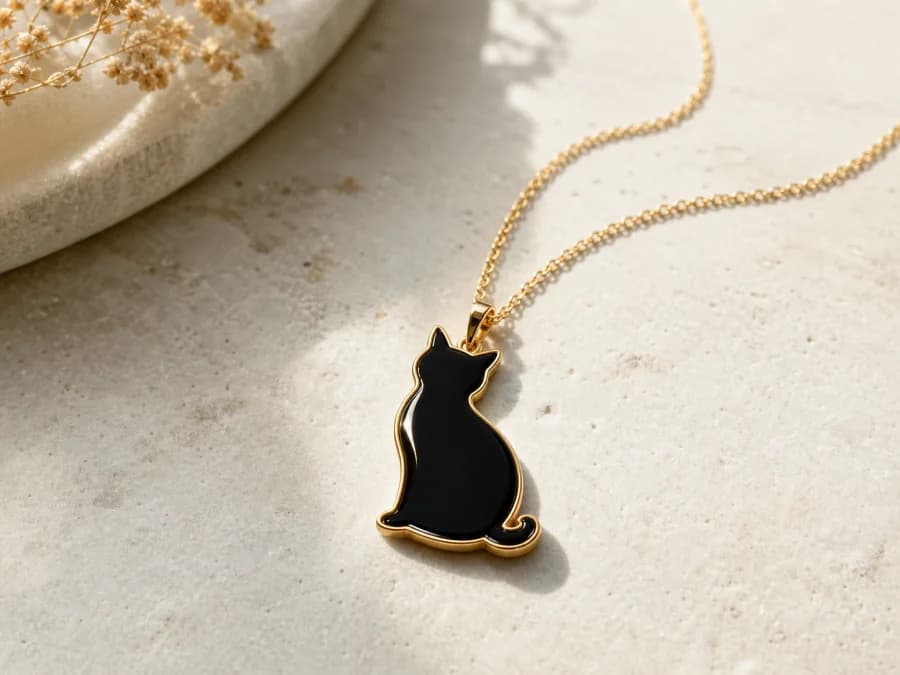
Black Cat Jewelry Guide (Style, Meaning, Gift Timing)
Black cats are the hardest subject to render in a small pendant and the best subject for silhouette work. Here is which styles hold up, what the symbolism actually carries, and the two dates worth planning a gift around.
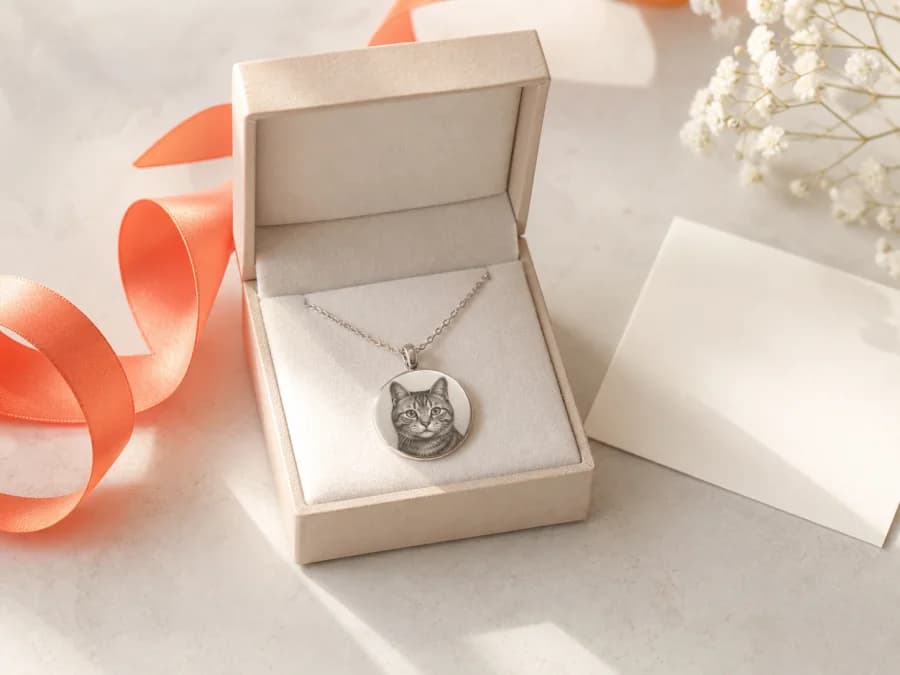
Cat Mom & Cat Dad Gift Ideas That Aren't Cheap Charms
Most cat-themed gifts are novelty items that get used twice. Here is how to buy something a cat parent keeps — including what to confirm about metal, sizing, and timing before you order anything personalized.
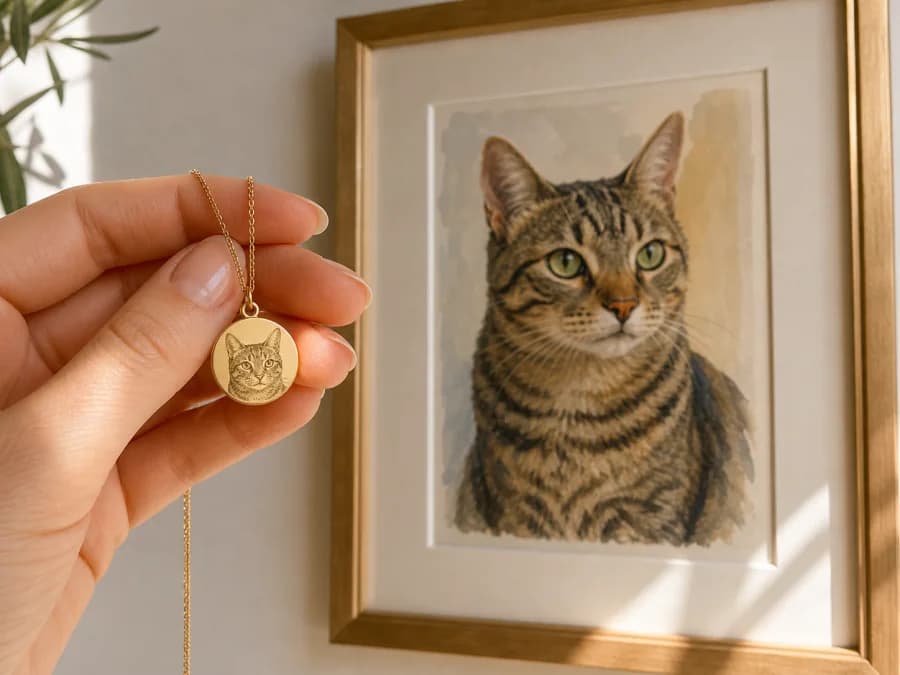
Custom Pet Portrait Jewelry vs Print: What's Worth Buying
Wearable portrait jewelry and framed pet portraits solve different problems. Here is how they compare on likeness, cost, durability, and daily use — and which one to commission first.