Cats have a reputation for being fine alone. Some are. Others are not.
Our team reviewed recurring owner questions from people whose cats cried when they left, followed them constantly, urinated on beds, overgroomed, or seemed distressed after schedule changes. The emotional tone was clear: owners were not trying to over-diagnose their cats. They were trying to understand why "independent" cats were acting so unsettled.
Cat separation anxiety is possible, but it should be handled carefully. Similar signs can also come from medical problems, litter box issues, pain, boredom, or environmental stress.
AI Summary
Overview
Cat separation anxiety is distress related to being away from an attachment person or routine. Possible signs include excessive vocalizing, destructive behavior, inappropriate elimination, overgrooming, restlessness, clinginess before departure, and intense greeting after return.
Do not assume every clingy cat has separation anxiety. First check health, litter box, food, boredom, and recent changes. If the behavior is sudden, severe, or includes urination, appetite change, vomiting, pain signs, or overgrooming, contact your veterinarian.
The goal is to make alone time predictable, enriched, and low-drama.
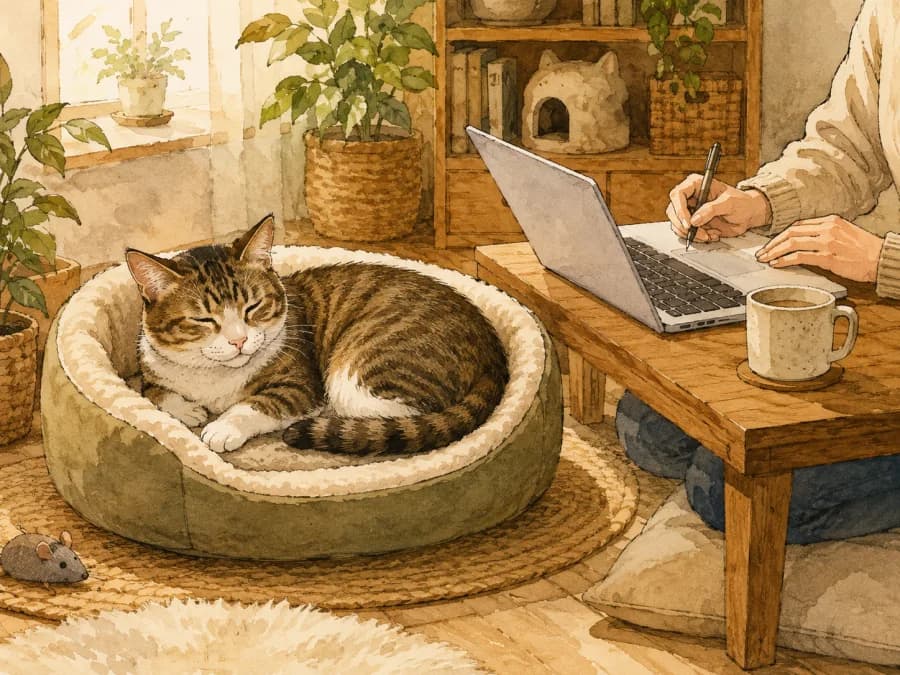
Signs That May Point to Separation Anxiety
Possible signs include:
- Crying or pacing when you prepare to leave.
- Following you intensely before departure.
- Scratching doors.
- Urinating or defecating outside the litter box when alone.
- Overgrooming.
- Destructive behavior.
- Not eating until you return.
- Extreme greeting behavior.
- Trouble settling after a schedule change.
These signs are not proof by themselves. A cat with a urinary problem can pee outside the box. A bored cat can knock things over. A painful cat can hide and vocalize. Behavior and health need to be considered together.
| What you observe | Could be separation-related | Also check |
|---|---|---|
| Crying right after you leave | Distress around departures | Hunger, closed doors, outdoor cats, noise triggers |
| Urinating on bed or laundry | Stress may be involved | Urinary disease, litter box cleanliness, box location |
| Overgrooming | Stress can contribute | Skin irritation, fleas, pain, allergies |
| Destruction near doors | Panic or frustration | Boredom, access habits, previous reinforcement |
| Not eating until you return | Attachment or stress | Nausea, dental pain, food dislike, feeding setup |
This is why the safest wording is "may point to" rather than "proves." The article should help owners organize observations, not diagnose their cat from one behavior.
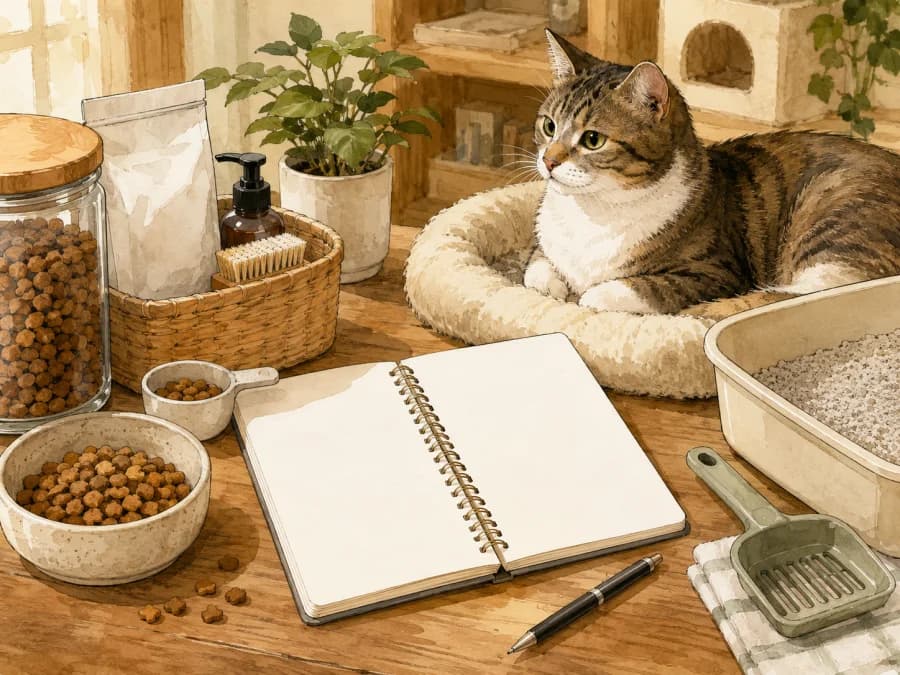
What Can Trigger It?
Common triggers include:
- A new work schedule.
- A move.
- Loss of a person or pet.
- A recent boarding stay.
- A new pet or baby.
- Less play or attention.
- Long absences after a period of constant togetherness.
- A cat with a naturally high need for contact.
Stress affects cats differently. International Cat Care notes that stress can show through behavior, appetite, toileting, and body language.
A Practical Alone-Time Plan
| Step | What to do | Why it helps |
|---|---|---|
| Stabilize routine | Keep meals, play, and sleep predictable | Predictability lowers uncertainty |
| Play before leaving | Use a hunting-style toy session | Reduces restless energy |
| Feed after play | Offer a meal or puzzle feeder | Creates a calm post-play routine |
| Make departures boring | Avoid dramatic goodbyes | Lowers departure intensity |
| Practice short absences | Leave for seconds, then minutes | Builds tolerance gradually |
| Add safe enrichment | Window perch, puzzle feeder, scent-safe bedding | Gives the cat something to do |
| Track signs | Note eating, litter, vocalizing, damage | Shows whether the plan works |
If you use a camera, review it like a log, not like a guilt machine. Note when the distress starts, how long it lasts, whether the cat settles, and what happened before you left. A clip that shows ten minutes of crying is useful; watching all day and panicking is not.
What to Track for One Week
Before changing everything at once, track a small set of facts:
- Departure time and return time.
- What your cat did before you left.
- Whether food was eaten while you were gone.
- Litter box use.
- Vocalizing, door scratching, pacing, or hiding.
- Any accidents, damage, or overgrooming.
- What happened on days with more play, less play, visitors, or schedule changes.
This gives your veterinarian or behavior professional better information if you need help. It also protects you from guessing based on one stressful camera clip.
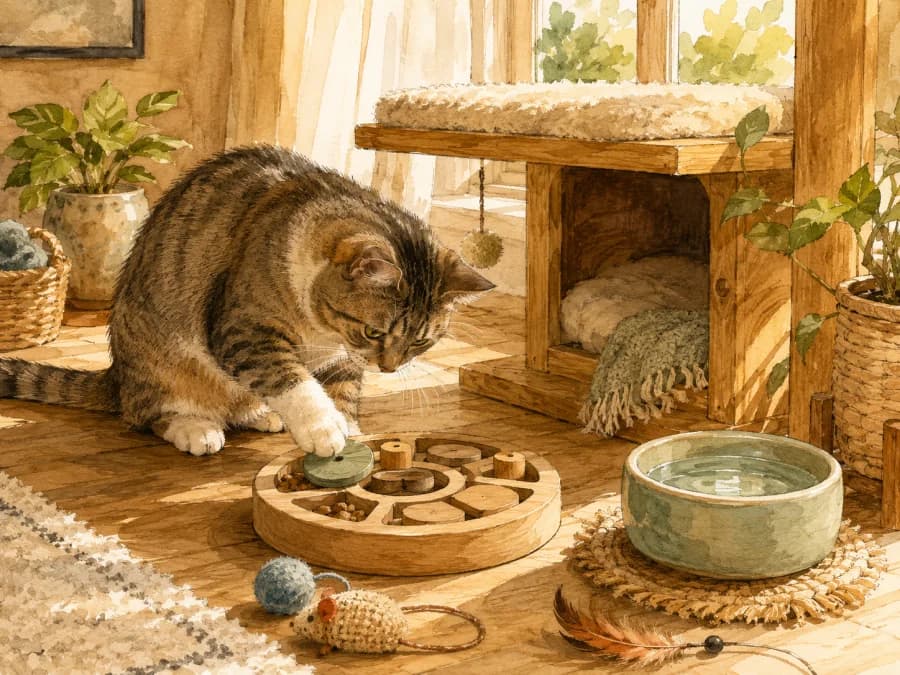
What Not to Do
Do not punish separation-related behavior. Punishment can make the home feel less safe and may worsen anxiety.
Do not lock the cat away for long periods as a "lesson." Short, planned separations are different from stressful isolation.
Do not add a second cat only to fix anxiety. Another cat can help some cats, but it can also add conflict. If you are considering adoption, read new cat is hissing at resident cat first.
Also avoid internet advice that skips the vet boundary. If the problem includes urination, not eating, overgrooming, or sudden distress, the first useful step is not a harsher training plan. It is documenting what changed and checking whether health, pain, or litter box problems are part of the picture.
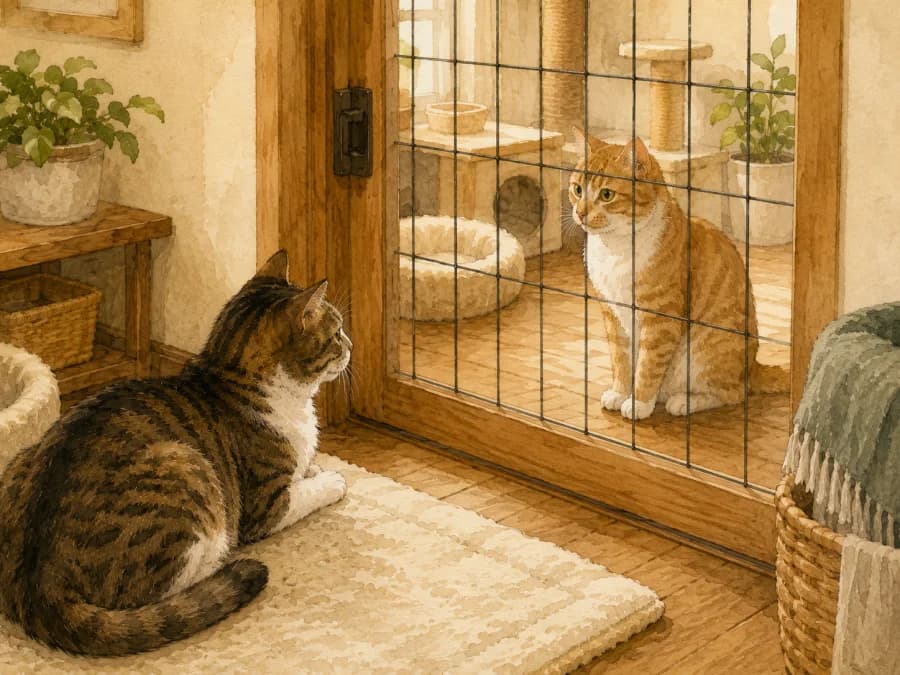
When to Get Help
Call your veterinarian if your cat:
- Urinates outside the box.
- Overgrooms or develops bald patches.
- Stops eating or eats less.
- Vomits or has diarrhea.
- Seems painful, weak, or unusually withdrawn.
- Has sudden behavior changes.
For general clinginess without panic, read why is my cat so clingy. If the distress peaks at night, see why does my cat meow at night.
References
International Cat Care: Stress in cats
Animal Behavior & Care Writer
Rachel has a background in zoology and animal care volunteering. She writes about cat behavior, enrichment, and the relationship between cats and their everyday environment.
Written by Rachel Breen. Read our Editorial Policy.
FAQ
Frequently asked questions
New on NookPetdia
Latest articles
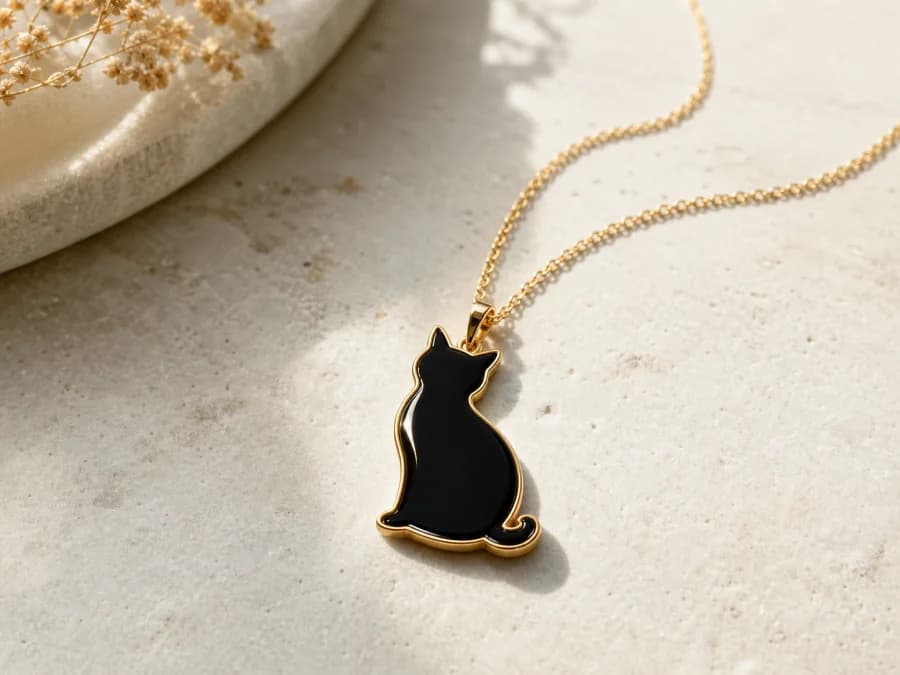
Black Cat Jewelry Guide (Style, Meaning, Gift Timing)
Black cats are the hardest subject to render in a small pendant and the best subject for silhouette work. Here is which styles hold up, what the symbolism actually carries, and the two dates worth planning a gift around.
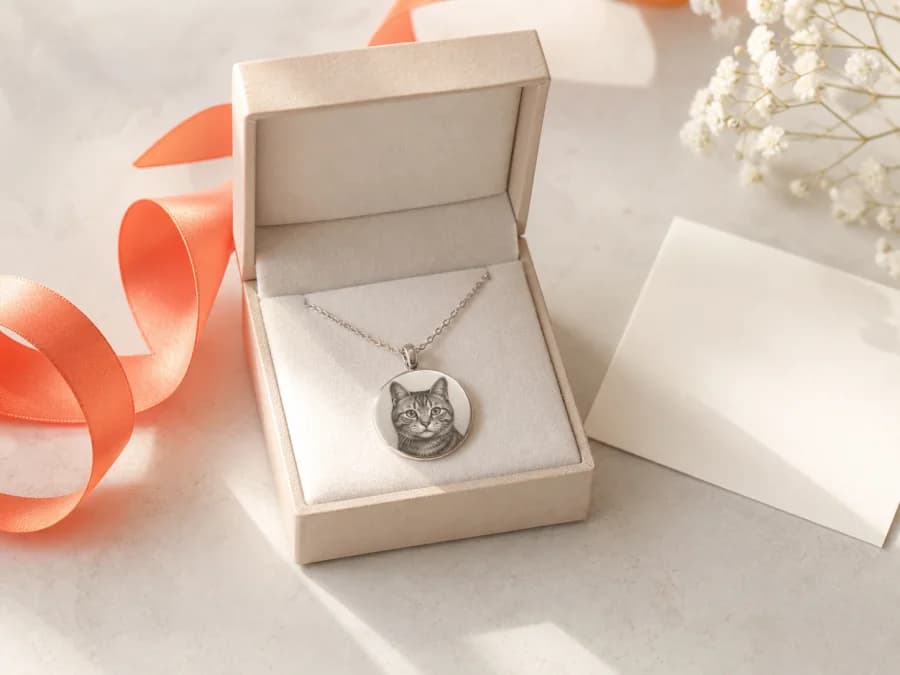
Cat Mom & Cat Dad Gift Ideas That Aren't Cheap Charms
Most cat-themed gifts are novelty items that get used twice. Here is how to buy something a cat parent keeps — including what to confirm about metal, sizing, and timing before you order anything personalized.
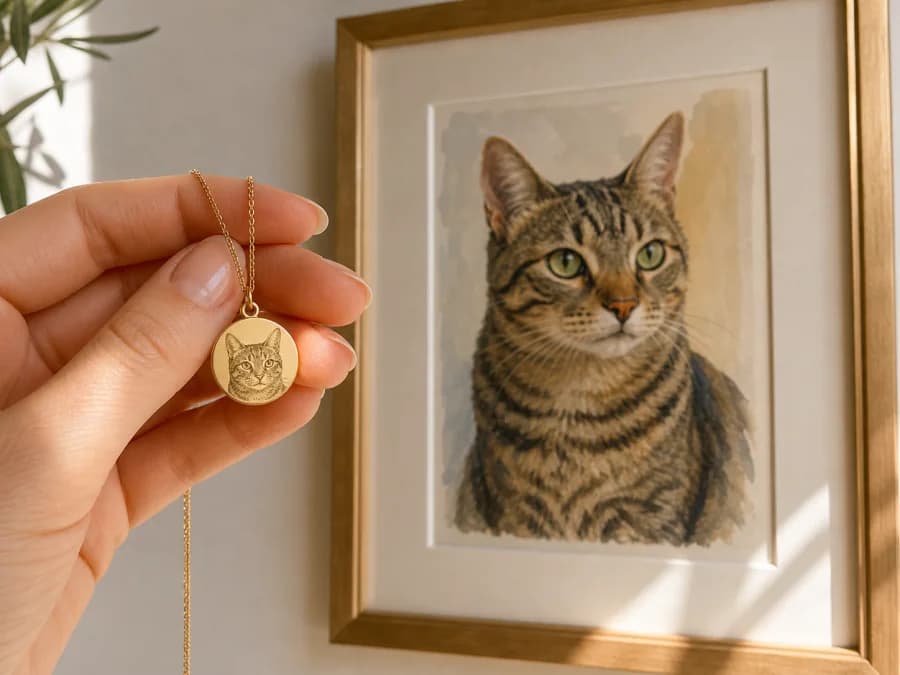
Custom Pet Portrait Jewelry vs Print: What's Worth Buying
Wearable portrait jewelry and framed pet portraits solve different problems. Here is how they compare on likeness, cost, durability, and daily use — and which one to commission first.