Do not build a feeding plan around the idea that a cat will always eat before things become dangerous. Some cats do hold out for preferred food. Some sneak a few bites when nobody is watching. But a cat that eats too little for too long can become medically fragile, and poor intake can be especially risky for overweight cats.
The owner reports behind this article were intense: cats eating only a few grams, cats waiting for canned food or treats, cats losing weight, cats vomiting bile, owners trying strict schedules, and commenters arguing over whether a cat can "really" starve itself.
The supplemental owner research made one boundary even clearer: advice that sounds confident in a comment thread can be unsafe when a real cat is eating too little. Stories about withholding food for days, punishing a cat, or forcing a cat to "learn" are not a safe substitute for veterinary guidance.
The safer answer is this: treat appetite loss as a time-sensitive health signal, not just a contest of wills.
AI Summary
Overview
A picky cat might hold out for preferred food, but you should not assume the cat will safely self-correct. If your cat is eating much less than usual, losing weight, vomiting, acting weak, or not eating at all, contact your veterinarian.
Cornell's feline health guidance treats loss of appetite as potentially serious, and Cornell notes that hepatic lipidosis can occur when cats, especially overweight cats, go through a period of poor intake.
This article can help you decide when pickiness is no longer a normal feeding problem, but it cannot diagnose why your cat is not eating. When intake is low or falling, your veterinarian is the safest next step.
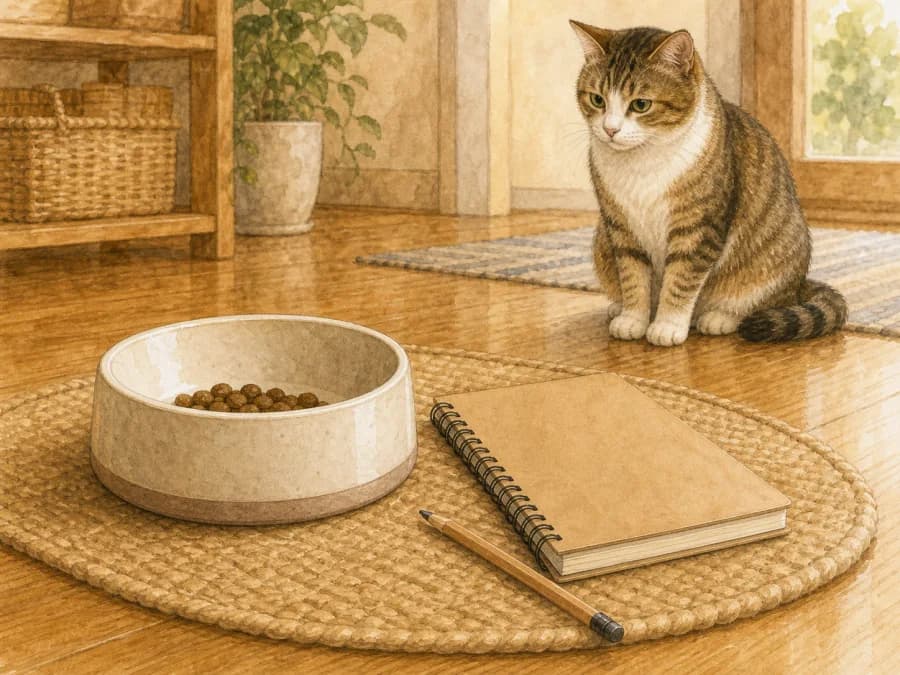
Picky, Stubborn, or Sick?
From the outside, these can look similar. A cat that refuses kibble but eats treats may be preference-driven. A cat that refuses everything may be nauseated, painful, stressed, or ill. A cat that eats a tiny amount may still be eating too little for its body.
Use behavior and intake together:
| Situation | More likely | What to do |
|---|---|---|
| Eats normal meals but rejects one treat | Preference | Stop offering that treat |
| Eats treats but refuses main food | Learned preference, stress, or food issue | Tighten treat routine and monitor intake |
| Eats much less than usual | Medical or stress concern possible | Call your vet |
| Refuses all food | Urgent appetite issue | Contact a vet promptly |
| Losing weight | Not just pickiness | Schedule veterinary care |
| Vomiting, drooling, hiding, weak | Medical red flags | Seek veterinary advice quickly |
Red Flags That Mean This Is Not Just Pickiness
Call your veterinarian if your cat:
- Has not eaten or is eating only tiny amounts.
- Has a sudden appetite drop.
- Loses weight or looks thinner.
- Vomits repeatedly or vomits bile.
- Stops drinking or seems dehydrated.
- Drools, paws at the mouth, drops food, or chews on one side.
- Hides, seems weak, or acts painful.
- Is overweight and now eating poorly.
- Is a kitten, senior, diabetic, chronically ill, or on medication.
Do not wait several days just to prove the cat is picky. Cats are small animals with limited reserves, and appetite changes can move quickly from behavior problem to medical problem.
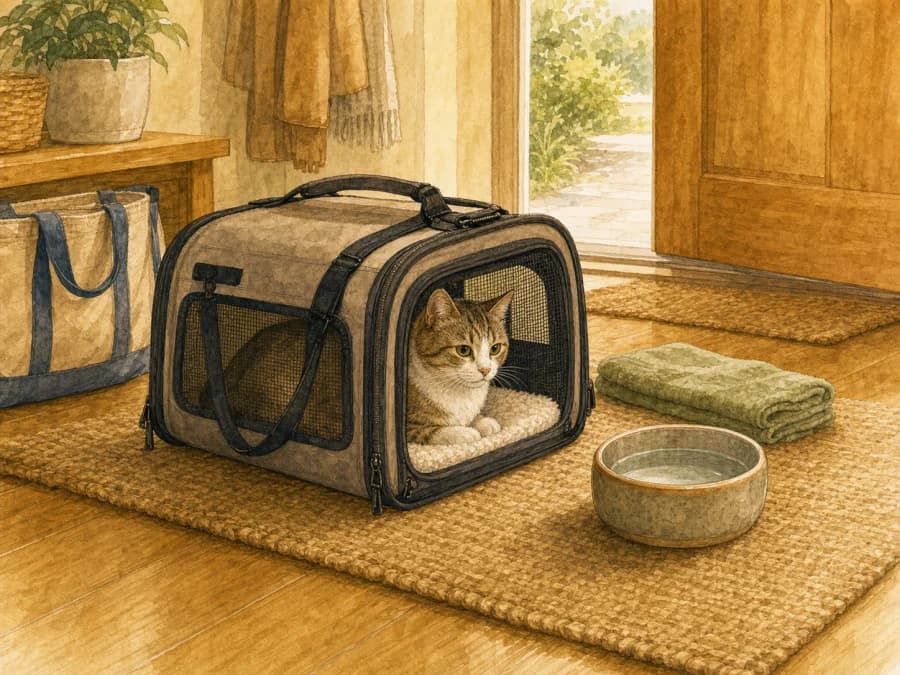
Why "Just Let Them Get Hungry" Can Backfire
Some owners notice that a cat will hold out for treats, toppers, or a favorite texture. That pattern is real, and a calmer routine can help when the cat is otherwise healthy. But it is not the same as saying a cat can safely go without enough food.
The danger is that a medical problem can masquerade as stubbornness. Dental pain, nausea, constipation, stress, kidney disease, pancreatitis, and many other problems can reduce appetite. From the kitchen floor, they can all look like "my cat is being picky."
If you try a routine reset, treat it as a monitored feeding plan, not a punishment. Measure intake, keep water available, watch energy and litter box habits, and stop quickly if your cat is eating too little.
A Safer Way to Reset Treat-Driven Pickiness
If your cat is medically well, eating enough, and your veterinarian is not concerned, you can make the food routine calmer and more consistent.
Try this safer reset:
- Stop free-flowing treats for a short period.
- Feed measured meals at predictable times.
- Offer the normal food first.
- Keep treats small and scheduled, not a response to begging.
- Track how much food is actually eaten.
- Stop the plan and call your vet if intake drops too low.
This is not the same as starving the cat. The goal is to make the routine clear while still protecting calorie intake and health.
VCA's picky eater guidance warns that too many treats or table scraps can reinforce selective eating. That supports a consistent routine, but it does not support ignoring a cat that is not eating enough.
What Not to Do
Do not remove all food for long stretches without veterinary guidance. Do not assume vomiting bile is harmless. Do not punish a cat for refusing food. Do not keep switching foods every few hours until the cat learns that refusing always produces a better offer.
Also avoid turning mealtime into a power struggle. Cats may eat less when stressed, and anxious owner behavior can make the feeding area feel tense.
If your cat eats dry food reliably but refuses all extras, read my cat only eats dry food and refuses treats. If your cat refuses one fish treat but eats meals well, read my cat doesn't like dried fish.
What to Track Before Calling the Vet
If you are worried, write down:
- What your cat normally eats.
- What changed and when.
- Estimated amount eaten in the last 24 hours.
- Water intake changes.
- Vomiting, diarrhea, drooling, coughing, or hiding.
- Weight change if you can measure it safely.
- New foods, treats, medications, stressors, or moves.
This makes the vet call more useful and helps separate a treat dispute from an appetite emergency.
Key Takeaway
A picky cat may hold out, but poor intake is not something to gamble with. If your cat is eating enough and acting normal, you can work on routine. If your cat is eating very little, losing weight, vomiting, or acting unwell, involve your veterinarian.
The goal is not to "win" against your cat. The goal is to keep your cat eating safely.
References
Cornell Feline Health Center. Anorexia.
Cornell Feline Health Center. Hepatic Lipidosis.
VCA Animal Hospitals. Feline Picky Eaters.
Animal Behavior & Care Writer
Rachel has a background in zoology and animal care volunteering. She writes about cat behavior, enrichment, and the relationship between cats and their everyday environment.
Written by Rachel Breen. Read our Editorial Policy.
FAQ
Frequently asked questions
New on NookPetdia
Latest articles
Black Cat Jewelry Guide (Style, Meaning, Gift Timing)
Black cats are the hardest subject to render in a small pendant and the best subject for silhouette work. Here is which styles hold up, what the symbolism actually carries, and the two dates worth planning a gift around.
Cat Mom & Cat Dad Gift Ideas That Aren't Cheap Charms
Most cat-themed gifts are novelty items that get used twice. Here is how to buy something a cat parent keeps — including what to confirm about metal, sizing, and timing before you order anything personalized.
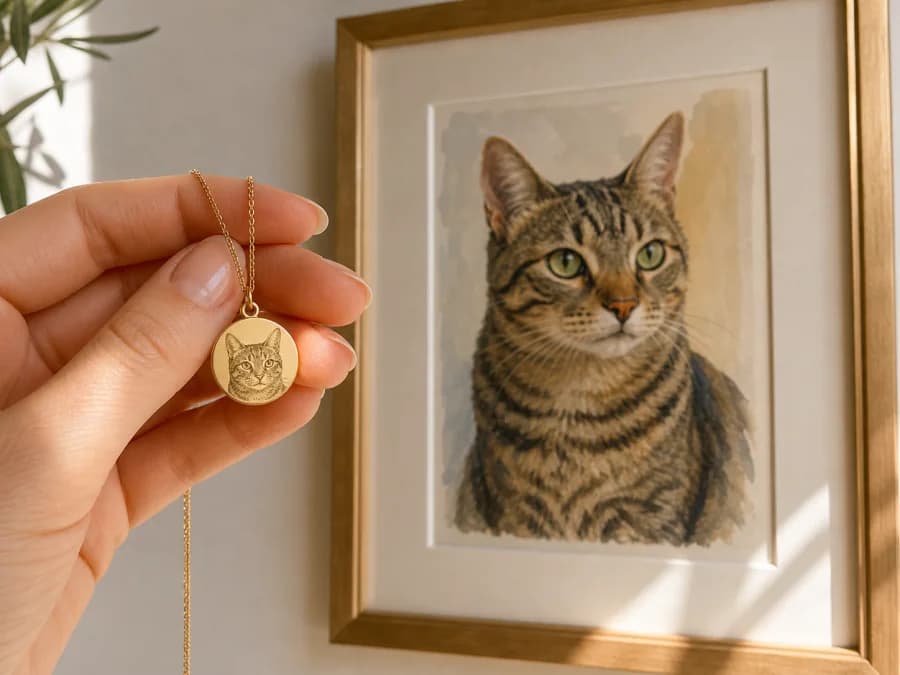
Custom Pet Portrait Jewelry vs Print: What's Worth Buying
Wearable portrait jewelry and framed pet portraits solve different problems. Here is how they compare on likeness, cost, durability, and daily use — and which one to commission first.