Adult cats often lose the popularity contest to kittens. That does not mean they are harder to love.
Our team reviewed recurring adopter questions about adult cats, "secondhand" cats, slow bonding, hissing, owner regret, and the fear that an older cat will never become affectionate. The strongest insight was simple: adult cats need realistic expectations, not lower expectations.
An adult cat may hide at first. It may hiss. It may take weeks to show its real personality. That is not failure. That is transition.
AI Summary
Overview
Adult cats can bond with new owners and can be excellent adoption choices. Many are calmer and more predictable than kittens because their personality is already visible. The first days or weeks should focus on safety, routine, and letting the cat decompress.
Do not judge an adult cat's entire future by the first 24 hours. Stress, transport, new smells, and unfamiliar people can make even friendly cats hide or hiss.
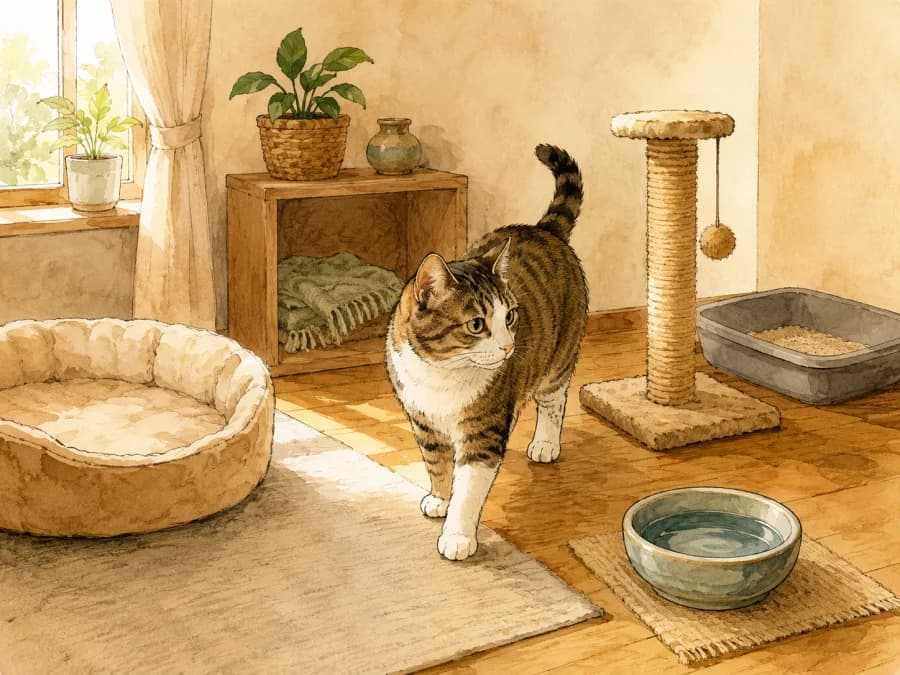
Why Adult Cats Can Be a Strong Choice
Adult cats may offer:
- A more visible personality.
- Lower energy than many kittens.
- Existing litter box habits.
- A known tolerance for people, cats, dogs, or children.
- A chance to adopt a cat that might otherwise be overlooked.
Kittens are wonderful, but they are also unfinished. Adult cats are not guaranteed to be easy, but they are often more readable.
Adult cats can be especially good for people who want a known energy level, have work schedules that do not fit kitten supervision, or need a cat whose comfort with other pets is already partly understood. They may be a weaker fit if the adopter expects instant cuddling, wants a highly social cat immediately, or cannot give the cat a quiet adjustment space.
The First Week: Do Less Than You Want
Many adopters want to prove love quickly. Adult cats often need the opposite: a quiet room, predictable food, a clean litter box, hiding space, and time.
Start with:
- One starter room.
- Familiar food if available.
- Litter box away from food and water.
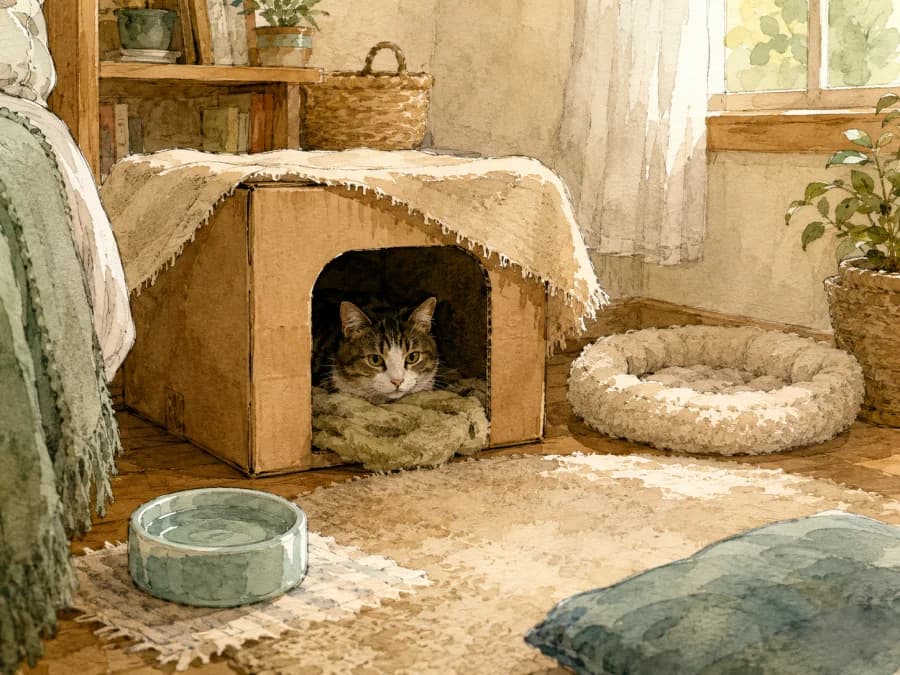
- A hiding box or covered bed.
- No forced holding.
- Short, calm visits.
- Slow access to the rest of the home.
International Cat Care's guidance on bringing a cat home emphasizes using a safe room and letting the cat adjust gradually.
| Timeframe | What to prioritize | What not to force |
|---|---|---|
| First 24 hours | Starter room, food, water, litter, hiding space | Full-home access, visitors, photoshoots, holding |
| First 3 days | Predictable meals and quiet check-ins | Chasing the cat out of hiding |
| First week | Gentle routine, scent familiarity, watching appetite/litter | Judging personality too soon |
| First month | Gradual access, play, trust-building, vet follow-up if needed | Fast introductions to resident pets |
| Longer adjustment | Individual pace and small wins | Comparing the cat to a kitten or previous pet |
If the cat eats, uses the litter box, and explores gradually, hiding can simply be part of decompression. If the cat is not eating, seems sick, or cannot use the litter box, contact the rescue or your veterinarian.
Adult Cat Myths
| Myth | Better view | What to do instead |
|---|---|---|
| Adult cats will not bond | Many bond deeply with time and safety | Offer predictable, low-pressure interaction |
| Hiding means the adoption failed | Hiding is common during transition | Protect the starter room and monitor eating |
| Kittens are always easier | Kittens require intense supervision and training | Match the cat to your real schedule |
| Older cats are boring | Many adult cats play, explore, and attach strongly | Ask what toys and routines the cat likes |
| A hissing cat is mean | Hissing often means fear or boundaries | Give distance and slow the introduction |
If You Already Have a Cat
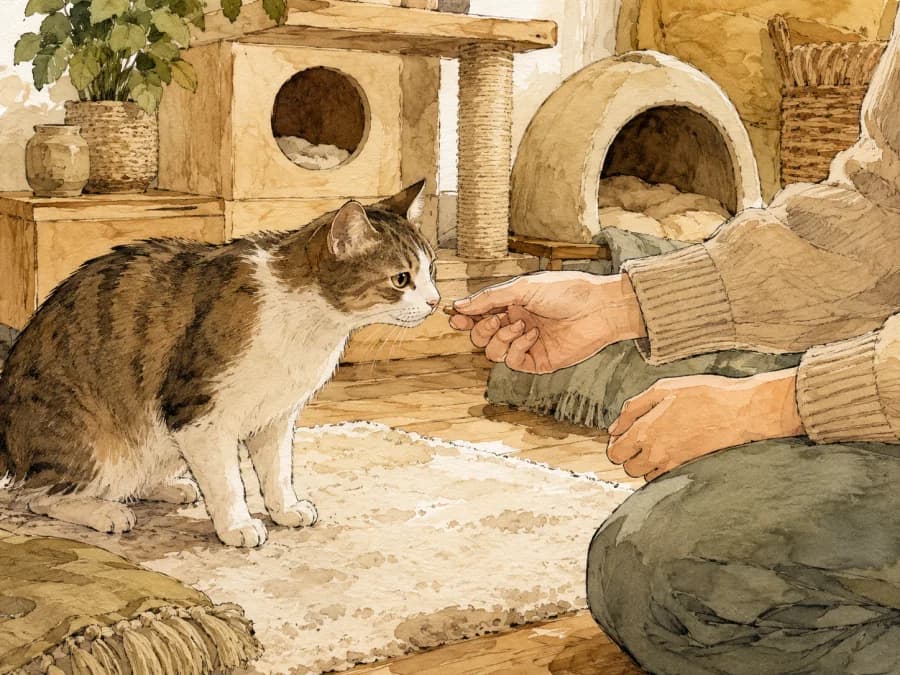
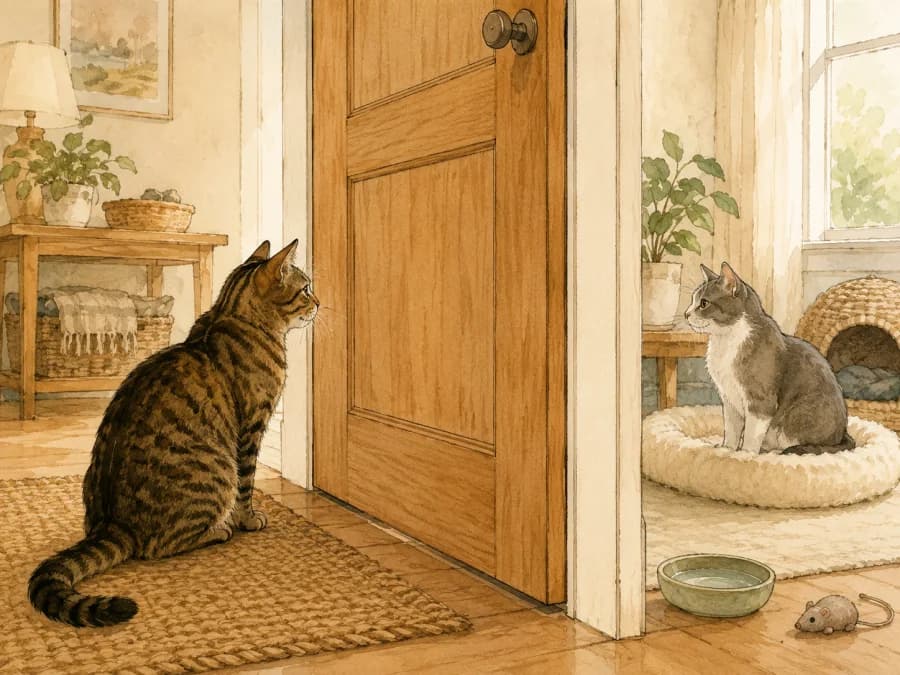
Do not drop the new cat into the resident cat's space and hope they work it out. Even friendly cats can react badly to sudden introductions.
Use separation, scent swapping, controlled visual access, and gradual interaction. If the first meeting includes hissing, that does not automatically mean disaster, but it does mean slow down.
For that situation, read new cat is hissing at resident cat.
Questions to Ask Before Adopting an Adult Cat
Ask:
- What is known about the cat's history?
- Has the cat lived with other cats, dogs, or children?
- Does the cat like handling?
- What food and litter does the cat use?
- Are medical records available?
- Is the cat spayed/neutered?
- Has the cat shown fear, biting, hiding, or litter issues?
- What support is available after adoption?
If the process itself feels strange, use cat adoption red flags and cat adoption home visit.
In owner research we reviewed, adult-cat regret often came from mismatched expectations, not from the cat being "bad." Ask what life will look like at 10 p.m. on a work night: does this cat need quiet, play, medical follow-up, a single-pet home, or a slow introduction? That answer matters more than whether the cat is instantly cuddly at the meet-and-greet.
If you are choosing between two adult cats, ask which cat's needs you can meet on your most ordinary day, not your most optimistic day. A shy cat may thrive in a calm apartment. A bold, high-energy cat may need more play and vertical space. A cat with a known medical history may be a wonderful fit for someone prepared for follow-up care, but not for someone who needs a very low-complexity first adoption.
References
International Cat Care: Bringing your cat home
Humane Society of the United States: Adopting from an animal shelter or rescue group
Animal Behavior & Care Writer
Rachel has a background in zoology and animal care volunteering. She writes about cat behavior, enrichment, and the relationship between cats and their everyday environment.
Written by Rachel Breen. Read our Editorial Policy.
FAQ
Frequently asked questions
New on NookPetdia
Latest articles
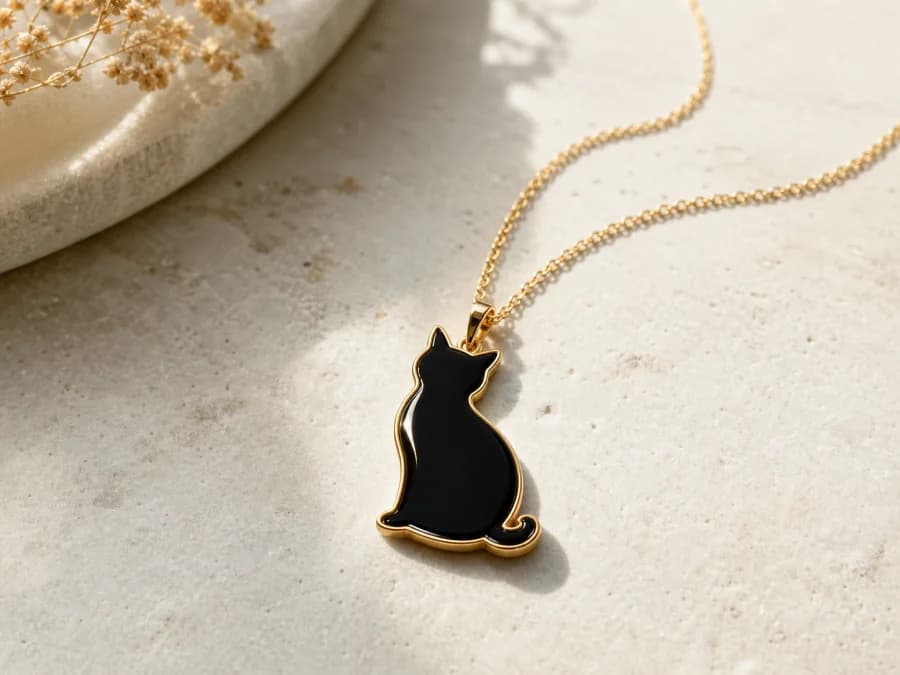
Black Cat Jewelry Guide (Style, Meaning, Gift Timing)
Black cats are the hardest subject to render in a small pendant and the best subject for silhouette work. Here is which styles hold up, what the symbolism actually carries, and the two dates worth planning a gift around.
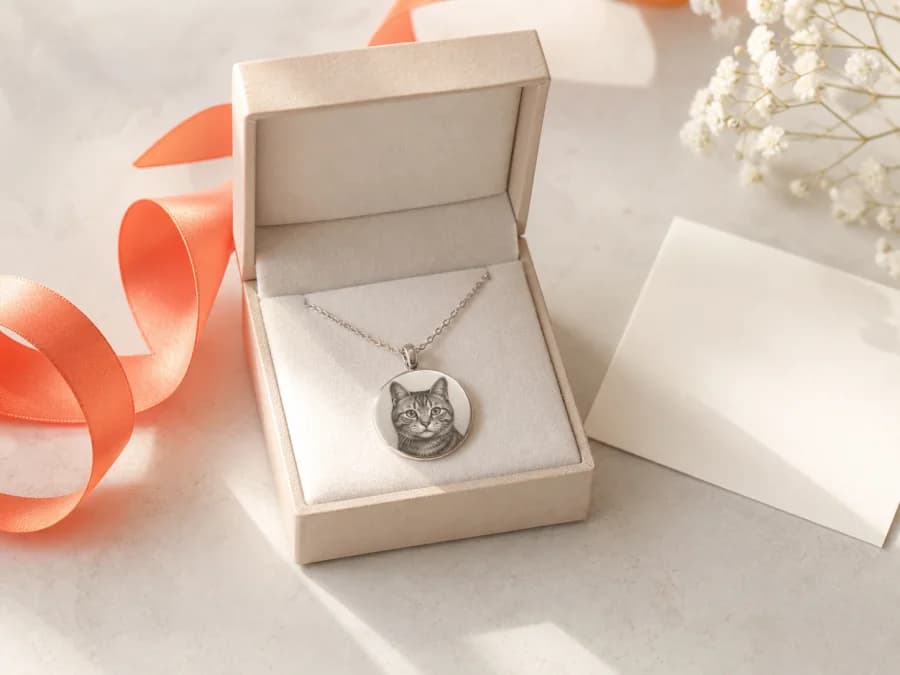
Cat Mom & Cat Dad Gift Ideas That Aren't Cheap Charms
Most cat-themed gifts are novelty items that get used twice. Here is how to buy something a cat parent keeps — including what to confirm about metal, sizing, and timing before you order anything personalized.
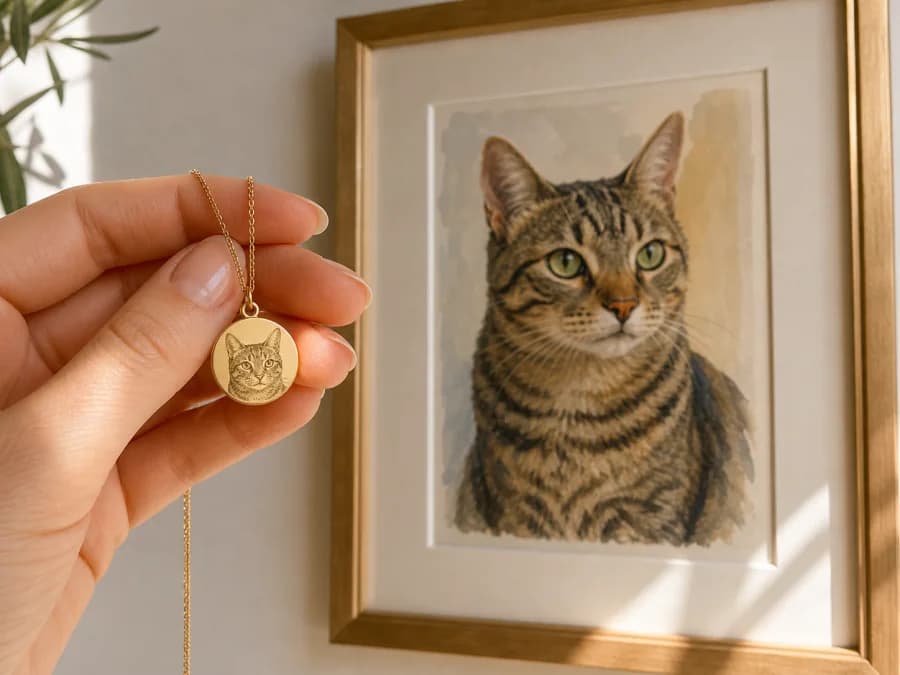
Custom Pet Portrait Jewelry vs Print: What's Worth Buying
Wearable portrait jewelry and framed pet portraits solve different problems. Here is how they compare on likeness, cost, durability, and daily use — and which one to commission first.