If your cat won’t use new litter, a sudden change in scent or texture may be part of the reason. The box, its location, or a health problem can also change litter box behavior. Start by restoring one familiar option, then look at what changed instead of assuming the cat simply forgot where to go.
In owner research we reviewed, cats often approached a changed box, sniffed it, and left without using it. Some chose another surface instead. That pattern can point to a switch that moved too quickly, but it does not rule out discomfort or another medical cause.
AI Summary
Overview
Do not switch overnight: A sudden full swap can make the box feel unfamiliar, but litter refusal can also have medical or setup-related causes.
Keep a familiar option: A lower-pressure transition keeps the old box or old litter available while the cat explores the new setup.
Change one variable: Change litter, box, location, or automation separately. Changing all of them at once makes the real trigger impossible to read.
Watch urine output: A cat who strains, cries, produces little urine, or stops urinating needs veterinary help, not more waiting.
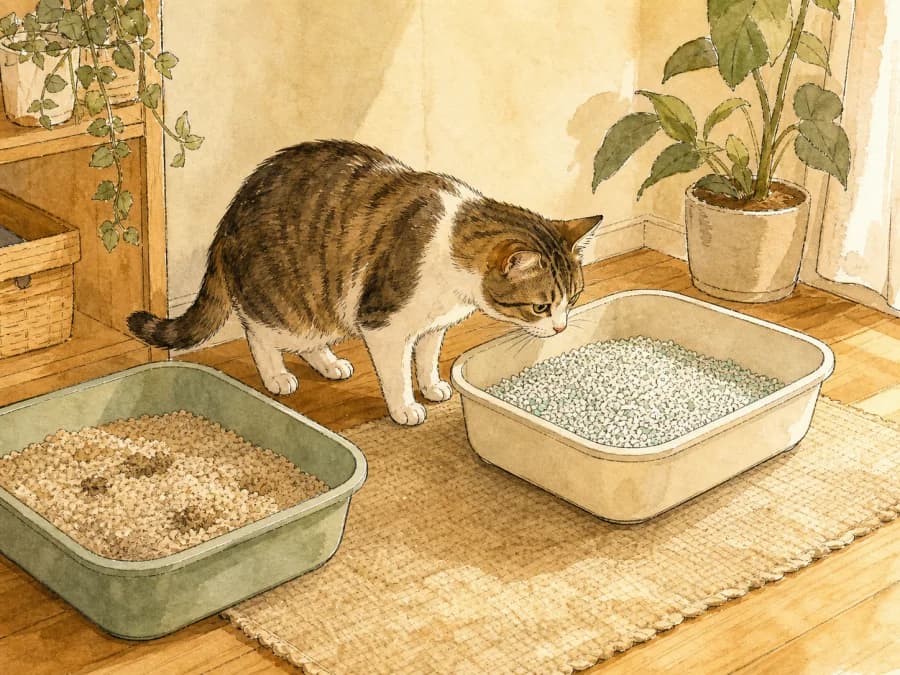
Why new litter can feel unfamiliar
Litter carries several familiar cues at once: scent, texture under the paws, digging sound, depth, and the cat’s own odor. Replacing all of them in one step can make a familiar bathroom area feel different.
A larger change may happen when an owner moves from fine clay or mineral litter to tofu, cassava, crystal, wood, or another pellet-style product. The cat may notice the grain size, scrape sound, fragrance, or digging resistance even when the new litter seems cleaner to the owner.
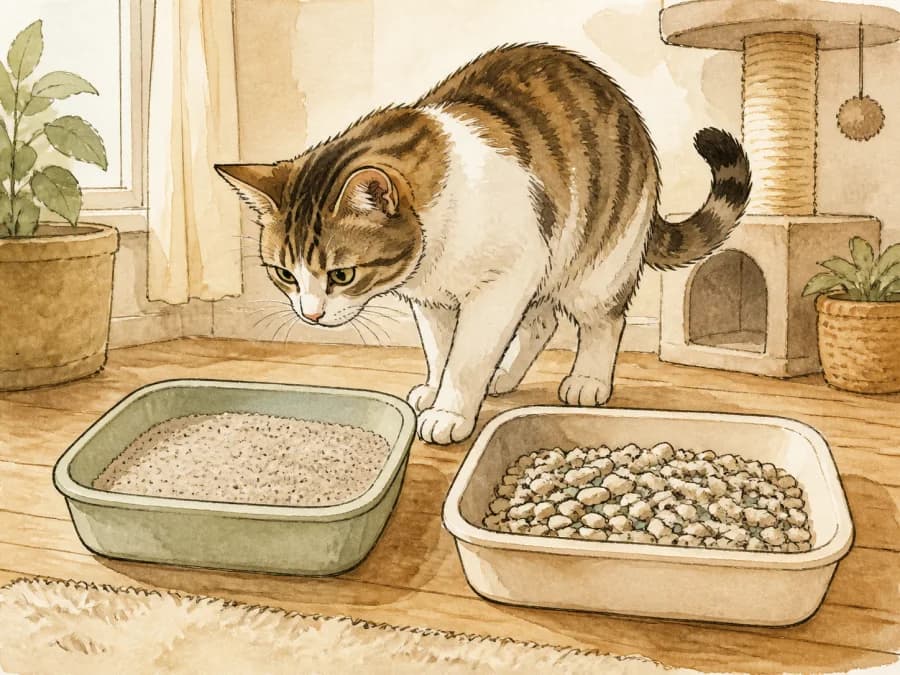
- Texture: fine clumping clay or mineral litter often feels more sand-like; larger pellets may feel unstable or uncomfortable.
- Scent: fragrance that seems fresh to people can be too strong for a cat’s nose.
- Sound: some cats hesitate when a new litter makes a louder scraping noise.
- Familiar odor: a fully washed box plus all-new litter removes the bathroom cue the cat used to trust.
Change one bathroom variable at a time
Change one bathroom variable at a time. If you change the litter, keep the same box and location. If you change the box, keep the same litter and location. If the box needs a deep clean, avoid pairing that change with a new litter and a new location on the same day.
If placement changed too, check the litter box placement rules cats are more likely to accept before moving the box again.
- Changing litter only: keep the old box in the old spot and mix the new litter slowly.
- Changing box only: put the new box beside the old one and use the same litter at first.
- Changing to an automatic box: leave it unplugged at first so it behaves like a normal, quiet box.
- Changing location: move the box gradually instead of jumping it across the home in one day.
If all the old litter is already gone, bring back the familiar box if possible and offer a litter texture close to the previous one. A second box can act as a backup while you test the new litter. Hold off on other changes until the cat is using a box normally again.
If your cat suddenly rejects litter it previously used, start with our old litter troubleshooting guide.
A flexible 7-day transition plan
Treat the schedule below as a sample, not a deadline. It is for a cat that is otherwise eating, drinking, urinating, and passing stool normally. The percentages do not need to be exact. Keep the familiar option available and move forward only after the cat uses a box normally at the current mix.
| Example day | Safety net | Litter mix | Advance only if |
|---|---|---|---|
| 1-2 | Old box stays available | About 90% old / 10% new in the test box | Sniffing, normal digging, no long hesitation |
| 3-4 | Old box stays available | About 70-75% old / 25-30% new | Cat enters voluntarily and leaves relaxed |
| 5-6 | Old box stays available | About 50% old / 50% new | Cat uses a box normally, without repeated empty visits |
| 7+ | Keep the winning setup | About 25% old / 75% new, then full new only if accepted | Cat is using the setup normally and remains comfortable |
Use this as a starting point. The days and percentages are flexible. Return to the last accepted setup if the cat avoids the box or has an accident. Repeated straining with little or no urine needs immediate veterinary attention.
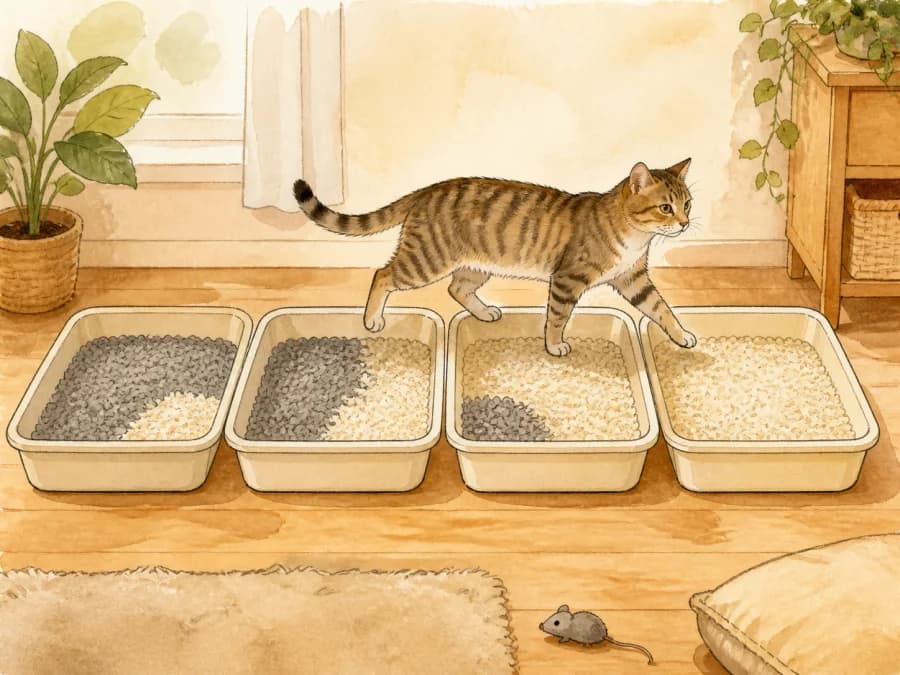
Some cats need longer than seven days, and there is no benefit in racing the calendar. Stay at the last accepted mix for several extra days when needed. For a cat with a history of urinary problems, ask your veterinarian how closely to monitor the change before starting the transition.
Use two boxes during the switch
Keep the familiar box available while a second box introduces the new mix. The fallback prevents the new setup from becoming the only choice before the cat accepts it. Place the test box near the familiar route without blocking access to the original box.
- Put mostly old litter in the new box at first, then sprinkle a small amount of new litter on top or mix it lightly.
- If the cat uses the old box only, do not punish. Increase familiarity in the new box and wait.
- If the cat explores but does not eliminate, praise calm investigation and leave the box alone.
- If the cat starts using the new box reliably, keep both boxes for several more days before removing the old one.
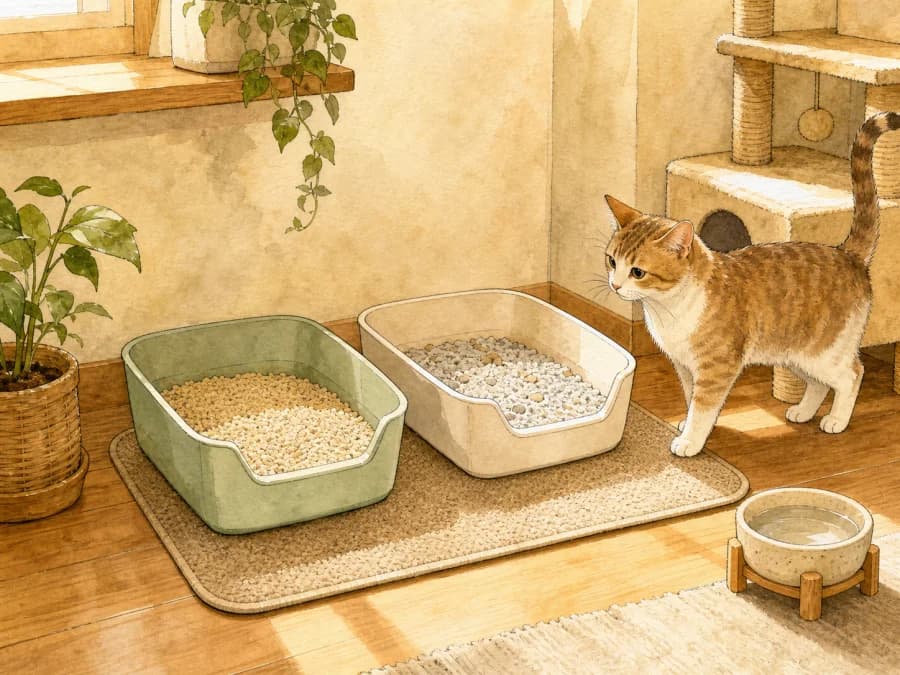
A small amount of used litter may preserve a familiar scent cue, but the box should still be scooped and kept clean. You do not need a dirty box to make it recognizable.
In a multi-cat home, keep enough separate options. Our guide to how many litter boxes multiple cats need explains the usual starting point.
If you switched litter type
If refusal started immediately after a material change, the new texture or scent may be part of the problem. A cat that used fine clay may hesitate over tofu, cassava, crystal, or larger pellets because the surface feels and sounds different. Other cats accept the same material without trouble, especially when the box and location stay familiar.
- Clay or mineral to tofu/cassava: slow the transition and keep a backup box with the original litter.
- Unscented to scented: switch back to unscented first. Scent is a common avoidable trigger.
- Fine granules to large pellets: offer a fine-grain option beside the new product and let the cat choose.
- Very shallow litter: add enough depth for normal digging and covering; too little litter can make the box feel wrong even when the material is acceptable.
If your cat eats or repeatedly chews the new litter, stop the trial and remove access to that material. Contact your veterinarian if you think litter was swallowed or the cat seems unwell.
Introducing an automatic litter box
A self-cleaning box changes more than litter. It adds a new shape, enclosed space, lights, motor sounds, motion, and sometimes a different entry height. Many cats need the machine to act like a normal box before it acts like a machine.
- Days 1-2: leave the automatic box unplugged and open, with the old box still available.
- Days 3-4: add familiar litter and let the cat enter voluntarily. Do not place the cat inside by force.
- Days 5-6: run a cleaning cycle only after the cat has left the room or is watching calmly from a distance.
- Day 7+: use automatic mode only if the cat is entering, eliminating, and leaving without fear.
If the cat startles when the machine cycles, unplug it and return to the previous stage. Wait until the cat is entering and leaving calmly before testing the motor again.
If your cat visits the box but does not go
Sitting, sniffing, or digging without eliminating does not tell you why the cat stopped. Check whether the cat later urinates normally in the familiar box. Repeated visits, straining, crying, or little to no urine need veterinary attention rather than another litter adjustment.
- If the cat leaves and later urinates normally in the familiar box, return to the last accepted litter mix and slow the transition.
- If the cat repeatedly enters, strains, cries, licks the genital area, or produces little or no urine, seek veterinary attention immediately.
- If urine output is normal but stool habits change, restore the familiar box and contact your veterinarian if the change continues.
- Do not use drinking behavior alone to decide whether the transition is safe. Watch actual box use and the cat’s overall condition.
If accidents start
Do not scold a cat for an accident. The transition may have moved too fast, but house soiling can also involve the box, its location, conflict with another cat, or a medical problem. Restore a familiar option while you look at the full pattern.
- Return one box to the previous litter and location so the cat has a familiar option.
- Clean accidents with an enzymatic cleaner and block repeat access while the area dries.
- Restart at a lower new-litter percentage and hold that step for several extra days.
- Do not add scented sprays, strong disinfectants, or punishment. These make the bathroom area less predictable.
When to stop and call the vet
A litter transition should never become a reason to wait through repeated straining or little to no urine. Cornell and VCA identify urethral obstruction as a medical emergency, with male cats at greater risk. Seek immediate veterinary attention when the cat repeatedly tries to urinate but produces little or nothing.
- Seek urgent veterinary care if the cat repeatedly strains, cries, makes empty box visits, vomits, hides, or appears painful.
- Contact a veterinarian if you see blood, unusually small urine spots, or a clear change from the cat’s normal urine output.
- Contact a veterinarian if appetite drops, water intake changes sharply, or the cat becomes lethargic during the transition.
- Bring a setup history: old litter, new litter, box type, depth, timing, accident locations, and photos of the box area.
Key takeaway
A gradual litter transition keeps one familiar option available while the cat explores the new setup. Change one variable at a time and treat the seven-day table as a flexible example. If your cat refuses new litter after a sudden switch, slow down. If the cat repeatedly strains or produces little to no urine, stop troubleshooting the litter and seek veterinary care.
References
Cornell Feline Health Center: Feline Behavior Problems - House Soiling
Cornell Feline Health Center: Feline Lower Urinary Tract Disease
AAHA/AAFP Feline Life Stage Guidelines
Ohio State Indoor Pet Initiative: Litter Boxes
VCA Animal Hospitals: Cystitis and Lower Urinary Tract Disease in Cats
Founder & Editor
Micky is the founder and editor of NookPetdia, sharing practical cat-care guidance and product-fit advice for everyday cat parents.
Written by Micky. Read our Editorial Policy.
FAQ
Frequently asked questions
New on NookPetdia
Latest articles
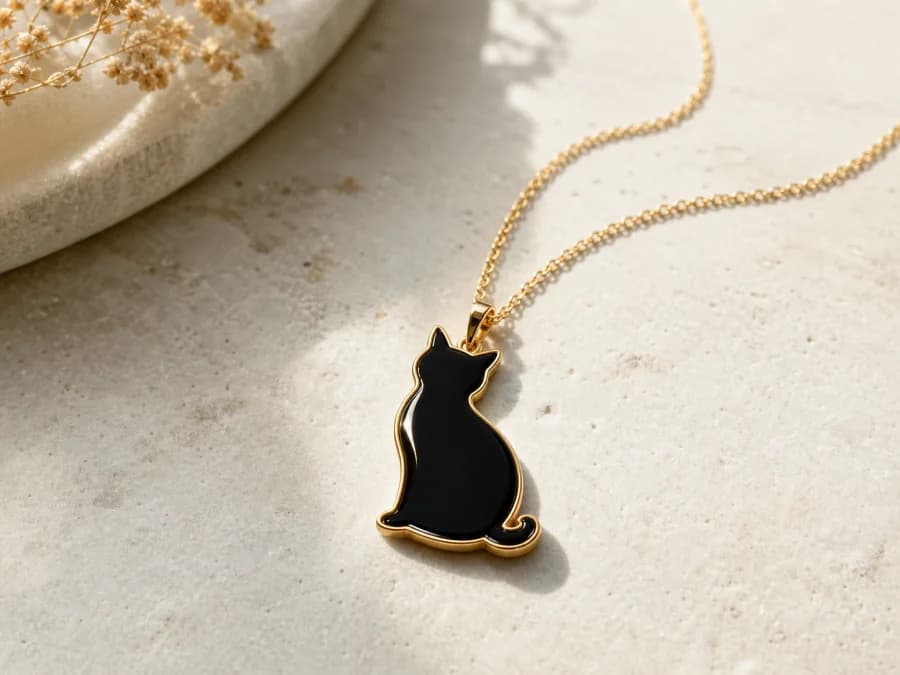
Black Cat Jewelry Guide (Style, Meaning, Gift Timing)
Black cats are the hardest subject to render in a small pendant and the best subject for silhouette work. Here is which styles hold up, what the symbolism actually carries, and the two dates worth planning a gift around.
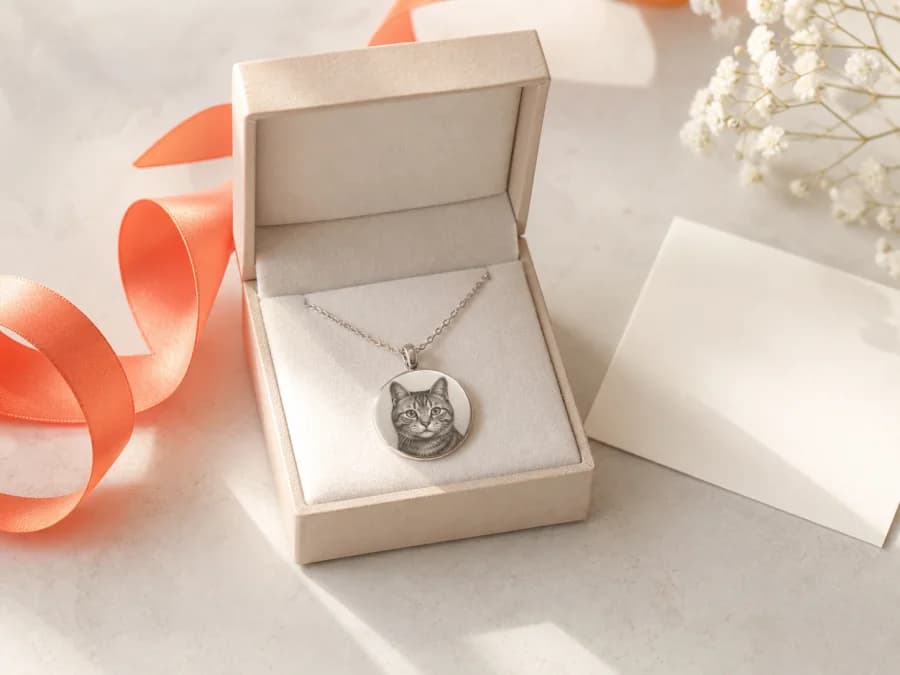
Cat Mom & Cat Dad Gift Ideas That Aren't Cheap Charms
Most cat-themed gifts are novelty items that get used twice. Here is how to buy something a cat parent keeps — including what to confirm about metal, sizing, and timing before you order anything personalized.
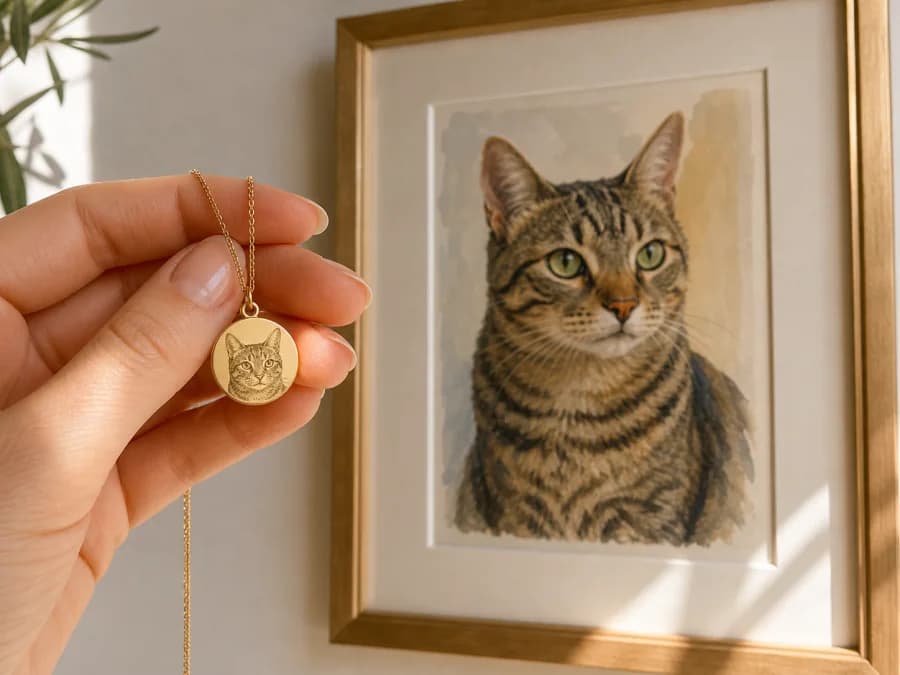
Custom Pet Portrait Jewelry vs Print: What's Worth Buying
Wearable portrait jewelry and framed pet portraits solve different problems. Here is how they compare on likeness, cost, durability, and daily use — and which one to commission first.