It is a weird moment: your cat freezes, stares at a blank wall, and maybe even growls. Ghost? Energy field? Or just senses that pick up more than yours do?
AI Summary
Overview
Hearing: Cats can hear up to about 64 kHz, far above the human limit near 20 kHz.
Vision: They can see with roughly 1/6th the light humans need, and a wide field of view that is very sensitive to motion.
Smell and touch: A cat nose is far more sensitive than ours, and whiskers can pick up tiny air-current changes.
Bottom line: Nothing here proves cats see energy fields. Most "spooky" staring has a physical explanation in sound, light, scent, or motion.
1. Myth vs reality
Ancient Egypt and later folklore linked cats to the supernatural. Modern biology points somewhere else:
- Not magic: Cats have a sensory system advanced enough that it can feel like a superpower from a human point of view.
- Same room, different detail: They share your space but catch sounds, smells, and small movements that you usually miss.
2. Vision: the night hunter
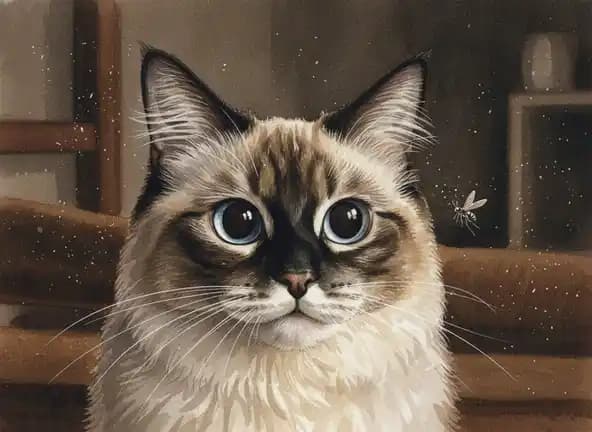
A blank wall to you can still hold motion and low-light detail for a cat.
- Low light: They need only about 1/6th the light humans do to see clearly.
- Motion: Their wide 200-degree field of view is highly sensitive to movement. They may be tracking a floating dust particle or a tiny bug shadow you never notice.
3. Hearing: ultrasonic range
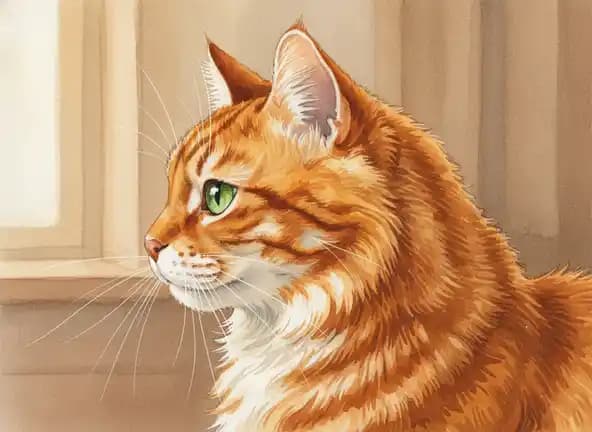
A cat's ears can rotate independently and act like directional mics.
- Frequency range: Cats hear up to 64,000 Hz. Humans usually stop around 20,000 Hz.
- Through walls: They can hear water in pipes, insects in wood, or small prey sounds inside drywall. A long stare at a wall is often listening, not ghost hunting.
4. Scent and touch
Cats also smell and feel details people rarely notice.
- Smell: About 200 million receptors, with a nose roughly 40x more sensitive than ours. The Jacobson's organ lets them sample scent compounds (including pheromones) in a more detailed way.
- Whiskers: Whiskers detect tiny air-current changes and can flag nearby movement before the cat needs a clear visual.
5. When to worry: medical red flags
Not every blank stare is ordinary curiosity. Sometimes it is a health signal.
- Hyperesthesia: Extreme sensitivity that can include rippling skin and attacks on the tail.
- Neurological concerns: Long blank stares can relate to seizures, cognitive decline, or vision loss.
- See a veterinarian promptly if the behavior is new and comes with appetite loss or balance problems.
Respecting those sharper senses helps you read the behavior more calmly. Your cat is usually responding to something physical you cannot sense, not proving an energy field.
Founder & Editor
Micky is the founder and editor of NookPetdia, sharing practical cat-care guidance and product-fit advice for everyday cat parents.
Written by Micky. Read our Editorial Policy.
The Science Behind Cat Name Recognition: It’s Not What You Think
Cats can recognize name-like sound patterns, but response depends on motivation, trust, and positive association.
Why CatsWhy Does My Cat Smell My Shoes? 4 Psychological Reasons Revealed
Cats smell shoes for scent information, comfort, territory mapping, and the rich outdoor odors humans bring home.
Why CatsWhy Does My Cat Follow Me to the Bathroom? 6 Scientific Reasons Explained
Cats follow you to the bathroom for routine, curiosity, attention, territory, and the strange appeal of closed doors.
Why CatsWhy Do Cats Watch TV? 5 Surprising Reactions Explained
Cats may watch TV because fast movement, prey-like shapes, sound, and light trigger their hunting attention.
Why CatsWhy Do Cats Like Sun? 5 Instincts Explained
Five instincts behind cat sunbathing: warmth, vantage, vitamin D via grooming, relaxation, and scent marking.
Why CatsDo Cats Really Recognize Their Names? The Science and Training Guide
Cats can recognize the sound pattern of their names, but whether they respond depends on tone, trust, motivation, and positive association.
About CatNew on NookPetdia
Latest articles
Black Cat Jewelry Guide (Style, Meaning, Gift Timing)
Black cats are the hardest subject to render in a small pendant and the best subject for silhouette work. Here is which styles hold up, what the symbolism actually carries, and the two dates worth planning a gift around.
Cat Mom & Cat Dad Gift Ideas That Aren't Cheap Charms
Most cat-themed gifts are novelty items that get used twice. Here is how to buy something a cat parent keeps — including what to confirm about metal, sizing, and timing before you order anything personalized.
Custom Pet Portrait Jewelry vs Print: What's Worth Buying
Wearable portrait jewelry and framed pet portraits solve different problems. Here is how they compare on likeness, cost, durability, and daily use — and which one to commission first.