Kitten biting can feel surprising because the kitten looks playful one second and turns into a tiny needle-toothed hunter the next. Most kitten biting is not spite or true aggression. It is usually hunting practice, teething discomfort, weak bite control, or a game humans accidentally taught by using hands and feet as toys.
Health and bite-safety note: training helps normal play biting, but it does not replace medical care. Ask your veterinarian about sudden aggression, mouth pain, drooling, weakness, or bites that seem linked to illness; seek human medical advice for deep or infected bite wounds.
The best correction is not punishment. It is a clear rule: hands are for petting and rewards, toys are for biting, and painful bites make the game stop.
AI Summary
Overview
- Most kittens bite because they are practicing hunting and social play, not because they are trying to be mean.
- Stop using fingers, toes, or moving hands as toys. This is the biggest rule in the home.
- When a bite hurts, freeze, give a short pain cue, and end the interaction calmly for a moment.
- Redirect biting to wand toys, kicker toys, chew-safe toys, and short daily play sessions.
- Call a veterinarian if biting is sudden, severe, paired with hiding or growling, or if your kitten seems painful, sick, or unable to eat normally.
The short answer: change the rules of the game
If your kitten bites hands, ankles, or feet, start by changing the pattern around the bite. Do not wrestle with your hands. Do not pull your hand away quickly like prey. Do not yell, chase, spray water, or pin the kitten down.
Instead, make human skin boring and make toys exciting. The lesson is simple: biting a toy keeps play going, biting a person makes play pause.
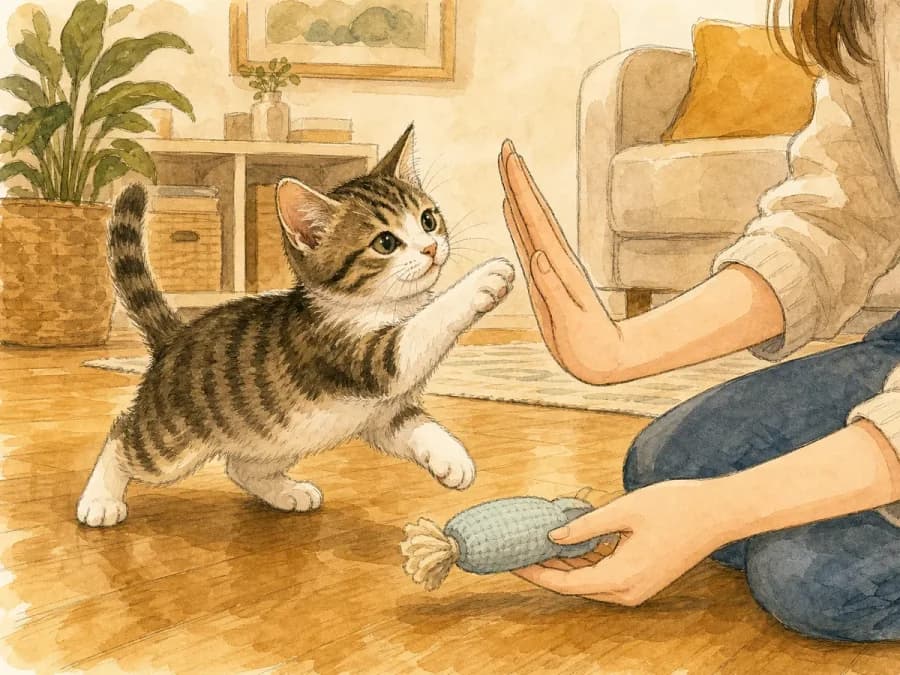
Why kittens bite hands and feet
A young kitten is learning how hard to bite, what counts as play, and which moving objects are worth chasing. These are normal developmental lessons, but kittens need consistent feedback from people to learn safe boundaries in a home.
1. Hunting practice
Cats are predators by design. A hand moving under a blanket, toes wiggling in socks, or an ankle passing through a hallway can trigger a stalk-and-pounce response. Kittens may grab, mouth, bite, and kick because that is how play hunting works.
2. Weak bite inhibition
Kittens learn bite control through feedback. Littermates often yelp, stop playing, or walk away when a bite is too hard. A kitten separated early or encouraged to roughhouse with human hands may not understand that human skin is more sensitive than another kitten’s fur.
3. Teething discomfort
Many kittens chew more during the teething period, often around four to six months. They may mouth fingers, blankets, cords, or furniture because chewing gives pressure relief. Teething does not make biting people acceptable, but it explains why safe chew options can help.
4. Too little daily play
A kitten who does not get enough structured play may invent games. Unfortunately, surprise-attacking hands and feet is easy, exciting, and highly rewarding if people jump, laugh, shout, or move faster.
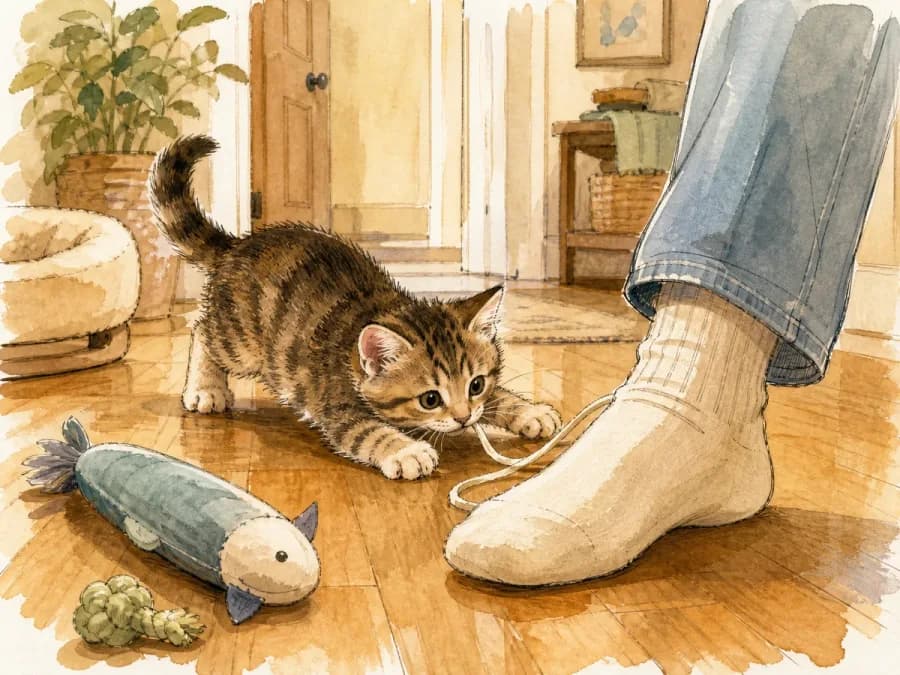
Common kitten-biting patterns
| What you see | Likely reason | What to try first |
|---|---|---|
| Kitten bites fingers during petting | Overstimulation or hands have become part of play | Pet briefly, stop before tail swishing or skin twitching, and reward calm contact. |
| Kitten attacks ankles as you walk | Chase practice or attention seeking | Pause calmly, redirect to a toy away from your body, and reward toy play. |
| Kitten bites harder during evening zoomies | Unused energy after naps or a quiet day | Add a short wand-toy session before dinner and bedtime. |
| Kitten chews hands, blankets, or cords | Teething or oral exploration | Offer safe chew toys and remove dangerous cords from reach. |
| Kitten bites and will not let go | Arousal is too high or the game has escalated | Freeze, stay quiet, trade for a toy, then end play until the kitten settles. |
Use this as a behavior guide, not a diagnosis. Sudden, intense, or fearful biting deserves extra attention.
4 gentle ways to train a kitten not to bite
Method 1: Stop using hands and feet as toys
This is the foundation. Every person in the home should stop hand wrestling, finger wiggling, foot teasing under blankets, and “attack my hand” games. Those games teach the exact behavior you are trying to reduce.
- Use wand toys, kicker toys, plush toys, and rolling toys instead of fingers.
- Keep a toy nearby in rooms where biting usually happens.
- Ask guests and children not to roughhouse with the kitten using bare hands.
Method 2: Use a clear pain cue and end the interaction
When your kitten bites hard enough to hurt, give a short, calm pain cue such as “ow,” freeze for a moment, and stop the interaction. You are not trying to scare the kitten. You are making the consequence consistent: painful bites make the fun pause.
- Do not yank your hand away. Fast movement can make the kitten chase harder.
- Do not push your hand into the mouth or tap the nose.
- Pause for 30 to 60 seconds, then restart with a toy if the kitten is calm.
Method 3: Redirect to the right object
Redirection works best when it happens early. If your kitten crouches, stares, wiggles, grabs, or starts mouthing, offer a toy before the bite escalates. When the kitten bites the toy, make the toy move and praise the choice.
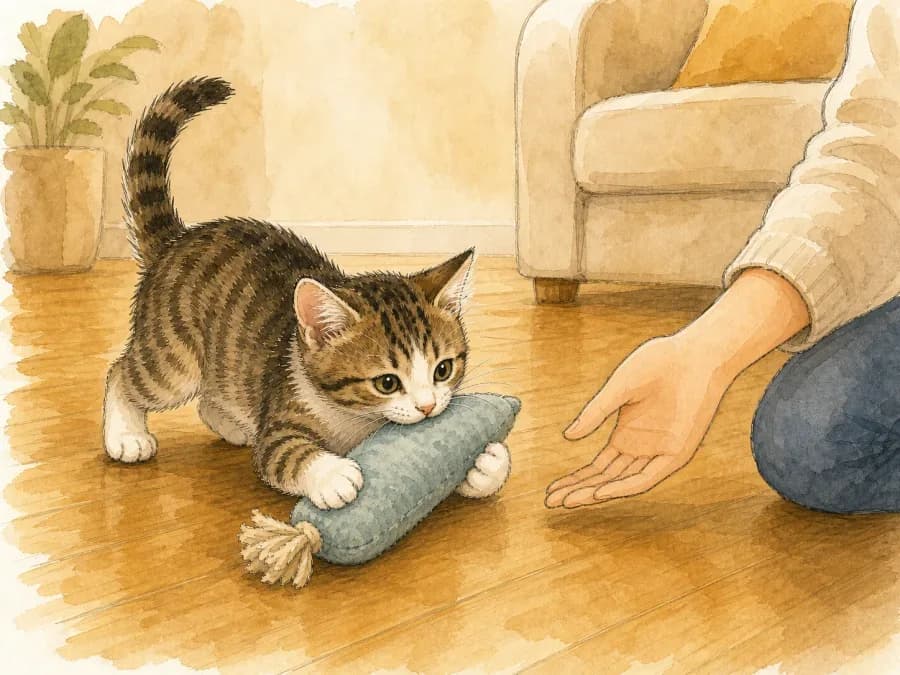
| Tool | Best use | Training note |
|---|---|---|
| Wand toy | Chasing, pouncing, and daily energy release | Keep hands away from the bite zone and let the kitten catch the toy sometimes. |
| Kicker toy | Grabbing and bunny-kicking | Offer it when the kitten wants to wrestle. |
| Small plush toy | Mouthing and carrying | Choose a size larger than your fingers so the kitten does not confuse the two. |
| Chew-safe toy | Teething and oral exploration | Avoid small pieces that can break off or be swallowed. |
Method 4: Build a daily play routine
Many biting problems improve when the kitten has predictable outlets. Aim for short, frequent play instead of one long session. A simple pattern is chase, catch, bite the toy, then eat a small meal or treat. That sequence matches a natural hunt-eat-rest rhythm.
- Try two to four play sessions per day, five to ten minutes each.
- Prioritize evening and pre-bedtime play if biting happens at night.
- Rotate toys so the same toy does not become boring.
- Add boxes, tunnels, scratching surfaces, and safe climbing spots for independent play.
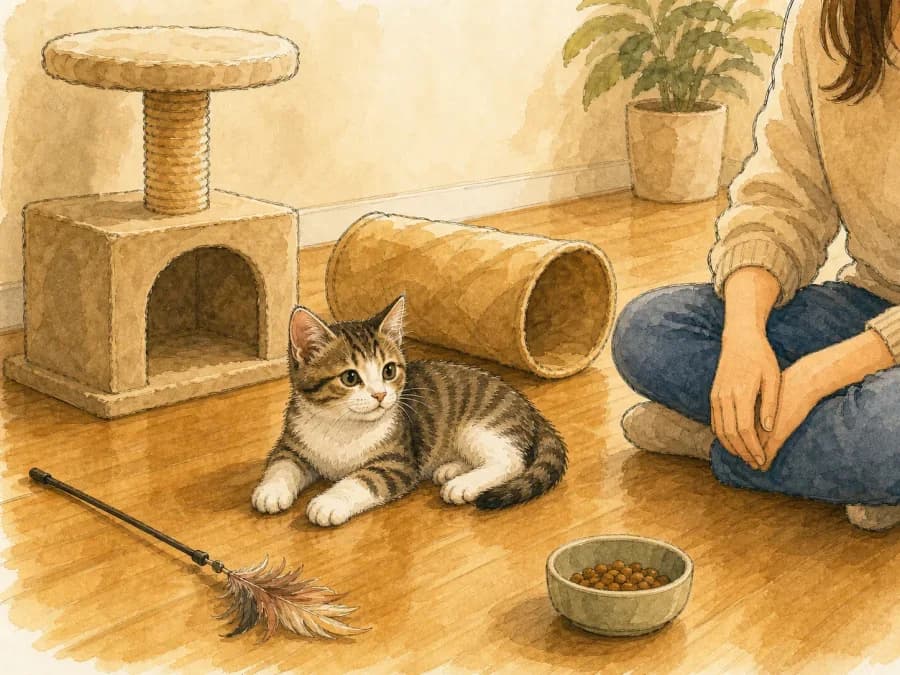
A simple two-week training plan
| Timeframe | What to do | Goal |
|---|---|---|
| Days 1-3 | Remove hand games and place toys in biting hotspots. | Stop reinforcing skin as a play target. |
| Days 4-7 | Use the same “ow, freeze, pause” response every time a painful bite happens. | Make the bite consequence predictable. |
| Week 2 | Add scheduled play before meals and bedtime. | Reduce random ambush biting caused by unused energy. |
| After two weeks | Keep the routine and reward gentle play. | Turn the new rules into a habit. |
What not to do
Avoid punishment-based methods. Spraying water, yelling, scruffing, pinning, tapping the nose, or forcing the mouth open may interrupt the moment, but they can also increase fear, arousal, or defensive biting. They do not teach the kitten what to bite instead.
- Do not use hands or feet as moving targets.
- Do not keep playing after a painful bite.
- Do not punish normal kitten energy. Give it a safer outlet.
- Do not ignore wounds. Clean bites and seek medical care for deep punctures or signs of infection.
When to get professional help
Most playful kitten biting improves with consistent training. Still, some situations deserve help from a veterinarian or qualified behavior professional.
- The biting is sudden, severe, or getting worse.
- Your kitten growls, hides, hisses, or seems frightened before biting.
- Your kitten has appetite changes, drooling, bad breath, mouth pain, limping, or touch sensitivity.
- Bites break skin often or feel difficult to interrupt safely.
- Training has been consistent for several weeks with no improvement.
Key takeaways
- Kitten biting is usually normal play and learning, not bad character.
- The fastest improvement comes from changing the rules around hands, feet, and toys.
- Consistency matters more than intensity. Calm repetition beats punishment.
- Use toys, routine, and gentle consequences to teach bite control.
- If the behavior looks painful, fearful, sudden, or dangerous, involve a veterinarian.
References
VCA Animal Hospitals: Play and Predatory Aggression in Cats
Cornell Feline Health Center: Feline Behavior Problems: Aggression
Animal Behavior & Care Writer
Rachel has a background in zoology and animal care volunteering. She writes about cat behavior, enrichment, and the relationship between cats and their everyday environment.
Written by Rachel Breen and reviewed by Rachel Breen on Jun 11, 2026. Read our Editorial Policy.
FAQ
Frequently asked questions
The Science Behind Cat Name Recognition: It’s Not What You Think
Cats can recognize name-like sound patterns, but response depends on motivation, trust, and positive association.
Why CatsCan Cats See Energy Fields? The Science Behind Their “Sixth Sense”
Cats are not known to see energy fields. Sharp hearing, night vision, scent, and whiskers explain most "sixth sense" moments.
Why CatsWhy Does My Cat Smell My Shoes? 4 Psychological Reasons Revealed
Cats smell shoes for scent information, comfort, territory mapping, and the rich outdoor odors humans bring home.
Why CatsWhy Does My Cat Follow Me to the Bathroom? 6 Scientific Reasons Explained
Cats follow you to the bathroom for routine, curiosity, attention, territory, and the strange appeal of closed doors.
Why CatsWhy Do Cats Watch TV? 5 Surprising Reactions Explained
Cats may watch TV because fast movement, prey-like shapes, sound, and light trigger their hunting attention.
Why CatsWhy Do Cats Like Sun? 5 Instincts Explained
Five instincts behind cat sunbathing: warmth, vantage, vitamin D via grooming, relaxation, and scent marking.
Why CatsNew on NookPetdia
Latest articles
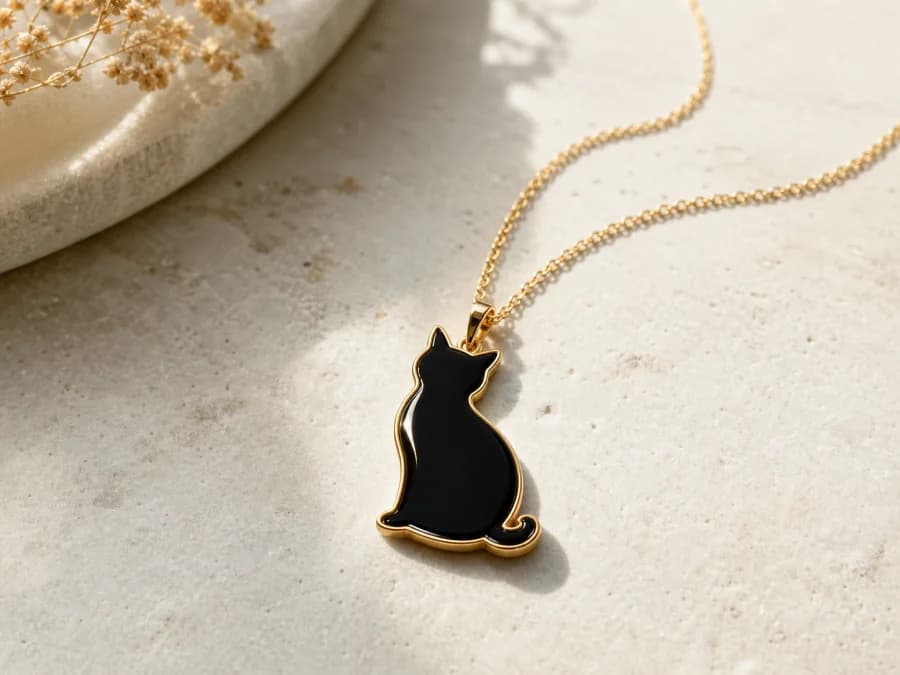
Black Cat Jewelry Guide (Style, Meaning, Gift Timing)
Black cats are the hardest subject to render in a small pendant and the best subject for silhouette work. Here is which styles hold up, what the symbolism actually carries, and the two dates worth planning a gift around.
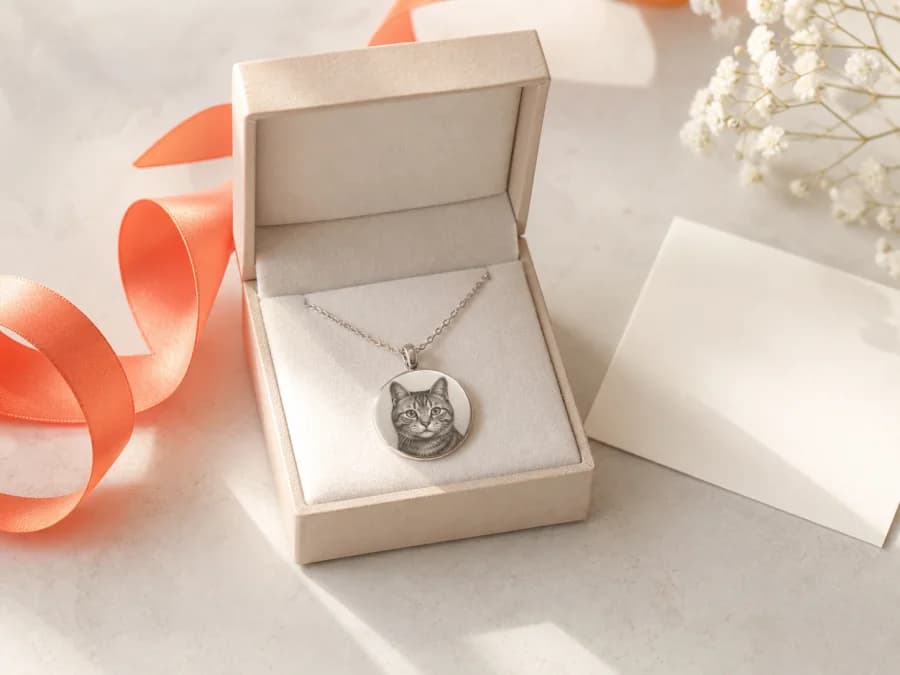
Cat Mom & Cat Dad Gift Ideas That Aren't Cheap Charms
Most cat-themed gifts are novelty items that get used twice. Here is how to buy something a cat parent keeps — including what to confirm about metal, sizing, and timing before you order anything personalized.
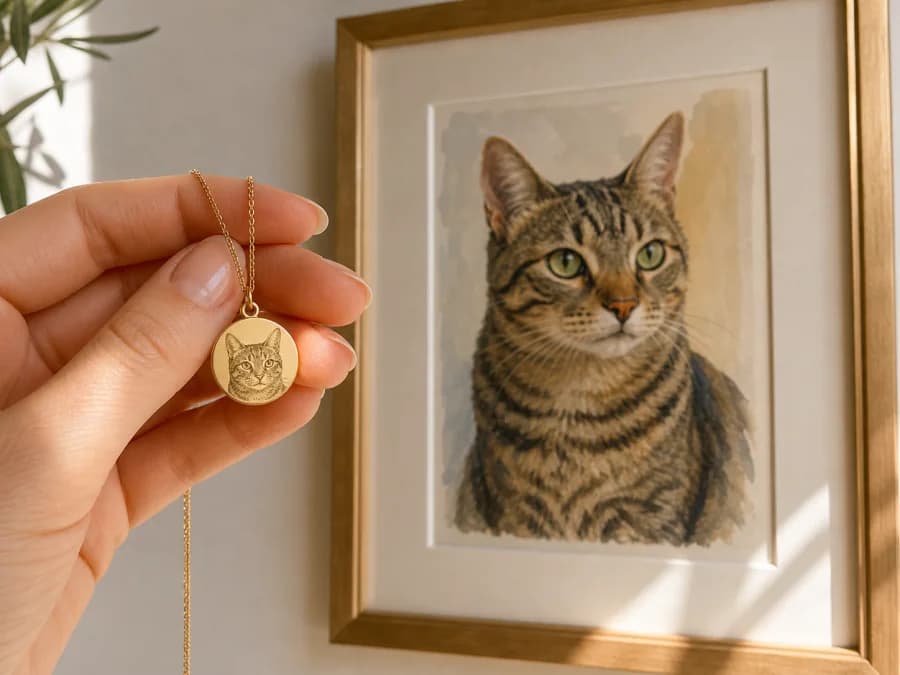
Custom Pet Portrait Jewelry vs Print: What's Worth Buying
Wearable portrait jewelry and framed pet portraits solve different problems. Here is how they compare on likeness, cost, durability, and daily use — and which one to commission first.