Stone plastic clay is forgiving until it is not. The failures that show up again and again in maker chats are rarely mysterious. They usually come from rushing dry time, sealing too soon, or asking a thin ornament to behave like cast metal.
This is a field guide to those repeats, not a shame list.
AI Summary
Overview
Cracks often trace back to uneven drying, aggressive heat, or thin unsupported walls.
Paint peels when the blank was not fully dry or the surface was dusty/greasy.
Embedded raw magnets can rust, swell, and crack a piece years later.
Thick gloss or fidgeting with wet topcoat creates bubbles and sticky scars.
Treat custom-order income as optional fantasy until you enjoy the craft for itself.
Cracks and Dents
Common patterns from maker reports:
- Warming one face too hard while the back stays damp
- Leaving a piece on a pad so long that recessed magnet wells telegraph through as circular dents
- Thin ears, rims, or walls drying faster than thick centers
- Big temperature swings while the piece is half dry
Fixes that help:
- Flip during drying
- Patch while semi-dry, then dry again before sanding
- Keep heat moderate; air dry when unsure
- Support thin parts or redesign them thicker
Details: drying stone plastic clay.
Peeling Paint and "Skinning"
If acrylic lifts in sheets, ask these first:
- Was the blank fully dry?
- Did sanding dust stay on the surface?
- Was paint applied in thick impatient layers?
- Did a topcoat go on while paint was still soft?
Many makers prefer acrylic markers for even coverage on small magnets. Others thin brush acrylic with a bit of medium so it levels. Either way, dry time between layers is not optional boredom. It is adhesion.
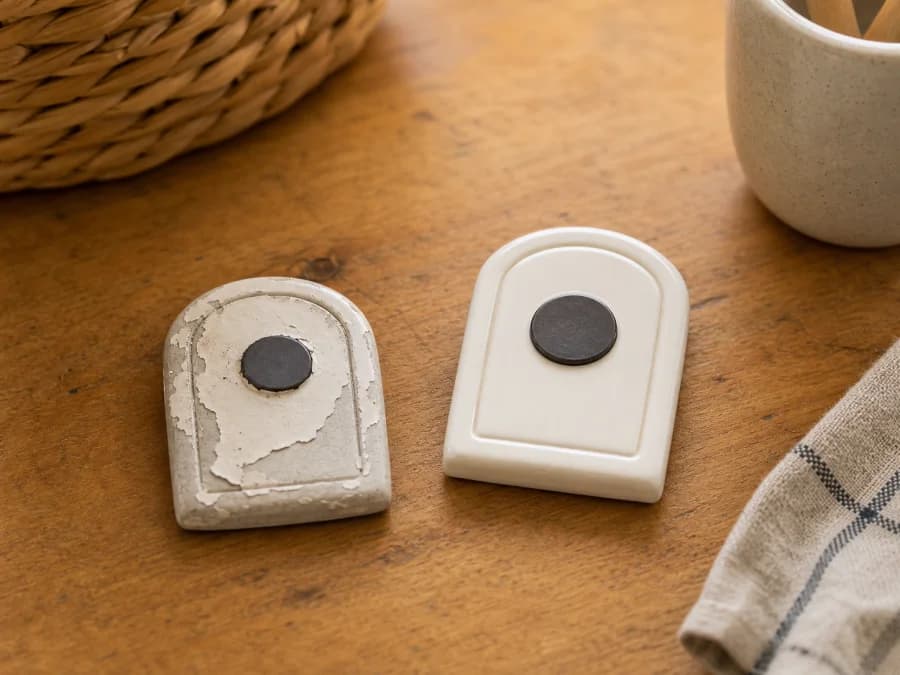
Magnet Mistakes
Fridge magnets are the gateway project. They are also a long-term failure museum.
A recurring warning: do not bury bare magnets inside clay and call it done. Years later, some pieces crack as magnets corrode or stresses show up. Other makers say sealing magnets thoroughly helps. The cautious approach for beginners:
- Finish and seal the clay piece
- Glue a sealed magnet to the back
- Or create a well, dry fully, and protect the magnet from moisture before closing anything
If a magnet must sit in a recess, make sure the surrounding clay is fully dry before you celebrate.
Gloss, Topcoat, and Sticky Disasters
Wet topcoat invites fingerprints. Thick topcoat invites bubbles. Touching gloss with a water brush because a chatbot said so can smear a whole face.
Habits that reduce drama:
- Thin coats
- Dedicated soft brushes
- Hands off until cured
- Ventilation for strong-smelling products
- Matte or gloss chosen on purpose, not by panic shopping
Some sprays and nail topcoats smell harsh even with a dust mask. Outdoor or strong airflow is the grown-up answer.
Armature and Wire Surprises
Wire can help big forms. It can also crack thin clay jackets. If you use aluminum wire or similar supports, wrap enough clay around stress points and dry slowly. Tiny unsupported limbs are crack invitations.
Buying and Mindset Mistakes
- Buying unlabeled pottery clay when you wanted stone plastic clay
- Buying every tool before one finished magnet
- Expecting custom orders to pay rent after a week of practice
In the discussions we reviewed, people who treated the hobby as focus practice stayed happier than people who treated it as an instant shop. Skill compounds. Listing photos do not.
For shopping resets, return to choosing clay and tools you actually need. For material confusion, see clay comparisons.
A Calm Recovery Order
When a piece fails:
- Decide if it is salvageable with patch + sand, or scrap practice
- Fix drying process before buying a new brand
- Change one variable at a time (heat, paint brand, sealer)
- Keep the next project smaller than your ego wants
Key Takeaway
Most stone plastic clay "mystery failures" are timing failures: drying, painting, sealing, or magnet installation done early. Slow those steps down and the craft gets weirdly kinder.
References
Editorial synthesis of private craft-discussion research notes on stone plastic clay cracking, paint peeling, magnet failures, topcoat issues, and commission expectations (2026-07-29).
Founder & Editor
Micky is the founder and editor of NookPetdia, sharing practical cat-care guidance and product-fit advice for everyday cat parents.
Written by Micky. Read our Editorial Policy.
FAQ
Frequently asked questions
New on NookPetdia
Latest articles
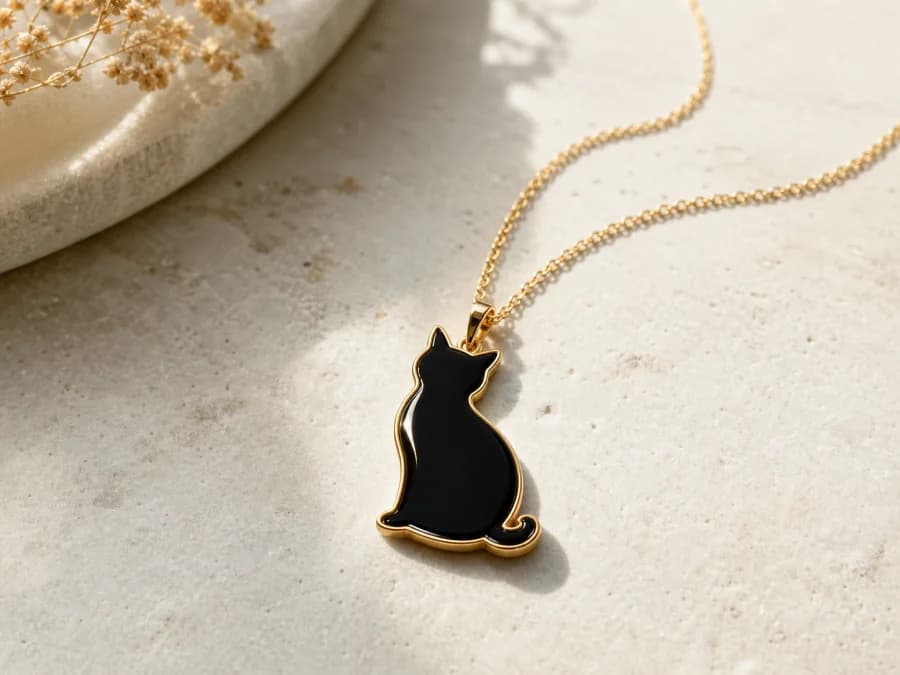
Black Cat Jewelry Guide (Style, Meaning, Gift Timing)
Black cats are the hardest subject to render in a small pendant and the best subject for silhouette work. Here is which styles hold up, what the symbolism actually carries, and the two dates worth planning a gift around.
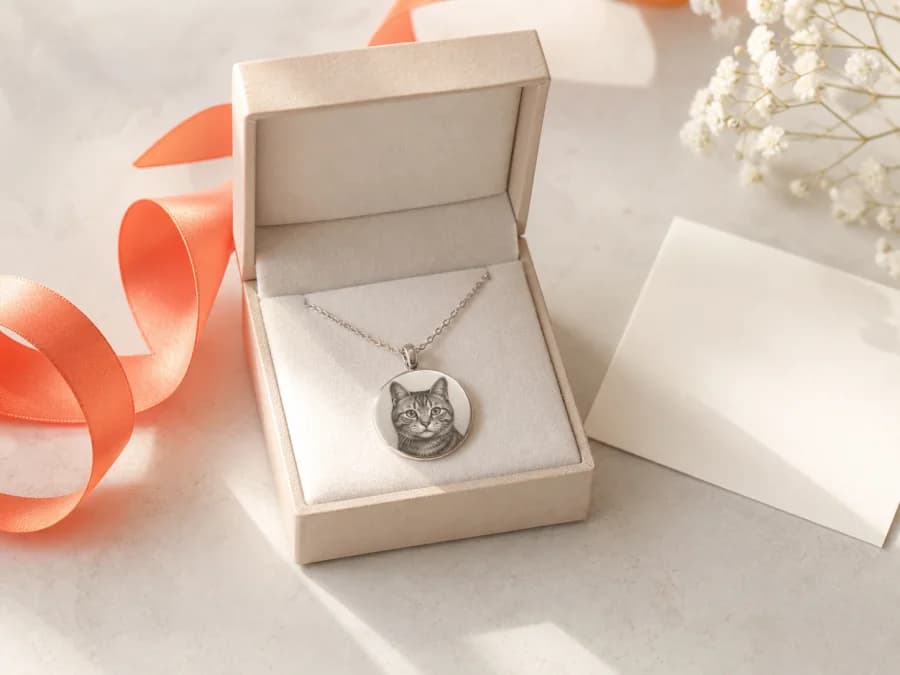
Cat Mom & Cat Dad Gift Ideas That Aren't Cheap Charms
Most cat-themed gifts are novelty items that get used twice. Here is how to buy something a cat parent keeps — including what to confirm about metal, sizing, and timing before you order anything personalized.
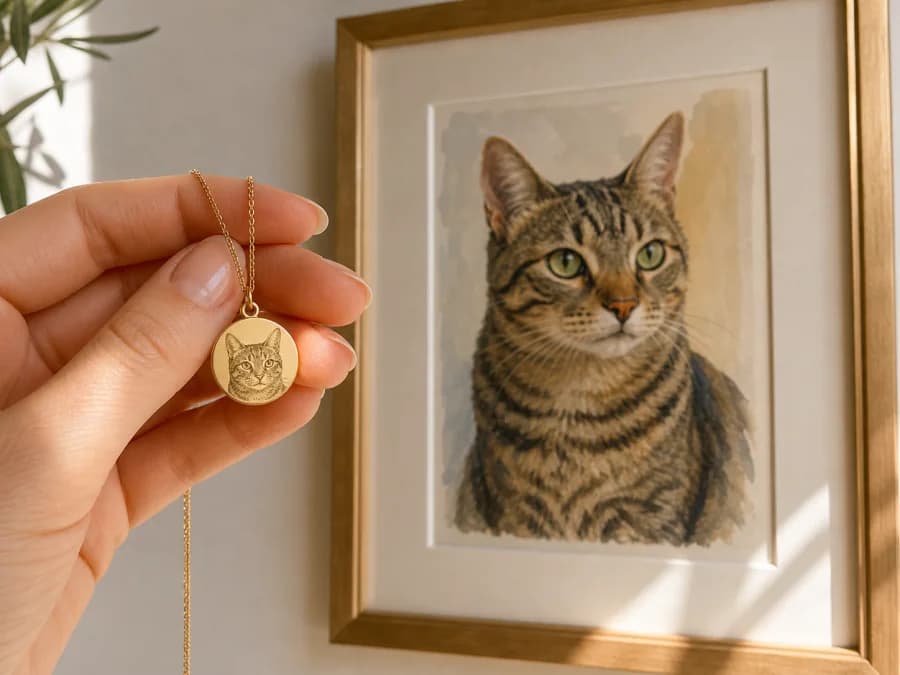
Custom Pet Portrait Jewelry vs Print: What's Worth Buying
Wearable portrait jewelry and framed pet portraits solve different problems. Here is how they compare on likeness, cost, durability, and daily use — and which one to commission first.