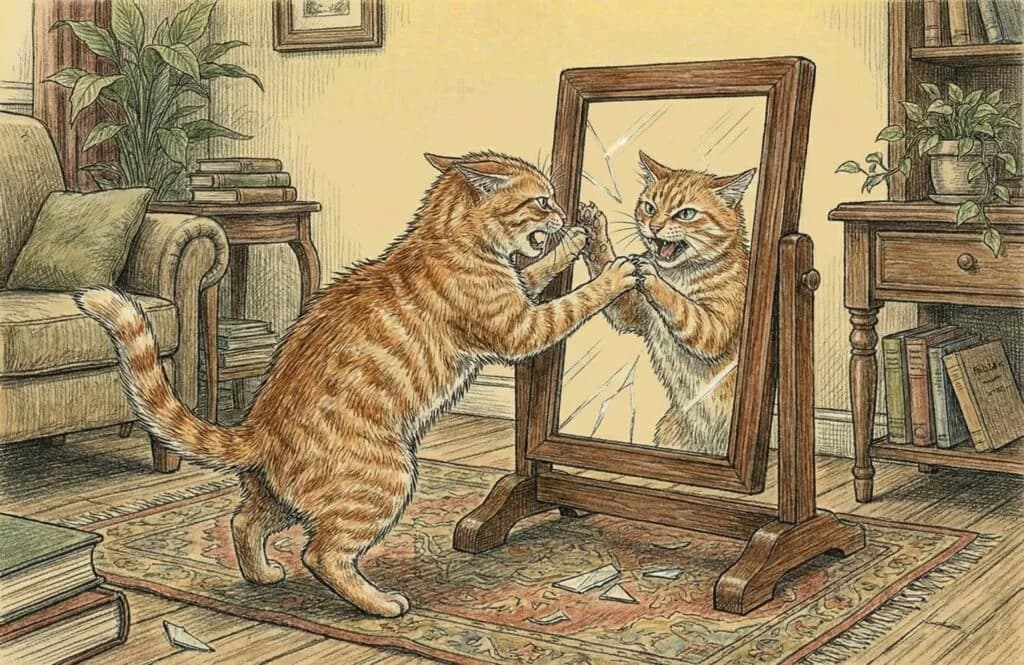
Your cat arches, hisses, and claws at a full-length mirror. It looks like a fight with an invisible rival, and it can be funny until you start worrying about the glass tipping over.
Many cats do this because of identity confusion. Cats lean on scent to tell who is who. A reflection looks like a cat but has no smell, so some cats treat the image as an intruder and slip into territorial defense or rough play.
AI Summary
Overview
Many cats treat a mirror image as another cat because it looks real but has no scent.
Reactions usually fall into territorial defense, curious play, or chasing reflected light and shadows.
Covering or moving the mirror, redirecting with toys, and securing leaning glass reduce risk without punishment.
Do not force a cat face-to-face with a mirror; chronic stress around a 'rival' can spill into other behavior problems.
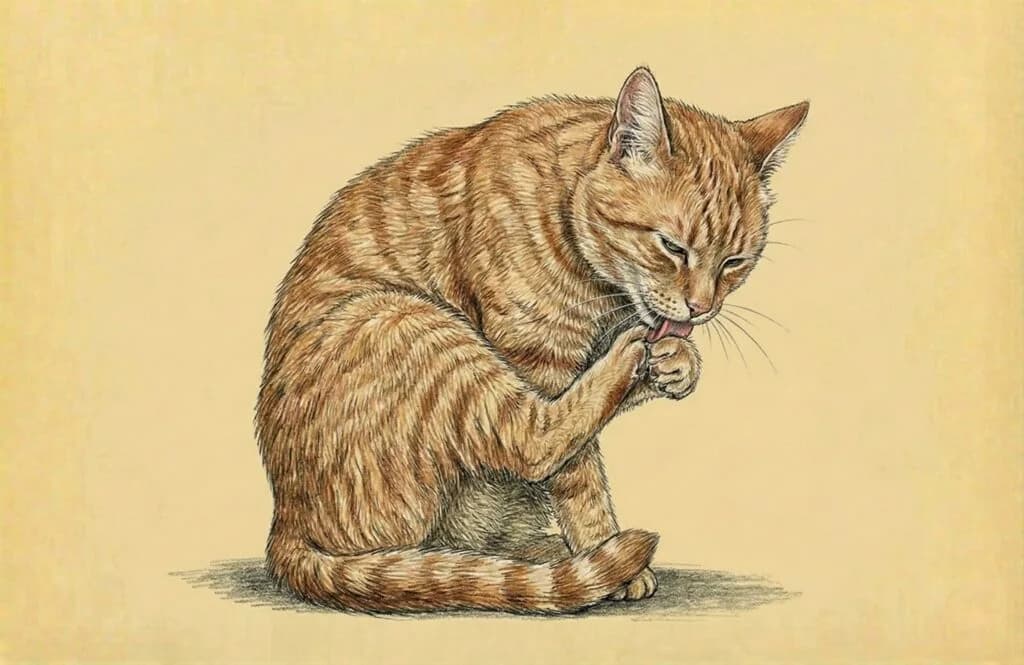
Why the reflection looks like another cat
Cats do not usually recognize themselves in mirrors the way people do.
- Mirror recognition: Studies suggest cats, like most animals, do not pass classic self-recognition mirror tests. To many cats, the animal in the glass reads as a real presence.
- Smell vs sight: Cats map the world with their noses as much as their eyes. Seeing a cat with no matching scent creates a sensory mismatch that can tip into frustration or fear.
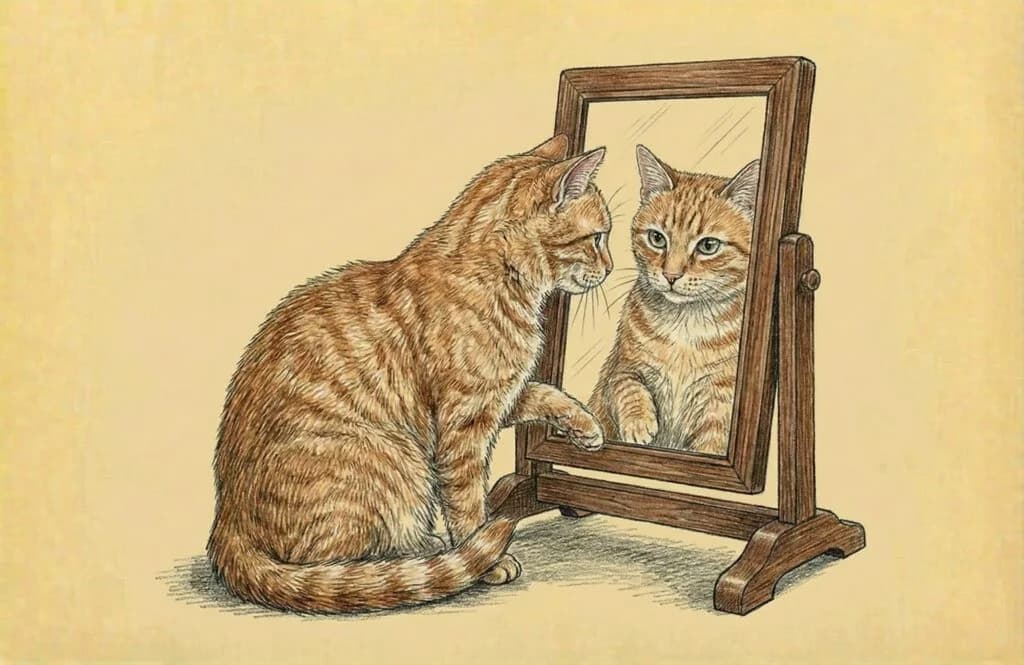
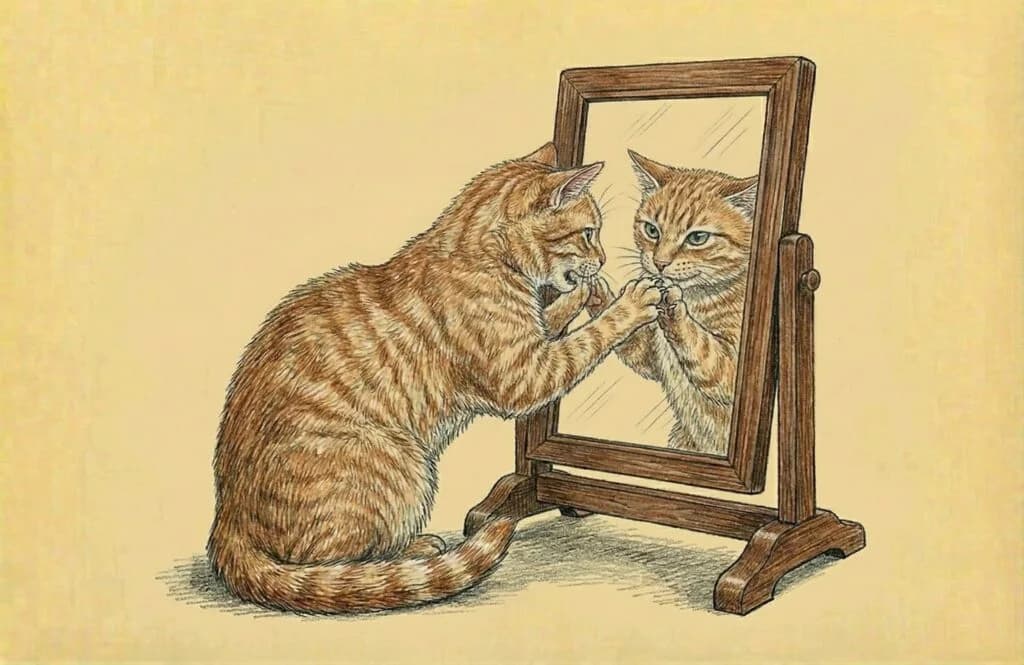
Three common triggers
Confusion is the base layer. What happens next depends on the cat and the room.
Territorial defense
For highly territorial cats, the reflection can feel like a stranger in the house.
- What you see: hissing, a puffed tail, ears pinned back
- What it usually means: they are trying to drive off a perceived rival and protect their space
Curiosity and play
Not every reaction is a fight. Bolder cats may treat the glass as a puzzle.
- What you see: pawing the glass, sniffing, peeking behind the frame
- What it usually means: they are looking for where the other cat went, more like hide-and-seek than combat
Moving light and shadows
Sometimes the trigger is not "another cat" at all. Mirrors bounce light and throw shifting shadows. For kittens especially, that flicker can pull in predatory chase behavior.
How to stop mirror attacks safely
If the cat is getting wound up, or a leaning mirror could fall, manage the setup instead of punishing the reaction.
Cover or relocate the mirror
Cover the mirror with a cloth, or move it to a room the cat rarely uses. That cuts the visual trigger right away.
Offer a better job nearby
Put favorite toys or a treat puzzle near the mirror, but not aimed at the glass. The goal is to pull attention toward a positive activity so the reflection stops mattering.
Secure heavy mirrors
A heavy leaning mirror becomes a real hazard during a "fight." Secure it to the wall with magnetic strips or acrylic guards so a clawing session cannot tip it.
Do not force a face-to-face lesson
Do not hold the cat up to a mirror to "show them." That pushes them into a close confrontation with a scary stranger-lookalike and can raise anxiety and distrust of you.
Founder & Editor
Micky is the founder and editor of NookPetdia, sharing practical cat-care guidance and product-fit advice for everyday cat parents.
Written by Micky. Read our Editorial Policy.
FAQ
Frequently asked questions
The Real Reason Cats Scratch: A Complete Guide to Instincts, Solutions, and Nail Care
Why cats scratch, how to place posts that get used, nail care basics, and why declawing is not a fix.
Why CatsWhy Is My Cat Scratching the Walls? (And How to Fix It)
Stop wall scratching by meeting your cat’s scratching needs, protecting surfaces, and checking for stress or paw pain.
Why CatsWhy Is My Cat Scratching the Wall? (Instinct vs. Health Warning)
Learn why cats scratch walls, how to redirect the habit, and when wall scratching may point to stress or paw discomfort.
Why CatsWhy Do Cats Like Butt Scratches?
Learn why cats raise their rear during tail-base scratches, when to stop, and which sensitivity signs may need a vet.
Why CatsNew on NookPetdia
Latest articles
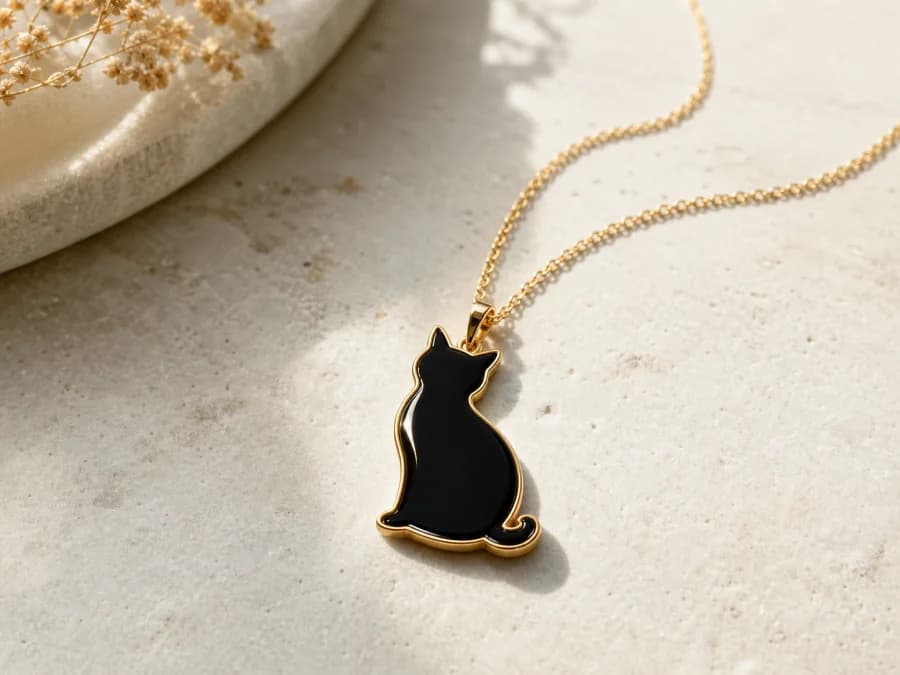
Black Cat Jewelry Guide (Style, Meaning, Gift Timing)
Black cats are the hardest subject to render in a small pendant and the best subject for silhouette work. Here is which styles hold up, what the symbolism actually carries, and the two dates worth planning a gift around.
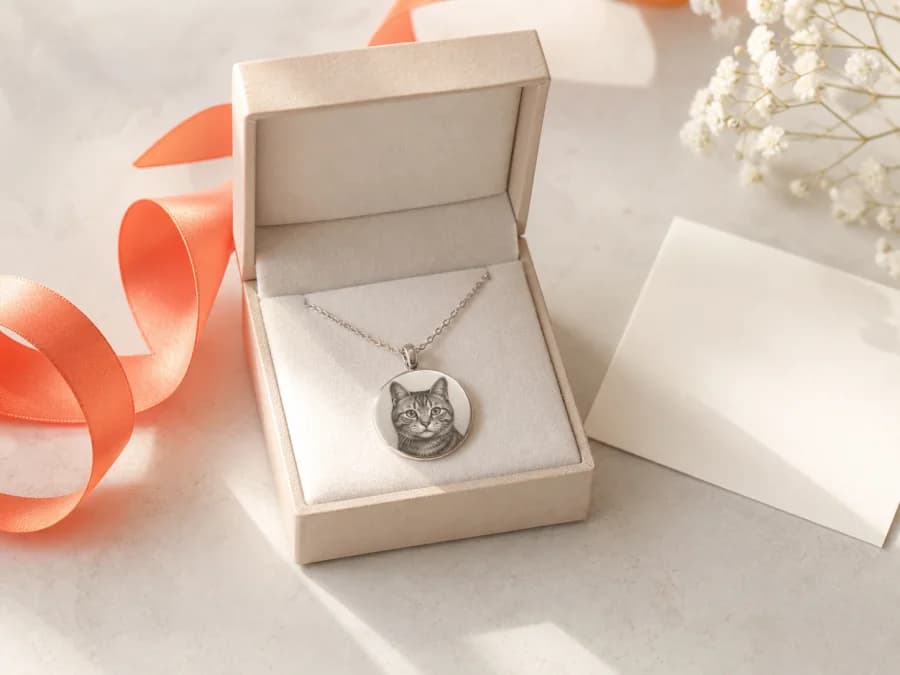
Cat Mom & Cat Dad Gift Ideas That Aren't Cheap Charms
Most cat-themed gifts are novelty items that get used twice. Here is how to buy something a cat parent keeps — including what to confirm about metal, sizing, and timing before you order anything personalized.
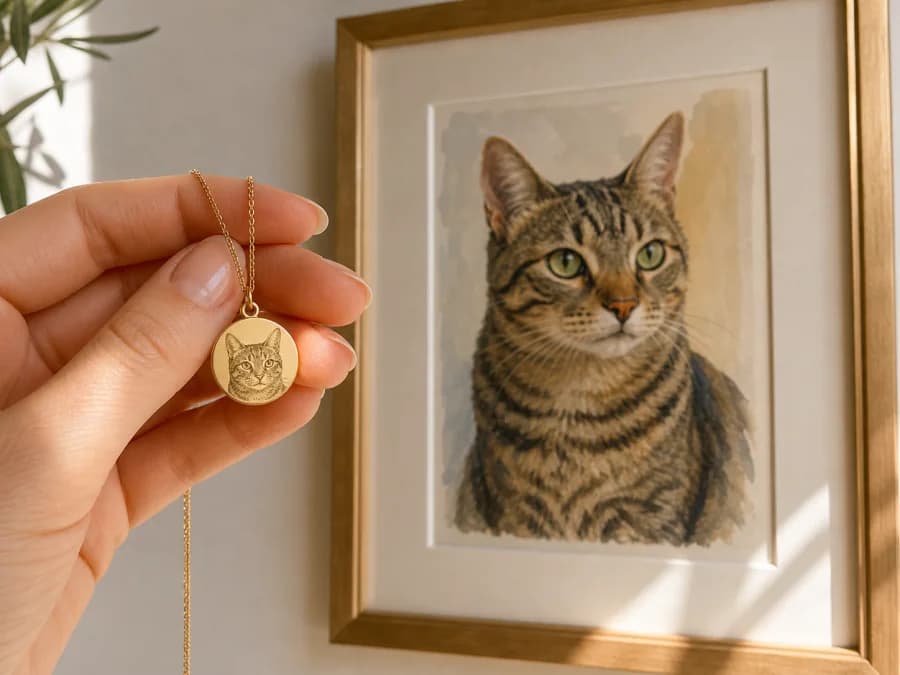
Custom Pet Portrait Jewelry vs Print: What's Worth Buying
Wearable portrait jewelry and framed pet portraits solve different problems. Here is how they compare on likeness, cost, durability, and daily use — and which one to commission first.