If your cat wraps their front paws around your ankle, bites your foot, and kicks with their back legs, it can feel personal. Most of the time, though, this behavior is not revenge or “bad attitude.” It is usually hunting play, excitement, attention-seeking, or a sign that your cat needs a better outlet.
Health note: most foot biting is play or attention behavior, but sudden biting, painful movement, weakness, or aggression during handling can point to discomfort. Ask your veterinarian if the behavior appears suddenly or comes with appetite, mobility, or pain signs.
The goal is not to scare your cat out of the habit. The goal is to make feet boring, give your cat safer things to chase, and notice when the biting pattern looks more like fear, stress, or pain.
AI Summary
Overview
Play aggression: Foot biting is often play aggression: your moving feet trigger a chase-and-grab response.
Hidden prey effect: Blankets, socks, and quick steps can make feet look even more like prey.
Kitten learning: Kittens and young cats may bite harder if they never learned gentle play.
Avoid punishment: Do not punish, chase, spray, or yell. Those reactions can make the behavior more intense.
When to check: If the biting is sudden, hard, fearful, or paired with hiding, limping, appetite changes, or touch sensitivity, arrange a veterinary check.
The short answer: your cat probably sees your feet as a moving target
Cats are small predators by design. A foot sliding under a blanket, toes moving under socks, or an ankle passing through a hallway can look like exactly the kind of small, fast target a cat is built to stalk. That does not mean your cat is trying to hurt you. It means the wrong object has become the game.
This is especially common in kittens, young cats, indoor cats with too little play, and cats who have learned that biting feet makes people jump, laugh, shout, or move faster.
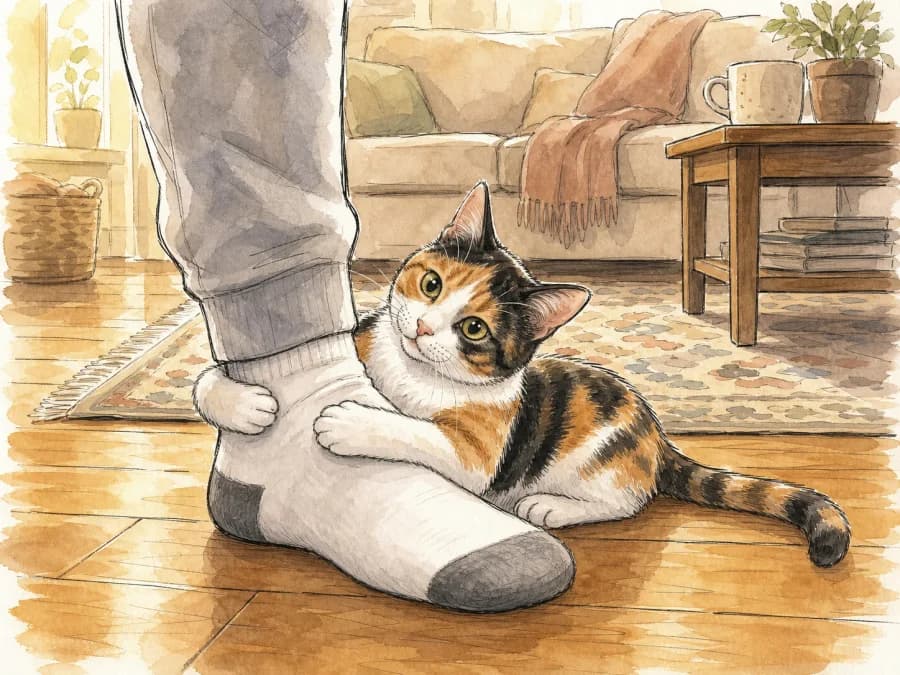
Common foot-biting situations
| Situation | What it often means | What to try first |
|---|---|---|
| Your cat attacks after lights-out | Evening energy, boredom, or a bedtime hunting routine | Add a 10-20 minute wand-toy session before bed, then feed a small meal or treat. |
| Your cat bites feet under the blanket | The blanket turns moving toes into hidden prey | Freeze your feet, redirect with a toy, and avoid wiggling toes as a game. |
| Your kitten bites hands and feet | Normal play plus weak bite control | Stop using hands or feet as toys and reward gentle toy play instead. |
| Your cat grabs your ankle as you walk by | Chase play or a request for attention | Pause calmly, offer a toy away from your body, then reward calm behavior. |
| Your cat only bites one person | That person may move faster, react louder, or wear interesting shoes or socks | Use the same calm response every time so the game stops paying off. |
| The biting is new or much harder | Stress, fear, pain, or a medical change may be involved | Schedule a vet check and avoid handling that triggers the reaction. |
Use this as a pattern guide, not a diagnosis. A sudden change in bite intensity deserves extra attention.
5 reasons cats bite feet
1. Play aggression and unused energy
The most common reason is simple: your cat wants to hunt something, and your feet are available. Indoor cats still need stalking, chasing, pouncing, grabbing, and “winning” moments. When those needs are not met through toys and routine play, feet can become the substitute.
This often happens at predictable times: early morning, evening, after long naps, or right when you get into bed.
2. Feet look and move like prey
Feet are low to the ground, they move in short bursts, and they disappear under blankets. To a cat, that can resemble a small animal moving through cover. Socks, slippers, and dangling blanket edges can make the effect stronger.
If you pull your foot away quickly after the first bite, the movement can accidentally make the “prey” more exciting.
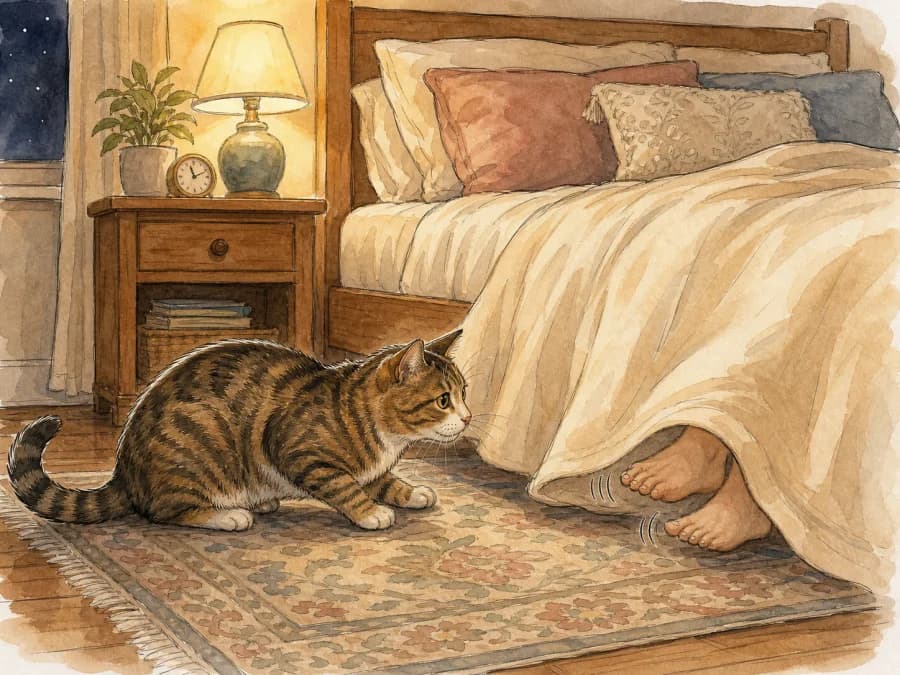
3. Your cat learned that feet are toys
Many cats learn this by accident. A kitten bites a toe, the person laughs, wiggles the foot, or pushes the kitten away. From the cat’s point of view, the game worked. The foot moved, the person reacted, and the kitten got interaction.
This does not mean you did anything wrong. It just means the pattern needs to be reset with consistency.
4. Your cat wants attention or a routine change
Some cats bite feet because it gets a quick response. If biting makes you wake up, feed breakfast, open a door, or start playtime, the behavior can become a very efficient request button.
The fix is to stop rewarding the bite and start rewarding the calmer behavior that comes before it.
5. Stress, fear, or pain changed the behavior
Not every bite is playful. A cat may bite harder or more often when they feel trapped, overstimulated, stressed by a household change, or uncomfortable in their body. Pain can also make a cat more reactive to touch, movement, or being approached.
Pay attention if the behavior appears suddenly, becomes more intense, or comes with hiding, growling, flattened ears, limping, appetite changes, litter box changes, or reluctance to jump.
Playful biting vs. a more serious problem
| Sign | More likely playful | More concerning |
|---|---|---|
| Body language | Loose body, tail up or softly moving, quick release | Ears pinned, stiff body, growling, hissing, hiding |
| Bite pressure | Light to moderate, no repeated hard pressure | Hard bite, punctures, repeated attacks, cannot redirect |
| Timing | Predictable active times, especially morning or evening | Any time, especially after touch or approach |
| After the bite | Runs off, grabs a toy, or returns to normal quickly | Stays tense, avoids people, or guards an area |
| Pattern | Improves with play routine and redirection | Sudden change, escalating intensity, or signs of pain |
If you are unsure which side fits, treat the situation gently and ask your veterinarian for guidance.
How to stop your cat from biting your feet
1. Stop making feet part of play
Do not tease your cat with toes under blankets, do not let kittens wrestle with hands or feet, and do not use socks as chase toys. Even “just once” can keep the habit alive because the reward is so exciting.
2. Schedule hunting play before the usual attack time
Use a wand toy, feather toy, kicker toy, or tossed soft toy to give your cat a full hunting sequence: stalk, chase, pounce, grab, bite, and finish. End with a small meal or treat so the routine feels complete.
- Before bed: play for 10-20 minutes, then offer a small meal or treat.
- Before morning ankle attacks: add a short play session before breakfast if possible.
- In hallway attack zones: keep a toy nearby so you can redirect before your cat launches.
3. Freeze when the bite starts
When your cat grabs your foot, stop moving. Do not kick, yank, run, or shout. Movement makes the target more interesting. Wait for a tiny pause, then calmly move away and offer a toy at a distance.
The message should be consistent: feet do not play, toys do.
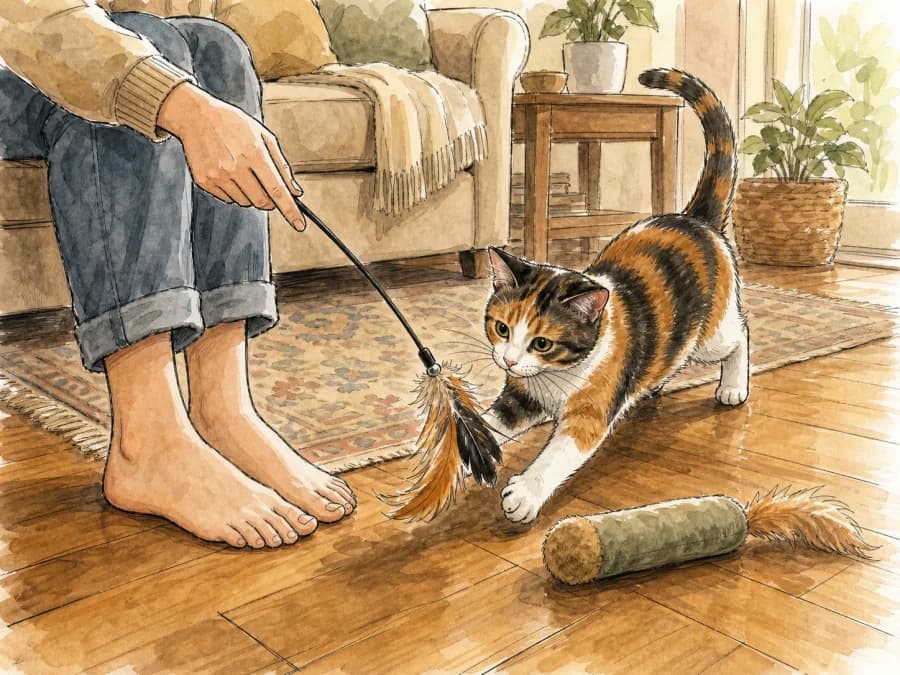
4. Reward the behavior you want
If your cat approaches your feet calmly, sits nearby, rubs without biting, or chooses a toy instead, reward that moment with attention, a treat, or play. Cats repeat what works, so make the calm option pay better than the bite.
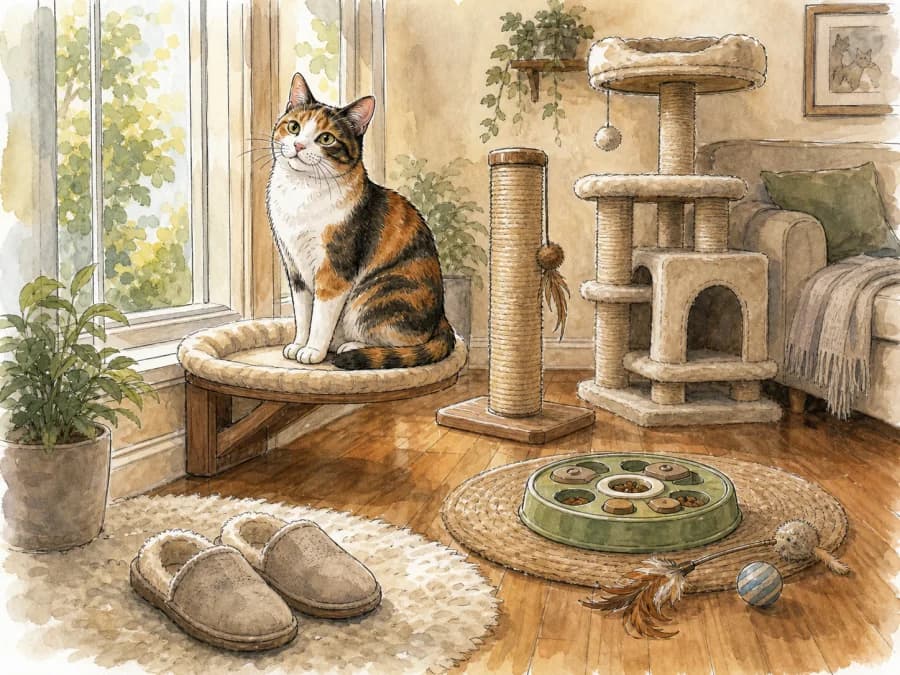
5. Add better outlets around the house
Foot biting often improves when the home gives your cat more legal ways to use their body and brain. Try scratchers near traffic areas, a cat tree or window perch, puzzle feeders, kicker toys, rotating toys, and short play sessions spread through the day.
What not to do
- Do not hit, chase, pin, or physically punish your cat.
- Do not yell or make the bite exciting with a big reaction.
- Do not spray your cat with water. It may teach fear without teaching the right behavior.
- Do not grab your cat’s mouth or force their jaw open unless there is an emergency.
- Do not keep walking quickly while your cat is latched on; that can turn the bite into a chase game.
When to call a veterinarian or behavior professional
A veterinary check is wise if the biting starts suddenly, becomes much harder, breaks skin, happens when your cat is touched, or appears with other changes such as hiding, limping, appetite changes, litter box changes, or sensitivity around the back, hips, paws, or mouth.
If your cat is healthy but the behavior is intense or hard to manage, a qualified cat behavior professional can help you build a safe plan without fear-based methods.
A simple 2-week reset plan
- Days 1-3: Stop all foot play. Keep a wand toy or kicker toy near the usual attack spots.
- Days 4-7: Add one scheduled play session before the most common biting time.
- Days 8-10: Reward calm approaches near your feet with treats or gentle attention.
- Days 11-14: Keep the routine predictable and track whether bite frequency or intensity is dropping.
If the behavior is not improving after two weeks of consistent changes, or if it is getting worse, treat that as useful information and ask for professional help.
Key takeaway
Most foot biting is a misplaced hunting game, not a personal attack. Make feet boring, give your cat better prey-style play, reward calm behavior, and watch for signs that the biting may be linked to fear, stress, or pain.
Sources and further reading
- VCA Animal Hospitals: Play and Predatory Aggression in Cats
- ASPCA: Aggression in Cats
- Cornell Feline Health Center: Feline Behavior Problems - Aggression
- VCA Animal Hospitals: Arthritis in Cats
VCA: Play and Predatory Aggression in Cats
Cornell Feline Health Center: Feline Behavior Problems - Aggression
Founder & Editor
Micky is the founder and editor of NookPetdia, sharing practical cat-care guidance and product-fit advice for everyday cat parents.
Written by Micky and reviewed by Micky on Jun 10, 2026. Read our Editorial Policy.
FAQ
Frequently asked questions
The Science Behind Cat Name Recognition: It’s Not What You Think
Cats can recognize name-like sound patterns, but response depends on motivation, trust, and positive association.
Why CatsCan Cats See Energy Fields? The Science Behind Their “Sixth Sense”
Cats are not known to see energy fields. Sharp hearing, night vision, scent, and whiskers explain most "sixth sense" moments.
Why CatsWhy Does My Cat Smell My Shoes? 4 Psychological Reasons Revealed
Cats smell shoes for scent information, comfort, territory mapping, and the rich outdoor odors humans bring home.
Why CatsWhy Does My Cat Follow Me to the Bathroom? 6 Scientific Reasons Explained
Cats follow you to the bathroom for routine, curiosity, attention, territory, and the strange appeal of closed doors.
Why CatsWhy Do Cats Watch TV? 5 Surprising Reactions Explained
Cats may watch TV because fast movement, prey-like shapes, sound, and light trigger their hunting attention.
Why CatsWhy Do Cats Like Sun? 5 Instincts Explained
Five instincts behind cat sunbathing: warmth, vantage, vitamin D via grooming, relaxation, and scent marking.
Why CatsNew on NookPetdia
Latest articles
Black Cat Jewelry Guide (Style, Meaning, Gift Timing)
Black cats are the hardest subject to render in a small pendant and the best subject for silhouette work. Here is which styles hold up, what the symbolism actually carries, and the two dates worth planning a gift around.
Cat Mom & Cat Dad Gift Ideas That Aren't Cheap Charms
Most cat-themed gifts are novelty items that get used twice. Here is how to buy something a cat parent keeps — including what to confirm about metal, sizing, and timing before you order anything personalized.
Custom Pet Portrait Jewelry vs Print: What's Worth Buying
Wearable portrait jewelry and framed pet portraits solve different problems. Here is how they compare on likeness, cost, durability, and daily use — and which one to commission first.