Have you ever noticed your cat staring intensely at a beam of light or a shadow on the wall? This behavior is more than just a quirky habit—it is a window into their primal instincts and unique sensory world.
Eye and neurologic safety note: light-watching can be harmless curiosity, but sudden vision changes are different. Contact your veterinarian if your cat bumps into objects, squints, has unequal pupils, seems painful, has seizure-like episodes, or suddenly stares at lights compulsively.
AI Summary
Overview
Your cat stares at lights primarily due to their Hunting Instinct , Sensory Curiosity , or potential Physical Discomfort . While most of this behavior is healthy play, sudden sensitivity to light or excessive squinting can be a medical red flag requiring veterinary attention.
1. The Hunting Instinct (Innate Activation)
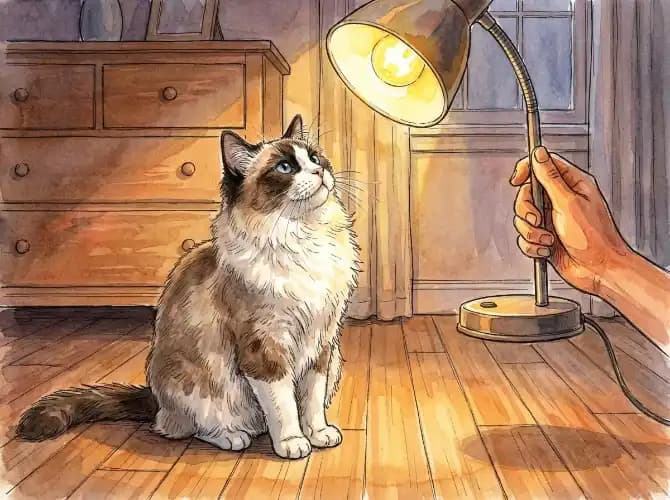
To your cat, a moving spot of light perfectly mimics the fast, irregular movements of small prey.
- Visual Trigger : Moving light spots activate the “hunting cycle” in their DNA—Tracking, Pouncing, and Biting.
- Physical Response : You may notice their pupils dilate, body crouch low, and muscles tense as they prepare to strike.
- Instinctual Drive : This behavior is an expression of deeply embedded survival strategies.
2. Sensory Curiosity & Exploration
Your cat is highly sensitive to the environment and uses visual patterns to understand the world.
- Visual Stimulation : Light patterns, contrasts, and moving shadows provide novel stimulation for their active brains.
- Interactive Learning : They often track or pat at shadows to try and understand the laws of light and shadow.
- Mental Engagement : This provides a non-threatening visual experience that keeps indoor cats curious and engaged.
3. Potential Eye Discomfort & Health Signals
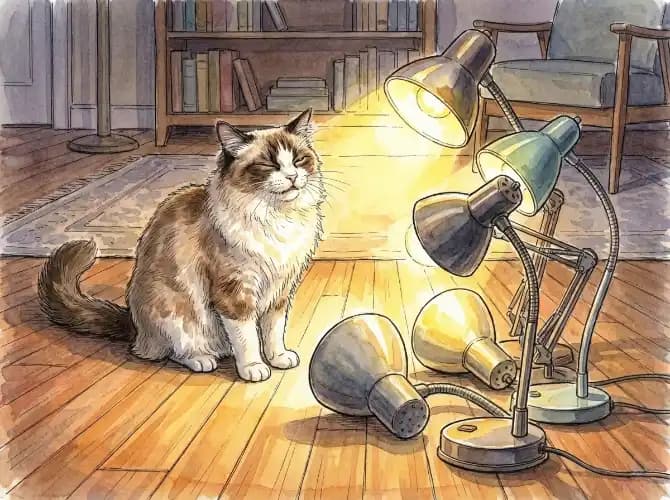
Not all staring is about play. Sometimes, an obsession with or avoidance of light is a sign of medical distress.
- Light Sensitivity : Strong light can irritate sensitive feline eyes, leading to pain or constant squinting.
- Warning Signs : Look for frequent blinking, rubbing eyes with paws, redness, or increased discharge.
- Possible Medical Issues : These symptoms could indicate conjunctivitis, corneal damage, or other serious eye diseases.
Summary Table: Play vs. Pain
How You Should Manage Light Play
- Complete the Cycle : Always end light-chasing games by leading your cat to a physical toy they can actually “catch” to prevent frustration.
- Protect Their Vision : Never shine bright lights or flashbulbs directly into your cat’s eyes.
- Medical Emergency : If you notice bloodshot eyes, yellow/green discharge, or asymmetrical pupils, seek veterinary help within 24 hours .
Founder & Editor
Micky is the founder and editor of NookPetdia, sharing practical cat-care guidance and product-fit advice for everyday cat parents.
Written by Micky. Read our Editorial Policy.
The Science Behind Cat Name Recognition: It’s Not What You Think
Cats can recognize name-like sound patterns, but response depends on motivation, trust, and positive association.
Why CatsCan Cats See Energy Fields? The Science Behind Their “Sixth Sense”
Cats are not known to see energy fields. Sharp hearing, night vision, scent, and whiskers explain most "sixth sense" moments.
Why CatsWhy Does My Cat Smell My Shoes? 4 Psychological Reasons Revealed
Cats smell shoes for scent information, comfort, territory mapping, and the rich outdoor odors humans bring home.
Why CatsWhy Does My Cat Follow Me to the Bathroom? 6 Scientific Reasons Explained
Cats follow you to the bathroom for routine, curiosity, attention, territory, and the strange appeal of closed doors.
Why CatsWhy Do Cats Watch TV? 5 Surprising Reactions Explained
Cats may watch TV because fast movement, prey-like shapes, sound, and light trigger their hunting attention.
Why CatsWhy Do Cats Like Sun? 5 Instincts Explained
Five instincts behind cat sunbathing: warmth, vantage, vitamin D via grooming, relaxation, and scent marking.
Why CatsNew on NookPetdia
Latest articles
Black Cat Jewelry Guide (Style, Meaning, Gift Timing)
Black cats are the hardest subject to render in a small pendant and the best subject for silhouette work. Here is which styles hold up, what the symbolism actually carries, and the two dates worth planning a gift around.
Cat Mom & Cat Dad Gift Ideas That Aren't Cheap Charms
Most cat-themed gifts are novelty items that get used twice. Here is how to buy something a cat parent keeps — including what to confirm about metal, sizing, and timing before you order anything personalized.
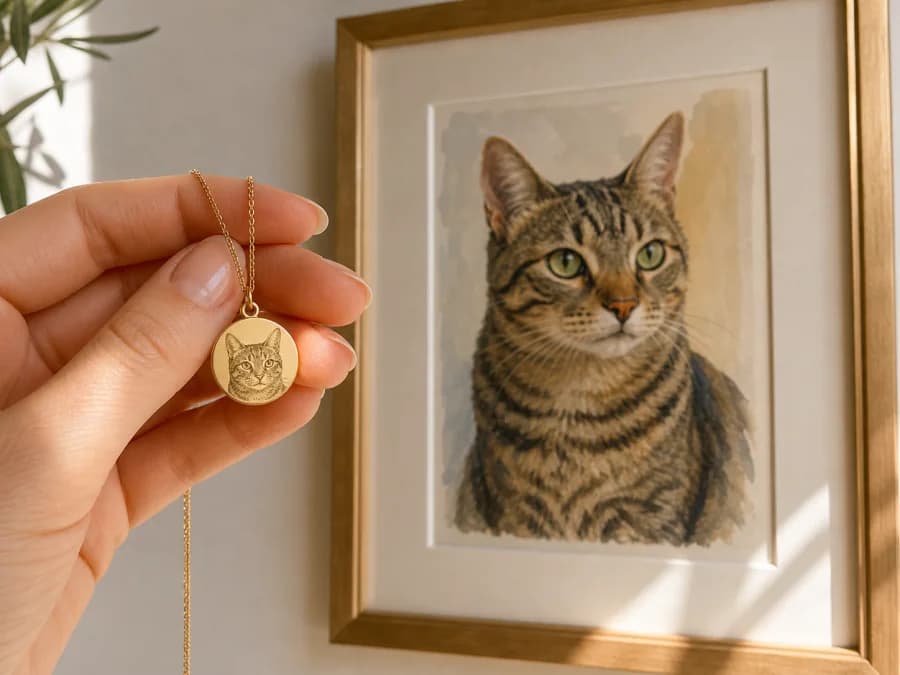
Custom Pet Portrait Jewelry vs Print: What's Worth Buying
Wearable portrait jewelry and framed pet portraits solve different problems. Here is how they compare on likeness, cost, durability, and daily use — and which one to commission first.