A female cat may come home after spay surgery acting defensive, restless, or unusually quick to bite. In many cases, this is a short-term reaction to pain, anesthesia, stress, and activity restriction rather than a permanent personality change.
AI Summary
Overview
Aggression in the first few days after surgery is normal: Pain, anesthesia, and stress overlap.
The surgery has not "changed her personality": Hormone decline is a process, not an instant switch.
In the long run: Many cats gradually become more stable, and some become more affectionate, but the timeline may range from days to months.
Watch for warning signs: Aggression that keeps getting worse after 2 to 3 weeks, or aggression paired with other abnormal symptoms.
Pet Owner Story
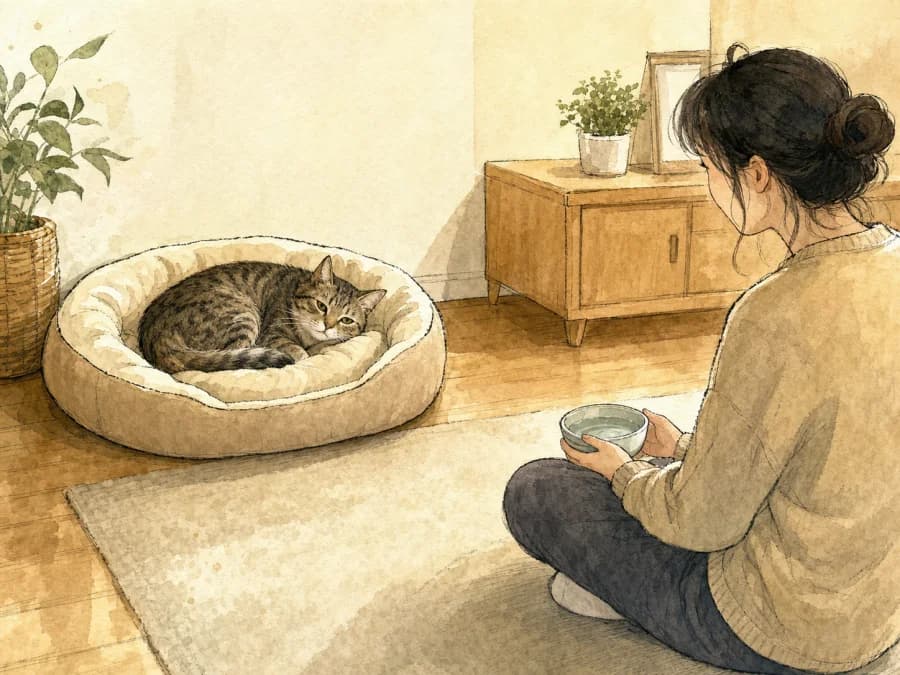
The evening I brought my female cat home after spay surgery, it felt like I had brought home a different cat.
Normally she was very attached to me and liked sleeping on my lap. But that day, as soon as I let her out, she went straight under the bed. When I reached in to touch her, she bit me hard. There was no warning, and it did not feel like any of her previous light nips. It was a real, forceful bite.
My first thought was: Did something go wrong with the surgery? Did the clinic do something to her?
Only later did I learn that this is almost the standard first-few-days story for many female cats after spay surgery.
In TikTok posts asking for help, owners often describe not just "aggression," but more specific patterns: "after the cone came off she suddenly chased and pounced on people," "one week after surgery she started ambushing and biting legs," "she used to bite with control but now has no pressure control," and "she bites hard whenever the cone or recovery suit is put on." Some owners also say that after a while, the cat returned to being affectionate, sometimes even more affectionate than before.
These records remind us that post-spay biting does not only happen on surgery day. It may appear when the cone is removed, bandages are changed, a recovery suit is put on, the incision is halfway healed, or the cat's energy returns before she is allowed to play intensely.
2. Why Did She Become Aggressive? Four Overlapping Reasons
| Reason | What owners may notice | How to respond |
|---|---|---|
| Anesthesia is wearing off | She hides, seems disoriented, startles easily, or reacts sharply to touch. | Keep the room quiet, reduce handling, and let her wake up fully. |
| Incision pain | She guards her belly, avoids being picked up, or bites when touched near the surgical area. | Avoid unnecessary handling and give prescribed pain medication exactly as directed. |
| Stress response | The clinic smell, cone, confinement, and changed routine make her defensive. | Keep routines predictable and give her a low-traffic recovery space. |
| Energy returns before activity is allowed | She stalks, pounces, or bites legs because she has energy but cannot jump or run normally yet. | Use short, low-impact wand play and stop before she escalates. |
These causes can overlap, so the safest response is usually less handling, better pain control, and calmer recovery conditions.
Reason 1: The Anesthesia Has Not Fully Worn Off
Spay surgery requires general anesthesia, and the recovery from anesthesia is gradual. A cat is not simply "awake" the moment the surgery ends.
When anesthesia is half worn off, the cat is in a strange neurological state: her senses are working, but her processing ability is reduced. Light touch, sound, and bright light may all feel much more intense. If you touch her then, it may feel ten times worse to her than it normally would.
This stage often lasts 6 to 12 hours, and in some cats it can last up to 24 hours.
Reason 2: Incision Pain Makes Her Guarded About Everything
A female cat spay is abdominal surgery. The incision is on the belly. Even if the procedure went smoothly, pain around the incision is usually more obvious during the first 24 to 72 hours.
A cat cannot understand where the pain is coming from. She only knows that she feels terrible, and your approach may make the discomfort worse. In this situation, biting is a defensive response, not active aggression. She is protecting herself.
How to tell:
- Does she bite when you touch near the belly? It is very likely an incision pain response.
- Does she bite randomly or react to any touch? Stress or anesthesia effects may be more involved.
Reason 3: Stress Response
For a cat, going to the veterinary clinic is already a high-stress event:
- Being placed in a carrier, which she usually dislikes.
- Strange environment, smells, and people.
- Being restrained, injected, and operated on.
- The strange feeling of an Elizabethan collar, if she has one.
- Coming home to a familiar space while her body feels unfamiliar.
All of these stack together, leaving her nervous system on high alert. In that state, any approach may be interpreted as a threat.
Reason 4: Her Energy Is Back, But She Cannot Release It Normally Yet
Many owners feel overwhelmed around one week after surgery: the cat no longer looks weak, and may even start running, stalking, pouncing on legs, and biting hands. But the incision is not fully healed, so she still cannot play as intensely as usual.
This kind of biting is more like "energy has no outlet plus the game rules are out of control." The cat has not become bad after spay surgery. Her physical recovery and activity restriction are out of sync. At this stage, she needs short, low-intensity toy play rather than hand play, chasing discipline, or forced holding.
3. Normal Behavior by Recovery Stage
| Stage | Possible Behavior | Is It Normal? |
|---|---|---|
| 0-12 hours after surgery | Wobbly walking, blank stare, strong reaction to touch, possible biting | Yes. Anesthesia residue |
| 1-3 days after surgery | Hiding, not wanting to be touched, more aggressive than usual, lower appetite | Yes. Pain period |
| 4-7 days after surgery | Gradual improvement, but still more sensitive than usual | Yes. Healing period |
| 1-2 weeks after surgery | More irritation around cone removal, recovery suit, or incision checks; may also pounce, bite, and run | Common, but intense activity should be limited |
| 2-4 weeks after surgery | Mostly back to normal, with occasional mood swings | Yes. Hormonal adjustment period |
| 1-6 months after surgery | Most cats gradually stabilize; some become more affectionate | Yes. Hormones and routine are stabilizing |
4. First-Week Care After Spay Surgery
Let Her Lead
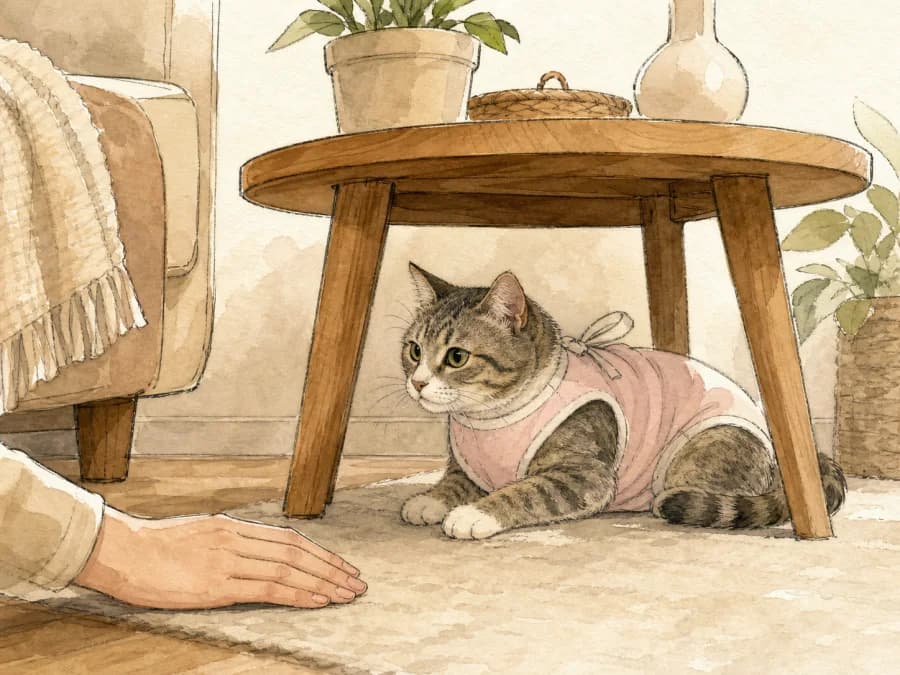
The most important principle this week is: let the cat come to you, instead of you going to the cat.
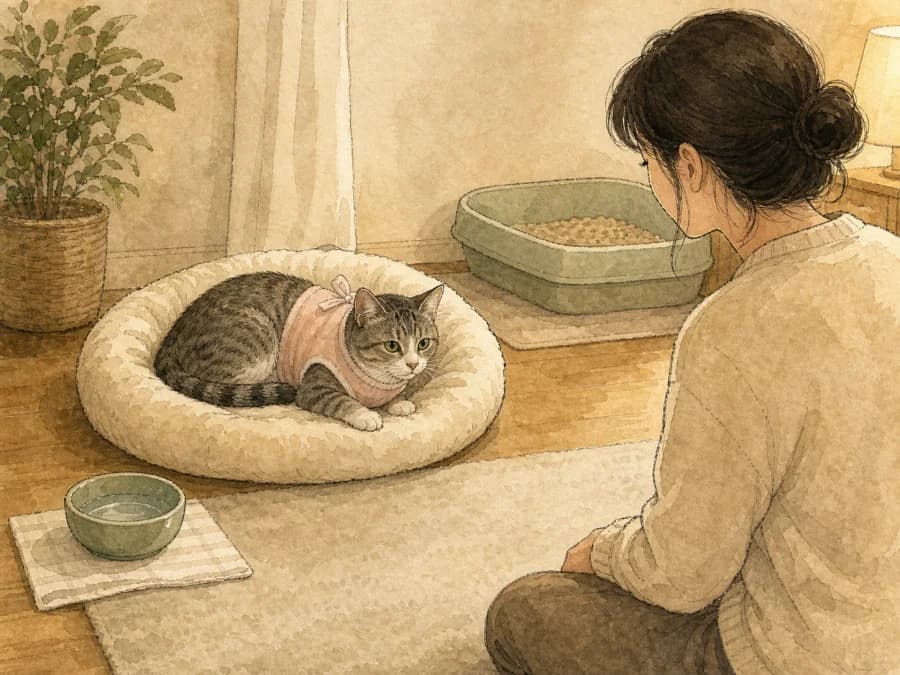
If she hides under the bed, do not drag her out. If she does not want to be touched, do not insist. Put food and water where she can reach them, sit nearby quietly, and let her know you are there without creating pressure.
When Touch Is Necessary, Such as Checking the Incision or Giving Medicine
If you need to check the incision or give medication, gently cover her with a towel or thin blanket first. Move slowly, lightly, and steadily, and use a low, soft voice.
Do not force it casually. Bites and scratches are predictable in this situation. Protect yourself with long sleeves and thick gloves.
Reduce Stimulation at Home
- Pause visitors for one week.
- Avoid sudden loud sounds, such as vacuum cleaners or loud music.
- If there are other pets in the home, separate them first and do not let them approach during this week.
Give Pain Medication as Prescribed
If the veterinarian prescribed pain medication, give it on schedule. Pain management is one of the most direct and effective ways to reduce post-surgery aggression.
Many owners think, "She seems okay, maybe she does not need it." But cats are very good at hiding pain. If pain is visible, they have often been enduring it for a while.
Use Toys for Release, But Do Not Let Her Jump Hard
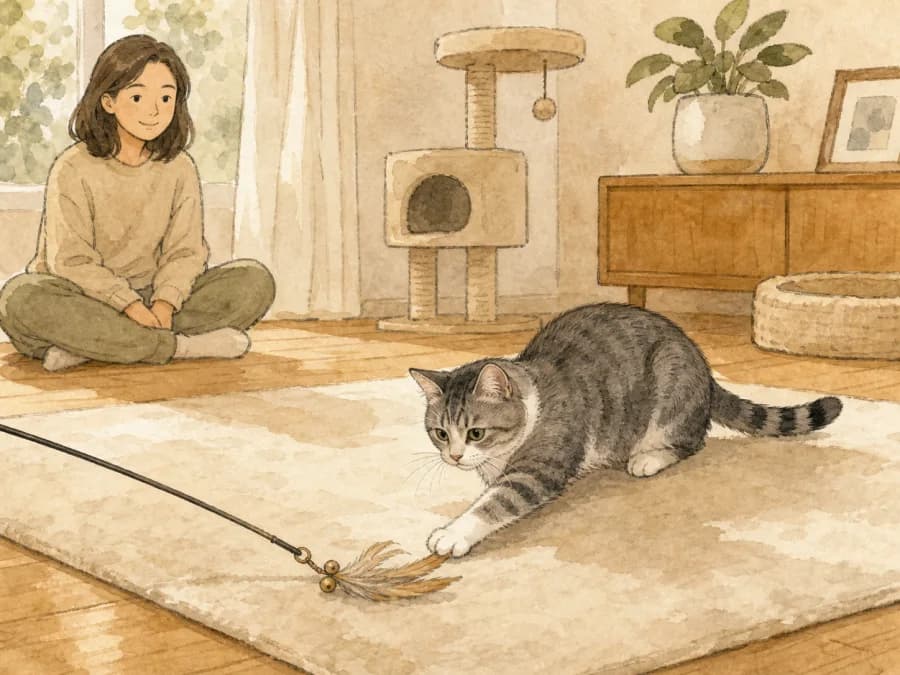
If she begins stalking, pouncing on legs, or biting hands, do not wrestle with your hands and do not chase her to scold her. Use a wand toy moving slowly along the floor for 3 to 5 minutes, then finish with a little food or treat. The goal is to move her focus from human hands and legs to toys while avoiding jumping that could pull on the incision.
5. Why Do Male Cats Recover Faster Than Female Cats After Neutering?
Owners who have both male and female cats often notice this difference.
Male cat neutering removes the testicles. The wound is external, the surgical trauma is smaller, and recovery often looks mostly normal after 2 to 3 days.
Female cat spay surgery removes the ovaries, and often the uterus as well. It is abdominal surgery. The wound is internal, the trauma is greater, and recovery takes longer.
So a strong stress response in a female cat during the first 3 to 5 days makes sense in context. She experienced a more invasive surgery than a male cat.
6. Will Spaying Make a Female Cat Gentler Long-Term?
In many cases, yes, but do not expect it immediately.
Hormonal fluctuation during heat can make cats irritable, tense, and more sensitive to touch. Once that factor is removed, many female cats who were previously very restless become surprisingly gentle.
Of course, this is not guaranteed. Personality is strongly influenced by the individual cat. Spaying reduces hormonal influence, but it cannot completely rewrite temperament. TikTok owners also report cats running, biting, and eating more for a period after surgery, then gradually stabilizing months later.
7. When Should You Contact the Vet?
The following signs are outside the normal range and need prompt veterinary advice:
| Sign | Possible Reason |
|---|---|
| Refusing food within 48 hours after surgery, including not drinking water | Complication risk |
| Redness, swelling, discharge, or strange smell from the incision | Infection |
| Temperature above 39.5°C (normal cat temperature is about 38-39°C) | Inflammation or infection |
| Excessive licking of the incision or frequent trips to the litter box | Incision opening or urinary issue |
| Biting behavior that keeps increasing after 2-3 weeks | Behavior or health issue needs investigation |
Additional Owner Experiences From Forums
On Zhihu, many owners have shared first-hand experiences about female cats becoming aggressive after spay surgery. Several shared patterns are worth noting.
Pattern 1: The first day after surgery is the hardest
"On the first day after surgery, my cat slept all day and seemed very weak, needing me to serve her. She was very aggressive that day, meowing pitifully when I touched her and even hissing at me. I think she hated me a little." - Zhihu owner record
Pattern 2: Stomach acid issues are often overlooked
"Cat stomach acid is strong. If there is too little food in the stomach, stomach acid can irritate the digestive tract and cause dry heaving. The right approach is small, frequent meals." - Zhihu owner personal record
Pattern 3: Female cats recover much more slowly than male cats
Female cat spay surgery is abdominal surgery, while male cat neutering is external. From forum data, full recovery for female cats often takes 14 to 18 days, about 2 to 3 times longer than for male cats. This difference is most obvious around days 3 to 5 after surgery. Many owners think something is wrong, when the surgical trauma itself is simply greater.
Pattern 4: Pain medication is underestimated
Many owners skip pain medication because "the cat looks okay," but experienced owners repeatedly emphasize that cats are very good at hiding pain. By the time pain is visible, the cat has often been enduring it for a long time. Giving pain medication on time is one of the most direct ways to reduce post-surgery aggression.
8. What Happened to My Cat Later
After that bite, I decided not to force contact again.
That night she stayed under the bed. I placed food and water on the floor beside the bed and went to sleep without trying to pull her out.
The next morning, she came out from under the bed, walked over to me, bumped my hand with her head, and sat there looking at me. I did not immediately pet her. I just spoke softly for a moment.
After about three days, she was fully back to her pre-surgery self. That experience taught me that sometimes the best care is "doing nothing."
Key Takeaway
A female cat becoming aggressive or biting after spay surgery is almost normal during the first few days. It does not mean the surgery failed, and it does not mean the cat has "changed."
She is experiencing pain, anesthesia residue, and stress.
The best things you can do:
- Let her lead interaction and do not force closeness.
- Give pain medication on schedule to reduce discomfort.
- Reduce stimulation at home and give her a quiet space.
- Wait for her to come out from under the bed on her own.
Usually, that only takes a few days.
If she has already started chasing people, ambushing, or biting legs, first reestablish the rule that human hands and legs are not toys: walk away, stop the interaction, offer a toy instead, and give her a quiet recovery area. Do not hit, gag, pin, or forcibly suppress her. In many help posts, the more owners punished, the more overwhelmed they became, and the more tense the cat became.
References
Animal Behavior & Care Writer
Rachel has a background in zoology and animal care volunteering. She writes about cat behavior, enrichment, and the relationship between cats and their everyday environment.
Written by Rachel Breen. Read our Editorial Policy.
FAQ
Frequently asked questions
Free Feeding vs Scheduled Feeding: Which Is Better for Your Cat?
Compare free feeding and scheduled meals, including portions, begging, multi-cat homes, and a gradual transition plan.
ComparisonHow to Calm a Scared Cat: Five Gentle Steps
Help a scared cat feel safer with quiet cover, soft body language, optional calming aids, and a steady routine.
How ToYour Cat Won’t Eat Dry Food? 6 Proven Solutions for Picky Eaters
Learn why cats refuse dry food, how to try gentle feeding changes, and when appetite loss needs veterinary attention.
How ToHow to Stop Your Cat From Shedding (The 3-Month Protocol)
A practical 3-month cat shedding routine: careful Vitamin B cycling, fish oil, daily brushing, and clear supplement safety limits.
How ToHow to Stop Your Dog From Eating Cat Food: A Guide for Multi-Pet Homes
Keep dogs out of cat food with better feeding zones, timing, barriers, and safer multi-pet routines.
How ToHow to Stop Ants and Cockroaches from Stealing Your Cat’s Food
Keep ants and cockroaches away from cat food with safer storage, cleaning, and pest prevention steps.
Why CatsNew on NookPetdia
Latest articles
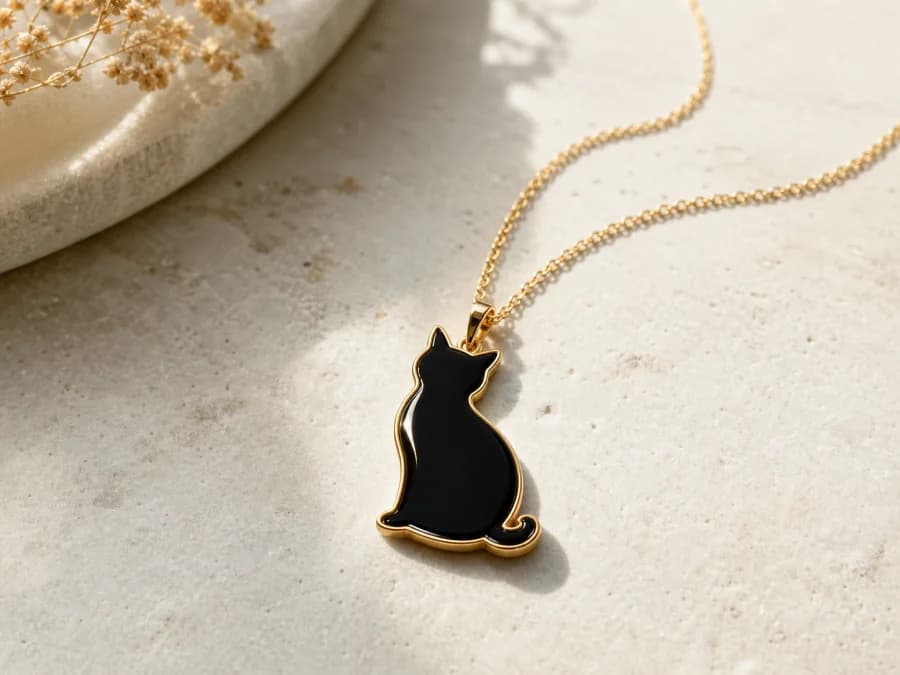
Black Cat Jewelry Guide (Style, Meaning, Gift Timing)
Black cats are the hardest subject to render in a small pendant and the best subject for silhouette work. Here is which styles hold up, what the symbolism actually carries, and the two dates worth planning a gift around.
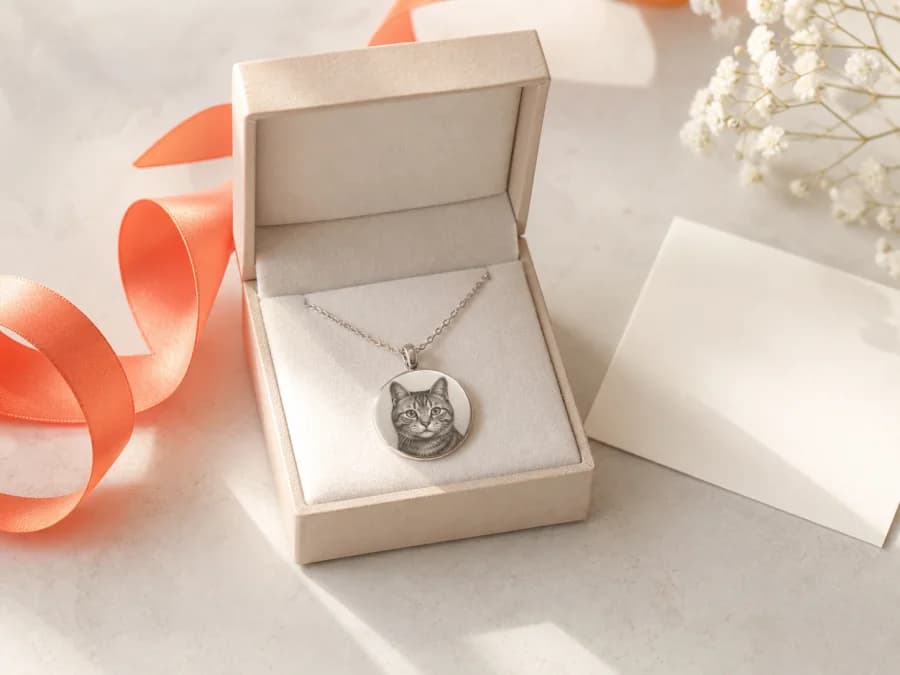
Cat Mom & Cat Dad Gift Ideas That Aren't Cheap Charms
Most cat-themed gifts are novelty items that get used twice. Here is how to buy something a cat parent keeps — including what to confirm about metal, sizing, and timing before you order anything personalized.
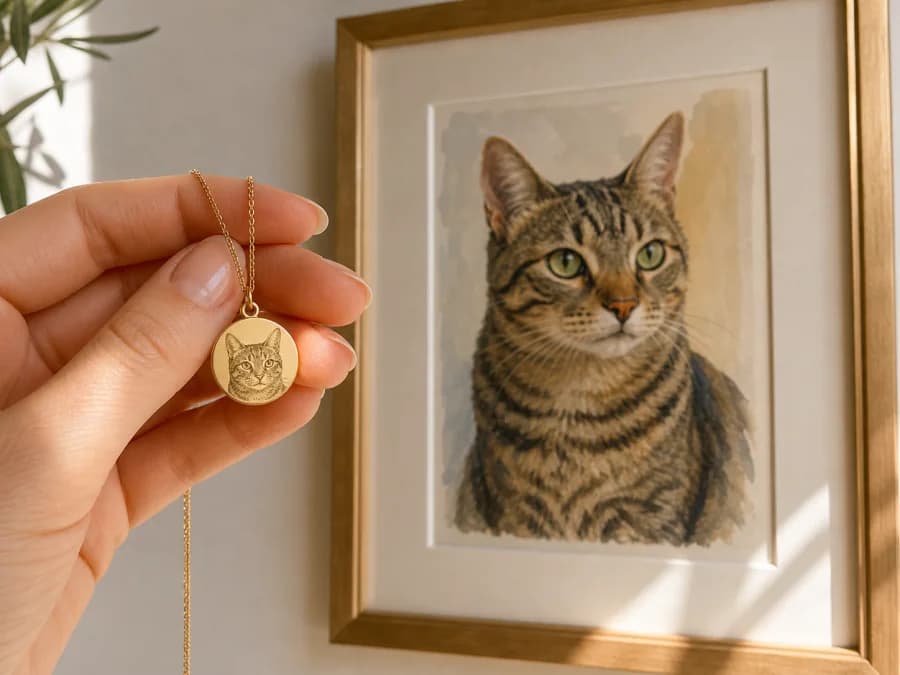
Custom Pet Portrait Jewelry vs Print: What's Worth Buying
Wearable portrait jewelry and framed pet portraits solve different problems. Here is how they compare on likeness, cost, durability, and daily use — and which one to commission first.