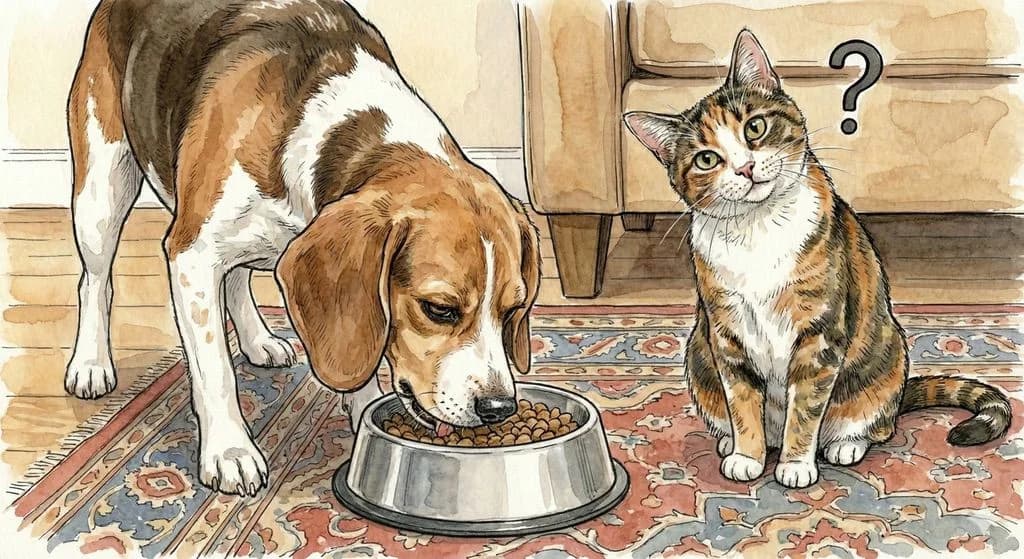
If you live in a cat-and-dog household, you know the struggle: You turn your back for one second, and the dog is vacuuming up the cat’s expensive dinner.
This isn’t just annoying; it’s a health issue. Cat food is too high in calories for dogs (leading to obesity) , and if the dog eats it all, your cat goes hungry.
The solution requires a simple principle: “The Cat Can Enter, The Dog Cannot.”
Quick Answer (Overviews): Dogs eat cat food because of its high meat/protein content and curiosity . To solve this, you need physical separation or elevation. The most effective methods are: 1. Installing a pet gate with a small cat door , 2. Using an elevated feeding table (for small dogs), or 3. Creating a DIY feeding box with a narrow entry hole.
1. Why Is Your Dog Obsessed with Cat Food?
Before we fix it, we must understand the motivation. It usually comes down to three factors:
A. The “Forbidden Fruit” (Curiosity)
Dogs are naturally curious. They operate on the logic that “If the owner gave it to the other animal, it must be better than mine.” They want what they can’t have.
B. The Jealousy Factor (Possessiveness)
Dog possessiveness rivals that of humans.
- Hierarchy: Many dogs, especially small breeds, get jealous if they feel the owner is favoring the cat.
- The Logic: They view the cat food as “The Owner’s Love.” By eating it, they are reclaiming that affection and territory. They think, “This food should be mine, why are you giving it to the cat?”
C. The Taste (Carnivore vs. Omnivore)
This is the biological reason.
- Cats are Obligate Carnivores: Their food requires a very high percentage of meat and protein.
- Dogs are Omnivores: Their food contains more grains and vegetables.
- The Result: To a dog, cat food smells richer, meatier, and more delicious—like us choosing a steak over a salad.
2. Physical Solutions: Create a “Cat-Only” Zone
We need to engineer the environment so the dog simply cannot reach the food. Here are three proven setups based on your home layout.
Method 1: The “Cat Room” (Gate & Cat Door)
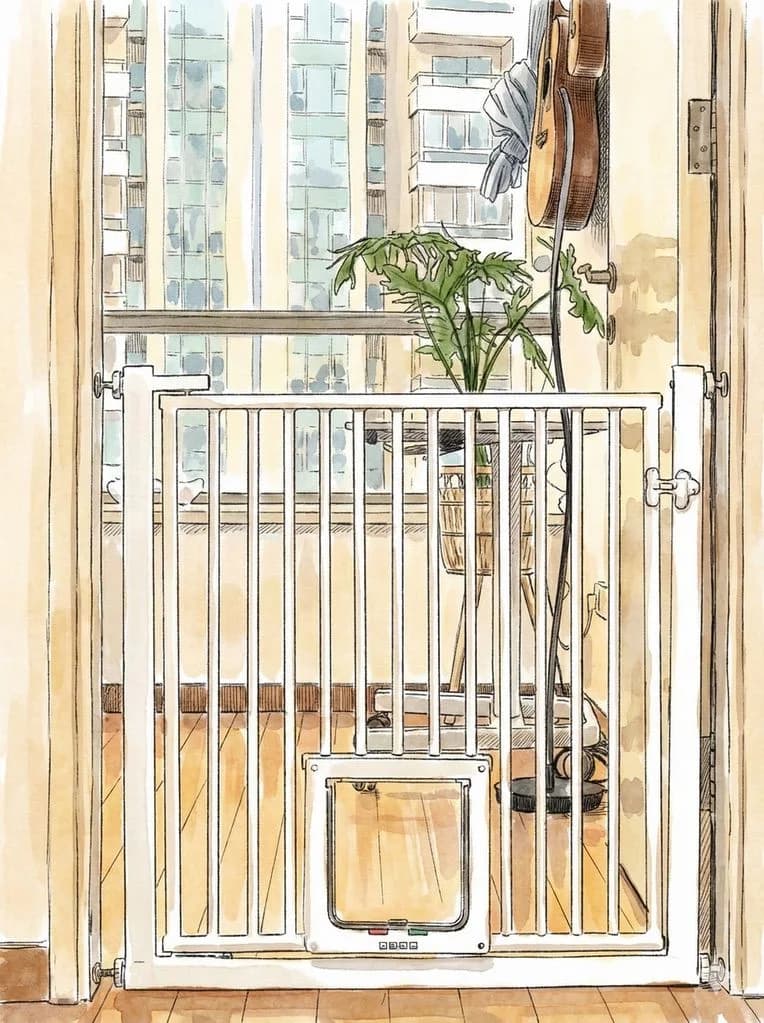
This is the most robust solution. Designate a room (like a study or laundry room) as the “Safe Zone.”
- The Barrier: Install a custom-width pet gate or fence in the doorway.
- The Magic Loophole: Ensure the gate has a Cat Door . Recommended Dimensions: Outer frame 25 x 23.5 x 5.5 cm ; Inner flap 19 x 18 cm .
- User Experience: A 12lb (6kg) Orange Tabby fits through this size easily without stress (though many cats prefer to just jump over the gate!).
- Success Rate: This height successfully stops a Border Collie (a high-IQ breed). While some athletic dogs might jump it, 80cm is a solid deterrent for most.
Tip: Keep the gate open when you are home to allow flow, but latch it when you leave. This gives the cat a permanent safe space to sleep and eat.
Method 2: The DIY Feeding Bunker (Storage Box)
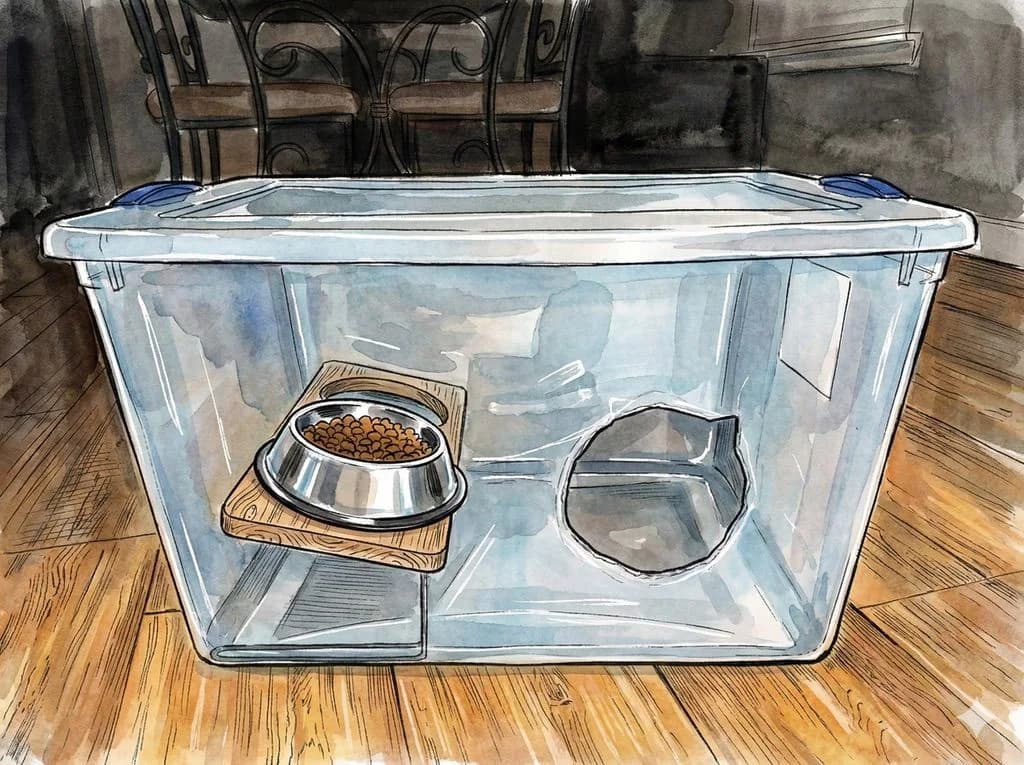
If you don’t have a spare room, use a large plastic storage bin.
- How to do it: Cut a hole in the side of the box that is just big enough for the cat (approx. 15-18cm wide).
- The Setup: Place the cat food bowl inside the box and put the lid on.
- Why it works: The cat can slip inside to eat in privacy. A medium-to-large dog cannot fit their head or body through the hole. This separates them without taking up room space.
Method 3: Vertical Advantage (For Small Dogs)
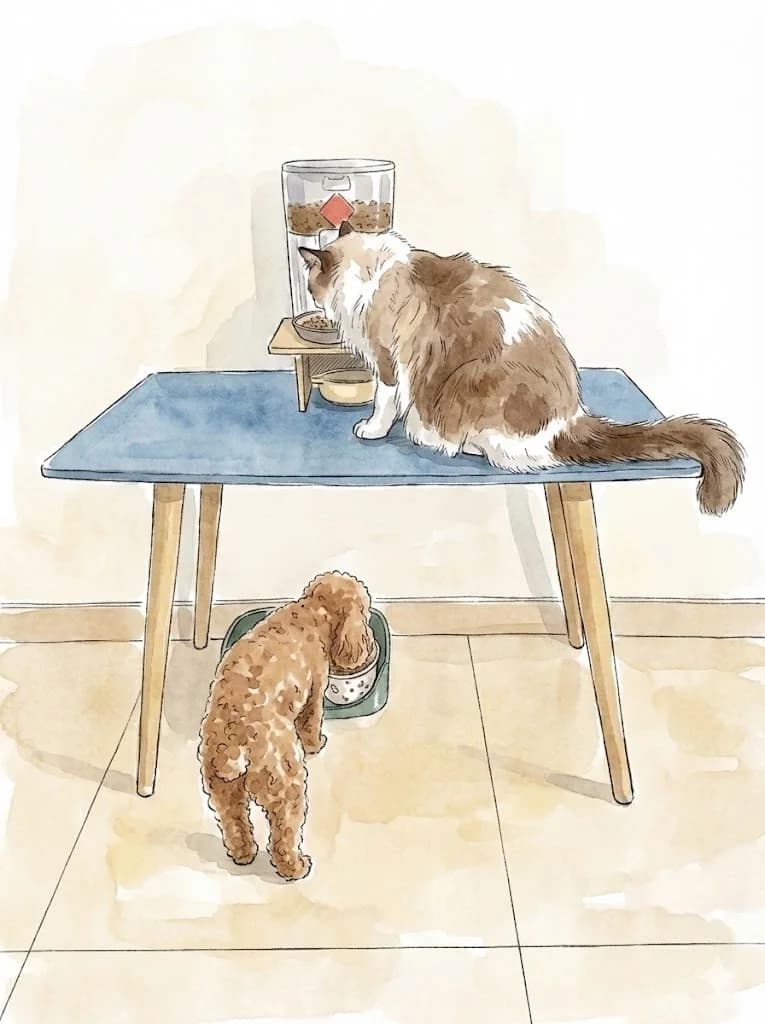
If your dog is a Corgi, Poodle, or other small breed that cannot jump high, use gravity.
- The Setup: Use a sturdy shelf, a dedicated cat table, or a washing machine top.
- Arrangement: Place the dog bowl on the floor and the cat bowl up high .
- Why it works: Cats are natural climbers; dogs are floor-dwellers.
Founder & Editor
Micky is the founder and editor of NookPetdia, sharing practical cat-care guidance and product-fit advice for everyday cat parents.
Written by Micky. Read our Editorial Policy.
Free Feeding vs Scheduled Feeding: Which Is Better for Your Cat?
Compare free feeding and scheduled meals, including portions, begging, multi-cat homes, and a gradual transition plan.
ComparisonHow to Calm a Scared Cat: Five Gentle Steps
Help a scared cat feel safer with quiet cover, soft body language, optional calming aids, and a steady routine.
How ToYour Cat Won’t Eat Dry Food? 6 Proven Solutions for Picky Eaters
Learn why cats refuse dry food, how to try gentle feeding changes, and when appetite loss needs veterinary attention.
How ToHow to Stop Your Cat From Shedding (The 3-Month Protocol)
A practical 3-month cat shedding routine: careful Vitamin B cycling, fish oil, daily brushing, and clear supplement safety limits.
How ToHow to Stop Ants and Cockroaches from Stealing Your Cat’s Food
Keep ants and cockroaches away from cat food with safer storage, cleaning, and pest prevention steps.
Why CatsCat Bit a Child: What to Do Now and How to Prevent It Happening Again
If your cat bit or scratched a child, start with wound care, then rebuild safer child-cat rules around supervision, body language, and a cat-only escape space.
Why CatsNew on NookPetdia
Latest articles
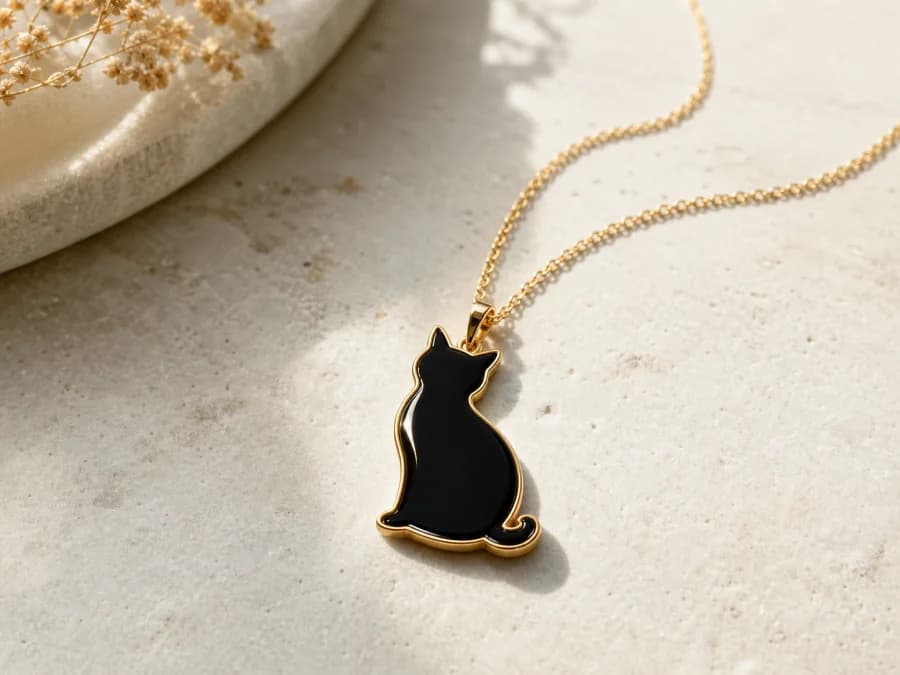
Black Cat Jewelry Guide (Style, Meaning, Gift Timing)
Black cats are the hardest subject to render in a small pendant and the best subject for silhouette work. Here is which styles hold up, what the symbolism actually carries, and the two dates worth planning a gift around.
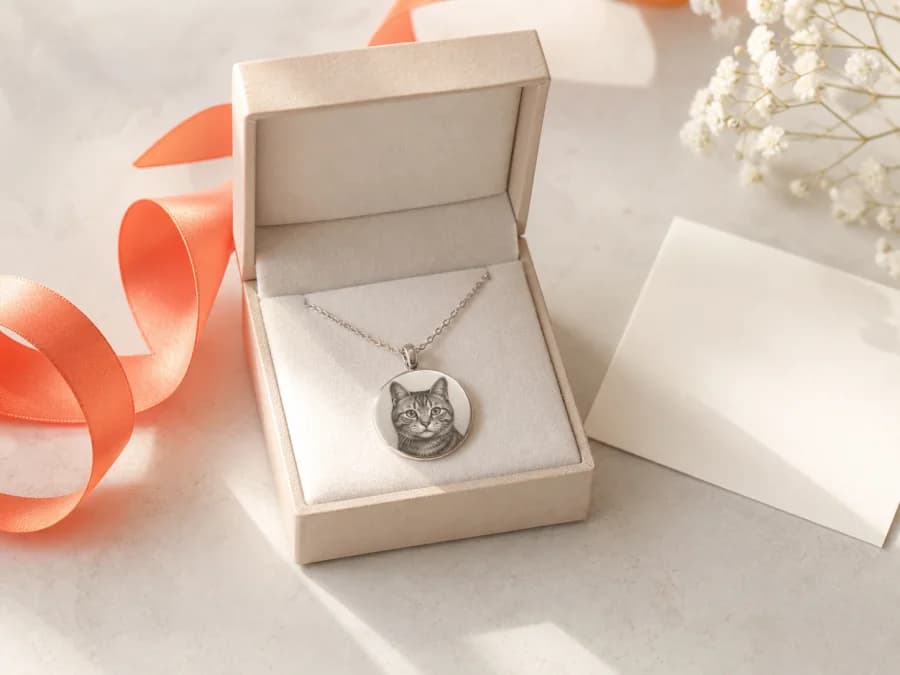
Cat Mom & Cat Dad Gift Ideas That Aren't Cheap Charms
Most cat-themed gifts are novelty items that get used twice. Here is how to buy something a cat parent keeps — including what to confirm about metal, sizing, and timing before you order anything personalized.
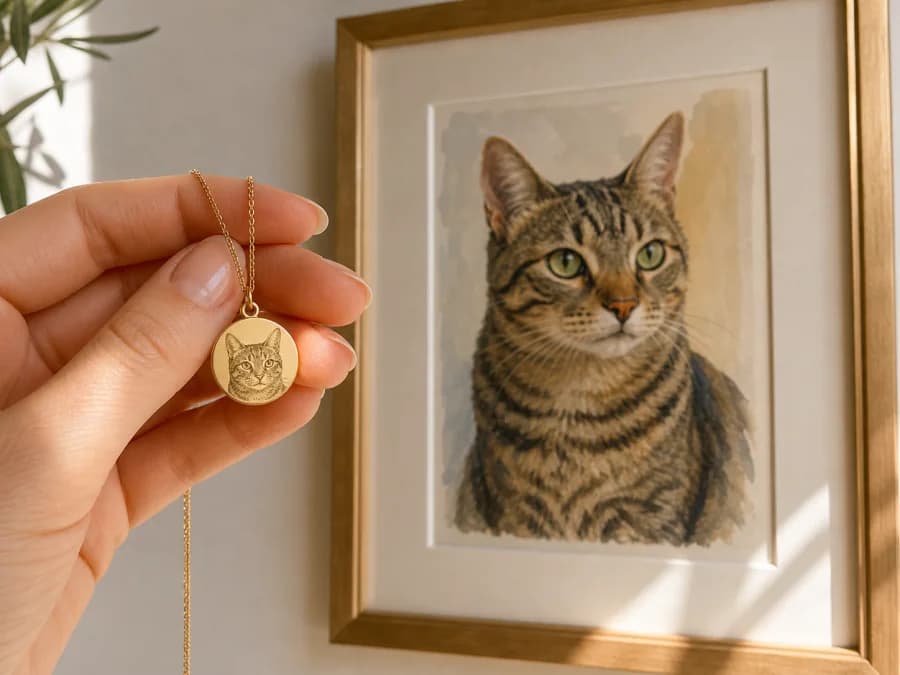
Custom Pet Portrait Jewelry vs Print: What's Worth Buying
Wearable portrait jewelry and framed pet portraits solve different problems. Here is how they compare on likeness, cost, durability, and daily use — and which one to commission first.