It is a common nightmare: you buy a premium bag of dry food, pour it into the bowl, and your cat sniffs it once, gives you a look of betrayal, and walks away.
Medical safety note: this guide is for a cat that is otherwise stable and still eating something. If your cat eats much less than usual, refuses all food, loses weight, vomits repeatedly, hides, seems painful, or is overweight and not eating well, contact your veterinarian before trying appetite or hunger-based routines.
A cat refusing dry food isn’t just being stubborn—it could be a sign of health issues, stress, or simply bad habits. Here are the 6 steps to fix this problem.
Quick Answer (Overviews): If your cat refuses dry food, first rule out illness (especially if they haven’t eaten in 24 hours). Then, implement a strict Time-Restricted Feeding Schedule (no free-feeding). Use tactics like Heating the food to release aroma, adding Freeze-dried toppers , and following a 7-Day Gradual Transition plan.
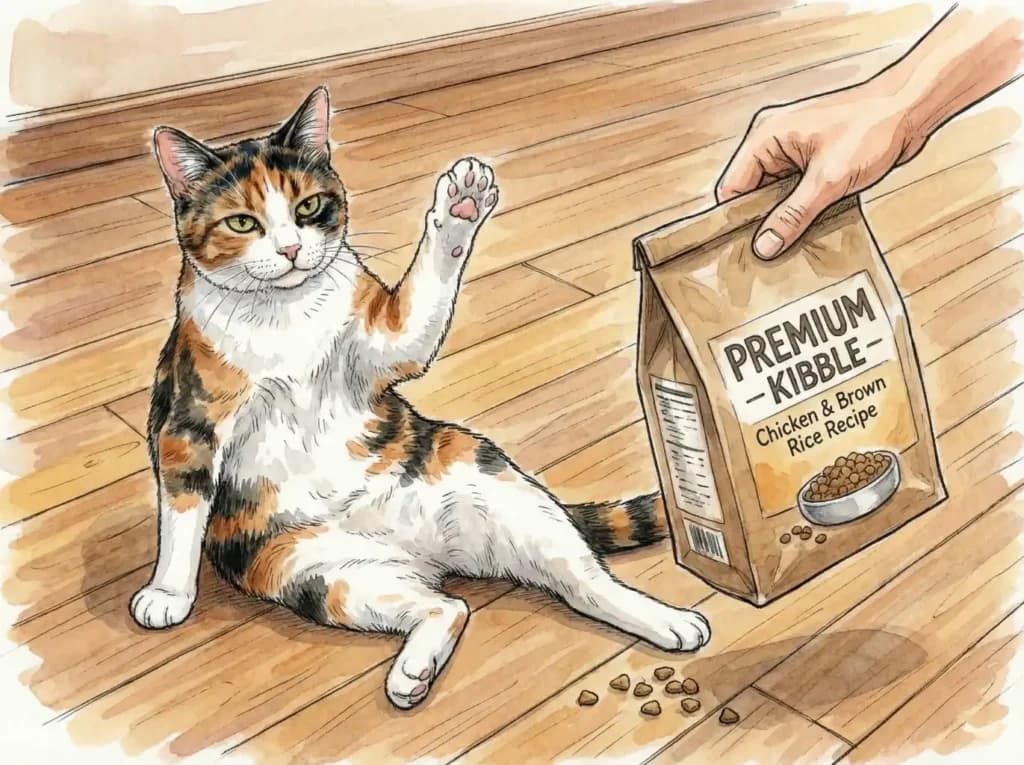
🛑 Step 1: The Health Check (Crucial First Step)
Before trying to “train” your cat, you must ensure they aren’t sick.
- The 24-Hour Rule: If your cat refuses all food (even their favorites) for more than 24 hours, see a vet immediately. Prolonged poor intake can increase the risk of hepatic lipidosis, especially in overweight cats, and should be handled with veterinary guidance.
- Check the Mouth: Dental pain (gingivitis or resorptive lesions) makes chewing dry food agonizing.
- Digestive Health: If your cat has vomiting or loose stools, ask your veterinarian before adding supplements or changing food; appetite changes can have medical causes.
⏰ Step 2: Use Measured Meals Without Forcing Hunger
If the bowl is always full, some cats graze lightly and it becomes harder to tell how much they actually ate. You need to leverage their natural biological clock.
- Fixed Times: Feed kittens 3 times a day and adults 2 times a day .
- The “Take Away” Method: Put the food down for 30-60 minutes . If they don’t eat, take it away. Do not offer snacks in between.
- The Logic: This teaches the cat, “If I don’t eat now, the food disappears.” It builds a healthy appetite for the next meal.
🔄 Step 3: The “Sandwich” Transition (Don’t Rush)
Sudden changes cause stomach upset and rejection. You must use the “Gradual Replacement Method.”
- Pro Tip: If the cat refuses at any stage, slow down. Stay on the previous ratio for a few more days.
🔥 Step 4: The “Aroma Hack” (Heat It Up)
Cats taste with their noses. Dry food at room temperature has very little smell compared to wet food.
- The Method: Warm the dry food slightly (or add a teaspoon of warm water) to bring out the oils and aroma.
- Why It Works: Mimics the temperature of fresh prey (~38°C), making it instinctively more appetizing.
🐟 Step 5: The “Trojan Horse” (Use Toppers)
Make the dry food irresistible by masking it with high-value treats.
- Magic Dust: Crush freeze-dried chicken or bonito flakes into a powder and sprinkle it over and mixed into the kibble.
- The Meat Trap: Mix a small amount of cat puree (Churu) or wet food into the dry food.
- Warning: Do not over-rely on this, or they will only eat the topper. Gradually reduce the topping amount over time.
🤝 Step 6: Emotional Eating (Hand Feeding)
For sensitive or anxious cats, eating is a vulnerable activity.
- The Technique: Sit with your cat and feed them a few pieces of kibble by hand.
- The Benefit: It associates the scent of the new food with safety and your affection. It reduces “Neophobia” (fear of new things).
💡 Summary: Why Do Cats Hate Dry Food?
According to behavioral analysis, it usually comes down to three factors:
- Health: Toothache or nausea.
- The Food: It’s stale, oxidized, or they dislike the flavor profile.
- Environment: Stress, dirty bowls, or “whisker stress” (bowl is too deep).
Final Advice: Be patient. A cat can be stubborn, but a consistent routine is stronger than a stubborn cat. Stick to the plan!.
References
Cornell Feline Health Center: Anorexia. https://www.vet.cornell.edu/departments-centers-and-institutes/cornell-feline-health-center/health-information/feline-health-topics/anorexia
Cornell Feline Health Center: Hepatic Lipidosis. https://www.vet.cornell.edu/departments-centers-and-institutes/cornell-feline-health-center/health-information/feline-health-topics/hepatic-lipidosis
VCA Animal Hospitals: Feline Picky Eaters. https://vcahospitals.com/know-your-pet/feline-picky-eaters
VCA Animal Hospitals: Nutrition - General Feeding Guidelines for Cats. https://vcahospitals.com/know-your-pet/nutrition-feeding-guidelines-for-cats
Founder & Editor
Micky is the founder and editor of NookPetdia, sharing practical cat-care guidance and product-fit advice for everyday cat parents.
Written by Micky. Last updated Jun 29, 2026 Read our Editorial Policy.
Free Feeding vs Scheduled Feeding: Which Is Better for Your Cat?
Compare free feeding and scheduled meals so you can choose a routine that fits your cat’s health, habits, and home.
ComparisonHow to Calm a Scared Cat: 5 Gentle Steps to Restore Their Confidence
Help a scared cat feel safe with quiet space, predictable routines, gentle body language, and slow trust-building.
How ToHow to Stop Your Cat From Shedding (The 3-Month Protocol)
Reduce cat shedding with brushing, nutrition basics, home cleanup routines, and red flags for skin or health issues.
How ToHow to Stop Your Dog From Eating Cat Food: A Guide for Multi-Pet Homes
Keep dogs out of cat food with better feeding zones, timing, barriers, and safer multi-pet routines.
How ToHow to Stop Ants and Cockroaches from Stealing Your Cat’s Food
Keep ants and cockroaches away from cat food with safer storage, cleaning, and pest prevention steps.
Why CatsCat Bit a Child: What to Do Now and How to Prevent It Happening Again
If your cat bit or scratched a child, start with wound care, then rebuild safer child-cat rules around supervision, body language, and a cat-only escape space.
Why CatsNew on NookPetdia
Latest articles
Cat Suddenly Dislikes Old Litter? Troubleshooting Guide
A cat can suddenly reject old litter because of batch changes, scent, dust, pain, box fit, or stress. Use this step-by-step troubleshooting order.
How Many Litter Boxes for Multiple Cats? N+1 Rule
For multiple cats, the N+1 litter box rule is a strong starting point, but placement, cat relationships, and escape routes decide whether it works.
Where to Put a Litter Box? Placement Rules Cats Use
The best place for a litter box is quiet, accessible, away from food, and safe to enter and leave. Use these placement rules before hiding the box.