A cat in heat may suddenly become restless, vocal, touch-sensitive, and more likely to bite. The behavior can look dramatic, but it is usually driven by hormones, arousal, and frustration rather than spite.
AI Summary
Overview
Increased aggression is common during heat, and hormones are the direct driver.
Male and female cats show different signs, so the response can differ too.
Temporary relief vs. a real fix: You need to understand both.
The most effective long-term solution: Spay or neuter surgery, not repeatedly waiting out each heat cycle.
Pet Owner Story
My female cat's first heat came at 4 and a half months, almost two months earlier than I expected. For several days she yowled all night, did not sleep, rolled on the floor, and turned around to bite my hand when I touched her. The bite was hard enough that I stopped moving immediately.
At the time, I did not know this was heat. I thought she was sick.
Biting during heat has one obvious difference from ordinary biting: touching the back or the base of the tail is almost guaranteed to trigger a bite. These areas become extremely sensitive during heat because they are linked to reproductive behavior. Accidentally touching them can cause a strong reaction.
One owner summarized a "how to live with a cat in heat" principle online, and many people agreed with it:
"A cat in heat is physically uncomfortable and cannot find an outlet. If you pet her then, even with good intentions, it is extra stimulation to her. The best approach is: if she comes to you, gently stroke her head; if she is yowling and rolling, keep your distance and do not interrupt."
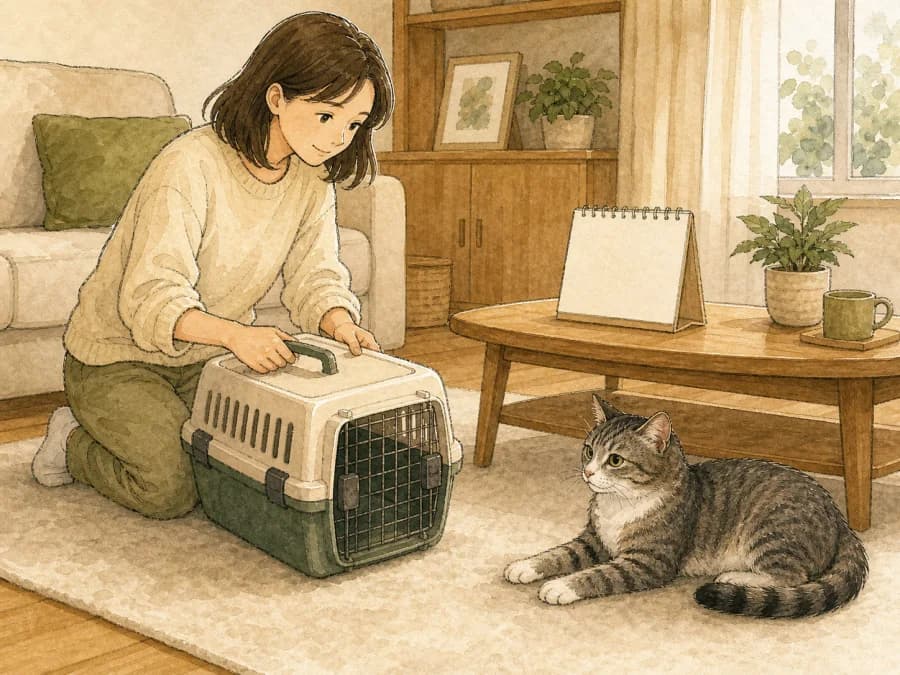
I scheduled her spay surgery two weeks after that heat ended. Since then, the cat who once yowled until 2 a.m. has never bitten me because of heat again.
In pet owner discussions about cats in heat, the descriptions are very specific: holding the owner's hand and clawing or chewing it, suddenly fixating on feet and socks whenever heat starts, hissing and scratching after two strokes, still flicking the tail irritably for a short time after heat ends, and biting during grooming or eye-wiping. Some owners ask whether "it will get better by itself after heat ends." That is where many people misjudge the problem: the hormone peak will pass, but without spay or neuter surgery, the next heat will come again.

1. Why Do Cats Become Aggressive During Heat?
In normal life, your cat may be gentle and people-oriented. During heat, the same cat may suddenly become restless, highly sensitive to touch, and even bite.
This is not a personality change. Hormones are at work.
How Hormones Affect Behavior
During heat, sex hormones such as estrogen, progesterone, and testosterone increase sharply. These hormones act directly on the nervous system and can cause:
- Increased sensitivity: touch that was normally fine may now feel irritating or even painful.
- Higher anxiety: the whole body is driven by the urge to mate and remains tense.
- Stronger territorial behavior: especially in male cats, who may protect perceived territory more intensely.
- Frustration: the instinct to mate cannot be satisfied, especially for indoor cats, and emotions may spiral.
A comparison: imagine being in a state of ongoing physical discomfort with no outlet, and every person who comes close makes you more irritated. That is roughly what heat can feel like for a cat.
2. Female Cats vs. Male Cats: Different Signs
Typical Signs of a Female Cat in Heat
| Behavior | What It Means |
|---|---|
| Constant yowling, especially at night | Mating call, which can be very loud |
| Rolling on the floor, arching the back, lifting the rear | Heat posture, more obvious when the back is touched |
| More sensitive to touch | The back and base of the tail trigger an immediate reaction |
| Lower appetite | Attention is focused on finding a mate |
| Aggressive response to certain people approaching | Especially strangers or less familiar family members |
| Trying to escape outdoors | Heat instinct drives her to look for a male cat |
A female cat's heat usually lasts 5 to 10 days. If she does not mate, heat may return after 2 to 3 weeks. Indoor cats can go into heat year-round without strong seasonal regulation, and may have 5 to 7 heat cycles a year or even more.
Typical Signs of a Male Cat Responding to Heat
| Behavior | What It Means |
|---|---|
| Urine spraying to mark territory | Sprays vertical surfaces with a strong smell |
| Much more aggression toward other cats | Especially toward other male cats in the home |
| Nighttime noise | Roaming and yowling |
| More guarded around strangers | Stronger territorial awareness |
| Trying to escape outdoors | Wants to find a female cat in heat |
Male cats do not have a fixed heat cycle the same way female cats do. They are more often triggered when they sense a nearby female cat in heat.
3. Specific Bite Triggers During Heat
Scenario 1: Touching the Back or Base of the Tail
Female cats in heat are extremely sensitive in these areas because they are reproductive-behavior trigger zones. If you touch them accidentally, she may turn and bite immediately.
What to do: avoid these areas completely during heat. Pet only the head and chin, which are usually more acceptable.
Scenario 2: Approaching While She Is Yowling or Rolling
When heat behavior is strongest, the cat is both highly aroused and anxious. Approaching at that moment, whether to pet her or simply walk past, can trigger aggression.
What to do: let her calm down on her own. Do not try to "comfort" her or interrupt heat behavior.
Scenario 3: Blocking Her When She Wants to Go Outside
The heat instinct is powerful. If you close a door and block her from leaving, she may express frustration with biting or scratching.
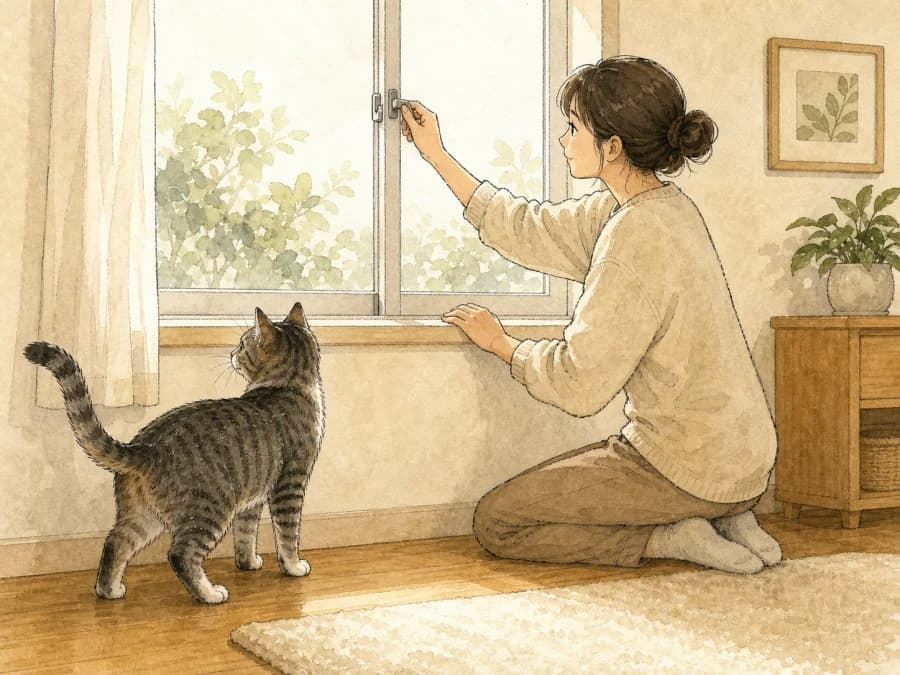
What to do: keep doors and windows secured, but do not forcefully pick her up or approach while she is emotionally escalated.
Scenario 4: Play Escalates Too Quickly
A cat in heat is already more aroused overall, so play can escalate into real biting more easily.
What to do: keep play sessions shorter and lower in intensity than usual. Stop immediately if the play starts to escalate.
Scenario 5: Sudden Fixation on Hands, Feet, or Socks
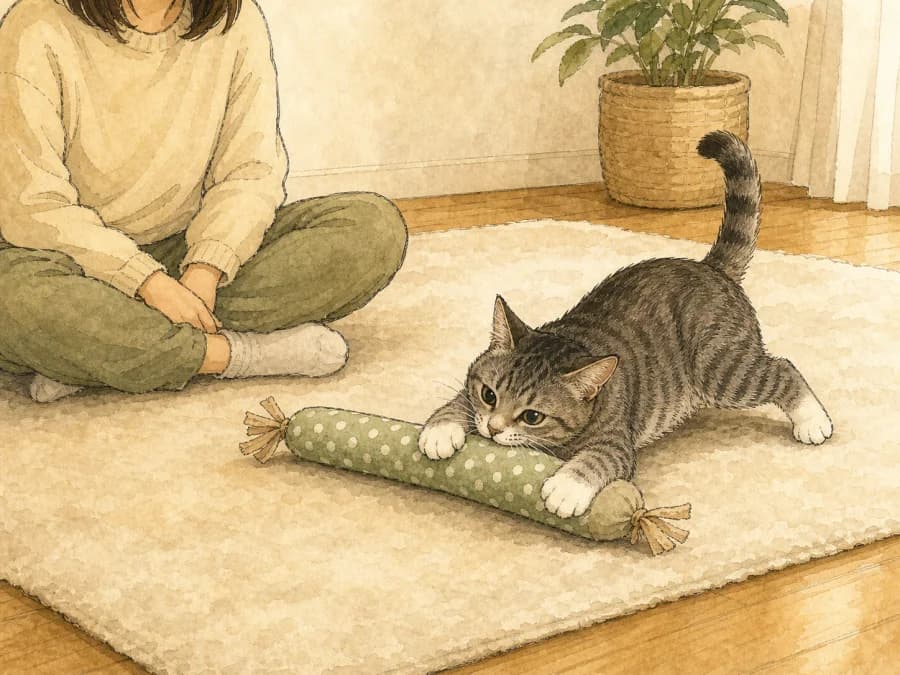
Some cats in heat become unusually fixated on an owner's hands, feet, or socks, grabbing and chewing them as if they were substitute bite objects. Do not put on many layers of socks and "let her bite until she is done." That may reinforce the habit that feet are bite targets.
What to do: move your feet away and immediately offer a long plush kicker, bite toy, or wand toy. Avoid using body parts to absorb her frustration.

4. Temporary Ways to Cope During Heat
These methods can make the moment easier to manage, but they do not solve the root cause.
Method 1: Reduce Touch and Give More Space
During heat, reduce the frequency and duration of active petting. Do not pick her up because she is yowling. That will not stop the yowling and may intensify anxiety.
Let her lead interaction. If she comes to rub against you, gently stroke the head. If she is yowling and rolling, keep your distance.
Method 2: Catnip, If It Works for Your Cat
Some cats relax noticeably with catnip. During anxious periods, it may temporarily redirect attention and help stabilize mood.
Note: not all cats respond to catnip. Response is genetic, and about 50% to 70% of adult cats respond. Do not use it too frequently; leave at least 2 to 3 hours between uses to avoid tolerance.
Method 3: Increase Play to Burn Some Energy
Part of heat-related anxiety comes from energy with nowhere to go. Extra wand-toy play can burn some restless energy and make the overall state slightly calmer.
Key point: use toys, not hands. Cats in heat are more aggressive and more likely to mistake hands for prey.
Method 4: Keep the Environment Stable and Reduce Triggers
- If your cat can hear or smell other cats outside, that may keep intensifying heat behavior; temporarily close some windows if needed.
- Reduce unfamiliar visitors.
- Keep the routine stable, including regular feeding times.

Method 5: Quiet White Noise or Soft Music
Some cats calm down with background sound, especially steady, gentle music. It can be worth trying when she is very agitated.
Not Recommended: Butt Patting, Cotton Swabs, or Simulated Mating With Ties
In social media discussions, some people mention "butt patting," "the cotton swab method," or tying methods meant to simulate mating. These are high-risk practices. They can cause infection, injury, worsening stress, or more arousal. The cotton swab method in particular is not appropriate for home handling.
If you see abnormal discharge, low energy, abdominal discomfort, ongoing refusal to eat, or you suspect pyometra, do not keep trying home remedies. Contact a veterinarian directly.
5. The Long-Term Solution: Spay or Neuter Surgery
If your cat is not spayed or neutered, heat-related aggression, yowling, and spraying in male cats will keep coming back.
Spay and neuter surgery not only addresses heat-related behavior, but also has other long-term health and behavior benefits:
| Benefit of Spay/Neuter | Explanation |
|---|---|
| Eliminates heat-related aggression | Removes the root hormonal trigger |
| Prevents accidental pregnancy | Helps reduce the number of stray cats |
| Lowers reproductive disease risk | Pyometra and mammary tumors in female cats; prostate issues in male cats |
| Often creates a calmer long-term temperament | Removes mood instability caused by hormone fluctuation |
| Reduces spraying, roaming, and fighting in male cats | Noticeably improves the home environment |
When to schedule surgery: Many veterinarians recommend doing it before the first heat, usually around 4 to 6 months, when surgical risk is lower and recovery is faster.
Many owners decide to book surgery during the hardest part of heat, and that is understandable. But surgery during the peak of heat can increase risk because reproductive organs are more blood-filled. It is usually better to wait 2 to 3 weeks after heat ends before surgery.

6. What to Do If a Cat in Heat Bites You
Treat a heat-related cat bite the same way you would treat any cat bite:
- Rinse with running water and soap for at least 15 minutes.
- Disinfect with povidone-iodine or alcohol.
- Watch for redness, swelling, warmth, or worsening pain for 48 hours and seek medical care if they appear.
Important reminder: do not punish a cat in heat. Hitting, scolding, or spraying water will not make her "understand." It will increase fear of you and may trigger stronger aggression while hormones are high.
Key Takeaway
A cat biting or acting aggressively while in heat is a hormone-driven physical response. It is not a bad habit and not a personality problem.
Short-term: reduce touch, give more space, and use toys to burn energy.
Long-term: spay or neuter surgery is the most complete way to eliminate heat-related aggression.
If you simply wait out each heat, the next one will come again. After spay or neuter surgery, the problem is truly solved.
In the short term, reduce stimulation, protect yourself, and do not let your cat use hands or feet as an outlet. Long-term, schedule spay or neuter surgery at the appropriate time. Separating those two tasks reduces stress for the owner and prevents unnecessary stimulation for the cat.
References
VCA Animal Hospitals: Estrous Cycles in Cats
Animal Behavior & Care Writer
Rachel has a background in zoology and animal care volunteering. She writes about cat behavior, enrichment, and the relationship between cats and their everyday environment, turning animal-care knowledge into simple steps that cat parents can actually use.
Written by Rachel Breen. Last updated Jun 13, 2026 Read our Editorial Policy.
FAQ
Frequently asked questions
Are yowling and irritability during heat signs that she is in pain?
To some degree, yes. Heat is not a pleasant experience for a cat. The body is highly tense, and the reproductive instinct cannot be satisfied, especially for indoor cats. After spay surgery, this repeated cyclical distress disappears.
Is the "cotton swab method" effective for helping a female cat through heat?
It is not recommended. Online advice sometimes suggests using a cotton swab to stimulate a female cat's vagina and induce false pregnancy so she can "get through heat." Done incorrectly, this carries a high risk of infection, injury, and increased stress. It also does not solve the next heat cycle. Do not try cotton swabs, butt patting, or tying methods at home. Spaying is the safer and more complete long-term solution.
Will biting during heat return to normal afterward?
Yes. After heat ends and hormone levels drop, behavior usually returns to normal. But if the cat is not spayed or neutered, the same behavior may return during the next cycle.
Male cats do not have heat cycles, so why did my male cat suddenly become aggressive?
Male cats do not have fixed heat cycles, but they can be activated immediately when they smell or sense a nearby female cat in heat. It may feel like he is "not in heat," but if a neighbor has an unspayed female cat, your male cat may be in a heat-driven state at any time.
How old are cats when heat starts?
Female cats often enter first heat around 4 to 6 months, and some breeds, such as Siamese cats, may start earlier. Male cats often become sexually mature around 5 to 7 months. This is why many veterinarians recommend scheduling spay or neuter surgery around 4 to 5 months.
Can I feed and interact with her normally during heat?
Feeding can continue normally. Do not repeatedly offer new food just because she eats less. Reduce the intensity of interaction, especially avoiding the back and base of the tail. If she comes to you voluntarily, gentle head petting is fine. If she is yowling and rolling, it is better to keep your distance.
Free Feeding vs Scheduled Feeding: Which Is Better for Your Cat?
Compare free feeding and scheduled feeding for cats, with pros, risks, and tips for choosing the best routine for your home.
ComparisonHow to Calm a Scared Cat: 5 Gentle Steps to Restore Their Confidence
Learn gentle steps to calm a scared cat, reduce fear triggers, create safe spaces, and rebuild confidence without forcing contact.
How ToYour Cat Won’t Eat Dry Food? 6 Proven Solutions for Picky Eaters
Find common reasons cats refuse dry food and practical ways to improve appetite, texture acceptance, hydration, and feeding routines.
How ToHow to Stop Your Cat From Shedding (The 3-Month Protocol)
Use a simple shedding-control plan covering brushing, diet, hydration, home cleanup, and when excess shedding may need a vet.
How ToHow to Stop Your Dog From Eating Cat Food: A Guide for Multi-Pet Homes
Learn how to stop your dog from eating cat food with better feeding zones, barriers, routines, and safe multi-pet management.
How ToHow to Stop Ants and Cockroaches from Stealing Your Cat’s Food
Keep ants and cockroaches away from cat food with clean feeding habits, safer storage, barriers, and pet-friendly prevention tips.
Why CatsNew on NookPetdia
Latest articles
Female Cat Biting After Spay Surgery: Why It Happens and How to Help
A female cat may bite after spay surgery because of pain, anesthesia, stress, recovery clothing, or pent-up energy. Give space, manage pain with your vet, and use gentle redirection.

Cat Bit a Child: What to Do Now and How to Prevent It Happening Again
If your cat bit or scratched a child, start with wound care, then rebuild safer child-cat rules around supervision, body language, and a cat-only escape space.

How to Train a Kitten Not to Bite: 4 Gentle Methods That Work
Teach your kitten gentle play with clear bite boundaries, toy redirection, daily play routines, and calm responses that avoid punishment.